
building 8216silicon valley
| | |

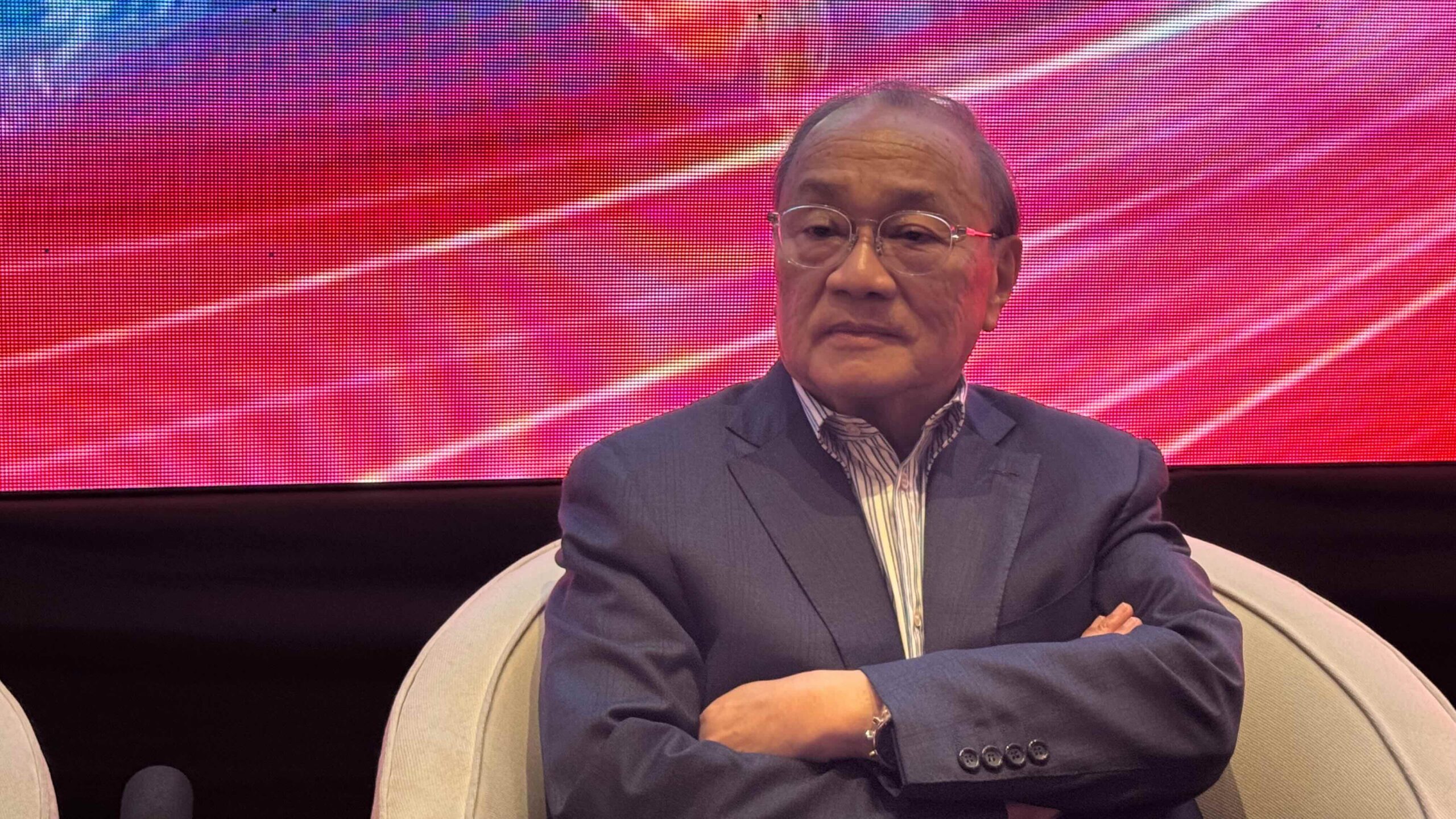
Building a ‘Silicon Valley in Tarlac’? Manny Pangilinan wants in.

MANILA, Philippines – Manuel V. Pangilinan wants to sit down with the Bases Conversion and Development Authority (BCDA) to see how his sprawling infrastructure group can help build up Tarlac into something resembling a Philippine “Silicon Valley,” including through the government’s ambitious Pax Silica project.

Few local businessmen are as well positioned to pitch in. Companies chaired by Pangilinan span electricity through Meralco, telecommunications through PLDT, and data centers through VITRO – three pieces of infrastructure that an advanced manufacturing and technology hub would need.

“I think we’re trying to arrange for a meeting, for a briefing from BCDA, because I think they are at the forefront of the effort of the government about this project,” Pangilinan told reporters on Thursday, August 13.

“The basic question is: How do you recreate Silicon Valley in Tarlac?” he said. “What are the elements that should go into the creation of a Silicon Valley in Tarlac?”

Whatever shape that ecosystem takes, Pangilinan said it would have to be viewed over a “long-term horizon.” Yet some of the ingredients are already apparent. (READ: World Bank sees promise in Pax Silica. Can PH build more than another assembly hub?)

Power is one. Pangilinan said data centers need not just continuous electricity supply, but power rates competitive enough to meet the expectations of international customers. For a large technology buildout in Tarlac, additional generation may eventually be needed.

“I think you may need to put up a power plant in Tarlac,” Pangilinan said.

That potentially puts Meralco and the broader Pangilinan group in the picture. MVP had already expressed interest in helping build those foundations weeks earlier. On July 29, he described the idea of creating a Philippine Silicon Valley as “great,” but warned that the country first had to assemble the engineers, capital, infrastructure, and higher-value industries that make a genuine technology cluster work.

“If they need power, Meralco will build a power plant. We need to build data centers, as well. So, we have to put the pieces together,” Pangilinan said then. “It depends [on] how ambitious we want to be.”

Water is another constraint, particularly for large data centers that require cooling. Pangilinan contrasted Tarlac with Metro Manila, where the two major concessionaires already provide relatively reliable supply.

“I don’t know the water supply situation in Tarlac,” he said.

Then there is connectivity.

PLDT Enterprise head Patricio “Blums” Pineda said prospective Pax Silica locators involved in advanced manufacturing would require private mobile networks, 5G, and Internet-of-Things infrastructure not only inside factories, but across their supply chains.

“When you look at the potential locators in something like a Pax Silica when it does come into fruition, they will need this type of connectivity for advanced manufacturing,” Pineda said. “They will need this type of connectivity for the ports that are going to service the supply chain.”

Pax Silica, highlighted by President Ferdinand Marcos Jr. in his latest State of the Nation Address, is envisioned as an advanced manufacturing and technology ecosystem in New Clark City with AI at its core.

Must Read

Pax Silica: BCDA’s claims and the counterarguments


Pax Silica: BCDA’s claims and the counterarguments

Data center in Tarlac?

But Pangilinan’s remarks extended beyond Pax Silica itself. He was also speaking more broadly about Tarlac’s potential as a technology hub, including the possibility of locating future data centers there.

“I think definitely data centers will be part of that overall development of Tarlac,” he said.

That possibility is already being explored within the PLDT group. Victor Genuino, president of PLDT’s data center arm VITRO, confirmed that Tarlac is among several locations being considered for its next facility, alongside General Trias in Cavite and sites closer to Metro Manila. No location has been selected.

Tarlac could be particularly suitable if the facility is built for AI training. Genuino explained that data centers handling gaming, financial transactions, and other consumer-facing services have to stay relatively close to users to minimize latency. AI training workloads, however, are less sensitive to distance.

“If the data center that you need to build is, for example, for AI training, hindi mo kailangan ng latency ‘yun. Puwedeng malayo ‘yun (you don’t need to worry as much about latency. It can be farther away),” Genuino said.

The search for another site comes as PLDT sees stronger momentum in the data center business more broadly.

“The data centers are doing well because you have local locators and foreign locators that are starting to come in,” Pangilinan said. “We’ve become aware of the potential of the Philippines as a data center hub.”

Must Read

Who comes after MVP? Pangilinan has successors in mind.


Who comes after MVP? Pangilinan has successors in mind.

PLDT said its data center segment grew 13% year-on-year in the first half of 2026, driven by colocation demand from hyperscalers, enterprises, and the public sector. It is also the largest data center operator in the Philippines, with a 33% market share by live colocation IT capacity. 

VITRO flagship project in Sta. Rosa is designed for 36 megawatts of IT capacity, with 10 MW already built out and about half of that initial capacity committed to customers, according to Genuino. PLDT’s official H1 results put the group’s currently available IT-ready capacity at close to 34 MW across its nine data centers.

The company also sees another source of demand from Executive Order No. 119, which establishes a data residency framework requiring certain government data to be kept in the Philippines.

Genuino called the policy “very, very important for the growth of the data center business,” saying VITRO also sees promise from incoming hyperscalers and continued enterprise digitalization. – Rappler.com
Similar Posts

  • | | | |

    Hormuz uncertainty pushes global oil prices higher

    KARACHI: Global oil prices edged higher on Monday as uncertainty over the reopening of the Strait of Hormuz continued to unsettle energy markets. Brent crude climbed by more than 1% in Asian trading, moving above $84 a barrel, while US crude prices also posted gains of over 1%. The market remains focused on the situation surrounding the Strait of Hormuz, a critical maritime route through which a significant share of the world’s oil supplies passes. Any prolonged disruption or uncertainty over shipping through the waterway could put further pressure on global energy prices. Iran has indicated that discussions with Oman on establishing alternative shipping routes are nearing completion. However, Tehran says the United States still needs to fulfil additional conditions before arrangements concerning the waterway can move forward. With the situation still unresolved, traders are closely watching developments around the Strait, with concerns over supply disruptions continuing to influence crude prices.

  • | | |

    ECC to review Rs1.34 hike in dealers’ margin

    ISLAMABAD: The Economic Coordination Committee (ECC) is set to consider a proposal to increase the margin of petroleum dealers. The meeting will be held on Friday evening. Federal Finance Minister will chair the session. The meeting is scheduled for 6pm. According to sources, the increase in petroleum dealers’ margins is the only item on the agenda. The committee will examine a proposal for a Rs1.34 per litre increase. Petroleum dealers currently receive a margin of Rs8.64 per litre on petroleum products. If approved, the proposed increase will raise the margin to Rs9.98 per litre. The proposal comes after discussions between the government and representatives of petroleum dealers. During those talks, the government had assured dealers that their margin would be increased. Dealers have been seeking an adjustment in their margin amid rising operational expenses. They argue that higher costs have affected the profitability of their businesses. The ECC will review the proposal and decide whether the increase should be approved. The committee’s decision will determine the next steps for implementing the proposed adjustment. Any increase in the dealers’ margin could also affect the overall pricing structure of petroleum products. The final impact will depend on how the government incorporates the additional margin into the pricing mechanism.

  • Thailand’s Domestic Gas Production Remains Key to Long-Term Energy Security

    BANGKOK – Thailand still depends on natural gas as a primary feedstock for electricity generation, industry, and transport, including compressed natural gas (CNG), while aging offshore fields no longer produce enough to meet national demand. Domestic output has fallen from its earlier peak, leaving the country more dependent on LNG and pipeline gas from abroad, […]

  • |

    Pakistan targets 90% clean electricity by 2035, says Awais Leghari

    Federal Minister for Power Awais Leghari outlined Pakistan’s long-term strategy to transform its electricity sector, setting an ambitious target of raising the share of clean energy in the national power mix to 90 percent by 2035. The announcement came during the Solar, Storage and Flexibility 2026 Conference, where the minister also highlighted key policy hurdles, including restrictions under Pakistan’s International Monetary Fund (IMF) programme that are delaying the introduction of a market-based electricity pricing mechanism. Speaking at the conference on Tuesday, Leghari said the government was pursuing a major shift in energy policy by moving away from a traditional generation-focused model towards a system centred on grid flexibility, energy security, battery storage and domestic manufacturing. He said the new approach is designed to reduce Pakistan’s dependence on imported fuels, shield consumers from volatile global energy prices and maximise the benefits of the country’s rapidly expanding solar sector. The minister said Pakistan has witnessed remarkable growth in rooftop solar installations, with nearly 38 gigawatts of distributed solar capacity now installed through private consumer investment. He described the rapid adoption of rooftop solar as one of the country’s biggest energy success stories but cautioned that it has also created new challenges for the national power system. According to Leghari, Pakistan generates significant amounts of electricity from solar energy during daylight hours, yet the absence of sufficient battery storage infrastructure prevents that surplus electricity from being utilised during evening peak demand. He stressed that without modern storage systems, the country would continue to struggle with balancing electricity supply and demand despite having abundant renewable energy resources. Referring to disruptions in Re-gasified Liquefied Natural Gas (RLNG) supplies earlier this year, the minister said the episode exposed Pakistan’s continued dependence on imported fuels. He noted that the interruption in fuel supplies led to electricity shortages and load shedding even though ample solar power was available during the daytime, highlighting the urgent need for large-scale energy storage. “Battery storage is no longer an optional technology—it has become a strategic national asset that is essential for ensuring Pakistan’s energy sovereignty,” Leghari said. He noted that clean energy sources, including hydropower, nuclear, wind and solar, currently contribute approximately 55 percent of Pakistan’s total electricity generation. However, he warned that achieving the government’s renewable energy targets would require significant investment in battery storage systems, transmission infrastructure and power market reforms. The minister emphasised that expanding renewable generation alone would not be sufficient unless supported by a modern electricity network capable of storing and transmitting clean energy efficiently. To support the country’s long-term energy transition, Leghari announced a three-point strategy. The plan includes expanding battery energy storage systems across the national grid, encouraging local battery manufacturing and assembly to reduce reliance on imports while creating employment opportunities, and introducing regulatory reforms aimed at providing long-term certainty and confidence for domestic and foreign investors. During a question-and-answer session following his address, the minister also disclosed that Pakistan’s commitments under the IMF programme currently limit the government’s ability to introduce a fully flexible, market-based electricity tariff system. He explained that the government has been in discussions with the IMF for several months regarding the introduction of a time-of-use tariff, under which electricity prices would vary according to the actual cost of power generation at different hours of the day. Such a system, he said, would encourage consumers to shift electricity consumption to off-peak periods, reduce pressure on the national grid and help integrate renewable energy more efficiently.

Leave a Reply

Your email address will not be published. Required fields are marked *