
filipino workers happy
|

59% of Filipino workers happy with salary, 45% say pay falls short – Jobstreet

MANILA, Philippines – About 6 in 10 Filipino workers are happy with their salaries, while nearly half say what they earn still falls short of what they need to maintain their standard of living.

A Jobstreet by SEEK survey found that 59% of employed Filipinos were satisfied with their salaries, while 45% said their pay was below their standard-of-living needs.

Oddly enough, this is despite most workers thinking their employers are paying them fairly. Eight in 10 respondents said they felt fairly or well paid for the work they do, one of the highest rates in the Asia-Pacific region.
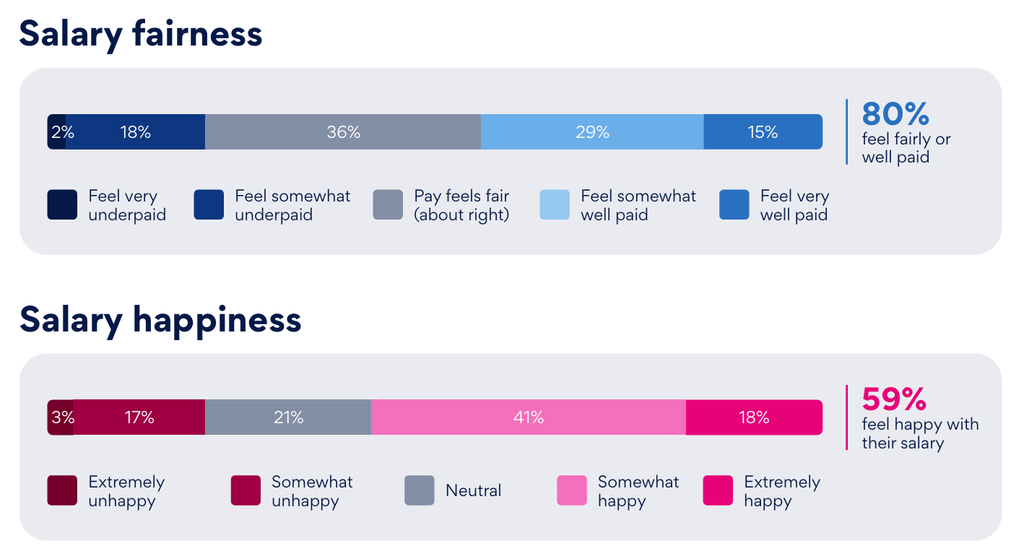
Image from Jobstreet by SEEK’s Salary Pulse: Philippines 2026 report.

That disconnect suggests workers may see their salaries as reasonable relative to their jobs or the broader market, while still finding that those salaries don’t go far enough in this economy. Among workers who described their pay as simply “fair” or “about right,” only 44% were actually satisfied with it.

Jobstreet said workers also judge compensation against their workload, contribution, and whether their income can support the life they want outside work.

“The gap between fair pay and salary satisfaction shows that compensation is only one part of the employee experience,” Jobstreet Philippines managing director Dannah Majarocon said. She said employers should pair competitive salaries with recognition, clearer career paths, and more open conversations about growth.

Across generations, Millennials were the unhappiest with their pay. Their salary happiness rate stood at 54%, lower than Gen Z’s 61% and Gen X’s 60%. Around 54% of Millenials said their salaries were below what they needed for their standard of living, while 27% reported receiving a meager pay increase (less than 2% over the past year). Millennials were also the generation most open to taking on side hustles to close the gap.

There were sharp differences by industry as well. Technology and construction workers were the most likely to say they were well paid, at 54% and 50%, respectively, and also posted the highest salary happiness rates at 69% and 65%. Industrial workers were at the other end, with 58% saying their salaries fell below their cost-of-living needs.
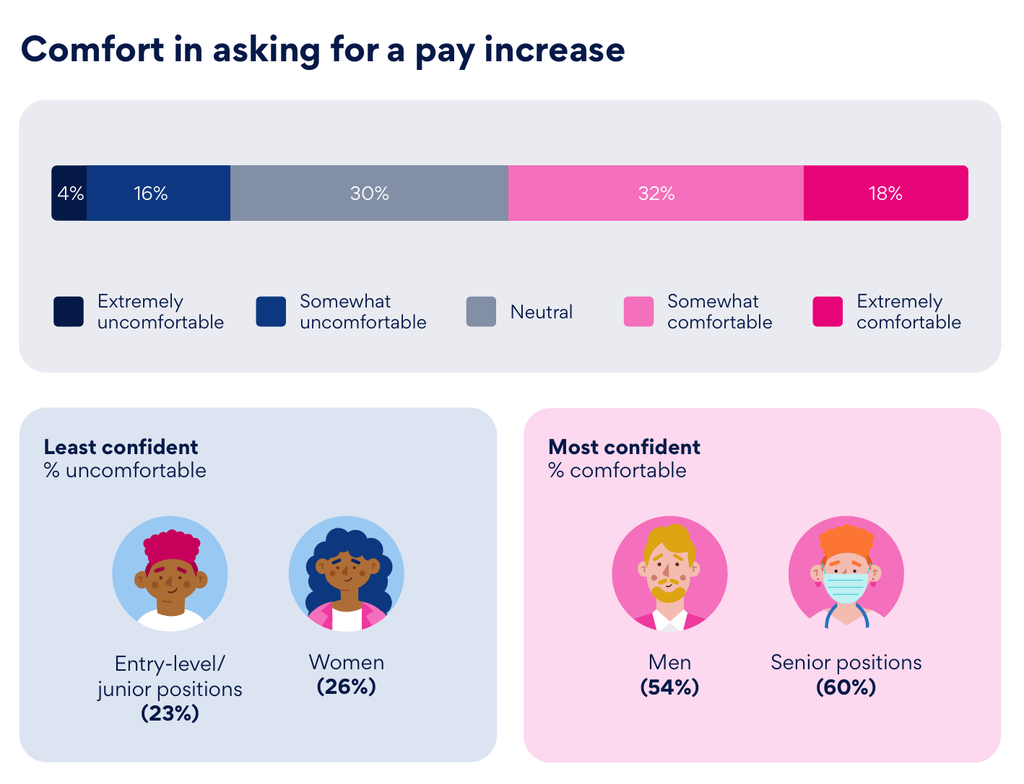
Image from Jobstreet by SEEK’s Salary Pulse: Philippines 2026 report.

Employers have a reason to pay attention to salary satisfaction too. Workers happy with their salaries were 2.2 times more likely to say they were motivated to go above and beyond at work. Those unhappy with their salaries were 2.9 times more likely to be thinking about changing jobs.

The findings came from an online survey of 1,009 employed Filipinos aged 18 to 64 conducted in February 2026, with respondents recruited to be nationally representative by age and gender. – Rappler.com


Similar Posts

  • |

    South Korea’s Bankware Global secures Rs1.57 billion Pakistan Post Contract

    ISLAMABAD: South Korean core banking and financial technology company Bankware Global has secured a contract worth 7.98 billion South Korean won, equivalent to approximately Rs1.57 billion, to develop a banking and financial services system and provide software for Pakistan Post Office Department (PPOD). The Seoul-based technology company disclosed the development in a notice submitted to the Korea Exchange on Tuesday, marking a significant expansion of its presence in Pakistan’s financial technology and public-sector digitalisation market. According to the company, the project will be implemented from August 7, 2026, to March 6, 2028. The value of the contract represents around 12.6% of Bankware Global’s total sales recorded during 2025. The company said the project would be executed through a joint venture, with the arrangement covering the development and supply of the required technology infrastructure and software solutions for the Pakistan Post Office Department. Bankware Global also outlined the payment mechanism for the project. Under the agreed terms, 20% of the contract amount will be paid upfront, while the remaining 80% will be released in phases. Subsequent payments will be linked to project implementation, sector-wise inspection and the commencement of operations and maintenance services. Pakistan Post seeks digital transformation The contract comes as Pakistan Post continues efforts to modernise its operations and introduce greater use of digital technologies across its extensive network. The Pakistan Post Office Department is one of the country’s largest public-sector service networks, with approximately 13,000 post offices operating across Pakistan. Besides traditional postal services, the department provides a range of financial and public services, including domestic and international mail, remittance facilities, utility bill collection and selected identity-related services such as CNIC renewals. With the growing demand for faster and technology-driven financial services, Pakistan Post has been seeking to upgrade its systems and integrate modern digital platforms into its operations. The introduction of a modern core banking and financial technology system is expected to support more efficient processing, improve service delivery and strengthen the department’s ability to manage financial transactions through its widespread network. Bankware Global expands international footprint Bankware Global has been operating in the financial technology sector for more than 17 years. The South Korean company specialises in core banking platforms and other technology solutions designed for financial institutions. Its portfolio includes component-based and cloud-native core banking systems, financial enterprise resource planning (ERP) solutions, card-processing platforms and software-as-a-service (SaaS) banking products. The company has supplied technology solutions to financial institutions in several Asian markets, positioning it as a regional player in the digital banking and fintech sector. The Pakistan Post project is expected to further strengthen Bankware Global’s international business portfolio while providing the company with an opportunity to participate in Pakistan’s ongoing digital transformation efforts. For Pakistan Post, the project could represent an important step toward upgrading its technological infrastructure and improving the delivery of financial and public services through its nationwide network. The contract will remain in force until March 6, 2028, with implementation and payments scheduled according to the agreed project milestones.

  • Thailand’s Second-Hand Homes Flood the Market: New Listings Surge By 34.2%

    BANGKOK – Kasikorn Research Center expects Thailand’s unsold housing inventory to surpass 610,000 units by the end of 2026. A massive 34.2% surge in second-hand home listings is driving this growth. Meanwhile, weak consumer purchasing power continues to stall overall market demand, giving buyers significant bargaining power. Thailand’s real estate market is facing a massive wave […]

  • How Thai SMEs Can Audit & Prepare Product Catalogs for Amazon Global Selling

    For Thai SMEs, this is often where the gap lies. A product catalog that performs well on local sales channels may still fall short of Amazon’s cross-border selling requirements for product identifiers, category attributes, variation structure, listing content, images, claims, compliance documents, and fulfillment data. An Amazon product catalog audit helps identify these gaps before […]

  • |

    KP cabinet approves tax exemptions for merged districts, Malakand

    PESHAWAR: The Khyber Pakhtunkhwa government has approved a package of measures aimed at providing tax relief to businesses and industries operating in the province’s merged tribal districts and Malakand Division, while also expanding welfare and education initiatives. According to Khyber Pakhtunkhwa Information Minister Shafiullah Jan, the provincial cabinet has endorsed exemptions from certain provincial taxes for service providers and industries operating in areas previously covered by the Federally Administered Tribal Areas (FATA), Provincially Administered Tribal Areas (PATA) and Malakand Division. Under the decision, service providers operating in the former FATA, PATA and Malakand areas will be exempted from provincial sales tax on services. Industries established in these regions will also receive relief from withholding sales tax. The government said the tax measures were intended to encourage investment, facilitate businesses and support economic activity in areas that have historically faced developmental and infrastructure challenges. Ehsaas Nawaz funding increased The cabinet also approved a significant increase in the financial allocation for the Ehsaas Nawaz programme. According to the information minister, the programme’s funding has been raised from Rs3 billion to Rs5 billion. The increase is expected to provide additional financial support under the government’s welfare initiatives and expand the programme’s reach among deserving segments of the population. Ashra Rahmat Lil-Aalameen programme approved The provincial cabinet also approved arrangements for observing Ashra Rahmat Lil-Aalameen (PBUH) across Khyber Pakhtunkhwa. The celebrations will formally begin from the first day of Rabi-ul-Awwal, with the cabinet approving a schedule for programmes to be organised across the province. The initiative is expected to include a range of activities aimed at highlighting the teachings, life and message of the Holy Prophet Muhammad (PBUH). Education sector measures Several decisions concerning education were also approved during the cabinet meeting. The provincial government sanctioned funds for schools and colleges in various districts to address educational requirements and improve facilities. The cabinet also approved a system for providing textbooks according to the semester system up to Grade 5. In another major education-related decision, the cabinet approved the provision of 100 percent free textbooks for students from Grade 9 to Grade 12. The measures are aimed at reducing the financial burden on students and their families while improving access to educational resources, particularly for students enrolled in government institutions. Public-private partnership legislation The cabinet further approved the Khyber Pakhtunkhwa Public Private Partnership Authority Bill 2026 for enactment. The proposed legislation is intended to establish a formal framework for public-private partnerships in the province and facilitate greater participation of the private sector in development projects. The government believes stronger public-private cooperation can help mobilise investment, improve service delivery and accelerate infrastructure development across Khyber Pakhtunkhwa.

Leave a Reply

Your email address will not be published. Required fields are marked *