trumpimposesforced labortariffs trading
| | | | |

Trump imposes forced labor tariffs on 60 trading partners, including Philippines

WASHINGTON, USA – The Trump administration on Friday, July 24 imposed new tariffs of 10% and 12.5% on goods from 60 trading partners, including Europe, China, the Philippines, over allegations of lax enforcement of forced labor bans, just as a temporary 10% global tariff expired.

The move is the White House’s latest effort to restore President Donald Trump’s vision of a near-global tariff after the US Supreme Court in February struck down his “reciprocal” duties of 10% to 50% imposed under a national emergencies law to try to shrink the US trade deficit.

Trump imposes forced labor tariffs on 60 trading partners, including Philippines

New tariffs had been expected, but trade partners around the world joined in strongly disputing the justification for them. Some, however, noted they would make little difference to current levies. There was little early reaction on financial markets more focused on the Middle East conflict.

In a statement on Friday, the Philippine Trade and Industry Secretary Cristina Roque said it takes note of the unilateral move, and that it would “continue to engage with the US.”

“We just got the news that we were imposed a 12.5% tariff and this will supposedly start already after July 24. Just like all other [Trump tariff] impositions before, we will have to abide by it, but the negotiations will continue as we always do,” Roque said in an interview on ANC’s Market Edge on Friday. 

“That has always been our stand, to get a lower tariff,” she added, when asked whether the Philippines will seek to get a better deal.

“We note that this is based on the alleged failure to impose and effectively enforce prohibition of imports made by forced labor,” Roque said in her statement.

“The Philippines will continue to engage with the US to emphasize that the country has a strong policy against forced labor consistent with various International Labor Organizations (ILO) Conventions. In fact, just yesterday we signed a Joint Administrative Order with Department of Finance and Department of Labor and Employment to provide institutional mechanism to address the issue of forced labor.”

Sought for comment, Philippine Ambassador to the US Jose Manuel “Babe” Romualdez said the Trump administration’s move was subject to talks.

“We can still negotiate,” he said in a message to Rappler, when asked if there was still wiggle room on the issue.

The Department of Foreign Affairs issued a statement, Saturday, July 25, rejecting the allegations of forced labor:

“The Philippines has long demonstrated that its locally produced goods, including
those exported to the US, do not rely on forced labor.

The Philippines already has existing laws prohibiting forced labor and continues to strengthen its legal and institutional framework through the development of appropriate mechanisms to effectively investigate and address goods allegedly produced wholly or in part through forced labor.”

The DFA also said that they “will continue to engage with US counterparts on this matter.”

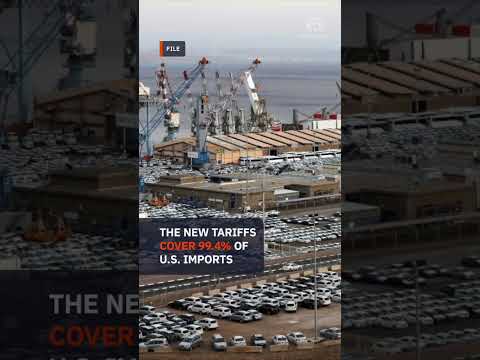
The new tariffs, announced in a Federal Register notice, cover 99.4% of US imports, but include numerous product exemptions, such as oil and gas, fertilizer and certain food items.

“The United States has had a forced labor import ban for nearly a century, and rigorously enforces it. It’s well past time for our trading partners to do the same,” US Trade Representative Jamieson Greer said in a statement.

“Today’s action will begin to correct what is both a human rights abuse and distortive trade practice to improve the welfare of workers everywhere.”

Imposed under Section 301 of the Trade Act of 1974, the new duties allow the administration to maintain a tariff floor on virtually all US imports despite the Supreme Court setback. The tariffs are also likely to face less legal risk as Section 301 has survived prior court challenges.

Trump’s temporary 10% global tariff expired at 12:01 a.m. EDT on Friday (0401 GMT) after 150 days. The new duties took effect at that exact same moment, with goods in transit exempted until 12:01 am EDT on July 28.

The US imposed a 10% duty on goods of Argentina, Bangladesh, Britain, Cambodia, Canada, Ecuador, El Salvador, Guatemala, Honduras, India, Indonesia, Jordan, Malaysia, Mexico, Pakistan, Sri Lanka, Trinidad and Tobago.

The European Union, Taiwan, Japan, South Korea and Switzerland were assigned rates that, combined with pre-existing most-favored-nation tariff rates, totaled 10% or 12.5%.

The other 38 countries were assigned a 12.5% rate. These include the Philippines, as well as Vietnam, which issued a new decree this week that sets out more detailed rules banning imports of goods made with forced labor, and China — accused by the US of detaining Uyghur minorities in work camps, which Beijing denies.

Greer previously pledged that for countries with trade deals with Washington capping US tariff rates, the new forced labor duties would not push them above those caps — a point which the EU noted in its response.

“The EU notes positively the fact that this outcome is in line with the US tariff commitments agreed under the EU-US Joint Statement,” a European Commission spokesperson said, adding it provided “positive momentum” to continue the work on exploring further tariff exemptions and deepening cooperation.

While disputing the allegations underlying the forced labor investigation, the Swiss government also said the United States was adhering to past commitments on tariff ceilings, in its case of up to 12.5%.

Britain said the move would have no negative effects.

“There is no negative change to the tariff rate facing UK businesses as a result of this announcement. Our agreement with the US remains in place, and today we see an improvement to our trading terms with zero tariffs on whisky and medical technology,” a government spokesperson said.

Trump administration officials have told Chinese counterparts they intend to rebuild Trump’s second-term tariffs on Chinese goods back up to the 20% that was agreed upon in a trade truce with Chinese President Xi Jinping in November 2025 – but not exceed that level. Prior to Friday’s action, China’s tariff rate had fallen to 10%, excluding the 25% imposed during Trump’s first term on industrial goods.

Widely telegraphed move with exemptions

The action drew stronger protests from some trade partners.

Australia and Brazil described the new tariffs as unjustified and said they would seek to have them removed, while Norway said there was “no basis” for them.

Canada — hit on Monday with new Trump tariffs on $20 billion worth of goods — issued a muted response.

“We will continue engaging constructively with the United States on this matter, as well as other outstanding issues, over the coming weeks to the mutual benefit of our citizens,” said Dominic LeBlanc, Canada’s minister in charge of US trade.

Kelly Ann Shaw, a former White House trade adviser in Trump’s first term and a partner with the Akin Gump Strauss Hauer & Feld law firm, said the new tariffs tracked what had been telegraphed, although some changes had been made, including the addition of some 471 products to an exclusion list.

“I think this is more status quo in terms of the economic impact,” she said.

Many goods will be exempted from the duties, including oil and gas, fertilizer, certain foodstuffs and goods already subject to Section 232 national security tariffs, such as autos, steel, aluminum and copper, the official said. Aircraft and parts will also be exempted, along with critical minerals.

There were some winners.

The Antwerp World Diamond Centre said the restored exemption was significant news for the local diamond sector. Belgium exported $2.1 billion of polished diamonds to the United States in 2024. The exemption had lapsed after the US Supreme Court struck down Trump’s global tariffs in February. – with reports from Bea Cupin/Rappler.com

Similar Posts

  • Thailand’s E-Commerce Vendors Push Back Against High Platform Fees  

    BANGKOK – The Thai E-Commerce Association recently held a major meeting with the Trade Competition Commission of Thailand (TCCT). Online vendors also joined the talks to express their deep frustration with the industry. They raised serious concerns over unfair business practices and skyrocketing commission fees charged by major e-commerce platforms. Many small business owners are struggling […]

  • | |

    Report details Trump’s covert aircraft switc…

    President Donald Trump quietly switched planes while departing a NATO summit in Turkey last month as part of an elaborate security maneuver designed to counter a possible Iranian threat, according to a US media report. The report said Trump boarded Air Force One in full public view before being discreetly transferred to a separate military aircraft with the help of a catering truck used to shield the movement from onlookers. Journalists and some White House staff traveling with the delegation reportedly had no idea at the time that Trump had already been moved off the plane. Officials said security teams had identified a credible Iranian threat involving a possible missile strike against the aircraft. During the Ankara summit, Trump had described Iran as the country’s top target. According to the report, Trump had traveled to Turkey aboard a newer Boeing 747-8 previously donated by Qatar, but chose to depart on the older Air Force One instead, saying at the time it was “for old time’s sake.” Footage released on July 9 showed Trump boarding the presidential aircraft at Ankara airport before being secretly transferred to a smaller C-32A military jet, a modified Boeing 757 typically used to transport the vice president. Defense Secretary Pete Hegseth reportedly boarded the C-32A through a separate exterior entrance as part of the effort to keep the flight’s appearance routine. Journalists and staff who boarded Air Force One were told to lower their window shades during the departure. While in the air, Trump spoke with reporters on board and acknowledged concerns about threats from Iran, though he made no mention of the earlier switch between aircraft. Explaining why passengers had been asked to keep their windows lowered during the flight from Turkey, Trump said the flight carried added risk “because of the sleazebags we have to deal with.” A previous report had already raised questions about security risks tied to the Qatari donated jet, noting that the Secret Service had urged Trump to change planes during his return from the NATO summit. The United States has spent months upgrading the $400 million Boeing 747-8 to bring it up to presidential standards, while older Air Force One aircraft carry laser based countermeasures designed to disrupt the guidance systems of incoming missiles.

  • |

    Punjab cotton crop in satisfactory shape as rice cultivation surpasses target

    LAHORE: The cotton crop in Punjab is currently showing a generally satisfactory condition, while rice cultivation in the province has exceeded the government’s target by a significant margin, with growers sowing the crop over more than six million acres against the planned five million acres. The latest assessment was shared at a high-level meeting held in Multan on Saturday to review the progress of major standing crops, agricultural extension services and measures aimed at strengthening farming activity across Punjab. The meeting was chaired by Additional Chief Secretary Punjab Iftikhar Ali Sahoo and brought together senior officials from the Agriculture and Irrigation departments, representatives of the farming community and experts from the agricultural sector. Among those attending were Muhammad Nawaz Sharif University of Agriculture Vice Chancellor Professor Dr Asif Ali, Special Secretary Agriculture South Punjab Sarfraz Hussain Magsi, Agriculture Department Directors General Abdul Hameed, Naveed Asmat Kahloon, Dr Aamir Rasool and Dr Sajid-ur-Rehman, as well as Kissan Ittehad President Khalid Mahmood Khokhar, Syed Hassan Raza and Dr Muhammad Iqbal Bandesha. Additional Secretary Task Force Shabbir Ahmed Khan, Director General Crop Reporting Dr Abdul Qayyum and Agriculture Department Consultant Dr Muhammad Anjum Ali participated in the meeting through a video link. Officials briefed the meeting on the condition of major crops and the progress of field-level initiatives designed to assist farmers. Cotton remained a major focus of the discussion because of its importance to Pakistan’s textile-based economy and its contribution to agricultural incomes. The participants were informed that the cotton crop across Punjab was in a satisfactory condition. However, officials stressed the need for continued field monitoring and timely technical support to protect the crop from potential threats during its critical growth stages. Cotton is considered one of Pakistan’s most important cash crops and serves as a major source of raw material for the country’s textile industry. Its performance has a direct bearing on farmers, ginners, textile manufacturers and export-oriented businesses. In recent years, cotton production has faced challenges from changing weather patterns, pest attacks, input costs and competition from alternative crops. Sahoo emphasised that the government was giving priority to agricultural development and the economic well-being of farmers. He directed agriculture officials and field formations to maintain regular contact with growers and ensure that technical advice reached farmers in a timely manner. He said the strategy prepared for the revival and strengthening of cotton cultivation should be implemented in letter and spirit. Officials were also asked to remain active in the field and assist growers in dealing with crop-related issues. Highlighting cotton’s wider economic significance, the additional chief secretary said the country’s economy and textile sector could not be viewed separately from the performance of the cotton crop. He stressed the need for coordinated efforts to improve productivity and strengthen the position of cotton growers. The meeting also reviewed the progress of rice cultivation. According to the officials, rice had already been planted over more than six million acres in Punjab, exceeding the season’s target of five million acres. Sahoo directed agricultural authorities to intensify technical guidance for rice growers, particularly to help them improve productivity, maintain crop quality and adopt better farming practices. He called for greater involvement of regional agricultural forums and professional experts in addressing issues faced by farmers at the local level. Such platforms, he said, should use their technical expertise to help improve agricultural performance and provide practical solutions to growers. The additional chief secretary also appreciated the efforts of Agriculture Department field teams for their role in supporting farmers and monitoring crop conditions across the province. Later, Sahoo visited the Model Agriculture Mall in Multan to inspect arrangements for the provision of agricultural inputs to farmers. During the visit, he reviewed the availability of fertilisers and other essential inputs and sought information from officials regarding stocks and farmer demand. He directed the relevant authorities to ensure uninterrupted availability of fertiliser at the facility so that farmers did not face shortages during the ongoing crop season. Officials said crop conditions would continue to be monitored closely in the coming weeks. With rice cultivation entering the final stages of the transplantation period and cotton moving into an important phase of its growth cycle, timely field intervention and availability of agricultural inputs would remain crucial to determining overall crop performance. The government is expected to maintain its focus on farmer guidance, crop monitoring and input availability as the province moves further into the agricultural season.

Leave a Reply

Your email address will not be published. Required fields are marked *