
Top Story

  • | | |

    Hezbollah slams Israel talks as ‘humiliation’

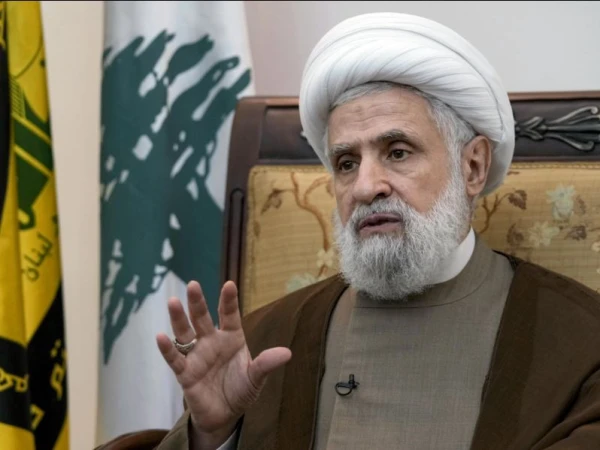
    Hezbollah Secretary-General Sheikh Naim Qassem has strongly criticized direct negotiations between Lebanon and Israel, describing the dialogue as a series of “concessions” that have failed to serve Lebanon’s national interests. Speaking during an Arbaeen commemoration in the Lebanese city of Baalbek, Qassem said the ongoing negotiations had brought “humiliation and repeated compromises” rather than meaningful progress. He urged Lebanese leaders to avoid external pressure and instead pursue policies that safeguard the country’s sovereignty. The Hezbollah chief also criticized President Joseph Aoun, claiming the president had failed to play a neutral and unifying role during the current political situation. Qassem argued that Lebanon’s leadership should engage in dialogue with domestic political forces rather than making concessions to achieve foreign policy objectives. He further claimed that Israeli attacks were halted only after a memorandum linked to efforts between Iran and the United States helped reduce tensions. According to Qassem, Lebanon’s political leadership would not achieve lasting stability by following policies influenced by outside powers. Meanwhile, Iranian President Masoud Pezeshkian reiterated that Iran remains committed to defending its territorial integrity but has no intention of expanding the ongoing conflict beyond its borders. Addressing a gathering in Tehran, Pezeshkian said Iran would continue protecting its national security while focusing on strengthening internal unity. He stressed that a united society would leave no opportunity for foreign interference or attempts to create divisions within the country. The latest statements come as uncertainty continues over possible diplomatic contacts between Iran and the United States. US President Donald Trump recently said discussions with Tehran were underway and described them as a final opportunity to reach an agreement. However, Iranian officials denied that any negotiations were currently taking place or that formal meetings had been scheduled. The conflicting statements have added to uncertainty over future diplomatic efforts to ease regional tensions. The regional situation has also affected global energy markets. Saudi energy giant Aramco reported a sharp rise in second-quarter earnings, saying higher oil prices and supply disruptions linked to the regional conflict significantly boosted its financial performance. The company said it maintained production despite challenging conditions across the region.

  • | | | |

    Iranian president rejects resignation rumours

    TEHRAN: Iranian President Masoud Pezeshkian has firmly denied reports claiming he had submitted his resignation, saying he remains fully committed to leading the country despite ongoing regional tensions and recent military escalation involving the United States. Speaking in a televised address, Pezeshkian dismissed speculation about stepping down, stating that he would publicly announce such a decision if it were ever made. He emphasized that he has no intention of resigning and will continue carrying out his responsibilities. The Iranian president also rejected reports suggesting differences with Mojtaba Khamenei and the country’s armed forces. He said the government, military leadership and state institutions were working in close coordination and remained united on national issues. His remarks came after opposition-linked media claimed that he had submitted his resignation several times amid growing political and security challenges. Iranian officials have not confirmed those reports. Meanwhile, diplomatic efforts to ease tensions between Lebanon and Israel continued as the two sides launched the seventh round of direct negotiations in Rome under United States sponsorship. According to Lebanese media reports, delegations from both countries are discussing the implementation of a US-backed framework agreement reached in June. The agreement outlines a gradual Israeli withdrawal from occupied Lebanese territory in exchange for the deployment of the Lebanese army and the disarmament of armed groups operating in those areas. The latest negotiations follow six previous rounds of talks aimed at reducing border tensions and advancing the implementation of the agreement. Separately, a report published by The New York Times claimed that Iran and Oman are close to reaching an arrangement to restore normal commercial shipping through the Strait of Hormuz, one of the world’s most important energy transit routes. According to the report, the proposed arrangement would establish separate shipping channels for vessels entering and leaving the Gulf. Iranian officials reportedly said the plan would include a service fee to cover environmental protection, maritime security and operational costs, with revenue shared between Iran and Oman.

  • | | | |

    Hezbollah signals major u-turn, seeks talks with S…

    BEIRUT/DAMASCUS: In what analysts are describing as a significant policy shift, Hezbollah Secretary-General Naim Qassem has expressed readiness to meet Syria’s new leadership, signaling a potential reset in relations after years of political uncertainty following the fall of former president Bashar al-Assad. Speaking during a televised address, Qassem said Hezbollah seeks “positive, brotherly and cooperative” ties with Syria and has no objection to holding an official meeting with the country’s current leadership if both sides consider the timing appropriate. He added that there were no barriers to public engagement once mutual conditions were met. The remarks mark the first time Hezbollah’s chief has openly endorsed the possibility of direct contact with Syria’s post-Assad leadership, a move that could reshape political dynamics across the region. For years, Hezbollah played a key role in supporting Assad’s government during Syria’s prolonged civil war. Throughout the conflict, Syrian territory served as a vital corridor for the movement of weapons and logistical supplies from Iran to Lebanon, making Damascus a strategic partner for the Iran-backed Lebanese group. However, the regional landscape changed dramatically after Syria’s new government assumed power in December 2024. The political transition created uncertainty over the future of relations between Damascus and Hezbollah, with observers questioning whether the alliance forged during the civil war would survive under the country’s new leadership. Political analysts believe Qassem’s latest comments indicate Hezbollah is adapting to the changing realities of the Middle East. By signaling openness to dialogue, the group appears to be seeking a pragmatic relationship with Syria’s new rulers while protecting its broader regional interests. Experts say any formal meeting between Hezbollah and Syrian officials would carry implications extending beyond the two neighbors. Such engagement could influence Iran’s regional strategy, Lebanon’s internal political landscape, and the broader balance of power in the Middle East. While no timetable for talks has been announced, Qassem’s statement is widely viewed as an important diplomatic opening, suggesting that former rivals and long-time allies alike are reassessing their positions as the region enters a new political era.

  • | | | |

    US, Iran and Oman near interim Strait of Hormuz ag…

    WASHINGTON: A breakthrough agreement aimed at reopening the strategically vital Strait of Hormuz could be announced as early as Wednesday, with the United States, Iran and Oman reportedly nearing a temporary deal designed to restore maritime traffic and reinforce the fragile ceasefire between Washington and Tehran. According to a report by the US news website Axios, citing two regional sources and a US official, negotiations have reached their final stage after weeks of intensive diplomacy. The agreement is expected to provide a 60-day interim framework that could later be extended if both sides remain committed to its terms. Under the proposed arrangement, ships entering the Persian Gulf would travel through the northern shipping lane under Iranian oversight, while vessels leaving for the Arabian Sea would use the southern lane within Omani waters, coordinated in consultation with Iran. During the interim period, no tolls or transit fees would be imposed on commercial shipping. The deal also includes a commitment to clear naval mines from the central navigation channel within 30 days. Once the route is declared safe, it is expected to become the primary passage for two-way maritime traffic under a longer-term management framework jointly coordinated by Iran and Oman. The reported agreement would address some of Iran’s longstanding demands for a greater role in managing navigation through the strategic waterway, one of the world’s most important energy corridors through which a significant share of global oil and liquefied natural gas exports passes. Regional diplomatic efforts played a crucial role in bringing the parties closer to an understanding. Sources familiar with the talks said officials from Qatar, Pakistan and Saudi Arabia supported mediation efforts alongside Oman, while the White House remained actively involved throughout the negotiations. The report added that US envoy Steve Witkoff, Iranian Foreign Minister Abbas Araghchi, and Omani Foreign Minister Badr Albusaidi held several telephone discussions in recent days to finalize outstanding issues. Regional sources said Araghchi had agreed to the proposal in principle over the weekend, pending approval from Iran’s senior leadership and the Supreme National Security Council. A US official and another regional source indicated that Tehran completed its approval process on Tuesday, clearing the way for a formal announcement. If confirmed, the agreement could ease tensions in the Gulf, reduce risks to global energy supplies, and revive broader diplomatic efforts, including discussions on Iran’s nuclear programme and long-term regional stability.

  • | | | |

    Trump says Hormuz reopening near, warns Iran of consequences

    US President Donald Trump has said the Strait of Hormuz could reopen “very soon” as diplomatic efforts with Iran continue, while warning that Tehran would face a strong military response if negotiations fail. Speaking during an interview with Fox News, Trump expressed optimism about the ongoing talks, saying discussions had made significant progress. He claimed Iranian representatives had requested negotiations at a time when the United States was preparing for a large-scale military operation. According to Trump, Washington agreed to engage in dialogue after receiving signals from Tehran that it was willing to negotiate. He stressed that the United States remains committed to preventing Iran from acquiring nuclear weapons and said abandoning the talks would have serious consequences. The US president said negotiators spent the entire day in discussions and described the atmosphere as positive. He added that a successful agreement could help restore normal shipping through the Strait of Hormuz, one of the world’s most important energy routes. Trump also suggested that reopening the strategic waterway would ease pressure on global energy markets. He said lower oil prices could eventually translate into cheaper fuel costs for consumers and urged energy companies to reduce gasoline prices if market conditions improve. Speaking later to reporters in California, Trump said developments with Iran were moving in the right direction and indicated that greater clarity on the negotiations could emerge within the next 48 hours. Diplomatic efforts are reportedly being supported by regional mediators, including Oman and Qatar. Discussions are focused on restoring safe maritime navigation through the Strait of Hormuz while reducing tensions between Washington and Tehran. However, Iranian officials have maintained that progress depends on an end to US threats and continued respect for Iran’s sovereignty. The Strait of Hormuz is a vital global shipping lane through which a significant share of the world’s oil and liquefied natural gas exports passes. Any disruption to traffic through the waterway has immediate consequences for international energy markets and global trade. Financial markets reacted positively to reports of progress in the negotiations. Oil prices declined while Asian stock markets advanced on expectations that a diplomatic breakthrough could reduce regional tensions and restore uninterrupted shipping. Meanwhile, reports from Israel indicated growing concern over Washington’s diplomatic approach. Some Israeli officials reportedly believe the United States is prioritising a negotiated settlement with Iran, although no official Israeli government statement has confirmed those claims.

  • | | | |

    Iran warns US forces face regional expulsion

    Senior Iranian officials on Wednesday issued fresh warnings against the United States, declaring that American forces could eventually be forced out of the Middle East while linking any future reopening of the Strait of Hormuz to changes in Washington’s policies. Ebrahim Azizi, chairman of the Iranian parliament’s National Security Committee, said the removal of US military forces from the region and from countries hosting American bases was only a matter of time. In a post on X, he claimed the US would eventually have to focus its resources on securing its own territory instead of maintaining military installations abroad. The remarks came as Iranian media reported that ongoing discussions between Tehran and Oman over future navigation arrangements in the Strait of Hormuz would not automatically lead to the reopening of the strategic shipping route. According to Iranian state media, negotiations are being conducted solely between Iran and Oman, with officials insisting that the process is independent of the United States. Iranian sources maintained that even if an agreement is reached with Muscat, the waterway will remain closed unless Washington changes what Tehran describes as its hostile policies and interference. The Strait of Hormuz is one of the world’s most critical energy corridors, carrying a significant share of global oil shipments. Any disruption to traffic through the strait has the potential to affect international energy markets and regional security. Meanwhile, the United Nations expressed concern over a sharp increase in executions in Iran. UN High Commissioner for Human Rights Volker Türk said at least 56 people had been executed on national security-related charges since March, including dozens connected to protest-related cases. He warned that the growing use of capital punishment appeared aimed at creating fear within society. Regional tensions also escalated after Yemen’s Houthi movement claimed responsibility for a missile attack on the Saudi oil tanker Wafaa in the northern Red Sea. The group said the vessel was struck by ballistic missiles as part of its campaign targeting Saudi shipping. Houthi spokesman Yahya Saree claimed the movement had targeted eight Saudi oil tankers since launching its maritime blockade in late July and said dozens of other vessels had either been prevented from passing or forced to change course. Saudi authorities had not commented on the claims at the time of reporting. Separately, Iranian lawmaker Esmail Kowsari criticised US President Donald Trump’s approach toward Tehran, describing Washington’s negotiating strategy as inconsistent and unreliable. He accused the US administration of issuing conflicting statements regarding the Strait of Hormuz and Iran’s regional position. Iranian officials also blamed what they described as continued US pressure and military threats for slowing negotiations with Oman over navigation in the Strait of Hormuz, insisting that Tehran would not conclude any agreement under external pressure.