Top Story

  • | | | | |

    Pakistan played key role in easing US-Iran tensions: analysis

    Pakistan played an important mediating role in efforts to ease tensions between the United States and Iran and helped bring the two sides to the negotiating table, according to an analysis by South Asian Voices, a policy platform focusing on security, political and economic developments in South Asia. The analysis said Pakistan stepped in at a critical stage when tensions between Washington and Tehran had escalated sharply and both sides had suffered significant losses. According to the assessment, Islamabad successfully facilitated communication between the United States and Iran and helped bring a global power and a major regional power into direct negotiations. The report described Pakistan’s diplomatic engagement as significant, arguing that Islamabad managed to perform a role that several major powers, including China, France, Germany, India and the United Kingdom, had been unable to achieve. The analysis further noted that talks between American and Iranian representatives in Islamabad continued for more than 20 hours. It described the discussions as the highest-level direct contact between the United States and Iran since the 1979 Iranian Revolution. Although Washington and Tehran subsequently accused each other of violating the terms of a ceasefire, the two sides did not completely abandon the diplomatic process, according to the analysis. The report therefore argued that it would be inaccurate to hold the mediator responsible for the failure of the process, stressing that Pakistan’s role should instead be viewed in the context of its efforts to keep communication channels open between the two sides. The assessment highlights Islamabad’s growing diplomatic role in attempts to reduce tensions between Washington and Tehran and underscores Pakistan’s efforts to facilitate dialogue during a period of heightened regional instability.

  • | | | |

    Trump furious over US weapons shortages as Iran te…

    WASHINGTON: US President Donald Trump has grown increasingly angry over reports that the country’s stockpile of key munitions has been significantly depleted during the conflict with Iran, fearing the disclosures could undermine Washington’s leverage as he pushes Tehran toward a deal. Senior US officials told CNN that the issue became a major point of discussion during a Cabinet meeting at Camp David last week. Trump was reportedly frustrated not only by the shortages but by the publication of details about US weapons inventories at a sensitive moment in the conflict. Several officials said Trump had known for months that certain munitions were in limited supply and was not surprised by the underlying situation. His concern, they said, was that public reporting could weaken the image of US military strength while he threatens further action against Iran. Trump sought to push back publicly, saying the United States has “massive amounts” of munitions and that weapons production is expanding. He also threatened severe punishment for officials responsible for leaking classified or sensitive information. However, Trump acknowledged in remarks at the White House that some advanced weapons are in tighter supply, while insisting there is a virtually unlimited supply of less sophisticated weaponry. White House officials said Trump has not blamed Defence Secretary Pete Hegseth for the situation and continues to express confidence in his leadership. Instead, the president has directed the Justice Department to investigate what he described as “treasonous” leaks from within his administration. The concerns have intensified after reports indicated that US forces have used a large share of their air-defence interceptors since the conflict began. CNN reported that the military had consumed nearly four-fifths of its pre-war THAAD missile inventory and about half of its Patriot interceptors. The reported shortages have also alarmed US partners in the Gulf, many of whom rely heavily on American air-defence systems. Regional officials have warned that reduced US stocks could make it harder to defend against potential Iranian missile and drone attacks if Washington launches further strikes. Iran has reportedly warned Gulf countries that renewed US attacks could trigger retaliation against energy infrastructure and desalination facilities across the region. Trump has spoken with leaders in Qatar and Saudi Arabia as his administration weighs its next steps. Senior military advisers have repeatedly raised concerns about dwindling stocks during discussions over potential escalation. The issue predates the current crisis. US military leaders had warned before the war that a prolonged campaign could strain American weapons supplies, particularly after years of support for Israel and Ukraine. Trump has blamed the previous administration for contributing to depleted stockpiles through weapons deliveries to Ukraine, while also acknowledging that the United States needs greater reserves. The administration has moved to expand production, including invoking the Defense Production Act and meeting with major defence contractors such as Lockheed Martin. However, officials acknowledge that expanding weapons manufacturing capacity could take years, meaning increased production may not immediately solve the shortage.

  • | | | |

    Attack on one, defence of all: Makkah pact

    Saudi Arabia, Türkiye and Pakistan have signed a joint defence agreement aimed at strengthening collective security and defence capabilities among the three countries. According to the Foreign Office spokesperson, the agreement was signed during a trilateral joint defence summit held in Makkah. Saudi Crown Prince and Prime Minister Mohammed bin Salman, Prime Minister Shehbaz Sharif and Turkish President Recep Tayyip Erdogan signed the agreement. Under the pact, an armed attack against any one of the three countries will be treated as an attack against all three. The Foreign Office said the agreement is aimed at strengthening the three countries’ collective defence capabilities against any act of aggression. The development came after Prime Minister Shehbaz Sharif met Saudi Crown Prince Mohammed bin Salman in Makkah. Field Marshal Syed Asim Munir and other members of the Pakistani delegation also attended the meeting. The leaders discussed the regional situation and ways to further strengthen the strategic partnership between Pakistan and Saudi Arabia. Earlier, a trilateral summit involving Saudi Arabia, Pakistan and Türkiye was scheduled to take place in Jeddah, with expectations of important developments concerning regional peace and security. According to Turkish media reports, the three countries were set to sign an agreement concerning regional security during the summit. Turkish President Recep Tayyip Erdogan also arrived in Saudi Arabia to participate in the high-level meeting. Prime Minister Shehbaz Sharif and Field Marshal Syed Asim Munir had arrived in Saudi Arabia a day earlier at the invitation of the Saudi Crown Prince. During their visit, the Pakistani delegation also performed Umrah and offered prayers at the Holy Kaaba.

  • | | | | |

    Trump claims Iran war could end soon, Hormuz to re…

    WASHINGTON: US President Donald Trump has claimed that the war with Iran could come to an end soon, while negotiations are reportedly continuing over the future of the conflict and the reopening of the strategically vital Strait of Hormuz. Trump said the United States, Iran and Oman were close to reaching a temporary agreement aimed at reopening the key maritime passage. His remarks offered a potentially hopeful signal after weeks of heightened tensions and disruption in the region. The US president also dismissed reports that the conflict had significantly depleted American weapons stocks, insisting there was no truth to such claims. Trump further rejected reports of disagreements or growing tensions with US Defence Secretary Pete Hegseth, playing down speculation about friction within his administration over the handling of the war. However, the picture on the diplomatic front remains uncertain. Arab media reports have claimed that efforts to broker a ceasefire between the United States, Israel and Iran have stalled, highlighting the difficulties surrounding a possible breakthrough. At the same time, Iranian authorities have reportedly tightened internal security measures across the country, particularly in Tehran, as uncertainty over the conflict continues. The Strait of Hormuz remains central to the crisis because of its importance to global energy supplies and international shipping. Any agreement that restores normal traffic through the waterway could ease pressure on regional markets and provide a significant boost to wider diplomatic efforts. For now, Trump’s prediction of a quick end to the war contrasts with reports suggesting that major obstacles still remain before a lasting ceasefire can be secured.

  • | | |

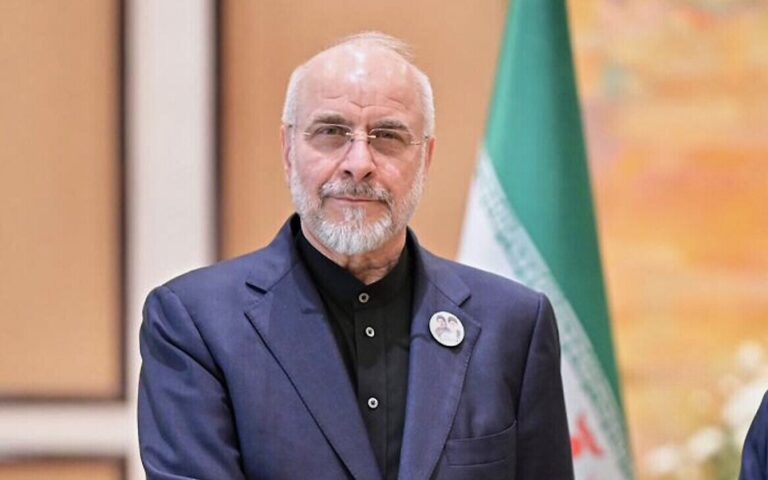
    ‘No more theatre’: Ghalibaf challenges Trump over talks

    TEHRAN: Iran’s Parliament Speaker and chief negotiator Mohammad Bagher Ghalibaf has delivered a blunt message to US President Donald Trump, calling for facts, commitments and serious diplomacy instead of what he described as political theatre. Reacting to Trump’s remarks suggesting that a major attack could be imminent, Ghalibaf said Iran was still prepared to negotiate, but expected the United States to demonstrate seriousness at the negotiating table. “Accept the facts and fulfil your promises,” Ghalibaf said, stressing that there was no need for further diplomatic drama and that responsible conduct was required. His comments come amid heightened tensions between Tehran and Washington, with negotiations remaining a key focus even as both sides continue to exchange strong warnings. Ghalibaf has emerged as a central figure in Iran’s diplomatic efforts and has been involved in negotiations with the United States. He was also re-elected as speaker of Iran’s parliament in May, securing 235 votes from 271 lawmakers who cast ballots. Ghalibaf accused Washington of repeatedly using pressure tactics, including threats, broken promises and what he characterized as false reports. According to him, such an approach has failed to achieve its intended purpose. The Iranian official’s message combines a firm warning with an opening for dialogue: Tehran, he suggested, is willing to talk, but not under pressure. The latest remarks could add another layer of uncertainty to already fragile US-Iran diplomacy, particularly as both sides weigh whether negotiations can prevent another escalation.

  • | | | |

    Rome talks continue despite fresh Israel-Lebanon c…

    JERUSALEM: Fresh violence erupted along the Israel-Lebanon border on Wednesday after two Israeli soldiers were killed during a military operation in southern Lebanon, prompting retaliatory Israeli airstrikes even as diplomatic talks aimed at reducing tensions continued in Rome. The latest escalation comes despite a US-brokered security arrangement reached in June, which was intended to ease hostilities between Israel and Lebanon following months of cross-border clashes. According to Israeli authorities, the two soldiers were killed and four others wounded when an explosion ripped through a building they had entered during a security sweep inside southern Lebanon. Israeli Army Radio, citing a security source, reported that investigators were still trying to determine whether the explosive device had been planted before or after the ceasefire agreement. Soon after the incident, the Israeli military described the explosion as a “blatant ceasefire violation” and launched a series of retaliatory strikes targeting areas in southern Lebanon. Lebanese officials said one civilian was killed and at least 12 others were injured after Israeli strikes hit the town of Tibnin, around 25 kilometres from Mansouri. Before the attack, the Israeli military issued an evacuation warning for residents in the area—the first such online warning directed at Lebanon in more than a month. However, Israel’s tone appeared to soften a day later. In a statement mourning the soldiers, Defence Minister Israel Katz did not directly accuse Hezbollah or refer to a ceasefire violation, signalling that Israeli authorities may be seeking to avoid a wider military escalation. Israel continues to maintain a buffer zone inside southern Lebanon, saying its forces are operating there to eliminate threats posed by the Iran-backed Hezbollah movement and to enhance border security. Meanwhile, diplomatic efforts remain underway in Rome, where Israeli and Lebanese officials are participating in talks that began on Tuesday and are scheduled to continue through Thursday. The negotiations are focused on strengthening the June security arrangement and preventing further violence along the volatile frontier. The renewed bloodshed underscores the fragile nature of the ceasefire and highlights the challenges facing mediators seeking lasting stability in the region. While both sides have expressed interest in preventing a broader conflict, sporadic violence continues to threaten the progress made through recent diplomatic initiatives. With negotiations still in progress and tensions remaining high, regional observers fear that any further incidents along the border could quickly undermine the fragile peace and derail ongoing efforts to maintain security between the neighbouring countries.

  • | | | |

    Iran, Oman move closer to Hormuz shipping agreement

    TEHRAN: Iran and Oman have reached a preliminary understanding on the geographic coordinates of a proposed shipping route through the Strait of Hormuz, marking progress in negotiations aimed at regulating navigation through one of the world’s most strategically important waterways. Iranian Foreign Ministry spokesperson Esmaeil Baghaei said discussions between Tehran and Muscat had advanced positively and that both sides had agreed on the geographical framework of the proposed route. He added that a joint statement outlining the key points of the understanding was in its final stages and could be issued if the process is not disrupted by external factors. Despite the progress, Baghaei emphasised that the agreement alone would not automatically guarantee security in the Strait of Hormuz. He noted that ensuring stability in the region would require broader cooperation and continued diplomatic engagement. According to regional officials familiar with the negotiations, the proposed arrangement would give Iran a greater role in overseeing vessels entering the Gulf through the strategic waterway. However, several technical and operational issues still need to be resolved before any final agreement can be implemented. The Strait of Hormuz remains one of the world’s busiest energy transit routes, carrying a significant share of global oil and gas exports. Any changes to shipping arrangements in the area are closely watched by international markets due to their potential impact on global trade and energy supplies. Officials involved in the negotiations described the talks as constructive, while indicating that further consultations would continue before a formal announcement is made. Both Iran and Oman have maintained that dialogue remains the preferred path for addressing issues related to maritime navigation and regional stability.

  • | | | |

    Trump says US-Iran talks to resume Monday

    US President Donald Trump has announced that fresh negotiations between the United States and Iran are expected to begin on Monday, saying he decided to suspend planned military action after being encouraged by signs of progress toward a possible agreement. Speaking to reporters aboard Air Force One, Trump said discussions with Tehran would resume through diplomatic channels, expressing hope that negotiations could help prevent further escalation in the region. He did not disclose the venue of the talks or identify the officials expected to participate. Earlier, Trump stated that he had delayed what he described as a large-scale military operation after receiving requests from Iran and several key US allies in the Middle East to give diplomacy another opportunity. According to him, regional partners believed a negotiated settlement was within reach and urged Washington to avoid immediate military action. Trump said Saudi Arabia, the United Arab Emirates and Qatar had all encouraged restraint, arguing that continued dialogue offered the best chance for reducing tensions. He added that discussions were expected to cover issues related to the Strait of Hormuz as well as Iran’s nuclear programme. Despite Trump’s comments, Iranian authorities have not officially confirmed the planned negotiations. Iran’s semi-official Mehr News Agency rejected claims that Tehran had requested the United States to postpone military action, describing the assertion as inaccurate. Iranian Foreign Minister Abbas Araghchi, however, said negotiations involving Oman over the future of the Strait of Hormuz were progressing toward a final stage, indicating that diplomatic contacts remain active. Trump also declined to set a deadline for reaching an agreement, saying his administration was prepared for different outcomes but preferred a peaceful resolution over military confrontation. The announcement had an immediate impact on global energy markets. Oil prices fell sharply in early Asian trading as investors reacted to the possibility of reduced tensions in the Gulf region. Brent crude and US benchmark oil both recorded notable declines following Trump’s remarks. The Strait of Hormuz remains one of the world’s most strategically important shipping routes, with roughly one-fifth of global crude oil and liquefied natural gas supplies passing through the narrow waterway. Any disruption in the area has the potential to significantly affect international energy markets.

  • | | | |

    Trump warns Iran it has a ‘last chance’ to rea…

    US President Donald Trump has warned that Iran has a final opportunity to reach an agreement with the United States, saying he postponed planned military action to allow diplomacy one last chance. Speaking to reporters at the White House, Trump said several Gulf countries had urged Washington to delay military strikes against Iran in the hope that negotiations could produce a diplomatic breakthrough. According to the US president, those requests led him to postpone military action once again. Trump stated that multiple regional governments had contacted his administration, asking that Iran be given another opportunity to negotiate. He described the current moment as Iran’s “last chance” to avoid further escalation and urged Tehran to seize the opportunity for a peaceful resolution. When asked why this latest diplomatic effort differed from previous attempts, Trump replied that he wanted to give Iran one final opportunity before what he described as “complete destruction.” However, he did not provide additional details about the conditions that could trigger military action or a specific timeline. Despite his warning, Trump expressed optimism that negotiations could move forward quickly. He said the first phase of a potential agreement would involve reopening the Strait of Hormuz to unrestricted maritime traffic by Tuesday, while the second phase would focus on ending Iran’s nuclear program. The US president acknowledged that dismantling Iran’s nuclear program would not happen immediately and would require additional time to implement. He added that both the reopening of the Strait of Hormuz and measures related to Iran’s nuclear activities were included in a memorandum of understanding reportedly reached between the two sides in June. Trump’s remarks come amid renewed diplomatic efforts surrounding the long-running dispute over Iran’s nuclear program and regional security. Tensions between Washington and Tehran have remained high despite repeated attempts to revive negotiations. Earlier in the day, Trump also announced that talks with Iran were expected to take place. However, Iran has maintained that its current discussions are being conducted through Oman rather than in direct negotiations with the United States. The differing public statements highlight the continuing uncertainty surrounding the diplomatic process. No immediate response from Iranian officials was reported following Trump’s latest comments. It also remains unclear whether a formal agreement is close or whether the two sides have narrowed their differences on key issues, including nuclear activities and regional security. Observers say the coming days could prove significant as diplomatic contacts continue and both sides weigh the possibility of further negotiations against the risk of renewed confrontation in the region.

  • | | | | |

    Israel won’t leave Gaza until Hamas disarms, Pea…

    JERUSALEM: Israeli forces will not withdraw from the Gaza Strip until Hamas is fully disarmed, according to Nikolay Mladenov, following high-level talks with Israeli Prime Minister Benjamin Netanyahu. The remarks came after a meeting in West Jerusalem between Mladenov, who heads the US-backed Board of Peace, and Netanyahu, where the two sides discussed the future of Gaza, regional security and the implementation of a proposed peace framework. According to a statement issued by the Board of Peace, reports suggesting that Israel had agreed to withdraw from Gaza before Hamas is disarmed are inaccurate. The organization stressed that the Israeli military’s withdrawal would only take place once Hamas had surrendered all of its weapons, including both light and heavy arms, and dismantled its network of underground tunnels. “The objective is clear and leaves no room for ambiguity,” the Board of Peace said in a statement shared on social media. It added that the long-term goal is the complete removal of weapons from the Gaza Strip and the transition toward civilian governance capable of maintaining stability and security. The meeting also highlighted concerns raised by Israeli political leaders regarding the peace initiative recently announced by the US president. While details of the proposal have not been fully disclosed, Israeli officials reportedly voiced reservations about aspects of the plan during discussions with Mladenov. Meanwhile, Hamas rejected the latest position, insisting that implementation of any agreement would remain impossible unless Israel fulfills its own obligations under the proposed framework. The group argued that both parties must comply with agreed commitments for any lasting ceasefire or political settlement to succeed. According to a news agency report citing two people familiar with the discussions, Mladenov also urged Netanyahu to halt Israeli military operations in Gaza, emphasizing the importance of reducing violence and creating conditions for diplomatic progress. Despite a ceasefire announced in October 2025, Israeli military operations in Gaza have continued, with both sides accusing each other of violating understandings reached under previous agreements. The continued fighting has complicated international efforts to revive negotiations and address the humanitarian situation in the territory. The latest statements underscore the deep divisions that continue to hinder peace efforts, with disarmament, security guarantees and governance remaining among the most contentious issues in negotiations over Gaza’s future.