देश-विदेश

  • |

    DR Congo Ebola outbreak exceeds 4,000 confirmed cases

    The Democratic Republic of Congo is facing the fastest-spreading Ebola outbreak on record, with official data confirming that total infections have surpassed 4,000 cases. According to the national public health institute, recorded infections have reached 4,053, alongside 1,850 deaths across five provinces: Ituri, North Kivu, South Kivu, Haut-Uele, and Tshopo. Research published in the journal Science indicates that the virus was circulating in Ituri as early as January 2026, months before the epidemic was officially declared on 15 May, with over 500 suspected cases occurring during that initial period. Containment efforts continue to be severely hampered by delayed detection, overwhelmed healthcare surveillance, active military conflict, and an absence of vaccines or targeted treatments tailored for the specific viral species involved. Ranking as the world’s second-largest Ebola outbreak in history, the epidemic is surpassed only by the 2014–2016 West African outbreak.

  • |

    DR Congo releases 15 prisoners to M23 rebel group

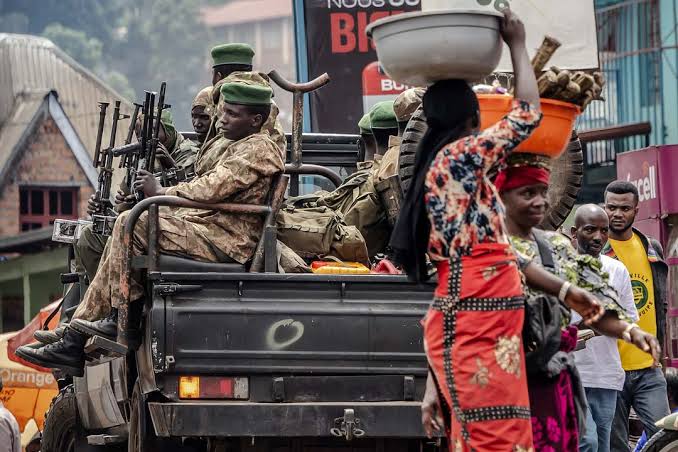
    Authorities in the Democratic Republic of Congo have released 15 prisoners and handed them over to the AFC/M23 rebel movement. The International Committee of the Red Cross facilitated the transfer, marking the first known exchange under last year’s peace agreement signed in Qatar. The detainees departed from the government-held city of Beni in a convoy and travelled through Uganda before being delivered to rebels in Rutshuru territory. All 15 individuals explicitly agreed to the transfer after months of bilateral negotiations regarding the finalised list of detainees. The diplomatic step aims to bring relief to separated families while addressing ongoing conflict in eastern Congo.

  • |

    Tanzania opens government debt market to all overseas investors

    Tanzania has relaxed its foreign exchange regulations to permit all international investors to purchase government-issued Treasury bills and bonds. The Bank of Tanzania announced that the policy change aims to deepen domestic financial markets and position the country as an attractive investment destination. Participation in government securities was previously restricted to residents of the East African Community, the Southern African Development Community, and the Tanzanian diaspora. President Samia Suluhu Hassan’s administration is seeking fresh revenue options following recent reductions in aid from international partners.

  • |

    Colombia’s new president takes office with hardline pledge on security and economy

    Abelardo De La Espriella has been sworn in as Colombia’s president in Cali, breaking with the tradition of holding the inauguration ceremony at the congressional building in Bogotá. The 48-year-old former lawyer and ally of US President Donald Trump won June’s runoff election on a platform focused on hardline security measures, significant cuts to state spending, and the expansion of national energy production. During his inaugural speech at the Pichincha Battalion military base, De La Espriella declared that peace negotiations with armed groups are completely exhausted. He stated that criminal syndicates must either submit to the rule of law or face a direct response from security forces. To combat drug trafficking, he announced plans to resume aerial spraying to eradicate coca crops and confirmed that Colombia will join the US-led Shield of the Americas programme. On the economic front, De La Espriella pledged to freeze public spending and simplify the tax regime to stimulate private investment, while proposing to reduce the size of the state by up to 40%. He confirmed that established social programmes would remain intact. To boost declining reserves, the new administration plans to expand oil and gas exploration, including the use of responsible fracking, alongside efforts to strengthen state-owned energy firm Ecopetrol. De La Espriella’s inauguration reflects a wider political shift across Latin America. Incoming Finance Minister Miguel Gomez noted a fiscal deficit between 7% and 8% of GDP, indicating that initial governance will depend on executive decrees whilst navigating a divided congress. Meanwhile, opposition figures led by Senator Ivan Cepeda organized peaceful demonstrations in Barranquilla, pledging to defend democratic institutions and monitor potential rollbacks of social protections.

  • |

    Senegal court jails TikTok creators for insulting president

    A Senegalese court has sentenced three TikTok influencers to custodial sentences and fines for insulting President Bassirou Diomaye Faye. Critics have condemned the ruling as a direct blow to free expression within the country. The creators work for Feenal Digital, an online channel known for producing content supportive of former Prime Minister Ousmane Sonko. The decision follows a recent political rift between President Faye and Sonko. Mandoumbe Diop, operating under the moniker Lamignou Darou, received a three-month unconditional prison term. He represents the most prominent of the group, boasting over 500,000 followers on TikTok. Magueye Diaw and Moustapha Ndiaye were each handed two-month custodial sentences alongside fines of 500,000 CFA francs. Defence counsel Abdy Nar Ndiaye argued the posts were purely satirical and did not warrant criminal sanction.

  • |

    India says talks with China stressed need for border peace to boost ties

    India and China have held a new round of border talks in New Delhi, emphasising that maintaining peace along their disputed frontier remains essential for broader bilateral relations. The 36th meeting of the Working Mechanism for Consultation and Coordination on India-China Border Affairs focused on boundary delimitation, border management, and trans-border cooperation. Indian officials also highlighted the necessity of early dialogue regarding shared rivers and the technical details of upstream projects. Both nations agreed to continue using diplomatic and military channels to resolve outstanding issues and prevent miscalculations along the Line of Actual Control.

  • |

    Peru and Mexico resume diplomatic relations after political dispute

    The diplomatic break occurred when Mexico granted political asylum to former Peruvian Prime Minister Betssy Chavez, who faced conspiracy charges regarding former President Pedro Castillo’s 2022 attempt to dissolve Congress. As part of the bilateral agreement to restore relations, Peru granted Chavez safe-conduct guarantees under the 1954 Caracas Convention on Diplomatic Asylum, enabling her to leave the Mexican Embassy in Lima and travel to Mexico. Peruvian Foreign Minister Carlos Espa confirmed she departed in good health. The Peruvian Ministry of Foreign Affairs maintained that no political persecution exists in the country and stated that granting safe-conduct does not waive Peru’s legal right to request Chavez’s extradition in the future. The diplomatic rapprochement follows commitments made by newly elected Peruvian President Keiko Fujimori ahead of her inauguration to normalize ties with Mexico, an initiative welcomed by Mexican President Claudia Sheinbaum.

  • |

    Armenian church leader stands trial in standoff with government

    The trial of Catholicos Karekin II, head of the Armenian Apostolic Church, and six senior clerics has commenced in Armenia over accusations of defying a civil court order. The proceedings were halted almost immediately when the presiding judge recused himself due to a conflict of interest involving defence counsel. The case marks an unprecedented legal challenge to the church leadership, stemming from a civil order to temporarily reinstate a defrocked bishop who aligned with Prime Minister Nikol Pashinyan. Pashinyan has repeatedly called for the resignation of Karekin II and accused the church of acting as a proxy for foreign powers, specifically Russia. Church officials and human rights advocates argue the prosecution is politically motivated and violates the constitutional separation of church and state.

  • |

    Typhoon Dolphin hits Japan’s Okinawa as China prepares for landfall

    Typhoon Dolphin has struck Japan’s southern Okinawa prefecture, injuring five people and causing power outages across approximately 14,000 properties. Major Japanese carriers ANA and Japan Airlines cancelled flights to the region as maximum sustained wind speeds reached 162 kph, with gusts hitting 216 kph. China has issued high-level alerts along its eastern coast, halting port operations and suspending 162 ferry routes in Zhejiang province ahead of expected landfall between Sunday and Monday. Airports and maritime hubs across eastern China, including Ningbo Lishe International Airport and Shanghai’s Yangshan port, have suspended operations or cleared vessels from harbors. In Taiwan, authorities reported the cancellation of 63 international flights, whilst Taipei rejected maritime traffic control directives issued by Beijing for the Taiwan Strait as baseless.

  • |

    US appeals court blocks Trump’s $400 million White House ballroom project

    A US federal appeals court on Friday ordered President Donald Trump’s administration to halt construction of its $400 million ballroom at the White House, ruling that the executive branch lacks the authority to make such extensive alterations to the landmark without explicit approval from Congress. ​The 2–1 decision by a panel of the US Court of Appeals for the District of Columbia Circuit upholds an injunction obtained by the National Trust for Historic Preservation. The preservation group filed a lawsuit last year after the administration demolished the historic East Wing to build a 90,000-square-foot ballroom complex. ​Writing for the majority, Judges Patricia Millett and Bradley Garcia rejected the administration’s stance that executive authority permitted the unilateral overhaul. ​”Each President is a temporary tenant, not the owner, of the White House and its Executive Residence”, the judges wrote. “Whether or not a massive ballroom should be constructed is for Congress to decide and is not a matter for Executive self-help.” ​The court clarified that its ruling does not permanently block the project, but requires the administration to secure legislative authorization before proceeding with aboveground construction. The order maintains an earlier district court ruling by Judge Richard Leon, which blocked aboveground work on the ballroom while permitting underground construction to proceed for bunker and national security facilities. ​The panel granted a 14-day stay on its ruling, allowing the Justice Department time to file an emergency petition with the US Supreme Court. ​President Trump strongly criticized the decision on social media, describing it as “horrendous, politically motivated, and unlawful”. He argued that the project functions as a broader security complex incorporating bomb shelters, medical units, and drone shielding, warning that the halt poses a threat to national security. ​The National Trust praised the ruling, with CEO Brent Leggs stating that the decision affirms the principle that only Congress holds the authority to approve major structural additions to the White House. ​Judge Neomi Rao dissented, siding with the administration’s position that the executive branch retains sufficient discretion over the maintenance and security of the presidential residence.