देश-विदेश

  • |

    Japan launches cooling shirt with built-in fans

    Tokyo – Due to Japan’s intense summer heat, office wear is now being equipped with modern cooling technology. Japanese people have started wearing clothes with built-in air-conditioning systems. Japanese clothing manufacturer Yofuku no Aoyama has introduced a short-sleeved shirt fitted with two small fans that provide cool air to the wearer while they are on the move. According to media reports, the shirt looks like a simple and elegant office shirt but it actually contains an advanced cooling system. A fan is installed at the back of the shirt near the waist. When switched on, it circulates air inside the shirt and helps keep the body cool. Air-cooled clothing has become increasingly popular in Japan over the past few years. However, it has mainly been used by people working in construction, waste collection and event security. Such clothing is generally designed as jackets or vests and has traditionally been considered protective or workwear rather than office clothing. However, as summer temperatures continue to rise in Japan, demand for cooling clothing is increasing among ordinary citizens and office workers as well. Keeping this growing demand in mind, Yofuku no Aoyama developed the shirt in collaboration with FZN, a company specializing in fan-equipped clothing. The shirt comes with two fans and a rechargeable battery. According to the company, efforts have been made to keep the cooling system as lightweight as possible. According to the report, each of the two fans weighs 95 grams, while the rechargeable battery pack weighs 165 grams. Although the fans are visible when the shirt is viewed from the back, designers have tried to make them less noticeable from other angles so that the shirt remains suitable for an office environment. The company has not provided specific information about the noise level of the fans suggesting that they may not be completely silent. When is cooling shirt most useful? The shirt is considered more useful while travelling rather than during meetings. The company says its main purpose is not necessarily to operate the fans inside an office or during client meetings as such meetings are generally held in air-conditioned rooms. The real benefit of the shirt is for people who travel around the city from one meeting to another. While walking outside in extreme heat or using public transport, the fans can help keep the body cool. It may also reduce the need for employees to change sweat-soaked clothes and put on formal attire again after reaching their destination. What is price? The complete initial package of the Kuchou Wear Short-Sleeve Shirt is being sold for 17,490 Japanese yen. The package includes the shirt, two fans, a rechargeable battery pack and a charging cable. The shirt is available in blue and grey with medium, large and extra-large sizes offered. The product has already gone on sale at the company’s stores and online shop.

  • |

    South Korea beats NASA to first photos of SpaceX Moon crash

    A spent SpaceX rocket stage slammed into the Moon on August 5, travelling at roughly 8,700 kilometres per hour. South Korea’s Danuri orbiter was perfectly positioned to capture the moment. The Korea Aerospace Administration released the images on August 6, beating NASA’s own Lunar Reconnaissance Orbiter to the first confirmed photos of the impact site. KASA had adjusted Danuri’s orbital path specifically for this event. The manoeuvre let the probe fly around 340 to 350 kilometres above the impact zone near Einstein Crater, capturing images just before and after the collision. Using its high-resolution Lunar Terrain Imager, the satellite photographed the site at an estimated resolution of five metres per pixel. A separate instrument measured changes in surface reflectivity to help gauge how much debris the impact had thrown up. KASA compared the difficulty of the shot to photographing a car crash in Busan from an aircraft flying above Seoul. The comparison highlighted just how precise the timing and positioning needed to be. The rocket stage originally launched in January 2025, carrying Firefly Aerospace’s Blue Ghost lander and ispace’s RESILIENCE spacecraft toward the Moon. Both spacecraft were part of separate lunar missions at the time. Falcon 9 upper stages are typically destroyed by burning up in Earth’s atmosphere after their missions end. This particular stage, however, had used up nearly all its fuel reaching lunar orbit, leaving it drifting as space debris. Gravitational and solar forces eventually pulled the stage back down, resulting in the lunar impact. SpaceX confirmed it had coordinated with NASA on the disposal process for the spent stage. The company noted that controlled descents are not always possible for upper stages following this kind of trajectory. NASA administrator Jared Isaacman downplayed the event’s significance afterward. Isaacman pointed out that meteoroids strike the lunar surface roughly every hour. He noted that impacts of this scale happen approximately every six days, framing the incident as fairly routine rather than dramatic.

  • | | | | |

    Pakistan played key role in easing US-Iran tensions: analysis

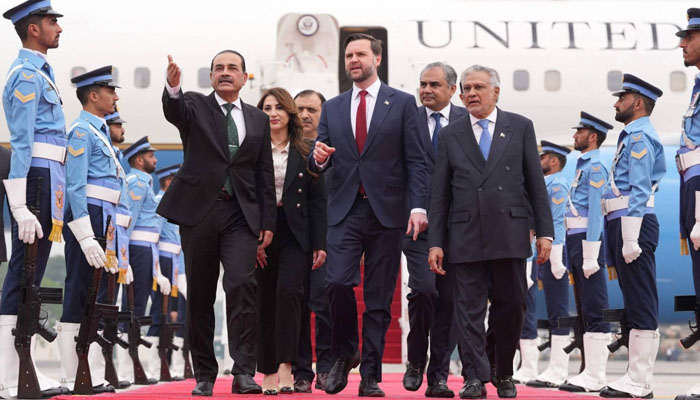
    Pakistan played an important mediating role in efforts to ease tensions between the United States and Iran and helped bring the two sides to the negotiating table, according to an analysis by South Asian Voices, a policy platform focusing on security, political and economic developments in South Asia. The analysis said Pakistan stepped in at a critical stage when tensions between Washington and Tehran had escalated sharply and both sides had suffered significant losses. According to the assessment, Islamabad successfully facilitated communication between the United States and Iran and helped bring a global power and a major regional power into direct negotiations. The report described Pakistan’s diplomatic engagement as significant, arguing that Islamabad managed to perform a role that several major powers, including China, France, Germany, India and the United Kingdom, had been unable to achieve. The analysis further noted that talks between American and Iranian representatives in Islamabad continued for more than 20 hours. It described the discussions as the highest-level direct contact between the United States and Iran since the 1979 Iranian Revolution. Although Washington and Tehran subsequently accused each other of violating the terms of a ceasefire, the two sides did not completely abandon the diplomatic process, according to the analysis. The report therefore argued that it would be inaccurate to hold the mediator responsible for the failure of the process, stressing that Pakistan’s role should instead be viewed in the context of its efforts to keep communication channels open between the two sides. The assessment highlights Islamabad’s growing diplomatic role in attempts to reduce tensions between Washington and Tehran and underscores Pakistan’s efforts to facilitate dialogue during a period of heightened regional instability.

  • |

    Pentagon drops 41 new UFO files spanning 1950 to 2026

    The Pentagon has released 41 new declassified documents related to unidentified flying objects. The files span an enormous timeframe, covering incidents from 1950 all the way through 2026. Among the most striking entries is a 1963 telegram from Brazil, describing a dead crewman found inside a crashed metal balloon. A follow-up cable sent just six days later, however, called the entire report fabricated. This marks the fifth batch of declassified UFO material released so far this year. Chief Pentagon spokesman Sean Parnell announced the files on Friday under the Presidential Unsealing and Reporting System for UAP Encounters, known as PURSUE. The collection draws from multiple agencies, including the Pentagon, FBI, CIA, State Department and the Executive Office of the President. Parnell confirmed that additional releases are already being prepared for the future. Interestingly, these documents predate today’s broader UFO disclosure movement by decades. The earliest file dates back to January 1947, referencing so-called “ghost rockets” spotted over Finland and Denmark the year before, believed at the time to be Soviet rocket tests. A separate 1948 memo sent to Wright-Patterson Air Force Base confirmed that some kind of flying object had genuinely been sighted, though no explanation was ever given. More recent entries include a 2021 account from military personnel in the Gulf of Oman. They reported spotting 25 objects moving at speeds up to 1,300 miles per hour during a live-fire operation. Another document details a former service member’s account of a massive, silent, triangular object seen over Bagram Airfield in Afghanistan back in 2002. The object was reportedly around 500 feet long and blocked out the stars as it passed overhead. Two additional triangle sightings, both from Colorado Springs, were digitally rendered by the FBI based on witness testimony rather than actual photographs. One reconstruction dates to 2011, the other to 2023. Together, the newly released files offer a rare, wide-ranging look into decades of military encounters with unexplained aerial phenomena.

  • |

    Gulf families seek fairer inheritance through UK law

    Wealthy families in the Gulf are increasingly preparing wills under British law to reduce the difference between the inheritance shares traditionally allocated to sons and daughters under Islamic law. According to a report in a Western publication, some experts have described the emerging trend as “Shariah Lite”, referring to families using the flexibility offered by English succession law to distribute their wealth among their children on relatively equal terms. British lawyers say families are increasingly exploring these legal arrangements to protect the financial future of their children, particularly in cases where they have only daughters or where daughters outnumber sons. Under traditional Islamic inheritance rules, the shares received by male and female heirs can differ depending on the family structure and circumstances. The growing use of foreign legal frameworks allows wealthy families with international assets to consider alternative succession arrangements within the limits of applicable laws. Experts say several factors are contributing to the trend, including changing attitudes among younger generations, increasingly complex marital arrangements and political uncertainty across parts of the Gulf region. These developments have encouraged affluent families to pay greater attention to estate planning, asset protection and succession arrangements to ensure that their wealth remains within the family and is transferred according to their wishes. Gulf states are also introducing legal systems that offer foreign residents and some families alternatives to traditional Sharia-based procedures. Abu Dhabi, for example, has established a separate civil legal framework for matters including divorce, providing an alternative route outside the traditional Sharia system. The growing interest in British wills highlights the changing approach of some wealthy Gulf families toward inheritance and succession planning, as they seek greater control over how their assets are distributed among future generations.

  • |

    Indian actress brutally murdered; body found in pieces, head still missing

    CHENNAI, August 7, 2026: A shocking murder case in the Indian city of Chennai has led police to identify the victim as Sindhya, an emerging Tamil actress, after her dismembered remains were recovered from different locations. According to Indian media reports, residents alerted police after noticing human fingers protruding from a plastic bag near a garbage dump in Chennai. When police opened the bag, they found a severed hand and legs inside. More plastic bags were later discovered in different parts of the city. The bags contained human bones, body parts and other remains. A post-mortem examination determined that the remains belonged to the same woman. Police said the victim had been killed and her body was allegedly cut into pieces using a sharp weapon. However, her head and left hand remained missing, making identification difficult. During the investigation, police noticed two distinctive tattoos on the victim’s right hand. One tattoo depicted the Hindu deities Shiva and Parvati, while the other featured a dragon. Meanwhile, a woman approached a police station to report her daughter missing. She told investigators that her 37-year-old daughter, Sindhya, was an aspiring Tamil actress who lived in Chennai with her husband and two children. Sindhya’s mother reportedly told police that her son-in-law had claimed Sindhya had gone out of the house but had not returned. Police later showed the recovered remains and identifying marks to Sindhya’s family. Her mother identified her daughter based on the tattoos and other features. A subsequent DNA test also confirmed that the recovered remains belonged to Sindhya. Following the identification, police questioned Sindhya’s husband, Balakrishnan. He initially claimed that his wife had left home and never returned. However, investigators reportedly found inconsistencies in his statements. Police later claimed that Balakrishnan confessed to the killing during questioning. According to investigators, Sindhya and Balakrishnan had an argument before the incident. Police alleged that Balakrishnan attacked Sindhya with an axe, killing her before dismembering her body and placing the remains in plastic bags, which he allegedly dumped at different locations.

  • | |

    Trump targets birthright citizenship again after c…

    WASHINGTON: US President Donald Trump has signed two executive orders seeking to restrict birthright citizenship, renewing his administration’s challenge to a constitutional provision just weeks after the Supreme Court rejected his earlier attempt. The new orders, signed on Thursday, take a narrower approach than Trump’s previous directive and focus on specific categories of children born in the United States. The administration argues that the measures fall outside the scope of the Supreme Court’s June 30 ruling. Birthright citizenship has been a central issue in Trump’s immigration agenda, with the White House particularly targeting what it describes as “birth tourism” — a practice in which pregnant foreign nationals travel to the US to give birth so their children can obtain American citizenship. At the signing ceremony in the Oval Office, White House aide Stephen Miller said the administration was formally moving to end the practice, declaring that “birth tourism” was banned under the new orders. The executive orders also seek to restrict citizenship rights for children born to certain foreign government employees and children of people classified as “alien enemies.” They could potentially have implications for people born in US territories if Congress approves proposed legislation seeking to end automatic citizenship there. Trump’s latest move comes only weeks after the Supreme Court ruled 6-3 against his earlier attempt to restrict birthright citizenship. His first executive order, issued in 2025, instructed federal agencies not to recognise citizenship for children born in the US when neither parent was an American citizen or lawful permanent resident. The 14th Amendment has traditionally been interpreted as guaranteeing citizenship to people born on US soil, with limited exceptions including children of foreign diplomats and members of an enemy occupying force. Trump criticised the Supreme Court ruling, calling it a “very unfortunate decision” and arguing that businesses and individuals were exploiting the citizenship system through birth tourism. However, legal experts and immigrant rights groups have questioned whether the new orders can withstand judicial scrutiny. The American Civil Liberties Union predicted that the administration’s latest effort would fail in court, while advocates accused Trump of attempting to bypass the Supreme Court. Deborah Fleischaker of UnidosUS said the high court had recently reaffirmed that birthright citizenship was a constitutional guarantee and argued that presidents could not alter it through executive action. The 14th Amendment’s Citizenship Clause states that all persons born or naturalised in the United States and subject to its jurisdiction are US citizens. The Supreme Court’s June ruling, Chief Justice John Roberts wrote, reaffirmed the principle that citizenship represents the right to participate fully in the country’s political community. The latest orders are therefore expected to trigger another legal battle, potentially putting Trump’s immigration policies and the constitutional interpretation of birthright citizenship back before the courts.

  • | |

    Hackers target Wall Street firms in phone-based cy…

    NEW YORK: Hackers seeking ransom have targeted dozens of major US financial institutions and businesses using a surprisingly simple tactic — posing as IT help desk employees and tricking staff into handing over passwords and authentication codes. According to Google and internet intelligence data reviewed by Reuters, the campaign targeted prominent private equity and financial firms, including Blackstone, Bridgewater Associates, Apollo Global Management, Bain Capital, KKR, TPG, CME Group, Clearlake Capital and Moody’s. Google said the cybercriminals operate under several names, including Redact, Pink, Falcon and Helix. The technology giant said some companies targeted during the campaign had paid ransoms, although it did not identify those businesses. Reuters was also unable to determine which companies were successfully compromised. The hackers reportedly created websites designed specifically for individual companies. Employees were then contacted by phone, sometimes through calls that appeared to originate from their organisation’s legitimate IT help desk. The attackers allegedly told employees that they needed to urgently update their passkeys or multifactor authentication credentials. Victims were then directed to malicious websites using names designed to look legitimate, such as those containing phrases like “passkey helpdesk” or “secure passkey”. Once an employee entered their credentials, the hackers could obtain an authentication code in real time, allowing them to take control of the account while remaining on the phone with the victim. Austin Larsen, a principal threat analyst with Google’s Threat Intelligence Group, said the technique was not especially sophisticated but remained highly effective. Cybersecurity experts said the campaign demonstrates that human behaviour remains one of the biggest vulnerabilities for even heavily protected organisations. Lee Clark of the Retail and Hospitality ISAC compared the tactic to persuading a security guard to open a heavily protected gate. Google said the attackers had increasingly focused on private equity firms, law firms and financial ratings agencies because they may hold sensitive information that companies would be willing to protect through ransom payments. Reuters identified 72 malicious websites listed in Google’s report and linked several of them to specific companies using internet intelligence platforms. Google cautioned that while the infrastructure indicated attempted intrusions, not every attack was necessarily successful. The campaign appears to have affected a broader range of industries. Data reviewed by Reuters showed that hackers created digital traps targeting more than 200 companies during a five-week period, including Uber, Zillow and Levi Strauss, along with law firms such as Paul Hastings and Greenberg Traurig. The hacking group’s shifting aliases have also complicated efforts to identify those behind the attacks. Google said the various names appeared connected through shared infrastructure, but acknowledged that important questions about the hackers’ identities and relationships remain unanswered. The latest campaign has heightened concern across Wall Street, highlighting how convincing phone calls and basic social engineering can bypass sophisticated cybersecurity systems and expose highly valuable corporate accounts.

  • | | |

    Thailand school shooting, teen kills 8 in deadly r…

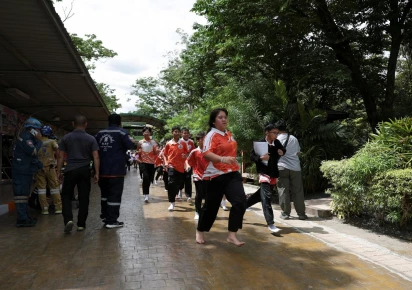
    BANGKOK: A 14-year-old boy killed at least eight people, including his grandparents, before taking his own life in a shooting rampage at a school outside Bangkok on Friday, police said, in Thailand’s deadliest mass killing since 2022. The teenager opened fire at Debsirin Nonthaburi School in Nonthaburi province, northwest of Bangkok, after allegedly shooting his grandparents at their home. Police said the suspect was among those killed at the school. The attack left 15 people injured, with both students and teachers reported among the casualties. Emergency teams rushed to the school as frightened students streamed out of the building, many without shoes, while ambulances transported the wounded. Police said the teenager fired at least 26 rounds and had another 34 rounds of ammunition. Authorities said the weapon belonged to his grandfather. An 18-year-old student told Reuters he initially believed the loud noises were firecrackers or someone striking an object. He said the sounds stopped briefly before gunfire erupted again. Emergency worker Kiatikhun Verapongpradith said his team arrived while the shooting was still underway and treated students suffering injuries. He said teachers were also among those found injured or dead inside the school. The suspect was later found after apparently shooting himself, according to the emergency worker. He was taken to hospital, but authorities confirmed that he died. Education Minister Prasert Jantararuangtong said both teachers and students were among the casualties, while police identified the teenager as a student. Prime Minister Anutin Charnvirakul expressed sorrow over the incident, describing the shooting as a devastating event for the country. The attack is Thailand’s second school shooting this year. In February, a teacher was killed and a student injured in a shooting at a school in the southern part of the country. Thailand has experienced several deadly gun attacks in recent years. The country’s worst mass killing in recent history occurred in 2022, when a former police officer killed 36 people, including 22 children, during a rampage at a daycare centre in northeastern Thailand. A separate 2023 shooting at a Bangkok shopping centre, carried out by another 14-year-old, killed two people and injured five others. Following that attack, authorities introduced several gun-control measures, including restrictions on new firearm licences and tighter rules concerning access to shooting ranges by people under 20. Thailand has one of Southeast Asia’s highest rates of civilian gun ownership. A Small Arms Survey estimate from 2017 put the number of privately held firearms in the country at around 10.3 million. Friday’s tragedy is expected to renew debate over firearm access, school safety and measures aimed at preventing young people from obtaining weapons.

  • | | | |

    Trump furious over US weapons shortages as Iran te…

    WASHINGTON: US President Donald Trump has grown increasingly angry over reports that the country’s stockpile of key munitions has been significantly depleted during the conflict with Iran, fearing the disclosures could undermine Washington’s leverage as he pushes Tehran toward a deal. Senior US officials told CNN that the issue became a major point of discussion during a Cabinet meeting at Camp David last week. Trump was reportedly frustrated not only by the shortages but by the publication of details about US weapons inventories at a sensitive moment in the conflict. Several officials said Trump had known for months that certain munitions were in limited supply and was not surprised by the underlying situation. His concern, they said, was that public reporting could weaken the image of US military strength while he threatens further action against Iran. Trump sought to push back publicly, saying the United States has “massive amounts” of munitions and that weapons production is expanding. He also threatened severe punishment for officials responsible for leaking classified or sensitive information. However, Trump acknowledged in remarks at the White House that some advanced weapons are in tighter supply, while insisting there is a virtually unlimited supply of less sophisticated weaponry. White House officials said Trump has not blamed Defence Secretary Pete Hegseth for the situation and continues to express confidence in his leadership. Instead, the president has directed the Justice Department to investigate what he described as “treasonous” leaks from within his administration. The concerns have intensified after reports indicated that US forces have used a large share of their air-defence interceptors since the conflict began. CNN reported that the military had consumed nearly four-fifths of its pre-war THAAD missile inventory and about half of its Patriot interceptors. The reported shortages have also alarmed US partners in the Gulf, many of whom rely heavily on American air-defence systems. Regional officials have warned that reduced US stocks could make it harder to defend against potential Iranian missile and drone attacks if Washington launches further strikes. Iran has reportedly warned Gulf countries that renewed US attacks could trigger retaliation against energy infrastructure and desalination facilities across the region. Trump has spoken with leaders in Qatar and Saudi Arabia as his administration weighs its next steps. Senior military advisers have repeatedly raised concerns about dwindling stocks during discussions over potential escalation. The issue predates the current crisis. US military leaders had warned before the war that a prolonged campaign could strain American weapons supplies, particularly after years of support for Israel and Ukraine. Trump has blamed the previous administration for contributing to depleted stockpiles through weapons deliveries to Ukraine, while also acknowledging that the United States needs greater reserves. The administration has moved to expand production, including invoking the Defense Production Act and meeting with major defence contractors such as Lockheed Martin. However, officials acknowledge that expanding weapons manufacturing capacity could take years, meaning increased production may not immediately solve the shortage.