देश-विदेश

  • | |

    Oil prices climb as Hormuz tensions rekindle suppl…

    Global oil prices moved higher on Friday as renewed uncertainty surrounding the Strait of Hormuz fueled concerns over potential disruptions to one of the world’s most critical energy shipping routes. Brent crude futures rose 80 cents, or nearly 1%, to $83.29 per barrel, while US West Texas Intermediate (WTI) crude gained 64 cents to reach $77.93 per barrel. The increase followed a sharp rally in the previous session, when prices surged by more than $3 after reports that Iran was considering new restrictions on maritime traffic through the strategic waterway. Market sentiment shifted after Iranian officials proposed measures that could prohibit US and Israeli-linked vessels from transiting the Strait of Hormuz, while imposing significant financial penalties on ships from countries deemed hostile. The proposal, reportedly being reviewed by Iran’s parliament, has raised fresh concerns about the future of global energy supplies. Analysts said the latest developments indicate that tensions between Iran and the United States remain unresolved, despite recent hopes of diplomatic progress. They noted that the market is now pricing in the possibility of a tightly managed transit system rather than a return to unrestricted shipping through the strait. Reports also suggest that Iran is seeking transit fees ranging from 5% to 7% of cargo values, while Oman has proposed lower charges. However, industry experts believe any agreement would face significant hurdles because of US sanctions and insurance restrictions affecting international shipping. Although crude benchmarks are still on track to post weekly losses after earlier declines driven by optimism over a possible breakthrough in the regional conflict, the renewed geopolitical uncertainty has restored upward pressure on prices. Adding to market jitters, Yemen’s Houthi movement claimed missile and drone attacks targeting Saudi positions in Marib and Hadramout, further highlighting the fragile security situation in the region. Meanwhile, US President Donald Trump expressed optimism that the conflict could end soon, but investors remain cautious as uncertainty continues to dominate the global oil market.
  • | |

    President Erdoğan arrives in Saudi Arabia for tri…

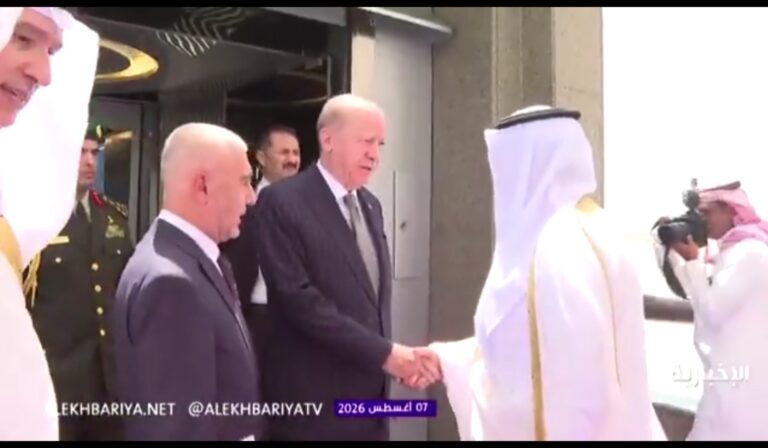
    President of Türkiye Recep Tayyip Erdoğan has arrived in Saudi Arabia to participate in the high-level trilateral summit. President Erdoğan received a warm welcome upon his arrival at Jeddah Airport, with ceremonial scenes reflecting the significance of the visit. The summit is expected to focus on strengthening regional cooperation, enhancing diplomatic engagement, and advancing shared strategic interests amid evolving geopolitical developments in the Middle East. Earlier, Prime Minister Muhammad Shehbaz Sharif was received by Saudi Crown Prince and Prime Minister Prince Mohammed bin Salman bin Abdulaziz Al Saud at Al-Safa Palace in Makkah on Friday, where the two leaders commenced high-level bilateral talks aimed at further strengthening Pakistan-Saudi Arabia strategic ties. The Prime Minister is accompanied by Deputy Prime Minister and Foreign Minister Senator Mohammad Ishaq Dar, Field Marshal Syed Asim Munir, Chief of Army Staff and Chief of Defence Forces, and Defence Minister Khawaja Muhammad Asif.

  • | | | |

    Pakistan, Saudi Arabia and Türkiye sign Makkah jo…

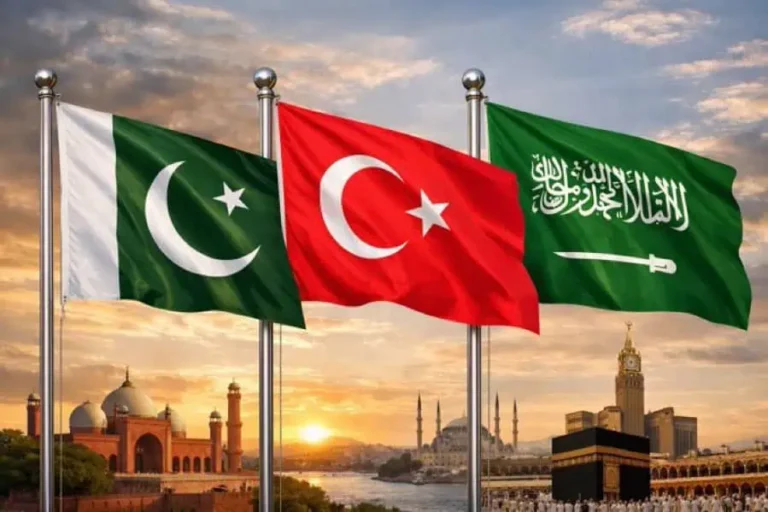
    MAKKAH: Pakistan, Saudi Arabia and Türkiye have signed the Makkah Joint Defence Agreement, pledging to strengthen collective security and defence cooperation among the three countries. The agreement was signed on Friday during a high-level summit at Al-Safa Palace in Makkah, where Saudi Crown Prince and Prime Minister Mohammed bin Salman received Pakistani Prime Minister Shehbaz Sharif and Turkish President Recep Tayyip Erdogan. According to the agreement, the three countries reaffirmed their commitment to strengthening collective security and promoting peace, stability and security in the region and beyond. The agreement is based on the longstanding relations and shared strategic interests of Pakistan, Saudi Arabia and Türkiye. It also highlights their continued defence cooperation and commitment to closer coordination on security matters. Any attack to be treated as an attack on all three A key provision of the agreement states that an armed attack against any one of the three countries will be regarded as an attack against all three. The pact is intended to enhance collective deterrence against acts of aggression and expand cooperation across various areas of defence. The agreement also seeks to strengthen military and security coordination among the three states and build a framework for closer cooperation in the face of regional security challenges. The summit brought together the leaders at a time of heightened tensions and instability across the Middle East. Recent reporting had indicated that the three countries were preparing to deepen defence coordination through a joint pact. Prime Minister Shehbaz Sharif was accompanied by Deputy Prime Minister and Foreign Minister Ishaq Dar, Chief of Army Staff and Chief of Defence Forces Field Marshal Syed Asim Munir, and Defence Minister Khawaja Asif. The leaders also reviewed bilateral and regional matters of mutual interest and discussed ways to further strengthen cooperation. The Makkah agreement marks a significant development in defence ties among Pakistan, Saudi Arabia and Türkiye, establishing a stronger trilateral framework for collective security and defence cooperation.

  • U.S. Slashes F-1 Visas for Chinese Students By Nearly 50 Percent

    WASHINGTON, D.C. – The landscape of American higher education is undergoing a quiet but massive transformation. Recent data shows that the United States has sharply reduced the issuance of F-1 academic visas for Chinese students. This shift comes as federal authorities implement stricter vetting procedures and national security checks. University campuses, which have long relied […]

  • | | | | |

    Trump claims Iran war could end soon, Hormuz to re…

    WASHINGTON: US President Donald Trump has claimed that the war with Iran could come to an end soon, while negotiations are reportedly continuing over the future of the conflict and the reopening of the strategically vital Strait of Hormuz. Trump said the United States, Iran and Oman were close to reaching a temporary agreement aimed at reopening the key maritime passage. His remarks offered a potentially hopeful signal after weeks of heightened tensions and disruption in the region. The US president also dismissed reports that the conflict had significantly depleted American weapons stocks, insisting there was no truth to such claims. Trump further rejected reports of disagreements or growing tensions with US Defence Secretary Pete Hegseth, playing down speculation about friction within his administration over the handling of the war. However, the picture on the diplomatic front remains uncertain. Arab media reports have claimed that efforts to broker a ceasefire between the United States, Israel and Iran have stalled, highlighting the difficulties surrounding a possible breakthrough. At the same time, Iranian authorities have reportedly tightened internal security measures across the country, particularly in Tehran, as uncertainty over the conflict continues. The Strait of Hormuz remains central to the crisis because of its importance to global energy supplies and international shipping. Any agreement that restores normal traffic through the waterway could ease pressure on regional markets and provide a significant boost to wider diplomatic efforts. For now, Trump’s prediction of a quick end to the war contrasts with reports suggesting that major obstacles still remain before a lasting ceasefire can be secured.

  • | | |

    ‘No more theatre’: Ghalibaf challenges Trump over talks

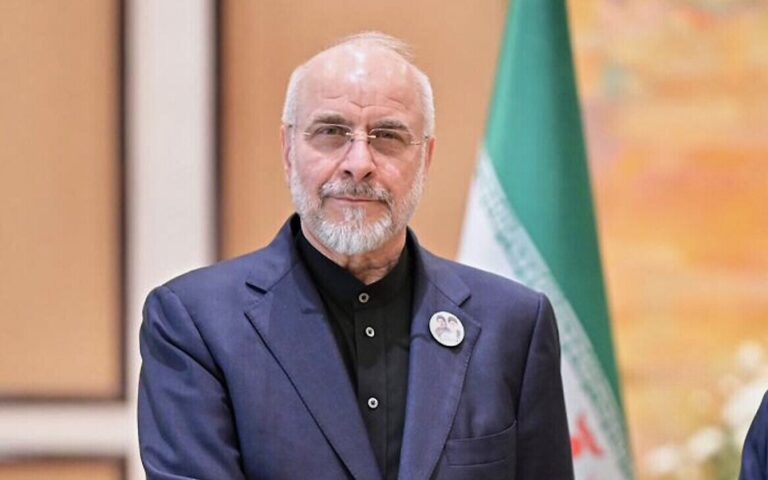
    TEHRAN: Iran’s Parliament Speaker and chief negotiator Mohammad Bagher Ghalibaf has delivered a blunt message to US President Donald Trump, calling for facts, commitments and serious diplomacy instead of what he described as political theatre. Reacting to Trump’s remarks suggesting that a major attack could be imminent, Ghalibaf said Iran was still prepared to negotiate, but expected the United States to demonstrate seriousness at the negotiating table. “Accept the facts and fulfil your promises,” Ghalibaf said, stressing that there was no need for further diplomatic drama and that responsible conduct was required. His comments come amid heightened tensions between Tehran and Washington, with negotiations remaining a key focus even as both sides continue to exchange strong warnings. Ghalibaf has emerged as a central figure in Iran’s diplomatic efforts and has been involved in negotiations with the United States. He was also re-elected as speaker of Iran’s parliament in May, securing 235 votes from 271 lawmakers who cast ballots. Ghalibaf accused Washington of repeatedly using pressure tactics, including threats, broken promises and what he characterized as false reports. According to him, such an approach has failed to achieve its intended purpose. The Iranian official’s message combines a firm warning with an opening for dialogue: Tehran, he suggested, is willing to talk, but not under pressure. The latest remarks could add another layer of uncertainty to already fragile US-Iran diplomacy, particularly as both sides weigh whether negotiations can prevent another escalation.

  • |

    Houthis launch deadly missile and drone strikes in Yemen

    Houthi forces launched a series of missile and drone attacks on several Yemeni government military bases in the provinces of Hadramout and Marib, killing at least 30 soldiers and injuring 15 others, according to the Yemeni government. Officials warned that the death toll could rise as some of the wounded remain in critical condition. Meanwhile, the Houthis claimed the attacks caused hundreds of casualties among government forces, although independent verification of that figure is not available. Houthi spokesperson Yahya Saree said the strikes came in response to recent military movements by government forces. The Yemeni military confirmed the attacks and said they followed its own operations against Houthi positions. Arab media reported that the Houthis fired eight missiles from Al Jawf province, targeting military camps in Al Thaniyah and Al Abr in Hadramout, as well as Al Rawk in Marib. The strikes hit while soldiers had gathered for training exercises, contributing to the high number of casualties. The attacks rank among the deadliest military operations in Yemen since 2022 and come as clashes between the two sides have intensified in recent weeks, raising fears of further escalation. The U.S. Embassy condemned the attacks, describing them as a “cowardly act of terrorism,” and expressed condolences to the families of the fallen Yemeni soldiers. Separately, the Saudi-led coalition said a Houthi attack on the Saudi border city of Najran wounded 11 civilians, including a woman and a child. The Houthis have not immediately claimed responsibility for that incident.

  • | |

    Qalibaf accuses Trump of using “Theater Diplomacy” on Iran

      Iranian Parliament Speaker and the country’s chief negotiator, Mohammad Bagher Qalibaf, has accused U.S. President Donald Trump of engaging in what he described as “theater diplomacy,” saying Washington continues to send mixed signals by alternating between military threats and calls for negotiations. In a statement posted on social media platform X, Qalibaf criticized Trump’s recent rhetoric, saying the U.S. administration repeatedly announces the possibility of major military action before stepping back and expressing interest in diplomatic talks. “First they say a major attack is coming, then they say they want negotiations. This cycle of theater diplomacy continues,” Qalibaf wrote. He argued that Washington keeps shifting its position between military pressure and diplomatic engagement, creating uncertainty rather than building trust. According to Qalibaf, the repeated use of threats, broken promises, and what he called “false narratives” has failed to pressure Iran into changing its stance. “The strategy of intimidation has not worked,” he said. “It is time to accept the realities, honor commitments, and replace political theater with serious and responsible diplomacy.” Qalibaf’s remarks came after President Trump claimed that he had canceled plans for a large-scale military strike against Iran. Trump said Iran and several countries in the region had urged the United States to avoid military action, adding that diplomatic progress was within reach. The U.S. president also claimed that ongoing negotiations could lead to a temporary agreement involving the United States, Iran, and Oman. He said such a deal would reopen the Strait of Hormuz without delay and eliminate what he described as the Iranian nuclear threat. The exchange highlights the sharp differences between Tehran and Washington as both sides continue to send conflicting messages about diplomacy and the possibility of easing tensions in the region. While U.S. officials speak of negotiations and a potential agreement, Iranian leaders remain skeptical, arguing that meaningful progress will require the United States to move beyond threats and fulfill its commitments.

  • |

    Thailand school shooting leaves seven dead, 15 injured

    At least seven people were killed and 15 others injured after a student opened fire at a school near Thailand’s capital Bangkok on Friday. The suspected shooter was among those killed after turning the weapon on himself, according to police. The incident took place at Debsirin Nonthaburi School in Nonthaburi province, northwest of Bangkok. Students rushed out of the school as emergency teams arrived at the scene. Several wounded people were taken to nearby hospitals for treatment. Teachers and students were reportedly among those killed and injured. A student at the school said he initially mistook the sound of gunfire for firecrackers or someone hitting an object. He later realised that several shots had been fired. Prime Minister Anutin Charnvirakul described the incident as a terrible tragedy and questioned how such an attack could occur in the country. Emergency responders said they treated several students who had suffered gunshot wounds to their backs, chests and arms. A male teacher was found dead on an upper floor of the school, while a female teacher was also found with serious injuries. Rescue workers attempted to revive the injured teacher before rushing her to hospital, but she could not be saved. Following the shooting, traffic around the school came to a standstill as parents rushed to collect their children. Authorities also moved to provide assistance to students, teachers and affected families. Police identified the attacker as a student. The incident is the second school shooting reported in Thailand this year. Thailand has experienced several deadly shooting incidents in recent years. The country witnessed its deadliest mass killing in 2022, when a former police officer killed 36 people, including 22 children, in a prolonged attack at a childcare centre. Other deadly shootings have also taken place in Bangkok and other parts of the country, raising continued concerns over gun violence and firearm access.

  • |

    North Korea battles heatwave with dog soup

    North Korea is highlighting traditional foods, health advice and leisure activities as an intense heatwave sweeps across the Korean Peninsula. State media reported that temperatures in the country reached 36.7°C, the highest recorded since modern weather observations began. The extreme heat has also brought a series of unusually warm nights. With the hottest period of summer underway, North Korean media has focused heavily on ways for people to stay cool and maintain their health. One of the recommendations receiving particular attention is dog-meat soup. State media described the dish as a traditional summer food and promoted a long-standing belief that it can help people cope with extreme heat. Other foods recommended by state media include watermelon, cucumbers, mung beans, fish porridge and red-bean porridge. Chicken soup prepared with ginseng, sticky rice and dates has also been promoted as a popular summer meal. Health programmes on North Korean television have urged people to remain hydrated and take precautions while swimming or exercising outdoors. The country has not released figures on deaths linked to the current heatwave. South Korea, meanwhile, has reported more than 20 heat-related deaths. North Korean state media has also used the extreme weather to highlight leader Kim Jong Un’s image as a leader who shares difficult conditions with ordinary citizens. A recent report recalled a 2013 visit by Kim to a construction site during hot weather. The report said his clothes became soaked with sweat during the inspection. According to the account, Kim insisted that important work for the people should continue despite the heat. State media also highlighted other past inspections in difficult weather conditions. These included a trip through mountainous terrain during heavy rain and a visit to a seafood factory where temperatures were reportedly around 39°C. There has been no detailed report on Kim’s activities during the current heatwave. Meanwhile, state television has shown large crowds visiting beaches, swimming pools and water parks to escape the extreme temperatures. Thousands of people have reportedly visited the Wonsan Kalma Coastal Tourist Zone, one of Kim’s major tourism projects on the country’s eastern coast.