देश-विदेश

  • |

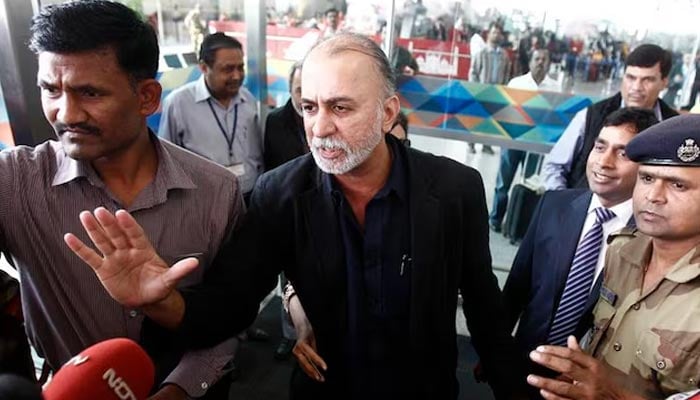
    Indian ex-editor jailed 10 years for rape

    An Indian court has sentenced former investigative magazine editor Tarun Tejpal to 10 years of rigorous imprisonment after convicting him in a rape case involving a junior colleague, bringing a high-profile legal battle that has spanned more than a decade to a major turning point. The case stems from allegations that Tejpal sexually assaulted a female journalist inside a lift at a luxury hotel in the coastal state of Goa during a media event in November 2013. A trial court had acquitted Tejpal in 2021 of charges including rape, sexual harassment and wrongful restraint. However, the Goa government challenged the verdict before the Bombay High Court, which overturned the acquittal and found him guilty. The court ordered Tejpal to surrender within two weeks to begin serving his sentence. In addition to the prison term, he was directed to pay a financial penalty imposed by the court. Following the verdict, Tejpal announced that he would challenge the conviction before India’s Supreme Court. He maintained that the case against him was politically motivated and claimed he had faced a prolonged campaign against him over the past 13 years. Tejpal was first arrested in 2013 after the allegations surfaced and spent several months in custody before being granted bail by the Supreme Court. Throughout the proceedings, he consistently denied the allegations and argued that the prosecution was driven by political considerations. The case attracted nationwide attention because it emerged during a period of heightened public concern over violence against women in India. Public debate over sexual assault had intensified following the 2012 gang rape and murder of a young woman in New Delhi, which led to widespread protests and significant reforms to India’s criminal laws on sexual offences. The conviction also had a lasting impact on Tehelka, once regarded as one of India’s leading investigative publications. The scandal severely damaged the magazine’s reputation and influence, despite continuing operations under new management.

  • |

    Houthi attacks kill 38 Yemeni troops, dozens injured

    Houthi missile and drone strikes killed at least 38 Yemeni government soldiers and injured 29 others on Thursday in one of the deadliest attacks in recent years, according to medical sources. The assaults targeted military camps in Marib and Hadramawt provinces, including positions near the Saudi Arabian border. Security officials said one of the missiles struck troops during their morning assembly at a military camp in Marib, causing heavy casualties. Military sources said the attacks hit camps in the Al-Ruwaik area of Marib as well as Al-Abr and Al-Wadiah in Hadramawt. The strikes left dozens of soldiers dead or wounded, with officials warning that the casualty toll could rise as some of the injured remain in critical condition. The latest violence comes as Yemen’s long-running conflict has intensified following recent regional tensions. Last month, the Iran-backed Houthi movement expanded its military actions after renewed hostilities involving Iran and the United States. The group resumed attacks after a period of relative calm, including strikes on government forces and maritime targets. In a separate incident last month, Houthi fighters killed 16 government-aligned soldiers during an attack south of the strategic port city of Hodeidah. Yemen has been devastated by conflict since 2014, when the Houthis seized the capital, Sanaa, forcing the internationally recognised government to relocate. The rebels continue to control much of northern Yemen, while government forces hold large parts of the south. Although a UN-brokered truce reached in 2022 significantly reduced large-scale fighting, the agreement eventually expired, and sporadic clashes have continued. The latest attacks highlight the fragile security situation and raise fears of further escalation in a war that has already claimed hundreds of thousands of lives and created one of the world’s worst humanitarian crises.

  • | |

    Pakistan, allies condemn Israeli actions in Gaza

    Pakistan and seven Muslim-majority countries have jointly condemned Israel’s ongoing military actions in the Gaza Strip, describing attacks on civilians, healthcare facilities and essential infrastructure as serious violations of international law. In a joint statement released on Thursday, the foreign ministers of Pakistan, Egypt, Türkiye, Indonesia, Jordan, Qatar, Saudi Arabia and the United Arab Emirates expressed strong concern over the worsening humanitarian situation in Gaza. They said continued attacks on hospitals, medical personnel and civilian infrastructure, along with the mounting civilian death toll, particularly among women and children, represent grave breaches of international humanitarian law. The ministers warned that the ongoing violence undermines efforts to implement the next phase of the proposed peace roadmap and risks worsening instability across the region. They stressed that the protection of civilians, medical workers and humanitarian operations must remain a priority under international law, calling for unrestricted delivery of food, medicine and emergency aid throughout Gaza. The joint declaration also linked the situation in Gaza with developments in the occupied West Bank, citing settlement expansion, attacks by settlers and measures affecting East Jerusalem. According to the ministers, these actions weaken the prospects for a two-state solution and further erode the rights of the Palestinian people. The eight countries urged the international community, particularly the United Nations Security Council, to take effective steps to ensure compliance with international law and hold those responsible for violations accountable. They said greater international action is needed to protect civilians, support humanitarian efforts and help secure a lasting ceasefire. The ministers also rejected any attempt to annex occupied Palestinian territories, impose Israeli sovereignty over them or forcibly displace Palestinians from their homeland. They reiterated that lasting peace can only be achieved through a credible political process leading to the establishment of an independent and sovereign Palestinian state based on the 1967 borders, with East Jerusalem as its capital. The statement comes as violence continues in Gaza despite ceasefire efforts. Recent airstrikes have caused further casualties, while negotiations over a US-backed roadmap remain stalled.

  • | | |

    CBFC orders cuts in Emraan Hashmi’s Awarapan 2 b…

    Bollywood actor Emraan Hashmi’s much-awaited film Awarapan 2 has officially received clearance from the Central Board of Film Certification (CBFC), but only after several significant edits were made. The film has been awarded a U/A 16+ certificate, allowing viewers aged 16 and above to watch it under parental guidance. The CBFC approved the film on August 5, 2026, with a final runtime of 140 minutes and 20 seconds. However, before granting certification, the board instructed the filmmakers to implement changes at nine different points throughout the movie. According to reports, the CBFC asked the makers to tone down violent sequences, remove certain objectionable words from both the audio and subtitles, and include mandatory health warnings related to smoking and drug use. The board also directed the filmmakers to display the Hindi title prominently and ensure that anti-smoking messages remain visible during scenes featuring tobacco use. In addition, the certification body required a warning related to child trafficking to be included in the film. Some action scenes were shortened to reduce the intensity of violence, while one particular sequence was reportedly cut by nearly 50 percent. A scene involving drug inhalation was also modified to comply with certification guidelines. The end credits were adjusted to better align with the background music. Overall, approximately four minutes of footage were removed, while another 20 seconds of content were altered. Despite these edits, the film’s official runtime remains unchanged at 140 minutes and 20 seconds. Directed by Nitin Kakkar, Awarapan 2 stars Emraan Hashmi alongside Disha Patani and Shabana Azmi in key roles. The film serves as the sequel to the 2007 hit Awarapan and continues the emotional storytelling of the original while introducing a darker, revenge-driven narrative. Produced by Vishesh Bhatt, the sequel also reunites composer Mithoon and lyricist Sayeed Quadri. Fans can look forward to refreshed versions of the iconic songs “To Phir Aao” and “Tera Mera Rishta,” along with several new tracks created specifically for the film. With the required CBFC changes now completed, Awarapan 2 is set for a theatrical release on August 14, 2026. The film is expected to attract both longtime fans of the original and new audiences eager to see Emraan Hashmi return to one of his most memorable franchises.

  • | | |

    US sees strong potential for agricultural technolo…

    The United States has underscored the potential for expanding agricultural technology cooperation with Pakistan, saying that greater adoption of American innovation could modernise the country’s farming sector while creating new opportunities for bilateral trade and investment. The remarks were made by US Chargé d’Affaires Natalie A. Baker during a Direct Line webinar organised by the Business Council for International Understanding (BCIU) in collaboration with the US Embassy in Islamabad, the US Department of Commerce, and the Government of Pakistan. The virtual event brought together American companies, Pakistani government officials, investors, and representatives from the agriculture industry to discuss future collaboration. Speaking at the webinar, Baker described agriculture as one of Pakistan’s most important economic sectors, contributing nearly one-quarter of the country’s gross domestic product (GDP) and supporting millions of livelihoods. She said Pakistan’s efforts to modernise agriculture present significant opportunities for American businesses to introduce advanced technologies and expertise. According to Baker, US companies can contribute in key areas such as precision agriculture, advanced irrigation systems, digital farm management, cold chain logistics, and modern food processing technologies. She noted that these innovations could help improve agricultural productivity, reduce resource wastage, and strengthen food security while creating commercial opportunities for both countries. The US diplomat also highlighted the growing trade relationship between the two countries, revealing that US exports to Pakistan exceeded $1.5 billion in agricultural and related goods during 2025. She described the webinar as part of the US Mission’s broader strategy to promote stronger economic cooperation and expand commercial ties with Pakistan. During the discussions, Pakistani officials outlined regulatory reforms and policy initiatives designed to facilitate greater imports of American agricultural products, including soybeans, cotton, and high-quality planting seeds. They also encouraged increased US investment in farm mechanisation, biotechnology, seed development, controlled-atmosphere storage, and food processing industries. Baker stressed that American investment offers benefits beyond financial capital by promoting technology transfer, workforce training, and long-term business partnerships. She said such collaboration can strengthen local expertise and contribute to sustainable economic growth in Pakistan’s agriculture sector. The webinar also served as a preview of the US Department of Commerce’s Certified Agricultural Technologies Trade Mission to Pakistan, scheduled for October 26–30. Baker invited American companies to explore investment opportunities in Pakistan’s agricultural technology and food processing sectors, reaffirming that supporting US businesses seeking to invest in Pakistan remains a key priority for the embassy.

  • | | |

    Uganda backs sending troops to planned Gaza peace …

    Uganda’s Parliament has approved a government proposal to deploy troops to a planned international peace and stabilisation force for Gaza, marking the country’s first commitment to the proposed multinational mission. The resolution was introduced by Uganda’s Minister of Defence and received parliamentary approval following debate among lawmakers. With the decision, Uganda joins Morocco, which has also announced its willingness to contribute troops to the proposed force. The Ugandan government has not publicly disclosed the diplomatic discussions or political considerations behind its decision. However, the move sparked debate in Parliament, with opposition members expressing concerns about the potential implications for Uganda’s foreign policy and regional relationships. Opposition lawmaker Hassan Kiromera questioned the mission’s objectives, asking which parties Ugandan troops would ultimately be expected to confront if deployed. He argued that the government should provide greater clarity regarding the mandate of the proposed force before committing military personnel. Defence Minister Jacob Oboth-Oboth defended the proposal, stating that the Uganda People’s Defence Forces (UPDF) possess extensive experience in international peacekeeping operations, including missions in Somalia and other conflict zones. He said that this experience would enable Ugandan troops to contribute effectively to efforts aimed at restoring peace and stability in Gaza. According to the report, the proposed Gaza International Stabilisation Force is expected to consist of approximately 20,000 personnel from multiple countries. The force is reportedly planned under a proposal associated with US President Donald Trump’s Board of Peace and would be commanded by US Major General Jasper Jeffers. The mission is intended to help maintain law and order in Gaza following the end of hostilities between Israel and Hamas. Reports indicate that the proposal was first introduced earlier this year as part of broader discussions on post-conflict governance and security arrangements in the territory. The development follows recent announcements regarding a reported agreement under which Hamas would disarm and Israel would gradually withdraw its military forces from Gaza. Under the reported framework, the international stabilisation force would be deployed after the phased Israeli withdrawal. However, uncertainty remains over the implementation of the proposed arrangement. Israeli officials have reportedly expressed serious security concerns after reviewing the reported agreement, arguing that certain provisions could pose risks to national security. As a result, questions remain about the timeline and conditions for the deployment of the multinational peace force despite Uganda’s parliamentary approval.

  • | | |

    Video of Sunil Dutt’s ancestral home in Pakistan…

    A video showcasing the ancestral home of legendary Bollywood actor Sunil Dutt in Pakistan’s Jhelum district has gone viral on social media, attracting widespread attention from audiences in both Pakistan and India. The video was shared by Pakistani social media influencer Sameel Atif, who visited the historic house located in the village of Khord in Jhelum. According to the video, the property is the childhood home of Sunil Dutt, who was born as Balraj Dutt before the partition of British India in 1947. Following the video’s circulation, many social media users tagged Bollywood actor Sanjay Dutt, Sunil Dutt’s son, encouraging him to visit the family’s ancestral home and reconnect with his roots. The video has generated thousands of comments highlighting the shared cultural and historical ties between the two neighbouring countries. Reports state that Sunil Dutt spent his early years in the village before his family migrated to India during Partition. He later became one of Bollywood’s most respected actors and went on to serve as a member of the Indian Parliament. The story is further connected to Sanjay Dutt’s mother, legendary actress Nargis Dutt, whose family roots trace back to Rawalpindi. As a result, both of Sanjay Dutt’s parents had ancestral links to regions that are now part of Pakistan. In his social media post, Sameel Atif claimed that Sunil Dutt visited his ancestral village years after Partition. According to the post, the veteran actor requested the current owners of the house to preserve its original structure so that future generations could remember their shared history and heritage. This account has been widely shared online, though it reflects the information presented in the post. The viral video also includes a past interview in which Sanjay Dutt recalled his father’s emotional attachment to his birthplace. He said that whenever Sunil Dutt felt nostalgic, he would express a desire to return to what he considered his real home in Jhelum rather than Mumbai. Sanjay Dutt has also reportedly expressed a wish to visit Pakistan one day to see his father’s ancestral village and experience the place that held such deep emotional significance for him. The video has resonated with viewers on both sides of the border, many describing it as a reminder of shared history, cultural heritage, and enduring human connections beyond political boundaries. https://www.instagram.com/sameelatiff/reel/Dbs49YvKl5w/

  • |

    Saudi sounds alarm on rising sea threats

      Saudi Arabia has issued a forceful warning over escalating security dangers in the region, making it clear that the era of unilateral action is over. In an official statement, Ministry of Defense Spokesman Major General Turki Al-Malki stressed that new and complex threats—ranging from maritime terrorism to drone swarms and smuggling networks—now demand a collective response. “Every country has the right to protect its national interests,” Al-Malki said, “but the scale and sophistication of today’s risks require us to act together. No nation can stand alone.” He specifically pointed to the Red Sea corridor, a lifeline for global oil shipments and trade, as a flashpoint that needs constant vigilance. The nations bordering this strategic waterway, he added, are already in continuous dialogue to align their security strategies. The spokesman made it clear that the multi-national naval defense coalition—first proposed by Saudi Arabia—is not an offensive alliance but a defensive shield. Its core mission: to secure international shipping lanes, deter hostile acts, and ensure freedom of navigation in accordance with international law. The coalition, he emphasized, is open to all nations that share these goals and is firmly rooted in the principles of the United Nations Convention on the Law of the Sea. Al-Malki warned that the threat landscape has shifted dramatically. Non-state actors now possess advanced unmanned systems, anti-ship missiles, and cyber capabilities that can disrupt maritime traffic within minutes. Piracy and human trafficking add another layer of complexity. “We are not facing traditional navies,” he noted. “We are facing hybrid threats that exploit every gap in coordination. That is why interoperability, intelligence-sharing, and joint patrols are no longer optional—they are survival tools.” In a move that underscores Saudi Arabia’s commitment to this mission, the Ministry of Defense announced the appointment of Rear Admiral Abdullah bin Salim as the commander of the coalition. A distinguished naval officer with decades of command experience, bin Salim has served in multiple high-level posts within the Royal Saudi Naval Forces, overseeing fleet modernization and participating in large-scale international exercises. His leadership is expected to bring operational sharpness, strategic clarity, and a hands-on approach to coalition drills and rapid-response mechanisms. Rear Admiral bin Salim’s appointment is not merely symbolic. It reflects Saudi Arabia’s willingness to shoulder greater responsibility in regional security while maintaining an inclusive, consultative stance. He will oversee the integration of naval assets from partner nations, coordinate joint training missions, and ensure that the coalition can respond within hours—not days—to any maritime breach. Al-Malki also extended an open invitation to the international community. “We welcome all nations that believe in a rules-based maritime order,” he said. “The Red Sea is not just a regional asset—it is a global artery. Its security is everyone’s business.” He called for increased naval presence, technology transfers, and financial backing to sustain the coalition’s operations over the long term. The spokesman concluded with a sobering reminder: in a world of drone warfare, proxy conflicts, and rapidly evolving tactics, waiting for disaster is not a strategy. “The coalition is already active,” he said. “Our patrols are ongoing, our command is in place, and our resolve is firm. We are building a security architecture that will outlast any single crisis.” With Rear Admiral bin Salim now at the helm, the coalition enters a new phase—one defined by action, accountability, and unity. Saudi Arabia has made its position clear: the time for talk is over. The time for collective defense is now.

  • |

    Major US financial firms targeted in extensive phone-phishing campaign

    Ransom-seeking cybercriminals have launched a coordinated campaign targeting high-profile US financial institutions, including Blackstone, Apollo Global Management, KKR, Bain Capital, and CME Group. A technical report from Google’s Threat Intelligence Group revealed that hackers created 72 malicious websites designed to steal corporate login credentials. Operatives used social engineering tactics, reaching employees directly on personal mobile phones while spoofing corporate IT helpdesk numbers. Under the guise of urgent system updates, callers guided staff to fraudulent domains such as “passkeyhelpdesk” or “secure-passkey” to capture login credentials and multi-factor authentication passcodes in real time. According to threat intelligence analysis, the campaign represents a strategic pivot toward private equity firms, law practices, and financial rating agencies, driven by the assessment that these targets hold sensitive commercial data worth paying substantial ransoms to protect. While digital intelligence data identified fake portals created for over 200 organisations, including Uber, Levi Strauss, and several major law firms, it remains unconfirmed which specific financial targets experienced compromised systems. The threat actors operating under names such as Redact, Falcon, Helix, and Pink share common digital infrastructure. Analysts noted that despite advanced enterprise perimeter security, direct voice-phishing techniques exploiting human trust continue to rank among the most effective cyber-intrusion vectors.

  • |

    Ukrainian drones strike Russian oil refineries deep inside enemy territory as energy attacks escalate

    Ukraine has launched a series of long-range drone strikes targeting major oil processing facilities deep within Russian territory, hitting the Slavneft-Yanos refinery in Yaroslavl and the Bashneft-Novoil plant in Bashkortostan. Ukrainian President Volodymyr Zelensky confirmed the strikes, stating that the operations targeted facilities located up to 1,300 kilometres from the Ukrainian border to disrupt fuel supplies and revenues used to fund Russia’s military campaign. Ukrainian forces also struck two Russian patrol boats and shadow fleet oil tankers in the Black Sea. Russian officials in Yaroslavl reported that emergency crews responded to multiple fires at the Slavneft-Yanos site after falling drone debris ignited fuel storage tanks, injuring four people. Russian air defence forces claimed to have intercepted hundreds of Ukrainian drones across several regions overnight. Simultaneously, Russian forces launched retaliatory strikes against Ukrainian energy and transport infrastructure. Heavy bombardment in the southern city of Kherson caused a complete blackout and severely disrupted internet connectivity, while additional Russian drone and missile strikes in Kharkiv, Dnipropetrovsk, and Odesa killed at least 11 people and damaged residential areas, rail infrastructure, and cargo vessels.