देश-विदेश

  • |

    Iranian footballers become Australian citizens

    Two Iranian women footballers who refused to publicly support their government’s stance during an international tournament have officially become Australian citizens after seeking protection in Australia earlier this year. Atefeh Ramezanisadeh, 34, and Fatemeh Pasandideh, 22, received their Australian citizenship at a ceremony in Brisbane on Wednesday, marking the end of a journey that began when they chose not to return to Iran following the Women’s Asian Cup. The pair were among seven members of Iran’s national women’s football team who were granted humanitarian visas while in Australia. However, five of the players later returned to Iran, while Ramezanisadeh and Pasandideh remained, citing concerns about their safety. The players drew international attention after refusing to sing Iran’s national anthem before their opening match during the tournament. Their silent protest came amid heightened tensions following the conflict involving Iran, the United States and Israel, raising fears they could face punishment if they returned home. Australian authorities allowed the athletes to seek asylum after appeals from members of the Iranian community living in Australia. Their citizenship was formally granted at a ceremony attended by Australia’s Interior Minister, Tony Burke. Speaking after the ceremony, Pasandideh described becoming an Australian citizen as the beginning of a new chapter in her life, while Ramezanisadeh said the moment reflected years of hardship and sacrifice. Both expressed gratitude for the opportunity to build a future in Australia. The footballers are now training with Brisbane Roar FC Women and hope to continue their professional football careers in the country. Their decision to remain in Australia followed reports that Iranian state media criticised members of the national team for remaining silent during the anthem, with some commentators branding them disloyal. Human rights advocates also voiced concerns that players who returned to Iran may have faced pressure through threats directed at their families.

  • |

    Air India appoints CEO amid mounting financial losses

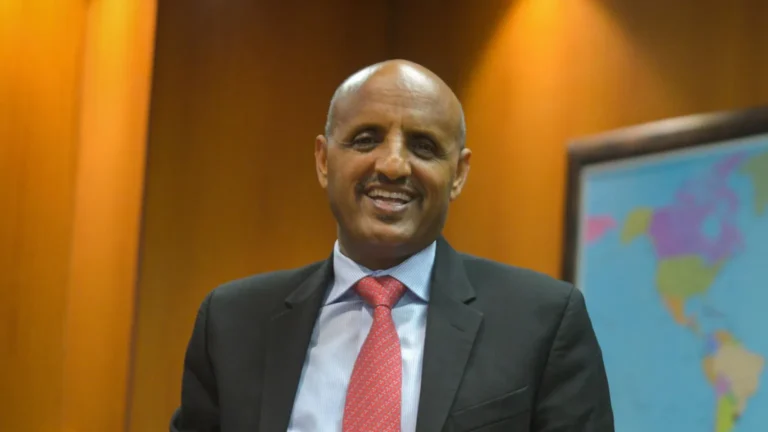
    Air India has appointed former Ethiopian Airlines chief Tewolde Gebremariam as its new chief executive officer, entrusting him with leading the airline through a challenging period marked by financial losses, operational setbacks and heightened safety concerns. Gebremariam succeeds Campbell Wilson, who stepped down in April after overseeing the airline’s initial restructuring following its acquisition by the Tata Group in 2022. The Air India board unanimously selected Gebremariam after an extensive global search, citing his leadership experience and strong operational record. During more than a decade at Ethiopian Airlines, he expanded the carrier’s fleet significantly and helped transform it into one of Africa’s leading and most profitable airlines. His appointment comes at a difficult time for Air India, which continues to recover from last year’s fatal Ahmedabad–London plane crash that claimed 260 lives. The airline is also dealing with mounting financial pressure after reporting a record loss of nearly $2.3 billion and reducing a significant portion of its international operations. In recent months, Air India has faced several operational disruptions, including flight delays, route adjustments and unexpected diversions. The broader aviation industry in India has also been affected by higher operating costs, aircraft delivery delays, disrupted international routes and stricter regulatory oversight. Industry analysts believe Gebremariam’s experience managing Ethiopian Airlines through the Boeing 737 Max crisis and the Covid-19 pandemic could prove valuable as Air India works to restore public confidence. Experts say his immediate priorities will include strengthening safety standards, improving employee morale, modernising the airline’s fleet, expanding its network and returning the carrier to long-term profitability.

  • |

    Modi ramps up Gen Z outreach on Instagram

    Indian Prime Minister Narendra Modi has launched a fresh social media campaign aimed at winning over young voters, shifting to a more informal and relatable style on Instagram after recent student-led protests exposed growing frustration over jobs and education. The campaign features selfie-style videos, casual greetings and short clips with popular music, reflecting a departure from the highly polished political messaging traditionally associated with Modi and his Bharatiya Janata Party (BJP). The strategy is designed to connect with India’s Generation Z audience, which is expected to play a decisive role in the 2029 general election. The renewed digital push follows nationwide protests by students and job seekers last month after an examination paper leak triggered widespread anger over the country’s education and employment system. The demonstrations eventually led to the resignation of India’s education minister. In response, BJP leaders and government ministries have increased their presence on youth-focused platforms by sharing short videos with minimal editing and a more spontaneous style. Officials believe authentic content is more likely to resonate with younger audiences than carefully scripted political messaging. Political observers say Instagram and similar platforms reward creativity, humour and genuine interaction, making them more challenging environments for traditional political campaigns. They note that recent protests gained significant momentum through viral reels and short videos that amplified public dissatisfaction. Beyond social media, the BJP and its ideological affiliate, the Rashtriya Swayamsevak Sangh (RSS), have also expanded outreach efforts by organising events and discussions targeting students and first-time voters. With more than half of India’s 1.4 billion population under the age of 35, analysts say younger voters are expected to become one of the most influential electoral groups in the next general election.

  • | |

    Iran pressures Gulf allies to rein in Trump, threa…

    Iran has launched an intensive diplomatic campaign targeting Gulf states, warning them directly that Tehran will strike their oil, power and water facilities unless they persuade President Donald Trump to halt US military action and pursue a negotiated end to the war instead. According to a senior Iranian official, the warning covers potential attacks on energy facilities, oil fields, refineries, electricity grids, water systems, transport networks and other strategic infrastructure belonging to Washington’s closest Arab partners in the region. The message formed part of a wider Iranian strategy to discourage further American military action by raising the specter of significant economic damage across the Gulf. Sources familiar with the matter said the warning traveled through a wave of high level diplomatic contacts following Trump’s July 28 threat to strike Iran’s energy network and broader infrastructure. Two senior Iranian officials, two Gulf sources and a senior regional diplomat, all speaking on condition of anonymity given the sensitivity of the discussions, said Iranian Foreign Minister Abbas Araqchi held conversations with his Saudi, Turkish and Qatari counterparts as well as Pakistan’s army chief. The senior diplomat said Araqchi pressed Washington’s Gulf allies to use their influence with Trump to head off renewed strikes, cautioning that any attack on Iran would trigger retaliation against American assets and critical infrastructure throughout the Gulf. The diplomat said Araqchi delivered a consistent message in each conversation, expressing readiness to retaliate while stressing that a diplomatic solution offers the best chance of avoiding wider regional destruction. One Gulf source described the Iranian position as unambiguous, saying Tehran made clear that any American strike on Iranian infrastructure would draw retaliation against Gulf energy facilities and other regional targets. The campaign illustrates how Iran is attempting to convert Gulf vulnerability into diplomatic leverage, presenting regional governments with the prospect that a renewed confrontation between Washington and Tehran could put the infrastructure their economies depend on directly at risk. Saudi Crown Prince Mohammed bin Salman subsequently spoke with Trump directly, urging him to hold off on military action, return to the negotiating table, pursue a ceasefire and seek a diplomatic resolution, according to the senior diplomat and Gulf sources. Another Gulf source said the warning was meant for every Gulf state but traveled primarily through Saudi Arabia and Qatar, both of which have rebuilt ties with Iran in recent years after a long period of regional rivalry. Qatar, Oman and Saudi Arabia have each urged Washington to resume talks with Tehran and prevent a fresh round of conflict, with Iran cautioning that further strikes could turn the region into what one Iranian official called a fireball. On August 2, Trump said he had agreed to call off a planned attack on Iran, provided a deal could be reached quickly. Concerns over wider escalation A Gulf source said Saudi Arabia believes additional escalation would only cause further destruction, explaining why Riyadh pushed Trump to give diplomacy more room to work. At the same time, Saudi officials made clear the kingdom would defend itself if directly threatened, with a second Gulf source saying Riyadh warned that any strike on Saudi territory would draw a military response of its own. Ali Shihabi, a Saudi analyst with ties to the royal court, said the kingdom’s assessment holds that further escalation is unlikely to produce the outcome Washington wants. He said Saudi officials believe a mix of proportionate military responses combined with sustained pressure on Iran around the Strait of Hormuz offers the most realistic route toward a workable diplomatic settlement. Iran’s clerical leadership has repeatedly called for the closure of US military bases across the Gulf and urged Gulf Arab states to stop sharing intelligence with Washington, which Tehran believes has enabled strikes against Iranian targets. Shihabi noted that memories of the September 2019 drone and missile strikes on Saudi Arabia’s Abqaiq and Khurais oil facilities still shape regional thinking, since that attack temporarily cut more than half the kingdom’s crude output and exposed how vulnerable Gulf energy infrastructure remains. A separate Iranian official reiterated that any damage inflicted on Iran would be met with far greater retaliation, again citing power grids and refineries among potential targets. From Tehran’s perspective, the senior Iranian official said, Trump now confronts two difficult options: escalate a conflict that risks engulfing the wider Gulf and disrupting global energy markets, or accept a negotiated settlement that falls short of the decisive win Washington has sought. The senior regional diplomat identified Washington’s reluctance to let Tehran claim any form of victory as one of the central obstacles blocking an agreement, noting that American officials want tangible proof they prevailed in the conflict.

  • | |

    Congo tightens grip on mineral exports with ban on…

    The Democratic Republic of Congo has prohibited exports of copper concentrate and cobalt concentrate, according to a government order reviewed on Thursday, marking the latest step in an ongoing push to force more mineral processing to happen inside the country and capture a larger share of the value generated by its mining sector. News of the ban sent benchmark three month copper prices on the London Metal Exchange up by as much as 1.8 percent to $14,369.50 a metric ton, the highest level since January 29, when the metal touched an all time peak of $14,527.50. Prices stood at $14,300 as of 0930 GMT following the report. Congo holds the position of the world’s largest cobalt supplier and ranks among the top sources of copper and other minerals critical to the global energy transition. The government is using that leverage to encourage the build out of domestic processing capacity rather than allowing raw or partially processed materials to leave the country. The order, dated June 29 and signed jointly by Mines Minister Louis Kabamba Watum, Foreign Trade Minister Julien Paluku Kahongya and Economy Minister Daniel Mukoko Samba, states plainly that exporting copper and cobalt concentrates is now prohibited. The prohibition took effect immediately, though the order allows for one year export waivers to be granted under unspecified strategic circumstances. The same order also establishes a new tax structure covering economically significant mining by products, with a three month transition period built in before the new rules take full effect. Officials said the export ban aims to push mining companies toward marketing or exporting higher value processed mineral products rather than raw concentrate. This marks the fourth time Congo has restricted concentrate exports, following similar bans imposed in 2013, 2019 and 2023, each of which included waivers in cases where domestic smelting capacity could not keep pace with output. The new order formally repeals the 2023 measure and its associated exemptions, replacing it with a broader regulatory framework governing both mineral exports and taxation of significant by products recovered during processing. Congo already exports the vast majority of its copper in refined form. During the first quarter of 2026, the country shipped 696,725 tons of copper cathodes, compared with just 53,926 tons of copper concentrate containing roughly 18,863 tons of copper metal, according to official figures. Over the same period, Congo exported 51,940 tons of cobalt hydroxide containing about 17,054 tons of cobalt metal. Christian Geraud Neema, a mining analyst with the nonprofit China Global South Project, said the new ban is unlikely to significantly disrupt most mining operators since the bulk of Congo’s copper and cobalt already undergoes domestic refining before export. He said the operation most likely to feel the impact is the Kamoa Kakula venture, jointly owned by Ivanhoe Mines, China’s Zijin Mining and the Congolese government, which still exports some volume of concentrate under existing exemptions. Neither Ivanhoe nor Zijin responded immediately to requests for comment, and the Congolese chamber of mines also did not respond. The newly introduced tax regime applies broadly across mineral categories, extending to trace and ultra trace minerals recovered during the refining process. These by products will be taxed using a 55 percent valuation coefficient, with royalties applied alongside those already charged on the primary mineral being extracted. The policy fits into a broader pattern across resource rich African nations seeking to move beyond raw material exports and capture more manufacturing and processing value domestically, a shift that has gained momentum as global demand for energy transition minerals like copper and cobalt continues to grow.

  • | |

    Pakistan’s military tightens grip on Islamis…

    Munir’s family background feeds into this shift as well. He is the son of an imam and considers himself a devout, conservative Muslim, and religious identity remains deeply woven into Pakistan’s state institutions. Even so, he has pushed the country toward international engagement through cryptocurrency partnerships, foreign investment deals, a mediating role in the conflict between the United States and Iran, and a mutual defence pact with Saudi Arabia. Data shared with a foreign news agency by the Armed Conflict Location and Event Data Project, a group that tracks conflict incidents worldwide, shows the scale of the shift. Pakistan averaged more than seven blasphemy related riots or attacks annually between 2021 and 2024, but recorded only one such incident over the past twelve months. Economic pressure appears to have played a significant role in prompting the crackdown. Two Pakistani government sources said officials grew alarmed during the summer of 2025 that rising hostility from fundamentalist groups toward France and other European countries threatened to jeopardize a European Union duty waiver covering Pakistani exports. Nearly a third of Pakistan’s total exports go to the EU, and losing that preferential access could have dealt a severe blow to the national economy. Neither the European Commission nor Pakistan’s commerce ministry responded to requests for comment on the matter. Washington has added its own pressure over religious freedom concerns. The US Commission on International Religious Freedom, a government watchdog, recommended last year that Pakistan be placed back on a list of countries of particular concern due to its blasphemy laws, a designation Islamabad has firmly rejected. Analyst Abdul Basit of Singapore’s S. Rajaratnam School of International Studies said worsening insurgent violence in Balochistan and Khyber Pakhtunkhwa, Pakistan’s two most mineral rich provinces, likely added urgency to Munir’s campaign, particularly since he has pitched foreign investment in the country’s mining sector to American officials over the past year. Basit noted that religious groups have lost favor within the state’s priorities, though he cautioned that the militias driving these regional insurgencies are not formally tied to the newly banned Islamist organizations, even if both draw recruits from the same pool of young, radicalized men. Elizabeth Threlkeld, who directs the Stimson Center’s South Asia program, said the open question going forward is whether Pakistan can sustain this level of focus over time. Crackdown targets country’s largest fundamentalist movement The largest of the groups swept up in the crackdown, Tehreek e Labbaik Pakistan, built its identity around the slogan “Death to blasphemers” before authorities banned it late last year. Many of its leaders now sit in jail, its mosques have been sealed shut and its financial accounts frozen. A previously undisclosed government document that laid the groundwork for the ban argued the organization had become a serious threat to Pakistan by damaging both domestic stability and the country’s standing internationally. A spokesperson for the group pointed to a statement it issued last year describing the ban as illegal and unconstitutional. The move against Tehreek e Labbaik follows earlier crackdowns on groups such as Lashkar e Taiba and Jaish e Muhammad, which Pakistan pursued under pressure from the Financial Action Task Force, the international body that monitors terrorism financing. Basit linked the newest crackdown to a period of internal reflection within Pakistan over its historical backing of the Afghan Taliban, whom Islamabad now blames for stoking Islamist insurgencies against the Pakistani state from across the border. The Taliban government in Kabul has dismissed that accusation as baseless, and a spokesperson for its foreign ministry declined to comment further, describing Pakistan’s crackdown as an internal matter. For Pakistan’s Christian, Shia and Ahmadi communities, the change in atmosphere has been dramatic. In the past, suspects in blasphemy related killings, including police officers, were sometimes greeted with rose petals or celebratory receptions, and individuals accused of burning churches or minority mosques often received public praise. Blasphemy remains a capital offense under Pakistani law, and even a rumor of an accusation has historically been enough to spark riots or lynchings. Human rights organizations say victims’ families have rarely obtained justice, since judges and lawyers have often been too frightened to take on such cases. Officer Malik said everyone who confronted the crowd during last month’s incident in Karachi felt genuine fear. The Christian family targeted that day was eventually moved to safety, and an initial investigation has since found the accusations against them to be false. Group’s military links trace back a decade Tehreek e Labbaik formed in 2015 while its founder was imprisoned for shooting and killing a Pakistani provincial governor in 2011 over his support for a Christian woman accused of blasphemy. That gunman, a former police bodyguard, was later convicted and executed months after the group’s founding. Analysts have long suspected the group’s creation received at least tacit support from Pakistan’s military establishment, including its intelligence services, as a tool to keep civilian governments and mainstream political parties in check. Following violent riots led by the group in 2017, then army chief General Qamar Javed Bajwa referred to its protesters as the country’s own people. Pakistan’s Supreme Court later ordered the military and intelligence agencies to stay out of politics but stopped short of directly tying them to the organization. Analysts and former officials say the effects of years of tolerance for the group will not disappear simply because of a ban, and that the shock felt by its supporters could still trigger backlash. Ihsan Ghani, who served as Pakistan’s counter terrorism chief during the 2017 riots, said he worries the group could resurface at full strength if its usefulness to the state changes again. He compared decades of state backed nurturing of the movement to something that cannot simply be switched on and off at will. Within Pakistan’s minority communities, the sudden shift still feels fragile. One of the Christian women rescued during last month’s incident in Karachi said she and her family are now physically safe, but admitted the fear has not fully faded.


  • |

    UK expands Global Talent visa scheme to attract world’s top scientists and engineers

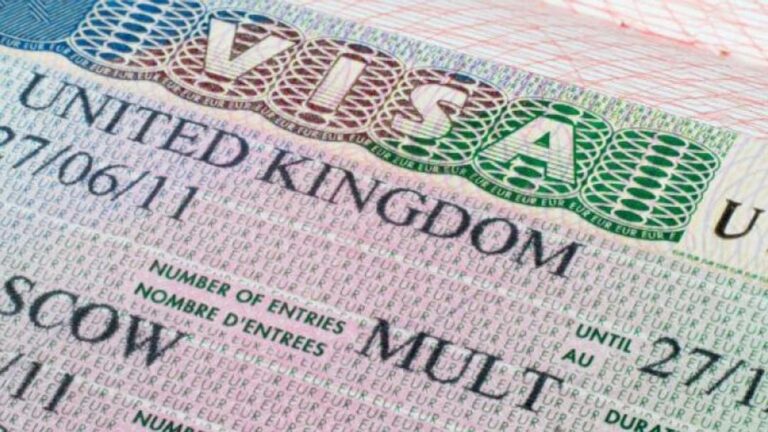
    In a major boost to Britain’s science and innovation ambitions, the UK government has announced a significant expansion of its Global Talent visa programme, allowing more than 100 research-intensive companies to sponsor leading scientists and engineers from around the world. Previously focused primarily on universities and research institutions, the expanded scheme will now enable eligible private-sector research organisations to recruit exceptional international talent directly. The move is aimed at strengthening the UK’s position as a global leader in cutting-edge technologies, including artificial intelligence (AI), quantum computing, nuclear fusion, clean energy and life sciences. The government said attracting the world’s brightest researchers would accelerate scientific breakthroughs, support innovation-led industries and create highly skilled jobs across every region of the UK. The initiative forms part of a broader strategy to boost economic growth through investment in advanced research and technology. By widening access to the Global Talent visa route, ministers hope Britain will remain one of the world’s most attractive destinations for leading researchers, scientists and engineers amid increasing international competition for high-skilled talent.

  • | |

    HRW says Israeli strike that killed journalist was war crime

    Human Rights Watch (HRW) has accused Israel of carrying out a deliberate airstrike that killed Lebanese journalist Amal Khalil, saying the attack may amount to a war crime under international law. In a report released on Wednesday, the international rights organisation said the strike targeted Amal Khalil and her camerawoman, Zainab Faraj, while they were covering Israeli military operations in southern Lebanon earlier this year. Amal Khalil, a reporter for the Lebanese newspaper Al-Akhbar, was killed in an Israeli airstrike on April 22 in the town of Al-Tayri. Her colleague, camerawoman Zainab Faraj, was seriously injured in the same attack. According to HRW, the available evidence suggests the Israeli military knew journalists were inside the building before launching the strike. The organisation said information gathered during its investigation indicates the attack was intentional and violated international humanitarian law. The report also referred to requests made by the United Nations Interim Force in Lebanon (UNIFIL) and the International Committee of the Red Cross for access to the area. HRW said these requests support evidence that authorities were aware of the presence of journalists at the location. Human Rights Watch further stated that Amal Khalil remained alive for some time after the strike. However, it alleged that Israeli forces prevented rescue workers from reaching the site, delaying emergency medical assistance that could have improved her chances of survival. The organisation said deliberately targeting journalists performing their professional duties and blocking humanitarian access are serious violations of international law. It added that such actions could constitute war crimes and should be investigated independently. HRW called for a transparent and impartial investigation into the incident and urged those responsible to be held accountable. It also stressed that journalists covering armed conflicts are civilians protected under international humanitarian law and must not be targeted during military operations.

  • |

    Explosive drone near German airport sparks security alarm

    German authorities have launched a major counterterrorism investigation after an explosives-laden drone was discovered near Leipzig/Halle Airport, prompting officials to warn of a dangerous new security threat. German Interior Minister Alexander Dobrindt described the incident as an unprecedented escalation, saying the presence of a drone carrying explosives at an airport represented a “new threat scenario” for the country. The drone was found near the airport’s southern runway, which is primarily used for cargo operations. Airport authorities immediately suspended flights while bomb disposal experts secured the area. A specialised bomb disposal robot successfully removed the detonator attached to the drone, preventing a potential explosion. Investigators are examining the device to determine its origin and identify those responsible. While authorities have not confirmed who was behind the incident, Dobrindt said the operation appeared to have been carefully planned and professionally executed rather than carried out by amateurs. He added that investigators are also examining whether foreign actors may have been involved. During the security operation, a second unidentified flying object reportedly struck a cargo aircraft after the plane aborted its landing because of the runway closure. The aircraft sustained only minor damage and safely diverted to another airport, where it landed without incident. Leipzig/Halle Airport is one of Europe’s busiest cargo hubs and has played a significant role in international freight operations, including hosting aircraft from Ukraine’s Antonov Airlines since the outbreak of the Russia-Ukraine war. The incident comes amid growing concerns across Europe over suspicious drone activity near airports, military installations and other critical infrastructure. Security officials have repeatedly warned that commercially available drones could be used for sabotage, espionage or attacks on strategic facilities. Authorities are continuing forensic examinations of the recovered drone while counterterrorism investigators work to establish its origin, motive and any possible links to organised groups or foreign intelligence operations.

  • | |

    Princess Isabella begins military service, decline…

    COPENHAGEN: Denmark’s Princess Isabella has begun her mandatory military service, becoming the first member of the Danish royal family to complete the country’s full compulsory military training under its updated national service program. The 19-year-old princess, the eldest daughter of King Frederik X and Queen Mary, reported for duty on August 3 after completing her education. She is expected to serve for 11 months as part of Denmark’s expanded military service requirements. In a gesture that has drawn public attention, Princess Isabella has declined to receive the salary and daily allowances provided to military recruits. According to the Danish royal household, she will instead rely on financial support from her parents to cover her personal expenses during training. Her older brother, Crown Prince Christian, previously completed military training, but Isabella is the first royal to undertake the extended compulsory service introduced under Denmark’s revised defense policy. Denmark expanded mandatory military service to include women in 2024 and increased the duration of service from four months to 11 months. The changes were introduced in response to Europe’s evolving security environment, the ongoing war in Ukraine, and growing strategic concerns in the Arctic region. This week, around 1,600 young recruits began their military service across the country, while Denmark is also preparing to deploy personnel to Greenland for the first time as part of its strengthened defense strategy.