indian exeditor jailed
|

Indian ex-editor jailed 10 years for rape

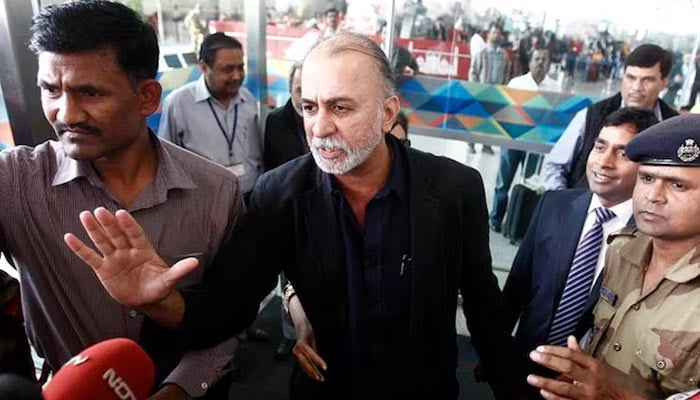
An Indian court has sentenced former investigative magazine editor Tarun Tejpal to 10 years of rigorous imprisonment after convicting him in a rape case involving a junior colleague, bringing a high-profile legal battle that has spanned more than a decade to a major turning point.

The case stems from allegations that Tejpal sexually assaulted a female journalist inside a lift at a luxury hotel in the coastal state of Goa during a media event in November 2013.

A trial court had acquitted Tejpal in 2021 of charges including rape, sexual harassment and wrongful restraint. However, the Goa government challenged the verdict before the Bombay High Court, which overturned the acquittal and found him guilty.

The court ordered Tejpal to surrender within two weeks to begin serving his sentence. In addition to the prison term, he was directed to pay a financial penalty imposed by the court.

Following the verdict, Tejpal announced that he would challenge the conviction before India’s Supreme Court. He maintained that the case against him was politically motivated and claimed he had faced a prolonged campaign against him over the past 13 years.

Tejpal was first arrested in 2013 after the allegations surfaced and spent several months in custody before being granted bail by the Supreme Court. Throughout the proceedings, he consistently denied the allegations and argued that the prosecution was driven by political considerations.

The case attracted nationwide attention because it emerged during a period of heightened public concern over violence against women in India. Public debate over sexual assault had intensified following the 2012 gang rape and murder of a young woman in New Delhi, which led to widespread protests and significant reforms to India’s criminal laws on sexual offences.

The conviction also had a lasting impact on Tehelka, once regarded as one of India’s leading investigative publications. The scandal severely damaged the magazine’s reputation and influence, despite continuing operations under new management.

Similar Posts

  • |

    Hong Kong democracy activist allowed to remain in UK after deportation scare

    Former Hong Kong opposition leader Wu Chi-wai has been granted permission to stay in the United Kingdom for six months after initially facing the possibility of deportation upon arriving at Heathrow Airport. The decision ends several days of uncertainty and allows the veteran pro-democracy activist to reunite with his family after years of separation. Wu arrived in London last Wednesday but was detained by UK Border Force officers for nearly 10 hours. Speaking to BBC Chinese, he said officials initially refused him entry and later informed him that he would only be allowed to remain in the country for one week before reporting back to the airport for deportation. However, the situation changed on Monday when UK authorities approved his entry under standard visitor rules, allowing him to stay in the country for up to six months. The 63-year-old is one of Hong Kong’s best known pro-democracy figures and formerly led the now dissolved Democratic Party. He was also among the group widely known as the Hong Kong 47, prominent activists and politicians prosecuted under Hong Kong’s national security law. Wu was released from prison in June after serving more than five years on convictions related to subversion and other charges. Wu said the trip was mainly intended to reunite with his wife and son, who moved to the United Kingdom in 2022 and 2023. During his imprisonment, he said their contact was limited to monthly phone calls and letters, making the visit especially meaningful after years apart. Before leaving Hong Kong, Wu said he sought advice from staff at the British Consulate General regarding his travel plans. According to him, officials assured him there should be no problems entering the UK and said they would inform the UK Border Force about his criminal record and travel itinerary in advance. Wu said border officials questioned whether he was a genuine visitor travelling only to see his family. He also rejected media reports claiming that he intended to seek political asylum in Britain, insisting that he had no such plans. The rights group Hong Kong Watch welcomed the UK’s decision to allow Wu to remain in the country. Policy Director Megan Khoo said the outcome was the correct one and argued that Wu should never have faced the threat of being sent back to the city where he had been imprisoned. Wu entered Britain using a British National Overseas passport, a travel document available to many Hong Kong permanent residents born before the territory’s transfer from British to Chinese rule in 1997. Holders of the passport are generally allowed to visit the UK without a visa for up to six months. The UK introduced a special visa route for British National Overseas passport holders in 2021 following the crackdown on Hong Kong’s pro-democracy movement. The programme allows eligible applicants to live, work and study in Britain and eventually apply for citizenship after meeting residency requirements. Since the scheme began, more than 230,000 Hong Kong residents have received BNO visas, while nearly 170,000 have relocated to the United Kingdom, according to government figures. The UK Home Office declined to comment on Wu’s individual case but reaffirmed its support for the Hong Kong community living in Britain. Meanwhile, the Hong Kong government said it had not received any request for assistance from Wu or other Hong Kong residents regarding the matter.

  • | |

    PTI may return to Senate committees after meeting …

    Senate Opposition Leader Allama Raja Nasir Abbas has said that Pakistan Tehreek-e-Insaf (PTI) could return to parliamentary standing committees if a meeting is arranged with the party’s founder, Imran Khan. Speaking to journalists in Islamabad, Raja Nasir Abbas said that if the government wanted Parliament to continue functioning, it should facilitate a meeting between PTI leaders and Imran Khan. He alleged that deliberate ambiguity was being created about Imran Khan’s health, saying the situation was also aimed at creating divisions within the party. Raja Nasir Abbas recalled that before the passage of the 26th Constitutional Amendment, a meeting with Imran Khan had taken place on the orders of the court. He said his party wanted a government that genuinely represented the people. Commenting on Interior Minister Mohsin Naqvi’s remarks about a possible collapse of the system, he said he agreed with the assessment. He added that the problem identified by Naqvi was real, but the proposed “medicine” to address it was illegal. The Senate opposition leader also claimed that he knew why negotiations between the government and PTI had failed. He said a complete plan for negotiations had been taken to Imran Khan at Adiala Jail, adding that the opposition had held a meeting at Khyber Pakhtunkhwa House before approaching the PTI founder. “We took several proposals to the founder,” he said, explaining that they did not want to visit the Prime Minister’s House and provide legal legitimacy to the government’s position. He said the same principle was behind their decision not to hold negotiations in the Speaker’s Office, as they did not recognise the arrangements as legally legitimate. Raja Nasir Abbas stressed that he distinguished between Imran Khan and the PTI as a political party, adding that he would stand by the former prime minister “until the last moment.” He reiterated that PTI could return to the standing committees if a meeting with Imran Khan was arranged. “If the government is serious about negotiations, it should come forward and talk,” he said, adding that the opposition was ready to hold talks in the Constitution Room of Parliament House.

  • |

    Ukrainian drone strike on Nizhnekamsk oil refinery kills 13 and injures dozens

    A devastating Ukrainian drone attack on the industrial city of Nizhnekamsk in Russia’s Tatarstan region has killed at least 13 people, including a child and several foreign nationals, and left dozens injured. The strike targeted Tatneft’s TANECO oil refinery, located approximately 1,200 kilometres east of the Ukrainian border, marking one of the heaviest civilian death tolls inside Russian territory in months. Footage verified on social media showed thick plumes of smoke rising over the refinery complex, which processed 17 million metric tonnes of crude oil in 2024. Ukrainian military officials confirmed targeting the facility as part of an ongoing strategy to dismantle key Russian fuel infrastructure and reduce the Kremlin’s economic capability to sustain its war effort. Russian authorities launched a formal criminal investigation into the incident, qualifying the strike as a terrorist attack. Officials stated that residential structures were hit in addition to industrial sites, with nine of the fatal casualties occurring inside a local worker hostel. Diplomatic officials confirmed that the dead included seven citizens of Uzbekistan and one national from Tajikistan. The attack reflects Kyiv’s intensified campaign of long-range strikes targeting major fuel and energy hubs deep within Russia, which has created localized supply disruptions across several Russian regions. Local authorities in Tatarstan have declared an official period of mourning following the incident.

  • |

    Human rights organizations file federal lawsuit challenging Trump administration sanctions on ICC

    Four prominent non-governmental organizations filed a joint federal lawsuit contesting executive sanctions imposed by the Trump administration on the International Criminal Court, arguing the penalties unlawfully disrupt global war crimes prosecutions. The legal challenge, brought by Human Rights Watch, the Center for Constitutional Rights, the Open Society Institute, and the American Friends Service Committee, targets an executive order enacted in February 2025. The presidential directive established financial sanctions and travel bans against ICC officials, judges, and affiliated advocacy groups involved in investigating alleged war crimes in Palestinian territory, including cases involving senior Israeli officials. Attorneys representing the civil rights organizations contend that the broad scope of the sanctions violates First Amendment protections regarding free speech and association. The suit asserts that the threat of severe civil and criminal penalties has effectively forced US-based legal advocates to suspend representation of victims before the tribunal, while halting formal collaborations with sanctioned international rights groups. The filing marks the latest in a series of legal challenges against the administration’s broader push to limit the jurisdiction of the Hague-based court. Representatives for the US Department of State and Department of Justice did not immediately issue formal statements regarding the lawsuit.

  • | |

    ‘Fear and censorship cannot silence the public?…

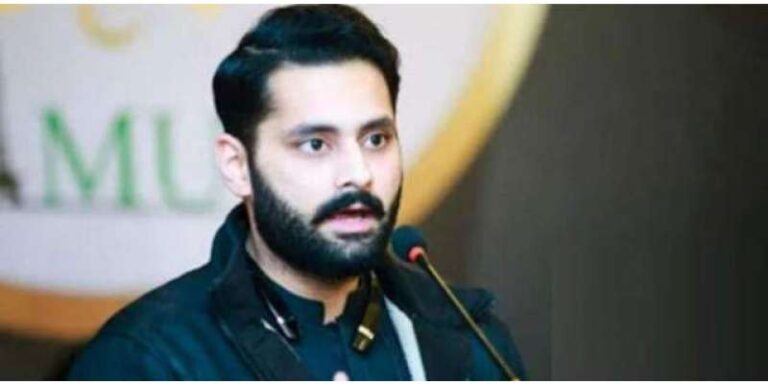
    Lawyer and social activist Jibran Nasir has criticised the country’s political and economic situation, alleging that pressure, censorship and coercive measures have failed to change public opinion about PTI founder Imran Khan. Speaking to anchorperson Ameer Abbas, Nasir said authorities had been unable to alter public sentiment toward Imran Khan despite what he described as years of pressure and attempts to control political discourse. He argued that if public opinion had genuinely changed, millions of people would not have voted for Imran Khan and his political movement in the February 8 general elections. Nasir questioned how the authorities could claim to change broader public thinking about the economy, Constitution and rule of law when they had not been able to change people’s views about a single political leader. He also criticised what he described as restrictions on political expression and media freedom. Nasir alleged that force, state pressure, censorship and arrests were being used to control political developments. According to Nasir, suppressing criticism does not resolve underlying public grievances. He said people who speak about alleged injustices are sometimes portrayed as creating unrest rather than being allowed to raise their concerns. He warned that continued reliance on pressure could increase frustration among citizens instead of resolving political differences. Nasir further claimed that people were now more aware of political developments and could not easily be persuaded through fear or restrictions. He said arrests, cases and harsh measures had not succeeded in changing the position of a significant section of the public. The lawyer maintained that political issues could not be permanently controlled through force. He called for greater space for political expression and a process through which public grievances could be addressed. His comments come amid continued political tensions between the government and PTI. The party has repeatedly raised concerns over the treatment of its leadership, legal cases against its members and restrictions on political activities.

  • | |

    FPAP, IPH hold breastfeeding policy dialogue

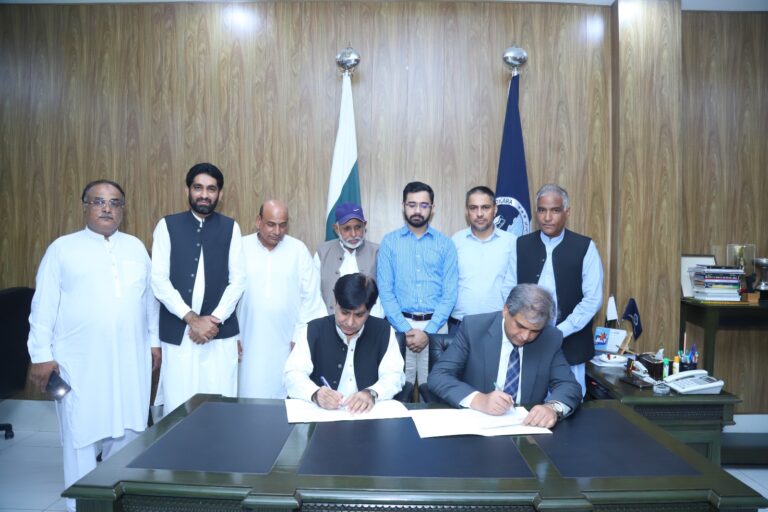
    LAHORE: Institute of Public Health Lahore and Rahnuma Family Planning Association of Pakistan joined hands to organize a Policy Dialogue on promoting Breastfeeding in connection with the World Breastfeeding Week 2026. The week is commemorated globally from 1-7 August to highlight the importance of breastfeeding. The house discussed strategies to improve breast feeding as only 45% of newborns in Pakistan were put to breast milk within the first hour of life, resulting in stunted growth and vulnerability to disease outbreaks. Moderated by Dean IPH Dr. Saira Azfzal, the event was joined by foreign dignitaries from the UKHSA, Chairman BoG IPH Prof Abdul Majeed Chaudhry, Executive Director Punjab Institute of Neuro Sciences & Principal General Hospital/PGMC Sardar Al Farid, former chairperson BoG Punjab Healthcare Commission Prof Atiya Mubarak, Head of Office WHO Punjab Dr. Jamshaid Ahmed, UNICEF Health Specialist Dr. Quratul Ain Ahmed, former Executive Director Health Services Academy Prof Shakila Zaman, WHO Technical Officer Dr. Irfan Ahmed, DGHS representative Dr. Zubair Hafeez as well as KEMU, Jinnah Hospital, SIMS and Ganga Ram experts including Prof Sobia Qazi, Prof Nadia Khursheed, Prof Munir Akhtar Saleemi, Dr Rameeza Kaleem Dr Asif Batani, Dr Mamoona, , Dr Ali Arshad, Prof. Dr Madeeha Rashid, Prof. Dr Muntaha, Dr Ammara Dr Amber Mustafa and a large number of students. Project Director GAVI RISE Rahnuma FPAP Sajjad Hafeez acknowledged IPH for joining hands with Rahnuma for a national cause. Highlighting this year’s theme “Breastfeeding for a Sustainable Start in Life: Strengthen What Works,” he said that Rahnuma-FPAP is one of the largest and oldest organizations in Pakistan, renowned for integrated package of mother & child health services, (ANC, safe deliveries PNC, vaccination, nutrition and family planning) at its country-wide network of facilities. Prof Sardar Al Farid highlighted barriers for mothers especially in office settings and need to designate workplace nursing stations. WHO representative Dr. Jamshaid elaborated key indicators (Early Initiation of Breastfeeding, Exclusive Breastfeeding and Continued Breastfeeding, highlighting that formula milk must not be marketed aggressively. UNICEF representative Dr. Quratul Ain highlighted that deliveries in Punjab under skilled birth attendants have improved to around 80%, yet the breastfeeding figures remain sub optimal. This requires integrating skilled counseling into routine family planning and reproductive health services.

Leave a Reply

Your email address will not be published. Required fields are marked *