देश-विदेश

  • |

    Murkowski opposes Blanche, putting Trump’s AG pick at risk

    WASHINGTON: Republican Senator Lisa Murkowski of Alaska has announced that she will vote against Todd Blanche’s nomination for US attorney general, dealing another setback to President Donald Trump’s choice and leaving his confirmation prospects increasingly uncertain. Murkowski’s decision makes her the second Republican senator to oppose Blanche, following Senator Susan Collins. With the Republican majority in the Senate already facing a narrow margin, even one more GOP defection could put the nomination in serious jeopardy. Murkowski said concerns surrounding an $1.8 billion “anti-weaponization” fund played a major role in her decision. Although the fund was rescinded while Blanche’s nomination was under consideration, she questioned whether it could be restored if Blanche is confirmed. “The country needs an Attorney General who will check the worst impulses of this administration,” Murkowski said, adding that she did not have sufficient confidence that Blanche would fulfil that role. Her opposition adds to a growing political challenge for Blanche, who is seeking Senate approval to lead the Justice Department. The nomination has faced scrutiny over questions surrounding the department’s independence and its handling of politically sensitive matters. The situation is particularly delicate because Republican Senator Mitch McConnell is absent from the Senate. That leaves Blanche with little room for further defections, while attention has turned to Republican Senator Bill Cassidy, who has yet to make his position clear. Murkowski, a longtime Alaska senator known for occasionally breaking with her party, said she had met with Blanche several times and viewed him as capable. However, she ultimately concluded that his nomination raised concerns she could not overlook. Her decision could force Senate Republican leaders to intensify efforts to secure support for Blanche before the chamber’s August recess. For Trump, a failed confirmation would represent a significant political setback in his effort to shape the Justice Department with his preferred leadership. The Senate battle is now expected to remain closely watched as Republicans work to determine whether Blanche can secure enough votes.

  • |

    Amanda Knox defends comedy show after backlash from Meredith Kercher’s sister

    Amanda Knox is standing by her Edinburgh Fringe comedy show, pushing back against claims from Meredith Kercher’s sister that the performance trivializes violence against women. Knox, 39, was convicted and later acquitted of murdering her British roommate Kercher in Italy 19 years ago. She took to Instagram on Thursday to say her show “honors Meredith Kercher’s memory” and “calls out the violence that was done to her and to me.” The show, titled “Cartwheel,” debuted Friday evening and runs for 11 nights straight at the Scottish festival. Its title nods to a widely repeated claim that Knox did cartwheels at the police station after Kercher’s death. The show is being pitched as the story of a woman nearing forty, balancing motherhood while finally processing her wrongful imprisonment. The backlash follows a BBC interview with Kercher’s sister, Stephanie, who said the show “normalizes and trivializes violence against women.” She acknowledged that Knox is free to live her life however she chooses, but argued that turning this particular story into comedy crosses a line. Stephanie stressed that her objection is not about guilt or innocence. She said the same discomfort would apply even if someone else were behind the show, though she admitted it stings more knowing it’s Knox herself. She said she feels strongly that the project shouldn’t be given a platform at all. An online petition demanding the show’s cancellation has gathered more than 4,400 signatures so far. It accuses the show of mocking the tragedy surrounding Kercher’s death and turning it into entertainment. Knox has previously defended the project in other interviews too. She told The Telegraph she believes Kercher would have “appreciated” the show, calling it an honest look at what it means to be a young woman, and even guessed her late roommate would have found parts of it funny. Despite the criticism, Knox appears set on moving forward with the run as planned. The show continues through the rest of its scheduled dates in Edinburgh, with public reaction still divided over whether the format is appropriate for such a painful and personal subject. For now, the controversy has added extra attention to a performance that was already drawing curiosity given Knox’s unusual path from headline-making legal saga to stand-up stage.

  • |

    Global food prices hit 3-year high as FAO warns of hunger risk

    World food prices climbed in July to their highest level in more than three years. The UN Food and Agriculture Organization says extreme weather and escalating conflicts are driving the surge. According to FAO’s food price index, prices averaged 131.1 points in July, up from 130.3 points in June. That marks the strongest reading recorded since January 2023. Experts describe the trend as a “perfect storm” of overlapping pressures hitting global agriculture at once. Multiple factors are compounding each other, making the situation harder to control. Reuters reported that FAO’s chief economist pointed to severe weather, including intense heatwaves and El Niño effects, as major contributors. These conditions have damaged crop yields in several key farming regions. On top of that, escalating conflicts in the Black Sea and Gulf regions have added further strain. Together, these factors have disrupted supply chains and pushed prices higher across multiple food categories. Cereal prices led July’s overall rise, climbing 3.4% month-on-month. That increase was largely driven by a sharp 5.8% jump in wheat prices specifically. FAO said wheat markets were rattled by fears over disrupted Black Sea exports. Heat damage to crops in major producing regions added even more pressure on supply. Vegetable oil prices also rose, climbing 2% to their highest level since June 2022. Higher crude oil prices, tied partly to the ongoing Iran conflict, helped push palm and soy oil prices upward. Rapeseed and sunflower oil prices moved in the opposite direction, declining slightly during the same period. Sugar prices rose too, up 5.6%, driven by weather concerns across Europe and Asia. Stronger expected demand for ethanol in Brazil added further support to sugar prices. Meat prices, however, told a different story entirely, falling 2.8% after hitting a record high in June. Poultry, pork and beef prices all declined during the month. Sheep meat was the exception, hitting a record high due to tight export supplies from Oceania. Dairy prices dipped slightly as well, down 0.7% overall. Despite July’s increase, the latest reading remains 18.2% below the record peak set in March 2022, following Russia’s invasion of Ukraine. Even so, economists warn that these combined pressures could trigger a fresh wave of global food inflation in the months ahead

  • |

    Iranian lawmaker questions Saudi defence pact with Pakistan, Türkiye

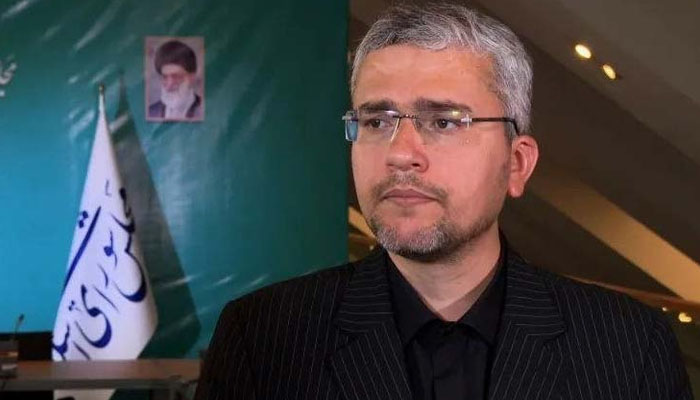
    TEHRAN: Iranian parliamentarian Ebrahim Rezaei has questioned whether Saudi Arabia’s new defence agreement with Pakistan and Türkiye can guarantee the Kingdom’s security. Rezaei, a member of Iran’s Parliament National Security and Foreign Policy Committee, made the remarks in a social media post. He said Saudi Arabia should understand that the agreement with Pakistan and Türkiye would not provide the level of protection Riyadh had failed to obtain despite decades of reliance on the United States. Rezaei described the agreement as a “paper pact” and urged Saudi Arabia to reconsider its policies so that it would not have to seek security guarantees from other countries. His comments came shortly after Saudi Arabia, Pakistan and Türkiye signed a joint defence agreement in Makkah. The agreement was signed amid concerns over potential attacks on Saudi Arabia by Iran-aligned militias in Iraq and Yemen. Saudi officials have reportedly warned of such security threats. Under the new agreement, an attack against any one of the three countries will be considered an attack against all three. The pact aims to strengthen defence cooperation and develop joint capabilities among Saudi Arabia, Pakistan and Türkiye. A trilateral defence summit was held at Al-Safa Palace in Makkah, attended by Saudi Crown Prince Mohammed bin Salman, Turkish President Recep Tayyip Erdogan and Pakistani Prime Minister Shehbaz Sharif. According to Pakistan’s Foreign Office, the three leaders signed the agreement, formally described as the Makkah Defence Joint Agreement.

  • | | | |

    Three powers, one shield? What the pact means

    Pakistan, Saudi Arabia and Türkiye have formalised their long-standing strategic and defence ties through the newly signed Makkah Joint Defence Agreement, establishing a framework for closer military coordination and collective security. The agreement was signed during a trilateral summit in Makkah attended by Prime Minister Shehbaz Sharif, Saudi Crown Prince Mohammed bin Salman and Turkish President Recep Tayyip Erdogan. The pact has attracted comparisons with established military alliances. However, analysts say its stated purpose is not to create a new military bloc or target any particular country. Instead, it provides an institutional structure for defence cooperation that has developed between the three nations over several decades. A formal structure for longstanding ties Pakistan and Türkiye have maintained close political and military relations for decades, while Islamabad and Riyadh have developed extensive defence, diplomatic and economic cooperation. The new agreement is viewed as an attempt to bring these existing relationships under a formal trilateral framework. It is designed to provide a more structured mechanism for consultations, military coordination and strategic cooperation. Why the agreement was signed now The agreement comes amid growing security challenges across the Middle East and wider region. Analysts say conflicts, changing military technologies and emerging security threats have encouraged countries with shared strategic interests to strengthen their defence coordination. The trilateral arrangement is intended to improve collective preparedness and provide a coordinated response to potential threats while supporting regional stability. What the defence pact provides A central element of the agreement is the principle of collective security. Under the framework, aggression against one member is to be treated as a threat to all three countries. The arrangement is expected to encourage greater military coordination, intelligence cooperation, strategic consultations and defence planning. Closer institutional links could also allow the three countries to coordinate their military capabilities and improve their ability to respond to security challenges. Different strengths, shared security interests Each country brings different capabilities to the partnership. Pakistan contributes a large and experienced military, operational expertise and extensive experience in counterterrorism and conventional defence. Saudi Arabia brings significant economic resources, regional influence and political weight. Türkiye adds its growing defence industry, military technology and manufacturing capabilities. Analysts believe these complementary strengths could make the partnership more effective while allowing the three countries to develop greater strategic self-reliance. Pakistan’s diplomatic role The agreement also comes as Pakistan seeks to strengthen its role as a regional diplomatic actor. Islamabad maintains relations with Saudi Arabia, Türkiye, Iran, China and the United States, giving it channels of communication with several major regional and global powers. Analysts argue that Pakistan’s diplomatic engagement, alongside its military capabilities, could help it contribute to regional crisis management and dialogue. What the pact does not mean Despite comparisons with NATO and other military alliances, analysts stress that the agreement is not described as an offensive alliance. It is also not presented as a pact directed against a particular country, a so-called “Muslim NATO”, a nuclear deterrence arrangement or a religious military bloc. Instead, the three countries have presented it as a defensive framework focused on collective security, deterrence, military cooperation and regional stability. The long-term effectiveness of the agreement will depend on sustained political coordination and the willingness of all three governments to implement its commitments.

  • |

    Turkish President Erdogan: Makkah pact to reshape regional security

    Turkish President Recep Tayyip Erdogan has said the joint defence agreement signed by Türkiye, Pakistan and Saudi Arabia will strengthen security cooperation and contribute to peace and stability in the region. In a statement posted on his X account, Erdogan said he visited Makkah at the invitation of Saudi Crown Prince and Prime Minister Mohammed bin Salman. During the visit, Erdogan said he met with Crown Prince Mohammed bin Salman and Pakistani Prime Minister Shehbaz Sharif. The three leaders subsequently signed a joint defence agreement, according to Erdogan. He said the agreement is based on the principle of collective defence and would further strengthen security and military cooperation among the three countries. Erdogan said the pact would also encourage joint projects in the defence industry and facilitate stronger cooperation in combating terrorism. The Turkish president said the agreement reaffirmed the right to self-defence recognised under Article 51 of the United Nations Charter. He stressed that the agreement was not directed against any country. Instead, Erdogan said the pact remained open to brotherly countries that seek peace, prosperity and stability in the region. He added that Türkiye would continue to pursue its principled position of resolving conflicts and crises through dialogue and diplomacy. Erdogan also expressed hope that the visit to Makkah and the agreement reached by the three countries would bring peace, stability and prosperity to the wider region. The agreement marks a significant step in defence cooperation between Türkiye, Pakistan and Saudi Arabia and establishes a framework for closer coordination against shared security threats.

  • | | | |

    Trump signs new orders to restrict birthright citi…

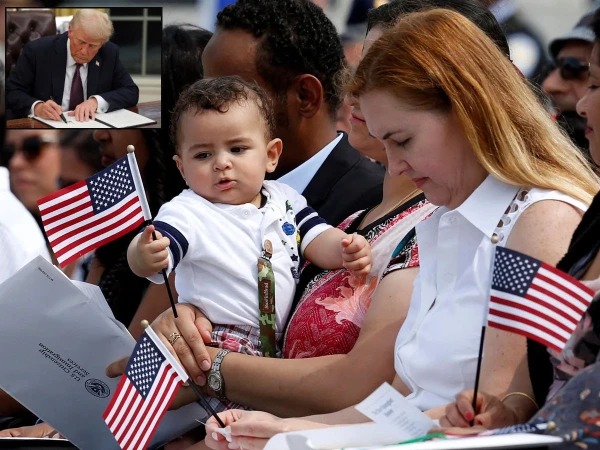
    US President Donald Trump has signed two new executive orders aimed at restricting birthright citizenship and curbing birth tourism, reviving one of the most contentious immigration debates in the United States despite a recent Supreme Court ruling that upheld constitutional protections for children born on American soil. The latest executive actions were announced at the White House, where President Trump defended his administration’s renewed effort to limit automatic US citizenship for certain children born in the country. He argued that the policy should have been implemented years ago and vowed to pursue a different legal path after the courts rejected an earlier attempt. The move comes only weeks after the US Supreme Court ruled that Trump’s previous executive order seeking to end automatic birthright citizenship was inconsistent with the Constitution. The court reaffirmed that the 14th Amendment continues to guarantee citizenship to individuals born in the United States. Under the first executive order, the administration seeks to expand the categories of foreign parents whose US-born children would not automatically qualify for American citizenship. According to the White House, the order targets cases involving parents linked to foreign terrorist organizations, individuals working for foreign governments, those accused of immigration fraud, or people residing in certain US territories where automatic citizenship rules differ. The second executive order focuses on birth tourism, a practice in which pregnant women travel to the United States on tourist or visitor visas to give birth so their children can obtain US citizenship. The Trump administration argues that the practice exploits America’s immigration laws and places an unnecessary burden on public resources. President Trump claimed that hundreds of thousands of children obtain US citizenship each year through birth tourism. However, independent estimates from the Migration Policy Institute suggest that approximately 22,000 to 26,000 births annually are linked to birth tourism. Official US government data also recorded around 9,600 births to foreign mothers in 2024. White House Deputy Chief of Staff and Homeland Security Adviser Stephen Miller defended the new policy, saying some visitors misuse tourist visas with the primary intention of securing citizenship for their children. He argued that existing immigration law gives the president authority to impose entry restrictions in specific circumstances. Legal experts, however, remain skeptical about the long-term viability of the new measures. Gabriel Chin, a law professor at the University of California, Davis School of Law, said that while the president may have authority to regulate entry into the United States, citizenship for children born on US soil is protected by the Constitution. He noted that the Supreme Court has already addressed the issue, making it likely that the latest executive orders will face fresh legal challenges. The renewed effort is expected to trigger another high-profile court battle over immigration policy and the constitutional limits of presidential authority, ensuring that the debate over birthright citizenship remains at the center of US politics.

  • | | |

    Teen in clown costume arrested after fatal stabbin…

    A 15-year-old boy has been arrested after allegedly fatally stabbing a 78-year-old man while dressed in a clown costume in East St. Louis, Illinois, in a case that has shocked local residents and gained widespread attention online. Authorities say doorbell camera footage and neighborhood surveillance videos were instrumental in identifying and apprehending the suspect. According to police, the incident occurred on Monday night when the victim, John Wesley Allen Sr., was waiting at a bus stop to meet his sister. Investigators allege that the teenager, dressed in a loose black-and-red clown outfit, suddenly attacked the elderly man with a knife, inflicting multiple stab wounds. Allen, a retired bus driver and US Navy veteran, died from his injuries. Before the fatal attack, the suspect was reportedly seen wandering through nearby neighborhoods while wearing the clown costume. Residents told investigators that the teenager rang several doorbells, peered through windows, and appeared to be searching for someone. One widely shared doorbell camera video shows the suspect leaning toward the camera and whispering, “I’m looking for you,” in a chilling moment that later spread across social media. Initially, many online users believed the footage was part of a prank or a horror-themed stunt. However, police later confirmed that the video was connected to a real homicide investigation, adding to the public shock surrounding the case. One local resident told police that if his mother had opened the door after the suspect rang the bell, she might also have become a victim. Investigators are reviewing additional surveillance footage and digital evidence to determine whether the attack was premeditated or a random act of violence. Using surveillance footage from nearby homes and businesses, police identified the suspect and arrested him within hours at a residence in the area. Authorities have charged the teenager with first-degree murder. Because the suspect is a minor, law enforcement officials have not released his identity. Police said preliminary findings indicate that the victim and the suspect had no known connection, suggesting the stabbing may have been a random attack. The investigation remains ongoing as detectives continue examining evidence, including social media activity and surveillance recordings, to establish the motive behind the killing. The case has drawn national attention due to its disturbing nature and the viral spread of the doorbell camera footage, while authorities continue to urge the public to avoid speculation until the investigation is complete.

  • |

    Cambridge to review hiring after Arday resignation

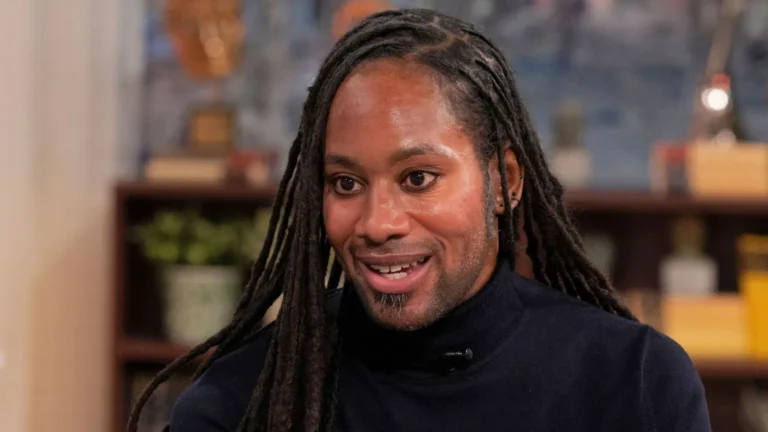
    The University of Cambridge has announced a review of its procedures for appointing senior academics following the resignation of Professor Jason Arday amid allegations of plagiarism and questions surrounding parts of his academic record. Cambridge said an ongoing investigation into Arday’s qualifications, previous appointments and tenure would inform the wider review of how senior academic positions are filled. Arday, a professor of sociology of education and fellow of Jesus College, stepped down after allegations emerged concerning his academic work and claims made about his professional background. He has rejected accusations of deliberate plagiarism and denied fabricating his achievements. The controversy has prompted calls from academics for an independent investigation into how Arday was appointed to a senior position at one of the world’s most prestigious universities. Priyamvada Gopal, a Cambridge professor who is among those calling for an independent inquiry, said the controversy had caused significant reputational damage to the university. She argued that Cambridge should not investigate itself and urged the involvement of academics from outside the institution. Cambridge said it was aware of the concerns surrounding the case and would continue examining the circumstances of Arday’s appointment and tenure. Jesus College welcomed the university’s decision to review its appointment procedures. The college said Arday’s position as a fellow depended on his university appointment and that it relied on Cambridge to verify academic credentials. The University of Glasgow, where Arday served as Professor of Sociology of Education from January 2022 to March 2023, has also launched its own review. The university said the review would establish the facts surrounding his appointment and identify lessons for the future. The controversy began after US researcher Nathan Cofnas raised allegations that sections of Arday’s PhD dissertation had been copied from earlier academic works. Liverpool John Moores University, which awarded Arday his doctorate, said it had investigated the plagiarism allegations last year and rejected them. The university maintained that position and said his PhD remains valid. Further questions have since been raised about some of Arday’s academic publications and claims on his CV. Some institutions where he reportedly claimed to have held academic positions have denied that he occupied those roles. Arday has acknowledged errors in his academic work but denied intentionally plagiarising material. He has suggested that autism and inadequate supervision during the early stages of his academic career may have contributed to mistakes. He has also rejected allegations that he fabricated his personal achievements and has previously argued that some of the criticism directed at him was racially motivated. The controversy has also raised questions about how allegations against Arday were handled. Times Higher Education reporter Jack Grove was investigated by the Metropolitan Police following a complaint of harassment after he contacted Arday about the plagiarism allegations. The investigation was later closed. Metropolitan Police Commissioner Sir Mark Rowley subsequently apologised and said the complaint should have been screened out at an earlier stage. Attention has also turned to Arday’s forthcoming memoir, “Great and Unfortunate Things”, which is scheduled for publication next week. Arday previously claimed in an interview that he had received a £1.4 million advance for the memoir, although he did not specify the currency. Publishing industry figures have questioned the size of the alleged payment. Publisher Simon & Schuster has said it intends to proceed with publication. Reports have also identified differences between an earlier proposal for the memoir and the final manuscript, including changes to the timing and description of some events in Arday’s life.

  • | |

    Oil surges above $83 as Strait of Hormuz tensions …

    Global oil prices continued their upward momentum on Friday, with Brent crude climbing above $83 per barrel as renewed tensions surrounding the Strait of Hormuz heightened concerns over potential disruptions to global energy supplies. Brent crude futures gained 1.1 percent to reach $83.48 per barrel, while US West Texas Intermediate (WTI) crude rose by 85 cents to $78.84 per barrel. The latest rally marks a sharp reversal from earlier this week, when crude prices had declined amid expectations that diplomatic efforts between Iran and Oman could ease regional tensions and pave the way for smoother maritime traffic through the Strait of Hormuz. However, investor sentiment shifted after reports that Iran, in coordination with Oman, proposed new restrictions on shipping through the strategic waterway. The proposal reportedly includes banning vessels belonging to countries considered hostile from passing through the strait and imposing substantial financial penalties on ships that violate the proposed regulations. The renewed uncertainty over one of the world’s most important oil transit routes has reignited fears of supply disruptions, prompting traders to push oil prices higher despite earlier forecasts predicting further declines. Analysts say developments in the Strait of Hormuz will remain a key factor influencing global energy markets in the coming days.