turkish president erdogan
|

Turkish President Erdogan: Makkah pact to reshape regional security

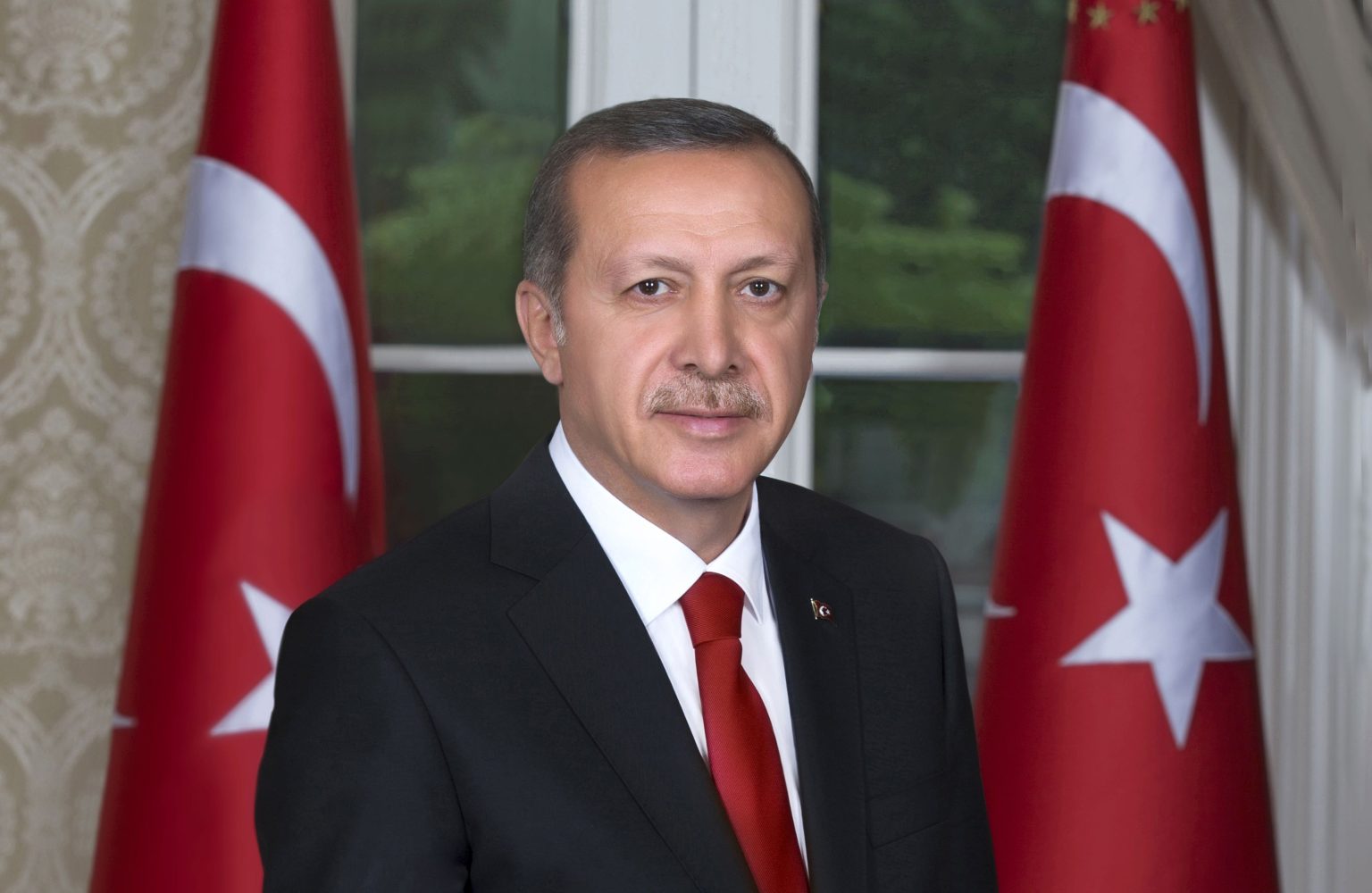
Turkish President Recep Tayyip Erdogan has said the joint defence agreement signed by Türkiye, Pakistan and Saudi Arabia will strengthen security cooperation and contribute to peace and stability in the region.

In a statement posted on his X account, Erdogan said he visited Makkah at the invitation of Saudi Crown Prince and Prime Minister Mohammed bin Salman.

During the visit, Erdogan said he met with Crown Prince Mohammed bin Salman and Pakistani Prime Minister Shehbaz Sharif.

The three leaders subsequently signed a joint defence agreement, according to Erdogan.

He said the agreement is based on the principle of collective defence and would further strengthen security and military cooperation among the three countries.

Erdogan said the pact would also encourage joint projects in the defence industry and facilitate stronger cooperation in combating terrorism.

The Turkish president said the agreement reaffirmed the right to self-defence recognised under Article 51 of the United Nations Charter.

He stressed that the agreement was not directed against any country.

Instead, Erdogan said the pact remained open to brotherly countries that seek peace, prosperity and stability in the region.

He added that Türkiye would continue to pursue its principled position of resolving conflicts and crises through dialogue and diplomacy.

Erdogan also expressed hope that the visit to Makkah and the agreement reached by the three countries would bring peace, stability and prosperity to the wider region.

The agreement marks a significant step in defence cooperation between Türkiye, Pakistan and Saudi Arabia and establishes a framework for closer coordination against shared security threats.

Similar Posts

  • |

    Armenian church leader stands trial in standoff with government

    The trial of Catholicos Karekin II, head of the Armenian Apostolic Church, and six senior clerics has commenced in Armenia over accusations of defying a civil court order. The proceedings were halted almost immediately when the presiding judge recused himself due to a conflict of interest involving defence counsel. The case marks an unprecedented legal challenge to the church leadership, stemming from a civil order to temporarily reinstate a defrocked bishop who aligned with Prime Minister Nikol Pashinyan. Pashinyan has repeatedly called for the resignation of Karekin II and accused the church of acting as a proxy for foreign powers, specifically Russia. Church officials and human rights advocates argue the prosecution is politically motivated and violates the constitutional separation of church and state.

  • | | |

    Oil prices surges avove $91 as Iran war fuels Horm…

    Oil prices climbed on Tuesday, with Brent crude moving above $91 a barrel as stalled diplomacy over the Iran conflict raised fresh concerns about global energy supplies. Brent futures gained 27 cents, or 0.3%, to $91.14 a barrel, while US West Texas Intermediate rose 42 cents to $85.04. WTI had earlier reached $85.37, its highest level since July 31. Markets remained tense after Iran signalled a shift toward a more offensive military posture, while Washington ruled out extending a temporary ceasefire. Progress toward reopening the Strait of Hormuz to normal tanker traffic has also slowed, adding to fears of prolonged supply disruptions. Only a handful of commodity vessels crossed the strategic waterway over the weekend, sharply below normal traffic levels. Concerns were further heightened by attacks in the Red Sea, reinforcing fears over disruptions at both the Strait of Hormuz and Bab el-Mandeb. Despite the growing tensions, reports of possible back-channel contacts between the US and Iran offered a limited sign of hope for renewed diplomacy. Meanwhile, markets are also watching US crude inventories, which are expected to have declined last week. Earlier, Oil prices climbed on Monday as uncertainty over a possible diplomatic breakthrough between the United States and Iran increased, while a sharp slowdown in tanker movements through the Strait of Hormuz heightened concerns about disruptions to global crude supplies. Brent crude futures gained as much as 1% during early trading to reach $89.40 per barrel. The benchmark was later up 72 cents, or about 0.8%, at $89.20 a barrel by 0229 GMT. US West Texas Intermediate (WTI) crude also moved higher, rising 44 cents to $82.83 per barrel. Both international benchmarks posted gains of more than 5% last week after a series of attacks involving energy and shipping assets in and around the strategically important Strait of Hormuz. The incidents have intensified fears that further escalation could affect one of the world’s most important oil transit routes. Market sentiment was further affected by developments over the weekend, when Iranian Foreign Minister Abbas Araqchi said Tehran had yet to decide whether it would resume negotiations with Washington. US President Donald Trump, meanwhile, told Americans to prepare for somewhat higher gasoline prices as the conflict continues. Analysts said the renewed uncertainty had brought geopolitical risk back into crude markets after oil prices had previously come under pressure on expectations that diplomatic efforts could ease tensions. “Oil prices have now rebounded almost completely from the lows seen in early August, as hopes for a more permanent resolution between the US and Iran have faded and geopolitical risk premiums have returned to the market,” said Priyanka Sachdeva, head of market insights at Phillip Nova in Singapore. Sachdeva cautioned, however, that the rally could lose momentum unless there is evidence of a further deterioration in the situation. She said the market would need to see renewed aggression in the Strait of Hormuz, particularly significant damage to oil tankers or energy infrastructure, before prices were likely to move substantially higher. Hormuz shipping activity slows Concerns over physical supply disruptions increased after ship-tracking data showed a marked decline in vessel traffic through the Strait of Hormuz over the weekend. According to data from Kpler, only five commodity vessels crossed the strategic waterway on Saturday, while no such transits were recorded on Sunday. This compared with 31 commodity vessel crossings during the previous weekend. The slowdown is significant because the Strait of Hormuz is a critical route for international energy shipments. Any prolonged disruption could increase transportation risks, raise insurance costs and place additional upward pressure on crude prices. The United Arab Emirates also accused Iran of attacking another vessel operated by Abu Dhabi National Oil Company (ADNOC) while it was passing through the strait on Friday, according to the Emirati state news agency WAM. The UAE had earlier blamed Iran for two separate incidents involving ADNOC-operated vessels on Thursday evening. The latest incidents have added to concerns among traders that the conflict could increasingly affect commercial shipping and energy infrastructure, rather than remaining confined to military and diplomatic confrontation. The Strait of Hormuz remains particularly important to global oil markets because a substantial volume of crude and petroleum products moves through the waterway. Any sustained interruption could therefore have consequences well beyond the region. For now, traders are closely monitoring developments involving US-Iran diplomatic contacts, attacks on shipping and the movement of tankers through the strait. While the latest price gains reflect a higher geopolitical risk premium, analysts remain cautious about predicting a prolonged rally. If shipping activity resumes and diplomatic channels reopen, some of the premium built into crude prices could quickly unwind. Conversely, additional attacks on tankers, oil facilities or other critical infrastructure could trigger a stronger market reaction and push prices higher as traders reassess the security of regional supplies.

  • | |

    Arjumand Rahim opens up about anxiety and multiple ER visits

    Arjumand Rahim is one of Pakistani television’s most enduring and respected performers. She began her career in the 1990s and has built a body of work that spans three decades, evolving alongside the industry itself and consistently delivering performances that leave a mark. Her recent role in Sher reminded audiences precisely what she is capable of, earning widespread praise and reinforcing her standing as one of the finest actors of her generation. Away from the screen, however, she has been quietly navigating a health struggle that was far more frightening than anything she has portrayed on camera. Appearing as a guest on Vasay Chaudhary’s show, Arjumand spoke with remarkable candour about a period in her life when she repeatedly found herself in the emergency room with no clear explanation for what was happening to her body. She described feeling faint and physically unwell on multiple occasions, with each ER visit leaving her more shaken than the last. Adding to her fear was a deeply personal detail: her father had passed away due to cardiac arrest, and the physical symptoms she was experiencing brought that grief rushing back in the most frightening way possible. Every episode of faintness or discomfort carried the shadow of that loss. It was only when she received a proper diagnosis that the picture began to make sense. She was found to be suffering from extreme anxiety and depression, conditions that had been manifesting through very real and alarming physical symptoms. For someone who had not understood what was happening to her, the diagnosis, while difficult to hear, was also the beginning of clarity. She sought professional help, underwent therapy, and received the treatment she needed to begin recovering. She described the period before the diagnosis as truly frightening, a time when she did not know what was wrong with her and could not explain what her body was doing or why. The uncertainty, layered on top of grief and the physical toll of the episodes themselves, made for an extraordinarily difficult stretch of time. The good news, and she was clear about this, is that she is doing significantly better now. The treatment worked, and the willingness to seek help made the difference. Her decision to speak openly about what she went through carries weight beyond her own story. In Pakistan, conversations around mental health and its physical manifestations remain challenging, and the stigma surrounding anxiety, depression and therapy continues to prevent many people from reaching out. When a figure of Arjumand Rahim’s stature speaks plainly about her own diagnosis and her experience of getting treatment, it sends a message that reaching for help is not weakness but the beginning of getting better. That is a message worth hearing.

  • |

    Pakistani climbers reopen historic Hindu Kush pass after 27 years

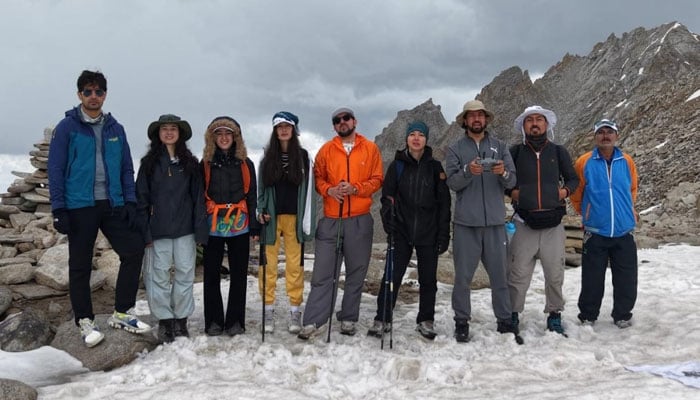
    CHITRAL: A team of Pakistani mountaineers has successfully crossed the historic Phargam An Pass in the Hindu Kush mountain range for the first time in 27 years, marking a major achievement for the country’s mountaineering community. The expedition successfully reached the 5,100-metre-high Phargam An Pass, completing a challenging journey through one of the most remote and difficult mountain routes in northern Pakistan. The expedition also made history as female climbers reached the summit for the first time, highlighting the growing participation of women in Pakistan’s adventure and mountaineering sector. The mission was organised in Upper Chitral with the support of the Khyber Pakhtunkhwa Culture and Tourism Authority. During the expedition, the team also discovered the memorial of Austrian mountaineer George Kronberger, who lost his life in the area in 1975. Despite facing dangerous glaciers, steep snow-covered slopes, rocky terrain and the constant threat of avalanches, the team completed the expedition safely. Expedition guide Zamrud Khan said the route to Phargam An Pass has changed significantly over the years due to the effects of climate change, making the journey more challenging than in the past. Three sisters from Chitral—Mehrosh Akhtar, Ismail Roz and Madhu Shala Akhtar—took part in the historic expedition, setting a new milestone for women in Pakistani mountaineering. Other members of the expedition included Kamran Khan, Samar Khan, Nauman Khan, Noorul Rahman, Zohaib Khan, Umar Khattab Sherani, Sohniya Babar, Amina Shabbir and Madiha Syed. The successful expedition is being seen as an important milestone for adventure tourism and mountaineering in Pakistan, while showcasing the country’s growing potential as a destination for high-altitude exploration.

  • | |

    Elizabeth Hurley reveals what she really thought o…

    Elizabeth Hurley has opened up about her relationship with Miley Cyrus, revealing that she admired the singer long before she began dating Miley’s father, country music star Billy Ray Cyrus. The actress shared that while she had never met Miley before her romance with Billy Ray, she already felt she knew the Grammy-winning star thanks to her son, Damian Hurley.  Speaking during an appearance on SiriusXM’s Andy Cohen Live, Hurley explained that Damian was a huge fan of Hannah Montana and Miley’s music while growing up. As a result, she became very familiar with the pop icon’s career and personality long before their families became connected. “I always knew who she was,” Hurley said, adding that her son frequently played Miley’s music and watched her videos. She joked that she had seen the music video for “Wrecking Ball” countless times because of Damian’s enthusiasm. Looking back, Hurley admitted she had a feeling she would get along with Miley if they ever met—and that prediction turned out to be true.  The Bedazzled actress described Miley as “adorable” and said she genuinely enjoys spending time with her. Hurley’s comments offer a glimpse into the positive relationship developing within the blended family since she and Billy Ray Cyrus confirmed their romance in early 2025.  Hurley and Billy Ray first crossed paths while filming the 2022 holiday movie Christmas in Paradise. Although they remained friends for some time, their relationship eventually blossomed into romance, which they made public in April 2025. Since then, the couple has frequently spoken about how much they enjoy each other’s company and the peaceful lifestyle they share between Tennessee and the English countryside.  Miley has also publicly expressed support for both of her parents finding happiness following their separation. Reports indicate that she has welcomed Hurley warmly, helping create a positive atmosphere within the extended family. Hurley and Billy Ray even attended the London premiere of Miley’s visual album in 2025, showing their support for the singer’s career.  Hurley’s heartfelt remarks suggest that her admiration for Miley began years before her romance with Billy Ray. Rather than seeing Miley only as a global superstar, the actress remembers her through the joyful memories she shared with her son. Now that their paths have crossed personally, Hurley says her first impression was right—she always believed she would like Miley, and today, she says that feeling has only grown stronger. 

  • |

    Powerful El Niño could push 49 million more into …

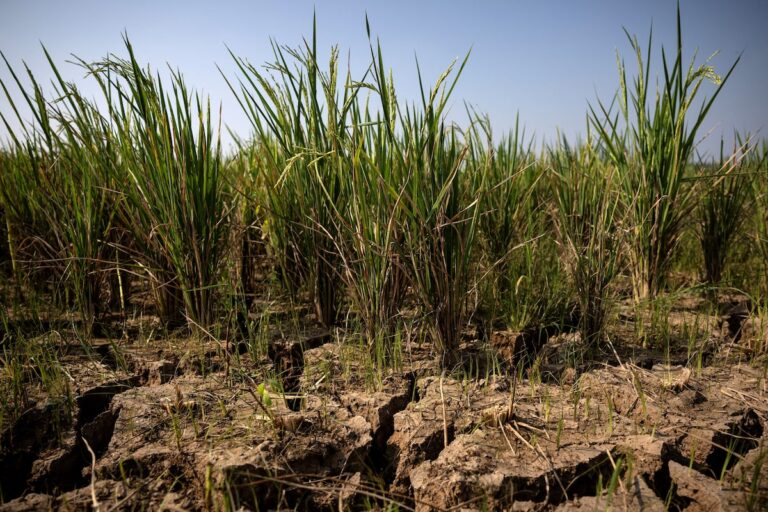
    A powerful El Niño weather event could push nearly 49 million more people into acute hunger by the end of 2027, the United Nations’ World Food Programme (WFP) has warned, raising fresh concerns about a worsening global food crisis driven by climate change and extreme weather. According to a new WFP report released on Wednesday, there is an 81 percent probability that the developing El Niño will become a very strong event, with Pacific Ocean temperatures already reaching their highest levels since at least 1982. If current forecasts hold, it could become the strongest El Niño recorded since 1950. El Niño is a naturally occurring climate pattern that warms surface waters in the central and eastern Pacific Ocean. Although it originates in the Pacific, it disrupts weather systems worldwide, often triggering droughts, delayed monsoons, floods and unpredictable rainfall that damage crops and threaten food supplies. The WFP estimates that 274 million people across 45 vulnerable countries could face acute food insecurity by the end of next year, representing a 22 percent increase from current crisis levels. Central America and Southern Africa are expected to suffer the most severe consequences. Food insecurity in Central America could rise by 83 percent, while Southern Africa may experience a 75 percent increase. More than 12 million additional people in Southern Africa, South America and the Caribbean could struggle to access enough food. Jean-Martin Bauer, Director of WFP’s Food Security and Nutrition Analysis Service, said previous strong El Niño events have repeatedly triggered major hunger emergencies. “These are events that in the past have caused widespread food crises,” Bauer said, urging governments and humanitarian organisations to prepare before conditions worsen. Although global food markets entered this El Niño cycle in a relatively stable position following strong harvests in 2025. Bauer warned that ongoing conflict in the Middle East and possible crop failures caused by extreme weather could push food prices higher. While worldwide price spikes are not considered inevitable, regional shortages could make food increasingly unaffordable for millions of vulnerable families already struggling with poverty. The report also highlights another growing concern—declining humanitarian funding. Budget cuts from major donors in the United States and Europe have significantly reduced WFP’s ability to monitor food security. Household surveys dropped from 1.1 million in 2024 to around 800,000 in 2025, with further reductions recorded this year due to funding shortages. Experts warn that limited data collection could delay the identification of emerging hunger hotspots, making humanitarian responses slower and less effective. The WFP also forecasts below-average rainfall across parts of East Africa, the Sahel, Central America and the Caribbean, while countries such as Somalia could face an increased risk of flooding. Across South and Southeast Asia, delayed monsoons, drought and localized floods are expected to disrupt agricultural production and livelihoods. Despite the alarming outlook, the UN agency stressed that forecasts remain uncertain and impacts will vary from region to region. To reduce future losses, the WFP has expanded its anticipatory action programmes in 18 countries, providing cash assistance and emergency support to more than 1.3 million people ahead of expected climate shocks. The agency says acting early will be critical to preventing millions more people from falling into hunger as one of the strongest El Niño events in decades continues to develop.

Leave a Reply

Your email address will not be published. Required fields are marked *