senate questions authorities

Senate questions authorities over years of neglect at Mazar e Quaid  

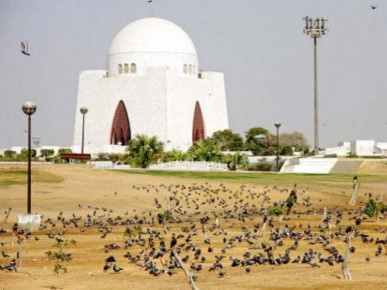
Islamabad: The Senate Sub Committee on National Heritage and Culture has raised serious concerns over the condition of Quaid e Azam’s Mausoleum, questioning the slow maintenance work, damaged boundary walls, cleanliness issues and security arrangements at one of Pakistan’s most important national monuments.

The issue came under discussion during a meeting of the Sub Committee held at Parliament Lodges, Islamabad, under the chairmanship of Senator Syed Waqar Mehdi. The meeting was held to review progress on earlier recommendations regarding administrative, renovation and development matters of Quaid e Azam’s Mausoleum and its surrounding areas.

Senator Syed Waqar Mehdi expressed concern over wall chalking and the poor condition of the boundary wall around Mazar e Quaid. He directed the concerned authorities to start urgent renovation work. Federal Secretary for National Heritage and Culture Mr. Asad Rehman Gillani informed the Committee that the boundary wall had not received proper maintenance since 2017 and assured that the issue would be addressed soon.

Senator Bushra Anjum Butt also expressed dissatisfaction over the lack of attention given to the national heritage site and questioned why such an important symbol of Pakistan was not receiving the required priority from relevant authorities.

The Committee reviewed several operational issues including security, electricity and water supply. Mr. Asad Rehman Gillani informed the Committee that some problems had already been resolved, while remaining matters would be completed at the earliest.

The meeting was attended by Senator Bushra Anjum Butt and Senator Sarmad Ali through Zoom. Representatives of the Quaid e Azam Mazar Management Board also participated. Officials from K Electric, Karachi Metropolitan Corporation, Sindh Solid Waste Management Board, Karachi administration and police authorities also attended the meeting.

The Committee directed authorities to improve security arrangements at the Mausoleum by installing CCTV cameras across the premises and ensuring deployment of sufficient police personnel. Senator Syed Waqar Mehdi also directed that a complete security plan should be prepared before reopening the Mausoleum for the general public, including deployment of a Special Security Unit.

During the discussion, the Committee also raised concerns regarding individuals involved in drug abuse found inside the Mausoleum premises. SSP East Karachi informed the Committee that such individuals are usually granted bail within two to three days after legal proceedings and are later referred to the Edhi Foundation for rehabilitation.

Senator Syed Waqar Mehdi also highlighted financial concerns regarding the maintenance of Mazar e Quaid. He observed that the Government of Sindh currently carries the financial responsibility for maintaining the Mausoleum and suggested that other provinces, Gilgit Baltistan and Azad Jammu and Kashmir should also contribute annually towards its maintenance and operational expenses.

The Committee expressed dissatisfaction over incomplete sanitation work around the Mausoleum. Officials informed that general waste had been removed, but construction debris was still present in surrounding areas. Senator Syed Waqar Mehdi directed immediate removal of all remaining waste and debris.

The Committee also took notice of coordination issues among government departments and expressed displeasure over the absence of the Director General Karachi Development Authority from the meeting.

To improve coordination, Senator Syed Waqar Mehdi directed all concerned departments to create a dedicated communication group where updates regarding Mazar e Quaid improvement work could be shared quickly. He also instructed officials to provide before and after pictures of development and maintenance activities.

The Committee further directed that one Member of the National Assembly and one Senator from Karachi should be included in the Quaid e Azam Mazar Management Board. It also recommended including the President of Karachi Chamber of Commerce and Industry in the Board to improve public and business sector involvement.

The Sub Committee will hold another follow up meeting after August 14 to review the progress of all departments and assess whether the required improvements have been completed.

Similar Posts

  • | |

    Rawalpindi Railway Station lights up in Pakistani,…

    RAWALPINDI: Rawalpindi Railway Station has been given a festive makeover ahead of Pakistan’s Independence Day, with the historic building illuminated and decorated with the national flags of Pakistan, Türkiye and Saudi Arabia. The display also highlights the growing ties among the three countries following the signing of the Mecca defence agreement. The railway station has been decorated with red and green lighting, creating a striking visual display across the building. According to the arrangement, red represents Türkiye, while green reflects the national colors of Pakistan and Saudi Arabia. Similar red and green lights have also been installed at the Railway Headquarters Police Station in Rawalpindi. The decorations are part of the city’s preparations to mark Independence Day while also showcasing the close diplomatic and strategic relations between Pakistan, Türkiye and Saudi Arabia. The colorful illumination has added a festive atmosphere to one of Rawalpindi’s key landmarks as celebrations for August 14 get underway.

  • | |

    Monsoon death toll rises to 107 as Punjab, K-P fac…

    LAHORE: Pakistan’s monsoon death toll has risen to 107 after 10 more people were killed in rain-related incidents across Punjab and Khyber-Pakhtunkhwa during the past 24 hours. According to the latest figures released by the National Disaster Management Authority (NDMA), seven people died in Punjab while three lost their lives in K-P. The deaths were reported between the previous afternoon and 1pm on Sunday. Punjab recorded fatalities in several districts. Gujrat and Okara reported two deaths each, while Sargodha, Narowal and Sialkot each reported one death. In K-P, two people died in Hangu and another was killed in Shangla. Officials said the latest casualties were caused by incidents including house collapses, electrocution and drowning as heavy rainfall continued to affect several parts of the country. The recent rains also injured 50 people. Punjab accounted for 47 of the injured, while three people were injured in Hangu. K-P has recorded the highest number of deaths since the beginning of the current monsoon season, with 55 fatalities. Punjab follows with 36 deaths. Seven people have died in Azad Jammu and Kashmir, six in Balochistan, two in Sindh and one in Gilgit-Baltistan. Overall, the monsoon has injured 297 people and damaged 447 houses across the country. At least 269 livestock have also been killed. Rescue authorities have carried out 130 operations since the start of the rainy season. These efforts have helped rescue 3,841 people from flooded and other dangerous areas. The rains have also caused significant damage to roads and other infrastructure. Landslides, flash floods and rising water levels have disrupted transportation in parts of K-P and Gilgit-Baltistan. The mountainous region has suffered particularly heavy damage. The Gilgit-Baltistan Disaster Management Authority said 184 houses have been damaged, while nine bridges have been destroyed. Nearly eight kilometres of roads have also been washed away. Astore has reported the highest number of damaged homes, while Diamer has suffered major destruction from several weather-related incidents. Skardu has recorded the greatest number of damaged bridges. Relief activities are continuing in affected communities. Authorities are distributing food, tents and other essential supplies, while road crews are working to reopen important routes.

  • | |

    LHC CJ orders 2-month deadline for long-pending tr…

    Chief Justice Lahore High Court (LHC) Justice Aalia Neelum has taken a major step to expedite the trials of accused persons who have remained in custody for more than three years, directing that their cases be decided within two months. On the directions of Chief Justice Aalia Neelum, letters have been issued to the Sessions Judges of 28 districts across Punjab, directing them to ensure the speedy disposal of cases involving under-trial prisoners who have been in detention for more than three years. The Sessions Judges have been instructed to place such cases on a fast-track basis and hear them on a priority basis so that decisions are delivered within the stipulated period of two months. The Chief Justice directed that all Sessions Judges in Punjab would be bound to ensure the disposal of these cases within the prescribed timeframe. The district judiciary has also been directed to accelerate proceedings in cases involving long-incarcerated under-trial accused and avoid unnecessary adjournments that could further prolong their detention. The Lahore High Court has also sought implementation reports regarding cases in which accused persons have remained behind bars for more than three years, in order to monitor progress and ensure compliance with the directions. The initiative aims to facilitate the timely provision of justice to prisoners whose trials have remained pending for prolonged periods. The directions are also intended to address unnecessary delays in criminal proceedings and reduce the backlog of long-pending cases. The Chief Justice’s directive underscores the need for the district judiciary to prioritize cases involving under-trial prisoners and ensure that prolonged detention does not continue merely because of delays in the disposal of their trials. The Sessions Courts across Punjab have accordingly been asked to take immediate measures to speed up proceedings and submit reports regarding compliance with the Lahore High Court’s directions.

  • | | | |

    Norway praises Pakistan’s role in US-Iran peace …

    Norway has praised Pakistan for playing an important and constructive role in efforts to promote dialogue between the United States and Iran amid rising tensions in the Middle East. The appreciation came during Norwegian Foreign Minister Espen Barth Eide’s visit to Islamabad, where he held talks with Deputy Prime Minister and Foreign Minister Ishaq Dar. The Norwegian foreign minister arrived in Pakistan on Thursday for a two-day visit, marking the first visit by a Norwegian foreign minister to the country in around a decade. During delegation-level discussions, Pakistan and Norway reviewed bilateral relations and discussed ways to expand cooperation in several areas, including trade, investment, climate change, renewable energy, maritime affairs and education. The two sides also discussed regional and international developments, with particular attention to the situation in the Middle East. Eide praised Pakistan’s diplomatic efforts during the recent US-Iran conflict. He specifically acknowledged the contributions of Prime Minister Shehbaz Sharif, Foreign Minister Ishaq Dar and Chief of Army Staff Field Marshal Syed Asim Munir in efforts aimed at promoting peace. The Norwegian foreign minister described the ongoing regional conflict as a serious threat to global peace and the international economy. He said Pakistan had taken an important step by engaging with the parties involved and facilitating dialogue. Eide also welcomed Pakistan’s role in hosting and facilitating talks in Islamabad. He said the country’s diplomatic engagement had strengthened its position on the international stage, particularly in peacebuilding efforts. Norway, he added, was prepared to support Pakistan wherever it could contribute to peace initiatives. He noted that Oslo had considerable experience in peace negotiations and maintained communication channels with both Tehran and Washington. The two countries also discussed maritime security and developments concerning the Strait of Hormuz. Eide said Norway’s experience as a major maritime nation could allow it to contribute constructively to discussions on international maritime law and regional maritime issues. Pakistan and Norway also agreed to strengthen economic and people-to-people ties. Eide said Norwegian companies were increasingly exploring opportunities in Pakistan, particularly in the energy and fertiliser sectors. He also highlighted the potential for greater economic cooperation involving Switzerland and Iceland. The Norwegian minister praised the Pakistani community in Norway, saying its integration into Norwegian society had played an important role in strengthening relations between the two countries. The Foreign Office said both sides expressed satisfaction with the friendly nature of Pakistan-Norway relations and agreed to expand cooperation in areas of mutual interest. The visit is also expected to build on recent high-level contacts between the two countries, including discussions between Dar and Eide earlier this year and a visit by Norway’s state secretary to Islamabad in May.

  • | |

    NSPP conducts 5th three-day directors’ training …

      LAHORE: The Executive Development Institute (EDI) of the National School of Public Policy (NSPP), Lahore, successfully conducted the fifth course of its three-day Directors’ Training Program (DTP) for State-Owned Enterprises (SOEs) from August 19 to 21, 2026. The training initiative was approved by the Securities and Exchange Commission of Pakistan (SECP) and focused on enhancing corporate governance, leadership and institutional performance within SOEs. A total of 21 participants from across Pakistan attended the program, representing federal and provincial governments as well as the private sector. Participants included officials and executives from the Ministry of Industries and Production, SECP, Pakistan Civil Aviation Authority, Pakistan Airports Authority, NESPAK, PASSCO, Northern Power Generation Company Limited, WAPDA, Water and Sanitation Services Company Haripur, Punjab Mineral Company, Punjab Police, Universal Service Fund, Pakistan Kidney and Liver Institute and Research Center, and Lahore Development Authority. Rector NSPP Mr. Farhan Aziz Khawaja welcomed the participants and highlighted the importance of strengthening corporate governance through quality professional training. He said the program aimed to establish a new benchmark in governance training with the support of SECP. He also emphasized the importance of transparency, accountability and responsible leadership in public-sector organizations. Dr. Naveed Elahi, Dean EDI, provided an overview of the training program and explained its focus on improving SOE governance and performance through effective leadership. He said the course addressed contemporary governance requirements, including directors’ legal responsibilities, board effectiveness, risk management and ethical decision-making. He encouraged participants to actively engage in case studies, simulations, discussions and networking opportunities throughout the training. The program featured a distinguished panel of guest speakers, including Mr. Abdul Rehman Warraich former SECP Commissioner; Dr. Ishrat Hussain, former Advisor to the Prime Minister; Mr. Kashif Ahmad Noor Military Accountant General; Mr. Farhan Aziz Khawaja, Rector NSPP/DG CSA; Dr. Irum Saba Director, IBA Karachi; Mr. Muhammad Anwar Sheikh retired Federal Additional Secretary, Finance Division; Mr. Mairaj A. Ariff, former Director General, NIPA Quetta; Dr. Kashif Zafar Dean-SST, UMT Lahore; Mr. Imtiaz Mahmood Company Secretary, SNGPL; Mr. Tariq Bajwa former Governor State Bank of Pakistan and Ex-SAPM on Finance; and Mr. Salman Amin Member, Competition Commission of Pakistan. The three-day course covered a wide range of topics, including principles of corporate governance, SOE reforms and legal frameworks, government stewardship, directors’ selection and performance evaluation, external and internal audits, audit committees, organizational culture, Islamic finance, financial risk governance, public service obligations, competitive neutrality, business planning, cybersecurity, digitization, reporting and disclosure, board composition and structure, as well as board simulations and case studies. During the closing session, Rector NSPP thanked the participants for their active participation and valuable contributions. He also appreciated the efforts of the Dean EDI and his team in successfully organizing the program. Participants showed keen interest throughout the course and actively participated in question-and-answer sessions. At the conclusion of the training, Rector NSPP, along with the Dean EDI, distributed certificates among the participants, formally marking the successful completion of the fifth Directors’ Training Program for State-Owned Enterprises.

  • | | |

    Pakistan needs hard governance to defeat terror: D…

    Director General of Inter-Services Public Relations (ISPR) Lieutenant General Ahmed Sharif Chaudhry has said Pakistan must become a “hard state” where the Constitution and law are applied equally to everyone, stressing that strong governance is essential to defeating terrorism and ensuring lasting peace. He rejected claims that the security situation in Balochistan is worsening, calling them part of a deliberate campaign to create a false perception about the province. Addressing a detailed press conference on Friday, the military spokesperson said Pakistan’s security forces continue to make significant gains against terrorism through sustained intelligence-based operations across the country. Lt Gen Chaudhry said a total of 40,348 intelligence-based operations (IBOs) have been carried out so far this year by the armed forces, police, intelligence agencies and civil armed forces. More than 31,000 of these operations were conducted in Balochistan, reflecting the state’s continued focus on restoring peace in the province. He said Pakistan recorded 3,145 terrorism-related incidents during 2026. Of these, 1,971 incidents occurred in Khyber Pakhtunkhwa, 1,148 in Balochistan and 26 in other parts of the country. The ISPR chief said security forces killed 2,084 confirmed terrorists during operations this year, describing it as the highest average in the country’s history. On average, around 10 terrorists have been eliminated every day, while nearly 200 intelligence-based operations are conducted daily. Highlighting the sacrifices made in the fight against terrorism, Lt Gen Chaudhry said 819 Pakistanis lost their lives in terrorism-related incidents this year. The victims included 303 military personnel, 194 members of police and civil armed forces, and 322 civilians. He also revealed that 28 suicide attacks had taken place across the country during the year. According to him, most of these attacks involved Afghan nationals or individuals linked to groups operating from Afghan territory. The military spokesperson said the rise in terrorist attacks should not be viewed as a sign of weakness. Instead, he argued that militant groups have intensified attacks because of increasing pressure from proactive security operations and repeated battlefield setbacks. Lt Gen Chaudhry also accused the Afghan Taliban administration of allowing terrorist groups to operate from Afghan soil, claiming cross-border support remains a major factor behind terrorism inside Pakistan. Explaining his vision of a “hard state,” he said it does not mean military rule. Rather, it refers to a country where institutions function according to the Constitution, laws are enforced fairly, and no individual or group stands above the law. Referring to Article 5 of Pakistan’s Constitution, he said loyalty to the state and obedience to the Constitution are fundamental duties of every citizen. He added that discussions about rights must also include recognition of civic responsibilities. Speaking specifically about Balochistan, Lt Gen Chaudhry said the province’s real challenge lies with certain elites and tribal leaders who seek to preserve the existing power structure. He alleged that some influential groups oppose educational and economic progress because they fear losing their traditional influence. He further claimed that some individuals benefit from illegal activities, including smuggling and other criminal networks, and promote unrest whenever the state strengthens law enforcement or cracks down on such activities. The military spokesperson reiterated that Pakistan would not negotiate with terrorist groups or those using violence for political purposes. Instead, he said the armed forces would continue engaging directly with the people of Balochistan, whom he described as the province’s true stakeholders. Lt Gen Chaudhry also alleged that hostile foreign powers are attempting to exploit Balochistan’s strategic location and natural resources by supporting anti-state elements in collaboration with local actors opposed to reforms and development. Discussing the issue of missing persons, he said the Commission of Inquiry on Enforced Disappearances has received 10,901 complaints since its establishment. Of these, 9,372 cases have been resolved, with 4,896 individuals returning home, around 1,030 found in prisons, 308 confirmed dead, and nearly 2,400 complaints determined to be incorrectly reported. He added that 2,933 complaints originated from Balochistan, of which 2,767 have already been resolved.

Leave a Reply

Your email address will not be published. Required fields are marked *