देश-विदेश

  • |

    US Senate confirms Trump nominees for labor board, cementing Republican control

    The US Senate confirmed President Donald Trump’s nominees for two positions on the federal labour law enforcement agency on Friday. The move provides Republicans with the necessary votes to overturn several key decisions that previously supported union organising. The Republican-led Senate approved a block of over 70 federal government nominees in a 51–47 vote. Among those confirmed were James Macy and David Prouty to serve on the National Labor Relations Board. James Macy, a Republican, held several roles at the US Department of Labour after spending four decades representing employers in labour disputes. David Prouty, a former union lawyer serving as the board’s sole Democrat, was confirmed for a second term. The five-member board already held a 2–1 Republican majority prior to the confirmation vote. By tradition, the panel maintains two Democrats, two Republicans, and a chair designated by the president. The NLRB investigates complaints from private-sector workers and unions whilst overseeing workplace elections. Formal complaints filed by the general counsel are heard by administrative judges before reaching the full board, whose rulings can be appealed in federal court. This internal process faces ongoing legal challenges from companies such as Amazon and SpaceX, which argue that the framework violates the US Constitution. Under long-standing tradition, the board requires three affirmative votes to overturn established precedent. Existing Republican appointees Scott Mayer and Chairman James Murphy had previously stated they would not break with that practice without a third vote. Trump’s appointees are expected to target policies favoured by trade unions that contributed to a recent surge in organising efforts. Murphy and Mayer have already revived a rule making it harder to hold companies accountable as joint employers of contract workers, whilst relinquishing jurisdiction over a SpaceX case to another federal agency. The board previously lost its quorum and was unable to process cases last year after Trump took the unprecedented step of removing Democratic member Gwynne Wilcox. Her dismissal left hundreds of cases unresolved for nearly a year. Wilcox sued and brief reinstatement was granted before a federal appeals court paused and reversed the decision. In June, the US Supreme Court upheld Trump’s removal of a Democratic Federal Trade Commission member, ruling that statutory protections against removal without cause were invalid. Wilcox’s petition for Supreme Court review regarding an identical protection remains pending.

  • | | |

    Iran’s Revolutionary Guards claim Trump suffered…

    TEHRAN: Iran’s Islamic Revolutionary Guard Corps (IRGC) has claimed that international media outlets are increasingly portraying US President Donald Trump as having suffered a defeat in the conflict with Iran. In a statement, the IRGC said reports from various parts of the world were highlighting what it described as the failure of the United States to achieve its objectives against Iran. The Guards further claimed that the war had placed the Trump administration in a situation of its own making, with international coverage allegedly pointing to Washington’s difficulties in achieving its declared goals. According to the IRGC, recent agreements between the parties should not be viewed simply as diplomatic arrangements but as evidence of what it described as an American retreat in the face of Iran’s military capabilities and negotiating position. The Iranian force also maintained that the United States and Israel had failed to accomplish their stated objectives despite extensive military operations and accompanying media campaigns. The IRGC characterized the latest agreements as reflecting Iran’s ability to withstand military pressure and secure a stronger position at the negotiating table.

  • | | | |

    Houthis strike Yemen forces, 10 killed in Marib

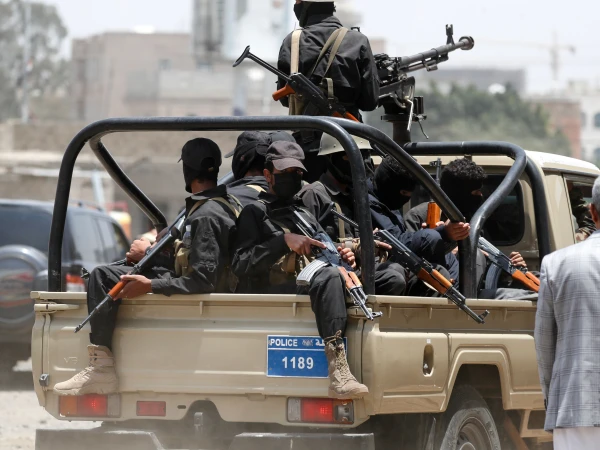
    MARIB: At least 10 people, including eight members of Yemen’s government-aligned security forces and two civilians, were killed in fresh Houthi attacks in the oil-rich Marib province, raising fresh concerns over a possible escalation in the country’s fragile security situation. According to local officials and military sources, Houthi fighters targeted positions held by forces loyal to Yemen’s internationally recognised government with missiles and drones. The attacks reportedly struck several military locations in Marib, a strategically important province that has remained a major focal point in Yemen’s long-running conflict. The latest violence comes despite a significant reduction in large-scale fighting across Yemen in recent years. The renewed attacks have therefore sparked concerns that the relative calm could be disrupted and that low-intensity clashes could once again develop into broader military confrontations. Reports also indicated that Houthi attacks in Marib and neighbouring Hadramout on Friday resulted in additional casualties, suggesting that the latest violence may be part of a wider increase in militant activity across government-held areas. Marib holds particular strategic importance because of its oil and gas resources as well as its location. Control of the province has long been a key objective for both the Yemeni government and the Houthis. The latest strikes have added to fears of a new escalation in Yemen, where years of conflict have already caused a severe humanitarian crisis. Any renewed fighting around Marib could carry wider consequences because of the province’s economic resources and military significance. The Houthis, who control large parts of northern and western Yemen including the capital Sanaa, have been involved in a prolonged conflict with government forces and their allies. The fresh deaths underline the continuing fragility of Yemen’s security environment and could test efforts to preserve the relative calm that has emerged after years of intense fighting.

  • | | | | |

    Iran displays wreckage of US, Israeli aircraft in …

    Iran’s Islamic Revolutionary Guard Corps (IRGC) has put the wreckage of US and Israeli aircraft on public display, offering a dramatic glimpse of the military hardware Tehran says was destroyed during the recent war. Images released by Iranian state-linked media show sections of aircraft arranged as part of an exhibition, including what has been identified as the remains of a US F-15 fighter jet. The display reportedly includes the aircraft’s ejection seat, canopy and part of its tail. The exhibition appears designed not only to showcase recovered wreckage but also to underline Iran’s claims about the effectiveness of its air-defence capabilities during the conflict. The appearance of the F-15 debris is particularly significant. Recent reporting has identified the wreckage as belonging to an F-15E Strike Eagle, while Iranian authorities have presented it as evidence of a successful engagement against US airpower. However, claims surrounding aircraft losses have been contested throughout the conflict. In earlier incidents, Iranian officials announced that US aircraft had been destroyed, while American officials disputed some of the claims. Independent identification of battlefield wreckage has also sometimes proved difficult. Iranian forces have previously showcased captured or downed US military equipment as symbols of resistance. A similar exhibition in Tehran in 2019 displayed wreckage of a US Global Hawk drone claimed to have been shot down by Iran. The latest display comes after Iran also claimed on July 30 that three US F-35 fighter jets had been destroyed at Jordan’s Al Azraq airbase. That claim has not been independently established. By placing the aircraft remnants on display, Tehran is turning battlefield debris into a powerful political and military message—one intended to demonstrate that even advanced American and Israeli aircraft can be targeted during wartime. The exhibition is likely to fuel further debate over the scale of aircraft losses during the conflict and the competing narratives presented by Iran, the US and Israel.

  • | | | |

    Yemen launches counter-operation against Houthis a…

    Yemen’s internationally recognised government forces have launched a military counter-operation against the Houthis following a series of missile and drone attacks on military positions in the provinces of Marib and Hadramout, according to a military spokesman. Yemeni army spokesman Majed al-Nazili said the government forces had begun responding to the attacks and would not tolerate threats against civilians, troops or military positions. “We will give a decisive military response to the threats facing the Yemeni people and armed forces,” al-Nazili said, according to the statement cited by local media. The announcement comes after Houthi forces carried out a series of attacks on government-aligned military camps in Marib and Hadramout. Recent reports said at least 30 Yemeni government soldiers were killed and 15 others wounded in the strikes. The escalation has raised fresh concerns over the fragile security situation in Yemen, where large-scale fighting had significantly declined following the UN-mediated truce that began in April 2022. Although the truce formally expired later that year, the country avoided a full return to nationwide warfare for an extended period. The latest violence is being closely watched because Marib remains strategically important to Yemen’s government, while Hadramout is a major eastern province with significant military and economic importance. The United Nations has repeatedly warned that renewed military escalation could undermine diplomatic efforts and worsen Yemen’s already severe humanitarian crisis. The UN Security Council has stressed the need for restraint and a Yemeni-led political process as the most viable route toward a lasting settlement. The latest developments could therefore mark a dangerous turning point if the government’s promised counter-operation leads to sustained fighting. For millions of Yemenis already affected by years of conflict, renewed hostilities could bring further displacement, economic hardship and pressure on essential services. With both sides now trading threats and military strikes, attention is turning to whether the latest confrontation remains limited—or develops into a broader escalation across Yemen.

  • | |

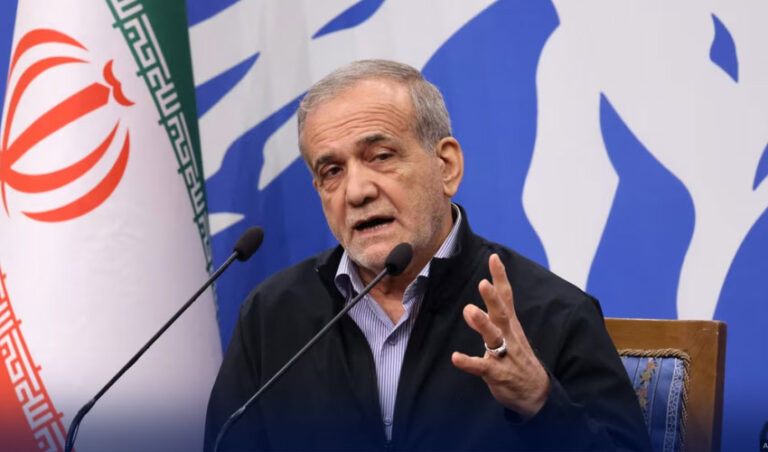
    Pezeshkian rejects pressure as Iran seeks path to de-escalation

    Iranian President Masoud Pezeshkian has said Tehran will not surrender to external pressure or compromise its military and defensive capabilities, while stressing that Iran remains open to diplomacy if it can help protect the country’s interests. In a televised interview marking the second anniversary of his presidency, Pezeshkian said Iran would resist any attempt to force it into submission. He maintained that Tehran had the right to preserve its defence capabilities and would not accept demands aimed at weakening its military strength. The Iranian president described his country’s response during the latest conflict with the United States and Israel as an act of self-defence. He praised Iran’s armed forces, including the Army, Islamic Revolutionary Guard Corps and Aerospace Forces, for their performance during the fighting. Pezeshkian also accused Washington and Tel Aviv of attempting to bring Gulf countries together against Iran. He said Tehran was working to prevent further regional divisions and maintained that Muslim countries should cooperate regardless of sectarian differences. He rejected claims that Iran sought territorial expansion or intended to attack neighbouring states. According to Pezeshkian, Iran wanted peaceful relations with countries in the region and had no plans to seize territory or expand its borders. The president also questioned why some regional countries allowed their territories to be used for attacks against Iran. He said Tehran did not seek confrontation with those states but would respond against locations from which it was attacked. Meanwhile, senior US military officials are reportedly pushing for a path toward de-escalation as concerns grow over the effectiveness and sustainability of further military action against Iran. According to a report, Chairman of the Joint Chiefs of Staff Gen Dan Caine has privately urged senior Trump administration officials to explore options for ending the conflict. The discussions reportedly involved senior figures including CIA Director John Ratcliffe, Secretary of State Marco Rubio and Vice President JD Vance. US officials are said to believe that continued air operations alone may not be enough to force Tehran to accept Washington’s demands. There are also concerns about Iranian retaliation against US allies and regional energy infrastructure. The report further indicated that shortages of some US weapons, including air-defence interceptors and precision munitions, could make a prolonged conflict increasingly difficult. Despite the concerns, US officials reportedly believe American forces could still inflict significant damage on Iran if President Donald Trump orders further escalation. At the same time, Washington is examining diplomatic options that could allow Trump to present an agreement as a political achievement. A possible agreement between Iran and Oman could provide a major breakthrough in efforts to reopen the Strait of Hormuz, according to a US official. Washington expects Tehran and Muscat to reach an understanding that would allow commercial shipping and oil traffic to resume through the strategic waterway. The United States has indicated that it could lift its blockade of Iranian ports once commercial shipping is restored and Iran fulfils its commitments. The Strait of Hormuz is one of the world’s most important energy routes, with a significant share of global oil supplies traditionally passing through it. Disruptions caused by the conflict have contributed to higher energy prices and increased inflationary pressure. The latest diplomatic activity follows several previous claims that a deal over the strait was close, although Iranian officials have repeatedly denied that formal negotiations were taking place. Regional tensions have also prompted Pakistan, Saudi Arabia and Türkiye to strengthen military cooperation through a joint defence agreement signed in Makkah. Under the agreement, an armed attack against any one of the three countries would be treated as an attack against all three. The countries said the pact was intended to strengthen collective deterrence and protect regional security. Türkiye stressed that the agreement was defensive and was not directed against any particular country. However, the deal comes amid heightened tensions involving Iran and growing concerns about the conflict spreading across the Gulf and wider Middle East. Meanwhile, diplomatic efforts are continuing on the Lebanon front, where officials are discussing arrangements for monitoring the potential disarmament of Hezbollah under a US-backed framework. Pezeshkian has also defended diplomatic engagement with Washington despite opposition from Iranian hardliners. The Iranian president argued that dialogue could be useful if it allowed Tehran to safeguard its national interests and secure its rights.

  • |

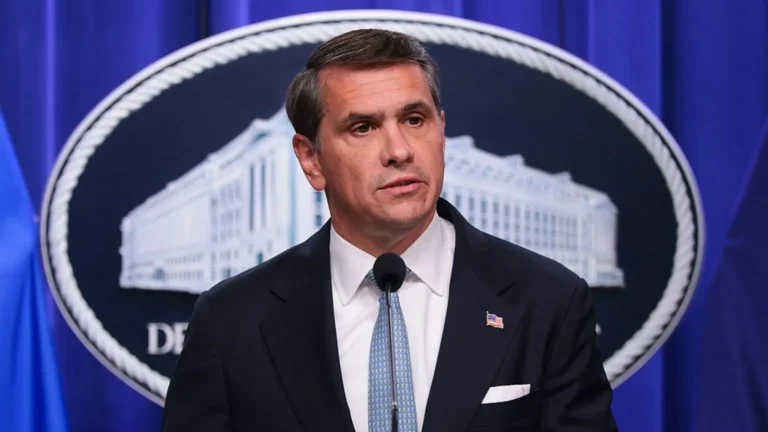
    Trump’s former lawyer Todd Blanche confirmed as US attorney general

    Todd Blanche, a former personal attorney to US President Donald Trump, has been confirmed as the country’s attorney general after a closely contested Senate vote. Blanche secured confirmation by 50 votes to 49, with Republican Senators Susan Collins and Lisa Murkowski joining Democrats in opposing his nomination. Senator Bill Cassidy provided the crucial Republican vote in Blanche’s favour after saying he believed Blanche was the strongest candidate Trump was likely to nominate. The vote ended a prolonged dispute between the Trump administration and Senate Republicans over Blanche’s appointment. He had been serving as acting attorney general since April, after Pam Bondi was removed from the position. All Senate Democrats voted against Blanche’s confirmation. Several Republican lawmakers had questioned Blanche’s record and raised concerns about his involvement in a number of controversial matters. Among them was his handling of documents related to convicted sex offender Jeffrey Epstein and his role in developing Trump’s proposed $1.8 billion “anti-weaponization” fund. The proposed fund was intended to compensate people who claimed they had been politically targeted or persecuted by the government. However, critics, including Murkowski, warned that the scheme could potentially benefit people prosecuted for their involvement in the January 6, 2021 attack on the US Capitol. During his confirmation process, Blanche promised to abandon the proposed fund following opposition from Republican senators. Questions remain over whether that commitment would prevent the administration from introducing a similar programme under a different structure in the future. Murkowski said she opposed Blanche because she lacked confidence that he would be willing to challenge what she described as the administration’s worst impulses. She also expressed concern about the increasing politicisation of the Justice Department. Collins raised separate concerns over Blanche’s involvement in Trump’s $10 billion lawsuit against the Internal Revenue Service. Despite those reservations, she ultimately did not support his confirmation. Cassidy, meanwhile, said he trusted Blanche to provide Trump with independent and candid legal advice. He acknowledged that the president ultimately determines the direction of the Justice Department but argued that Senate confirmation would give Blanche greater authority to advise the administration and push back when necessary. Cassidy also said he did not want political disagreements to prevent the Justice Department from carrying out its responsibilities, particularly in combating violent crime. Blanche’s confirmation marks a significant development for the Trump administration, given his previous role as Trump’s personal lawyer. He was serving as deputy attorney general when he assumed the department’s temporary leadership in April.

  • |

    Bristol Airport disruption continues as flights resume

    Flights have begun operating again at Bristol Airport after a runway defect caused widespread disruption and left hundreds of passengers stranded overnight. The airport runway was closed shortly after 6pm BST on Friday, forcing all flights to be suspended until 8am Saturday. Although operations have now restarted, passengers continue to face delays, disrupted schedules and flight diversions. Airport authorities warned that some disruption would continue throughout Saturday and apologised to passengers affected by the situation. Travellers were advised to contact their respective airlines for information about individual flights. The airport has not yet provided further details about the nature of the runway defect or explained when normal operations are expected to fully resume. Passengers described the disruption as chaotic, with several criticising the airport for a lack of clear communication and assistance. Paul Smith, who was due to travel to Glasgow for his son’s 20th birthday, said he was forced to cancel his trip. He criticised the information and support provided to passengers during the disruption. Another traveller, Dave Blackwell, said his flight from Rhodes was diverted to Newcastle. He claimed passengers spent several hours at Rhodes Airport without receiving adequate information before being told they would have to travel onward by bus. Eighteen-year-old Finn Holland was also among those affected after his flight to Bristol was redirected to Bournemouth. He said passengers had to arrange their own transport back to Bristol, describing the process as poorly organised. The disruption has affected both departing and arriving passengers, with some travellers facing lengthy delays and complicated onward journeys.

  • |

    NYC homeowners sue Mamdani over new pied-à-terre tax rollout

    A group of New York City homeowners has taken legal action against Mayor Zohran Mamdani and the city’s finance authorities over the rollout of a new pied-à-terre tax, arguing that the administration wrongly identified some primary residences as potential second homes. The lawsuit was filed on Friday by homeowners Simon Hedley, Rachel O’Brien and Carmine Morano. The plaintiffs are not challenging the legality of the tax itself. Instead, their case focuses on how city officials identified properties and made information about potentially affected homeowners publicly available. The dispute follows the publication of a city property tax roll containing the names and addresses of more than 900,000 property owners. Although most of those properties are not subject to the new surcharge, nearly 17,000 homeowners received notices warning that their properties could potentially fall under the tax. The homeowners allege that the city’s process has incorrectly flagged primary residences and unnecessarily exposed private information. O’Brien said her family’s permanent home was identified as a possible second residence despite records indicating that the property was their primary residence. She described the situation as unreasonable and questioned why homeowners were publicly listed when their properties might not ultimately be subject to the tax. The plaintiffs have asked the court to declare the notices and the publicly released property information unlawful. They are also seeking restrictions on public access to the list. In addition, the homeowners want the city to suspend response requirements and halt enforcement measures while the legal proceedings are underway. A spokesperson for Mayor Mamdani said the administration was committed to ensuring that the tax process remained clear and accessible. The spokesperson added that the city’s Law Department was prepared to defend the administration against the lawsuit. The pied-à-terre tax targets qualifying non-primary residences valued at more than $5 million, along with certain cooperative apartments valued at $1 million or above. The surcharge was included in Mamdani’s fiscal 2027 budget as part of efforts to address New York City’s budget shortfall. The rollout has triggered significant criticism from affected homeowners. In response, Mamdani extended the deadline for property owners to demonstrate that their homes are their primary residences by four weeks. The new deadline is now September 18, giving homeowners additional time to challenge their classification and provide documentation to city authorities.

  • | |

    Russia and Ukraine trade overnight strikes as thre…

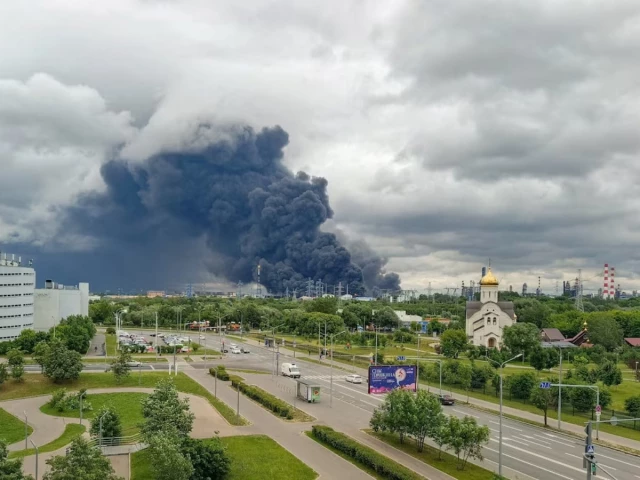
    Russia and Ukraine launched a fresh wave of overnight strikes against each other on Saturday, leaving three people dead and ten injured across multiple regions on both sides of the border, according to officials from both countries. Kyiv suburb bears the brunt of Russian strikes Three people died and three others suffered injuries when Russian forces struck three separate locations in the Brovary district on the outskirts of Kyiv, said Tymur Tkachenko, head of the Kyiv City Military Administration, in a statement posted on Telegram. Falling debris from the strikes damaged a private residential building along with several outbuildings and parked cars, while a fire broke out at a nonresidential structure in the area, Tkachenko said. Emergency crews rushed to the scene to contain the damage and assist residents. “Rescuers and all necessary services are working on the ground,” Tkachenko said. “The elimination of the consequences is ongoing.” Russia’s Defence Ministry confirmed carrying out the strike on the Ukrainian capital, stating on Telegram that its forces had targeted a military-industrial facility along with a fuel and lubricants depot located in Kyiv. The ministry additionally claimed that two dry cargo ships, which it alleged were transporting weapons and military equipment bound for Ukrainian ports, came under attack from drones while passing through waters south and east of the port city of Odesa. Russian regions report drone damage and injuries On the Russian side, five people sustained injuries and a fire erupted at the Ilsky Oil Refinery in the Krasnodar region after debris from a downed drone fell onto the facility, regional authorities reported. The Krasnodar Operational Headquarters said on Telegram that the injured were receiving all necessary medical care while emergency and special services worked at the scene. Separately, two people were injured when a drone crashed in the Russian city of Zadonsk, according to Lipetsk Governor Igor Artamonov, who posted details of the incident on Telegram. The crash damaged four private homes, a vehicle and a power line, Artamonov said, adding that power workers had already begun restoration efforts in the affected area. In the Samara region further east, one of the area’s industrial enterprises came under attack from a Ukrainian drone, said regional Governor Vyacheslav Fedorishchev in a post on the Russian social media platform Max. Fedorishchev said authorities were currently working to address the aftermath of the strike but did not immediately provide further details on the extent of the damage. Moscow claims mass drone interception Russia’s Defence Ministry also announced that its air defence systems had shot down and destroyed 397 Ukrainian drones over the course of the strikes, with the interceptions occurring over Russian territory, annexed Crimea and the Sea of Azov. Independent verification of the claims made by both Moscow and Kyiv remains difficult given the ongoing conflict, and neither side’s figures on damage, casualties or intercepted drones could be confirmed through independent sources. Latest strikes reflect continuing pattern of cross-border attacks The overnight exchange adds to a long running pattern of tit-for-tat strikes between the two countries, with Ukraine frequently targeting Russian energy infrastructure, including refineries deep inside Russian territory, while Russia continues to strike Ukrainian cities and industrial sites. Both countries have increasingly relied on long-range drones to strike targets far from the front line, a tactic that has expanded the geographic scope of the war well beyond the immediate combat zones in eastern and southern Ukraine. The strikes come as diplomatic efforts to end the war have shown little sign of producing a breakthrough, with both Moscow and Kyiv continuing large-scale military operations even as international mediators push for a negotiated settlement. Attacks on energy facilities, in particular, have become a recurring feature of the conflict, with both sides accusing the other of deliberately targeting civilian infrastructure and disrupting fuel supplies ahead of the winter months. As the war grinds on, Saturday’s strikes underscore the continued volatility along multiple fronts, from Kyiv’s outskirts to refineries deep inside Russian territory, with civilians on both sides bearing the brunt of the ongoing hostilities.