The week in photos: August 1-7, 2026
A recap of news, sports, lifestyle, entertainment, and human interest images from the Philippines and around the globe


A recap of news, sports, lifestyle, entertainment, and human interest images from the Philippines and around the globe

Communities across the United States are already grappling with soaring electricity demand, opaque utility agreements, environmental concerns, and questions over promised jobs. Before Pax Silica breaks ground, if ever, Filipinos should learn from those experiences.

Jollibee’s North American boom shows how Filipino food and culture are finding a bigger audience beyond the diaspora

Agreement between Iran and Oman over the strait, which separates the two countries, is seen as vital to a wider deal to end the war

Christopher Nolan is on the verge of a monumental career milestone. On Friday, August 7, Deadline confirmed that his latest film, The Odyssey, is crushing the worldwide box office, enjoying massive commercial success that adds yet another triumph to his legendary filmography. In a resurfaced interview, Nolan admitted the project was deeply nerve-racking despite years of careful work. He humbly noted that while filmmakers pour their hearts into their creations, movies ultimately belong to the audience, and their value lies in the eye of the beholder. This perspective reveals his rare respect for viewers, acknowledging that a film’s meaning is completed only when it reaches them. Beyond this epic, Nolan has gifted cinema with modern masterpieces like Oppenheimer, Interstellar, Inception, Batman Begins, and The Dark Knight Rises. Each film showcases his signature blend of intellectual ambition and visual spectacle, cementing his status as a visionary director who consistently pushes boundaries. The Odyssey, which Nolan both wrote and directed, adapts Homer’s ancient Greek epic into an action-packed fantasy. In a historic first, the entire film was shot using IMAX cameras, bringing this foundational saga to screens with breathtaking grandeur. The story tracks King Odysseus on his perilous ten-year journey home after the Trojan War. Along the way, he confronts terrifying mythical foes—the giant Polyphemus, the enchanting Sirens, and the sorceress Circe—before finally reuniting with his devoted wife, Penelope, on his native island of Ithaca. The film boasts an extraordinary ensemble cast, including Matt Damon, Tom Holland, Anne Hathaway, Robert Pattinson, Lupita Nyong’o, Samantha Morton, and Zendaya. This stellar lineup ensures Homer’s legendary characters are portrayed with charisma and emotional depth, elevating the ancient tale for modern audiences. With such a powerhouse combination of director, source material, and talent, The Odyssey has already become one of the year’s biggest cinematic events. Its box-office domination not only highlights Nolan’s commercial clout but also reaffirms his unique ability to marry intellectual storytelling with blockbuster spectacle, captivating global audiences and reshaping what epic filmmaking can achieve.

A Chinese teenager temporarily lost his hearing after spending four hours listening closely to the loud buzzing sounds of cicadas during a camping trip. The unusual incident highlights that although natural sounds are generally considered harmless, prolonged exposure to certain sounds in nature can sometimes affect human health. The 18-year-old teenager, identified by his surname Wang, was camping in a forest in Ningbo, Zhejiang Province, China, when he began listening to the continuous sounds of hundreds of cicadas. The insects, which are known for their loud and distinctive calls, continued making noise for several hours. Wang noticed that the sound of the cicadas became particularly loud around noon. Despite this, he remained in the forest until the evening. After spending several hours exposed to the loud buzzing, he began experiencing ringing in his ears. He also felt that his ears were blocked or unusually full. As the cicadas gradually became quieter toward the evening, Wang realized that something was wrong with his hearing. He could no longer hear the sounds of birds singing around him, and he was unable to hear notification sounds from his mobile phone. Concerned that he might have suffered permanent hearing loss, he immediately went to a hospital for medical attention. Doctors at the hospital examined both of Wang’s ears and found signs of swelling. He was given medication and advised to stay away from loud noises for at least 14 days. Fortunately, his condition improved with treatment and rest. After approximately two weeks, Wang’s hearing returned to normal. Senior ENT specialist Dr. Li Jie from the hospital affiliated with Ningbo University No. 1 Hospital explained that many people mistakenly believe sounds produced by nature cannot harm the ears. According to him, natural sounds can also become harmful when people are exposed to them at high levels or for extended periods. Cicadas are considered among the noisiest insects in the world. However, a single cicada normally does not pose a serious threat to human hearing because its sound rarely exceeds 70 decibels. The situation can be different when hundreds or even thousands of cicadas call at the same time. A large group of cicadas can collectively produce sound levels exceeding 85 decibels. Exposure to sounds at or above this level for extended periods can increase the risk of hearing damage. The risk becomes greater when the exposure continues for several hours without adequate breaks. Wang’s experience serves as a reminder that people should not assume every natural sound is automatically safe. Whether the sound comes from insects, animals, machinery, music or other sources, prolonged exposure to loud noise can place significant stress on the ears. Experts generally recommend moving away from extremely loud environments, taking regular breaks from noise and seeking medical attention if symptoms such as persistent ringing, blocked ears or sudden hearing loss occur. In Wang’s case, timely medical treatment and avoiding loud sounds helped him recover fully. The incident also demonstrates the importance of protecting hearing during outdoor activities. While camping and spending time in nature can be enjoyable and relaxing, people should remain aware of their surroundings and avoid prolonged exposure to unusually loud sounds.

Turkish Foreign Minister Hakan Fidan has said the recently signed defense agreement between Pakistan, Saudi Arabia and Turkey is designed to strengthen regional cooperation and security rather than target Iran. Speaking in Ankara, Fidan said the agreement follows the principle of collective defense reflected in Article 5 of the North Atlantic Treaty Organization (NATO), under which an attack on one member is treated as an attack on all. He explained that the new framework will include a ministerial committee and a general secretariat modeled partly on NATO’s structure. The secretariat is expected to be based in Saudi Arabia. Fidan also indicated that Egypt could potentially join the arrangement once outstanding technical matters are resolved, suggesting that the emerging security framework could expand beyond the three founding countries. The Turkish foreign minister stressed that the agreement should not be viewed as an alliance directed against any particular country. Instead, he described it as a mechanism intended to promote cooperation, strengthen defense capabilities and contribute to peace and stability across the region. The agreement, signed by Pakistan, Saudi Arabia and Turkey in Makkah, has attracted considerable attention across the Muslim world amid growing regional security concerns. Several Islamic countries and the Organisation of Islamic Cooperation have welcomed the initiative. Turkish President Recep Tayyip Erdogan has also said the agreement could enhance regional security while encouraging greater cooperation in the defense industry. The development marks another step in the long-standing strategic relations among Pakistan, Saudi Arabia and Turkey and could potentially reshape security cooperation in the wider Middle East and South Asian region.
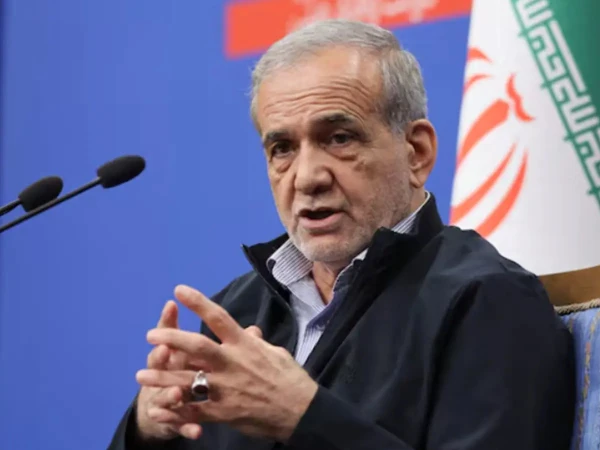
TEHRAN: Iranian President Masoud Pezeshkian has described the current moment as the “best time” for reaching an agreement with the United States, while making clear that Tehran’s broader policy toward Washington has not changed. Speaking to media representatives in Tehran on Sunday, Pezeshkian said the United States had been pushed toward negotiations and reconciliation with Iran, describing the development as a success for Tehran’s diplomacy. His comments come amid heightened tensions between Iran and the United States and growing international efforts to find a diplomatic way out of the crisis. Pezeshkian suggested that the present circumstances could provide an opportunity to move toward an agreement if Washington was prepared to meet its commitments. The Iranian president accused the United States of failing to implement understandings reflected in an Islamabad memorandum and points jointly prepared by Iran and Oman. According to Pezeshkian, Washington’s failure to follow through on those commitments forced Tehran to respond. He said Iran had established a special team to deal with the crisis and that the group was continuing its work. “We are hopeful that Iran will move forward with dignity, determination and pride,” Pezeshkian said, stressing that Tehran would continue to protect what it considers its national interests. Despite signaling openness to negotiations, Pezeshkian adopted a tough tone toward Washington. He described the United States as a “criminal” and “colonial” power and insisted that Iran’s policy toward Washington remained unchanged. The president also warned against what he portrayed as attempts by the United States and Israel to weaken Iran from within. According to Pezeshkian, military pressure and war had failed to force Tehran into submission. He argued that Washington and Israel could now seek to exploit divisions within Iranian society by encouraging internal disputes. Pezeshkian urged Iranians to remain alert to what he described as such efforts, emphasizing that national unity was particularly important at the current stage. He called on the Iranian public to stand together to safeguard the country’s security and defence capabilities. The remarks underline the delicate balance in Tehran’s position: Iran appears willing to explore diplomacy while simultaneously maintaining its longstanding opposition to Washington’s policies. Pezeshkian’s comments could therefore signal a possible opening for renewed diplomatic engagement, but any breakthrough is likely to depend on whether Iran and the United States can overcome deep mistrust and resolve disagreements over previous commitments. For now, Tehran’s message is clear: the door to negotiations may be open, but Iran says it will enter those talks from a position of dignity, national unity and strength.

Iran has set six conditions for the United States to allow the full reopening of the Strait of Hormuz. The demands were presented by Mohammad Bagher Zolghadr, secretary of Iran’s Supreme National Security Council. He warned that Tehran would not reopen the strategic waterway unless Washington changed its policy towards Iran. Zolghadr said the first condition was that the United States must not threaten Iran under any circumstances. He also said Washington must avoid any language or action that insults the dignity of the Iranian people. The second condition calls for a permanent end to what Iran describes as war and aggression against the country and its allies. These include Lebanon, Palestine, Yemen and Iraq. Iran’s third demand is the lifting of the naval blockade imposed on the country. Tehran has also called for the withdrawal of US forces from areas surrounding Iran. The fourth condition concerns compensation for damage caused to Iran during the war. Zolghadr said Iran must receive full compensation for the losses it suffered. The fifth demand is the removal of what Tehran considers unfair and illegal sanctions imposed on the Iranian people. Iran’s sixth condition calls for the unconditional release of Iranian assets that have been seized or frozen abroad. Tehran wants these assets returned to the Iranian people. The Strait of Hormuz is a key international shipping route. It connects the Persian Gulf with the Gulf of Oman and the wider Arabian Sea. A disruption in the waterway could have major consequences for global energy supplies and international trade. Iran has repeatedly stressed the strategic importance of the strait. Any decision regarding its reopening could therefore have wider regional and international implications. Zolghadr also said Iran would maintain its position regardless of whether the situation develops into further conflict or diplomatic negotiations.

With over 7,000 distinct human languages spoken across the globe today, humanity communicates through fascinating sentence structures. A compelling debate has captivated thinkers for decades. Does the language you grow up speaking dictate the limits of what your mind can comprehend? This captivating idea lies at the heart of the Sapir-Whorf hypothesis. A theory that continues to provoke vibrant discussions across linguistics, philosophy, and cognitive science. The Power of Vocabulary and Perception The hypothesis was formulated in the early 20th century by linguists Edward Sapir and Benjamin Lee Whorf. It’s often referred to as linguistic relativity or linguistic determinism. They propose that the structure of a native language fundamentally shapes its speakers’ worldview and cognitive capacity. If a concept or object lacks a dedicated word in a person’s language, that person cannot truly perceive, categorize or conceptualize it. Consider how different cultures classify colors. Some languages possess dozens of specific terms for distinct shades. Whereas, others operate with only a couple of basic terms distinguishing between light and dark tones. According to strong linguistic determinism, a speaker whose native tongue lacks a dedicated word for green would struggle to perceive a green leaf as distinct from yellow. Similarly, emotional vocabularies vary widely across cultures. German famously uses the word Schadenfreude to describe taking pleasure in someone else’s misfortune. According to Sapir-Whorf theory, an English speaker whose language lacks an exact single-word equivalent would supposedly find it difficult to recognize or isolate that specific emotional state within themselves. Why the Concept Fascinates Us? It is easy to see why the Sapir-Whorf hypothesis captured public imagination. The notion that our mother tongue acts as a unique way through which we view reality is deeply romantic. Philosophically, the theory suggests that the world contains thousands of distinct cognitive universes. If language entirely dictated thought, cross-cultural understanding would face profound barriers. It is so as the speakers of different languages would operate inside fundamentally incompatible mental frameworks. In semantic studies, labeling objects and experiences allows humans to organize chaotic sensory input efficiently. Giving a name to a precise group such as distinguishing toddlers, teenagers and senior citizens helps us categorize society into recognizable stages. The hypothesis demonstrated that naming things provides cognitive shortcuts. Such a naming method makes specific distinctions far easier to reference and discuss in daily life. Why Modern Science Rejects Strong Determinism Despite its initial popularity, modern linguistics and cognitive scientists reject strong linguistic determinism. The fundamental flaw in the hypothesis rests on a misunderstanding of the relationship between mind and speech. Language does not produce thought. Rather, human thought drives the creation and evolution of language. When people encounter new experiences, foods or technologies, they do not remain silent simply because they lack pre-existing terminology. Instead, humans spontaneously create new phrases. They adapt existing terms or borrow words from other cultures to describe what they have experienced. An English speaker can easily understand and feel pleasure at a rival’s failure without ever having heard the German word Schadenfreude. While English uses blue for both dark and light shades. Whereas Italian maintains separate primary words (blu and azzurro). English speakers are fully capable of seeing the difference between a midday sky and the deep ocean. Human cognition precedes language. Speech serves as a flexible tool designed to communicate human experiences, not a rigid cage that imprisons cognitive ability. The Lasting Value of Sapir-Whorf The Sapir-Whorf hypothesis retains great value even if its most radical claim has been disproven. It paved the way for weak linguistic relativity. The claim further explores how language subtly influences cognition, memory and visual attention without imposing hard limits on intellect. Ultimately, Sapir and Whorf inspired generations of researchers to explore the mysterious connection between human culture, language and the mind.