iran says deal
|

Iran says deal on Strait of Hormuz is close but not enough to open the waterway

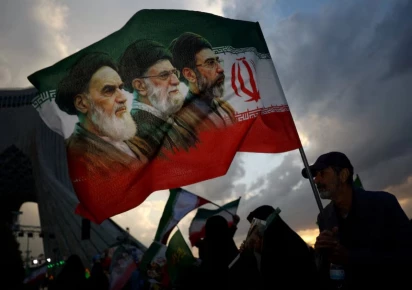
Iran said on Saturday, August 8 (August 9, Philippine time), that a deal with Oman on control of the Strait of Hormuz was close but would not be enough to free up the waterway, and the United Arab Emirates said Iran had hit another ship there.

Agreement between Iran and Oman over the strait, which separates the two countries, is seen as vital to a wider deal to end the war, which began with US and Israeli attacks on Iran on February 28 and led to Tehran establishing a chokehold over the major energy export route.

A US official, who declined to be identified, said on Friday that Washington anticipated an agreement soon between Iran and Oman, so normal oil traffic could resume.

Iranian Foreign Minister Abbas Araqchi said Iran and Oman were “very close” to an agreement on a new shipping route through the strait, but reopening it would depend on other conditions, including US compensation to Iran.

The secretary of Iran’s top national security body, Mohammad Baqer Zolqadr, listed other demands including ending US threats against Iran, stopping aggression against Iran and its Lebanese, Palestinian, Yemeni and Iraqi allies, lifting a blockade and sanctions on Iran and freeing Iranian assets.

Oman reports positive negotiations, condemns ship attacks

Oman condemned what it described as repeated attacks on vessels while transiting the strait, without assigning blame, and said that negotiations with Iran on arrangements for shipping through Hormuz were “positive and constructive”.

“Oman stresses the importance of avoiding any actions that could affect these negotiations and the progress achieved in a manner that takes into account the interests of all parties,” the foreign ministry said.

Araqchi said the previous shipping traffic separation scheme through the strait was no longer acceptable to Tehran and Iran was discussing a temporary route with Oman while technical and legal issues surrounding a permanent route were resolved.

Iran’s President Masoud Pezeshkian, a relative moderate, said he believed now was the best time for an agreement.

“There is cohesion, strength, and unity in the country, and as far as I know, Iran is considered victorious and powerful in this war,” Iranian news agencies quoted him as saying.

Iran has reacted to the US attacks by targeting US bases in Gulf states and Jordan as well as striking shipping in the narrow strait, which carried a fifth of the world’s oil and gas shipments before the war.

The UAE said on Saturday that Iran had attacked a carrier affiliated with the UAE’s state oil company with a missile as it transited the Strait of Hormuz. No injuries were reported in the latest attacks on shipping there.

The UK maritime trade monitor UKMTO said a vessel had caught fire after being hit by an unknown projectile but the fire was put out and there was no reported environmental impact.

There was no immediate comment from Iranian authorities.

In recent weeks, the Trump administration has repeatedly signaled that a deal to open the strait could be close, only to have Iran deny that talks are under way. It was unclear whether the latest flurry of negotiations would yield a more lasting arrangement.

“Once the deal is announced to restore commercial shipping without impediments, the United States will lift the blockade of Iranian ports,” the US official told Reuters on Friday. US actions would be tied to Iran’s implementation of its commitments, he said.

US Central Command said on Saturday it had allowed more than 30 ships through for humanitarian aid since the current blockade started. US forces have turned away 53 ships, disabled two vessels and boarded two others, Central Command said in a statement on social media.

Prices of food and other necessities have increased rapidly in Iran since the conflict began in February. At a news conference on Saturday, Pezeshkian blamed the US for causing difficulties in importing basic goods.

He did not mention any blockade exceptions for humanitarian aid.

Iran’s Revolutionary Guards, who have targeted the ships, also said on Saturday that reopening the strait depended on Washington accepting Iran’s conditions and was not related to the Iran-Oman negotiations.

“Whenever the United States accepts Iran’s conditions, the Strait of Hormuz will certainly be reopened,” said Guards spokesperson Hossein Mohebbi, according to Iran’s Tasnim news agency.

Sources said this week a deal would give Iran some control

A proposed deal between Iran and Oman to help end five months of war between Iran and the US would give Tehran control over ships entering the Gulf through the strait, a senior Iranian source and two regional officials told Reuters on Wednesday, one of the biggest concessions yet to Iran.

US officials have repeatedly said they would never agree to Iran controlling access to the world’s most important trade route for energy supplies. It was not clear whether they had sought to change the parameters of the deal.

Iran has used the hostilities to justify charging a toll on oil tankers. That, and the firing on ships that attempt to cross the strait without its permission, has badly disrupted global shipments, causing energy prices to surge and fueling inflation. – Rappler.com

Similar Posts

  • |

    Trial begins in Tupac Shakur murder case after 30 years

    The long-running investigation into the 1996 killing of rapper Tupac Shakur has reached a major stage, with the trial of former gang leader Duane “Keffe D” Davis beginning in Las Vegas. Jury selection is scheduled to start Monday in Clark County, Nevada. Davis, 63, faces one charge of murder with the use of a deadly weapon. He has pleaded not guilty. Prosecutors accuse Davis of playing a leading role in the drive-by shooting that killed Shakur nearly three decades ago. Shakur was 25 when he was shot near the Las Vegas Strip on September 7, 1996. He was riding in a car with Marion “Suge” Knight, the co-founder of Death Row Records. The shooting became one of the most famous unsolved cases in music history. It also became closely linked to the violent rivalry between East Coast and West Coast rap artists during the 1990s. According to authorities, the incident followed a fight at the MGM Grand casino. The confrontation allegedly involved Shakur and members of his entourage and a man connected to Davis. Investigators believe the shooting was carried out as an act of retaliation. Police have described Davis as a key figure in the alleged plan. Authorities say he helped obtain the weapon and was travelling in a white Cadillac with three other men when the shooting occurred. The Cadillac reportedly followed the vehicle carrying Shakur and Knight. Gunfire was exchanged when the two cars came close to each other. Shakur was struck four times. He was taken to hospital but died six days later from his injuries. Knight, who was driving the vehicle, suffered a minor injury after a bullet fragment grazed his head. The investigation remained unresolved for almost 30 years. Authorities say the case gained new momentum after Davis made a series of public statements about the shooting. His comments reportedly included details about his presence in the Cadillac and his alleged role in obtaining the weapon. Davis also discussed the incident in his 2019 memoir, “Compton Street Legend”. According to police, Davis said he was sitting in the front passenger seat and passed the firearm to one of the men in the back of the vehicle. However, the identity of the person who actually fired the shots remains a central issue in the case. The other three men who were reportedly inside the Cadillac have since died. Under Nevada law, a person can face a murder charge for participating in a killing even if they did not personally fire the weapon. The trial is being heard by Judge Carli Kierny at a courthouse in downtown Las Vegas. Proceedings could continue for as long as six weeks. One potential witness is Knight, who was with Shakur on the night of the shooting. Knight is currently serving a 28-year prison sentence in an unrelated voluntary manslaughter case. The prosecution’s case is expected to examine the events leading up to the shooting and Davis’s alleged role in the plot. The case has remained a major subject of public interest because of Shakur’s influence on hip-hop. His death occurred during a period of intense rivalry between artists and record labels associated with the East and West coasts of the United States. The killing was followed by the death of another major rapper, Christopher Wallace, better known as The Notorious B.I.G., who was shot dead in Los Angeles in March 1997. Wallace’s murder also remains officially unsolved. For years, theories have linked the two killings, with speculation that Wallace’s death was connected to the violence surrounding Shakur’s murder. Davis’s trial now offers prosecutors an opportunity to present their evidence in court after decades of uncertainty surrounding Shakur’s death.

  • | |

    Iran, Oman reach deal on Strait of Hormuz shipping routes

    Iran and Oman have reached an agreement on a proposed shipping route map for the strategically important Strait of Hormuz following weeks of technical negotiations, Iranian officials said on Saturday. Iranian Foreign Ministry spokesman Esmaeil Baghaei said the two countries had made significant progress in talks aimed at establishing safer navigation routes through the waterway. The negotiations began around three months ago under an agreement signed in June. Baghaei said the proposed route was developed through coordination between Iran’s foreign ministry and its defence, security and environmental authorities. He added that Tehran and Muscat were still discussing some remaining issues, including the wording of a joint statement. The spokesman stressed that the arrangement was a bilateral agreement between Iran and Oman and was intended to facilitate the safe movement of commercial vessels while respecting the sovereignty of both countries. However, Tehran has made clear that the full restoration of normal shipping through the Strait of Hormuz depends on broader developments involving the United States. Baghaei said Iran wanted an end to what it described as US military threats, naval restrictions and violations of previous commitments before normal commercial traffic could fully resume. Iranian Foreign Minister Abbas Araghchi separately said negotiations with Oman over the waterway were continuing. He described the discussions as separate from the wider diplomatic dispute between Tehran and Washington. Araghchi also rejected the description of an earlier agreement as a simple 60-day ceasefire. He said the understanding was aimed at ending the war, while the 60-day period was intended for negotiations toward a final settlement. He said Qatar and Pakistan were continuing to exchange messages with Iran but stressed that Tehran had not yet decided to resume direct negotiations with Washington. Iranian Deputy Foreign Minister Kazem Gharibabadi also rejected claims that the United States could take control of the Strait of Hormuz. He said Iran remained in charge of decisions concerning the waterway and dismissed statements suggesting that the strait could become US territory. The Strait of Hormuz is one of the world’s most important energy corridors, connecting the Persian Gulf with the Gulf of Oman. A prolonged disruption to shipping through the waterway has raised concerns over global energy supplies and fuel prices. The latest developments come amid continuing tensions between Iran, the United States and Israel. Shipping through the strait remains significantly below normal levels, while diplomatic efforts to end the wider conflict have yet to produce a lasting settlement. US President Donald Trump has meanwhile urged Americans to accept higher fuel prices while the conflict continues, arguing that confronting Iran was necessary to prevent it from obtaining a nuclear weapon. The dispute has already pushed global oil prices higher, while rising fuel costs in the United States have added to inflationary pressures.

  • | | | |

    Saudi-led coalition hits Houthi military sites nea…

    The Saudi-led military coalition announced on Saturday that it had carried out precision strikes against Houthi military positions in Yemen’s Al Hudaydah governorate, saying the operation was aimed at neutralizing threats to commercial shipping in the Red Sea. In a statement, the coalition said the strikes targeted military sites linked to the Houthi movement and stressed that Al Hudaydah Port was not targeted during the operation. It added that all Yemeni ports remain open to maritime traffic and international shipping. According to the coalition, the destroyed targets were associated with activities that posed a threat to commercial vessels navigating the Red Sea, one of the world’s busiest maritime trade routes. Officials said the operation was part of ongoing efforts to safeguard regional security and ensure the uninterrupted flow of global trade. The coalition warned that it would continue to respond if Houthi forces carried out further hostile actions against shipping or Saudi interests. It also reiterated its commitment to protecting merchant vessels and the Kingdom’s strategic interests, saying military operations would continue whenever necessary to counter security threats. The latest strikes come amid heightened tensions across the Middle East, where attacks on commercial shipping have raised concerns among international maritime operators and governments. The Red Sea remains a vital corridor for global energy supplies and cargo traffic, making any disruption a matter of international concern. There was no immediate response from the Houthi movement regarding the coalition’s claims or the reported strikes. The situation in Yemen continues to be closely monitored, with regional and international observers warning that any escalation around key shipping lanes could have wider implications for global trade and security. Despite the latest military action, the coalition maintained that navigation through Yemeni ports and the Red Sea remains unaffected and commercial vessels can continue operating normally.

  • | |

    Modi unveils free coaching and AI training plan to…

    NEW DELHI: Indian Prime Minister Narendra Modi has announced a major education and skills initiative aimed at addressing growing concerns among young people over employment, competitive exams and the rising cost of education. Speaking at India’s Independence Day ceremony at the Red Fort, Modi said the government would offer free online coaching for a range of competitive examinations. He said the programme would help reduce the financial pressure on families whose children spend years preparing for highly competitive entrance and recruitment tests. The announcement follows nationwide youth protests sparked by allegations of examination paper leaks and recruitment irregularities. The demonstrations intensified pressure on the government and contributed to the resignation of Education Minister Dharmendra Pradhan last month. Modi also announced an ambitious artificial intelligence skills programme, saying 10 million young Indians would receive AI-related training over the next year. The government hopes the initiative will equip young people with skills needed in a rapidly changing job market. India’s competitive education system has created a large private coaching industry, with many families spending heavily on preparation courses. Modi said free digital coaching would allow students to remain with their families while reducing the financial burden associated with preparation. During his speech, Modi also outlined a broader seven-point development and reform agenda covering manufacturing, agriculture, technology, defence and sectors linked to India’s cultural influence. He reiterated his goal of transforming India into a developed economy within the next two decades. The prime minister also announced plans for additional semiconductor facilities and nuclear reactors, with the government seeking to expand domestic manufacturing and energy capacity. Modi said India’s young population would be central to achieving the country’s development ambitions, describing youth as the biggest potential beneficiaries of a more prosperous and developed India.

  • |

    Abu Dhabi offers free three-month visas to Indian tourists

    Abu Dhabi has introduced a special visa-fee waiver for eligible Indian tourists as part of efforts to boost tourism in the United Arab Emirates. Under the initiative, selected Indian travellers will receive a waiver of the full UAE entry visa fee. The offer is available from August 1 to October 31, 2026, during a pilot programme that will cover up to 20,000 eligible travellers. To qualify, Indian passport holders must book a travel package from India to Abu Dhabi. The package must include a stay of at least three consecutive nights at a hotel in Abu Dhabi and a return flight. The booking must also be made through a participating travel partner or an online travel agency. Travellers cannot apply for the free visa independently or directly. The visa-fee waiver will only be available to passengers who meet the specified conditions and book their trip through the designated travel channels. The three-month initiative is designed to attract more Indian visitors to Abu Dhabi and increase tourism activity during the late summer and early autumn period. Although the visa fee will be waived, travellers will generally remain responsible for the cost of flights, accommodation and other travel expenses, unless additional discounts are included in their selected package. The initiative is part of Abu Dhabi’s broader efforts to introduce attractive tourism offers and strengthen visitor numbers. The UAE has been seeking to support its tourism sector amid regional tensions and their impact on travel patterns. Authorities are introducing promotional packages and other incentives to maintain tourism activity and attract visitors from key international markets.

  • | |

    Vance pledges military, diplomatic pressure on Iran

    The United States will use military, economic and diplomatic measures to bring the conflict with Iran to an end, Vice President JD Vance has said, stressing that Washington remains committed to preventing Tehran from acquiring nuclear weapons. In a television interview, Vance said negotiations with Iran remain difficult due to internal divisions within the country’s leadership. He claimed that while some factions in Iran want to end the conflict through diplomacy, others continue to support confrontation, making negotiations more complicated. Despite the challenges, Vance expressed confidence that a settlement could eventually be reached, although he acknowledged the process would take time. He said the US hopes regional stability will improve and global oil prices will ease once tensions decline. The vice president reiterated that the United States would continue using every available tool, including military strength, economic sanctions and diplomatic engagement, to achieve what he described as a lasting resolution. Meanwhile, President Donald Trump said he still prefers diplomacy over military action. Speaking at a public event, Trump said he would rather reach an agreement with Iran than resort to war, but warned that military action remains an option if negotiations fail. Trump also dismissed reports suggesting the United States is facing shortages of key military ammunition. He insisted that the country has substantial stockpiles of weapons and said defence manufacturers are rapidly expanding production to meet future requirements. The president further warned that individuals responsible for leaking classified information about US military capabilities would face legal action, saying authorities were actively pursuing those involved. The developments come as tensions remain high around the Strait of Hormuz, one of the world’s most important shipping routes for oil exports. At the same time, eight leading international shipping organisations have urged the United Nations to oppose any proposal to impose mandatory transit fees on vessels passing through the Strait of Hormuz. In a joint letter addressed to the UN and the International Maritime Organization (IMO), the organisations warned that introducing tolls would undermine the internationally recognised principle of free navigation and could increase shipping costs, fuel prices and inflation worldwide. The maritime groups also cautioned that allowing such charges could create a dangerous precedent for other international waterways and disrupt global trade. The appeal follows recent discussions between Iran and Oman on future arrangements for the Strait of Hormuz. Iranian officials said the two countries have reached preliminary understandings on several issues related to maritime traffic, although they clarified that the agreement does not mean the waterway will be fully reopened under a new system. Separately, reports in US media claimed President Trump had questioned senior defence officials over alleged shortages of military munitions during a recent Cabinet meeting. According to the reports, concerns over weapon supplies had influenced military planning regarding Iran.

Leave a Reply

Your email address will not be published. Required fields are marked *