|

Cuba plunges into darkness as national electric grid collapses

Cuba’s state-owned grid operator, Union Electrica de Cuba, announced that the national electricity system collapsed late on Sunday night, leaving approximately 10 million residents without power.

The widespread outage marks the fourth major blackout to hit the country in recent weeks following three similar grid failures recorded throughout July. The worsening energy crisis is driven by severe fuel shortages, which have left the nation’s ageing power generation facilities unable to meet basic electrical demand.

Sanctions and geopolitical shifts have severely restricted the island’s ability to import crude oil.

Following the ouster of Venezuelan President Nicolas Maduro in January, a US-imposed oil blockade cut off Cuba’s primary source of imported fuel, while alternative shipments from Mexico have also stopped under pressure from Washington.

To mitigate the escalating power supply emergency, the Cuban government has initiated unprecedented reforms by allowing private businesses and foreign-backed entities into its domestic wholesale fuel market.

Similar Posts

  • |

    Bangladesh signals interest in joining Pakistan-Saudi Arabia-Türkiye defence framework

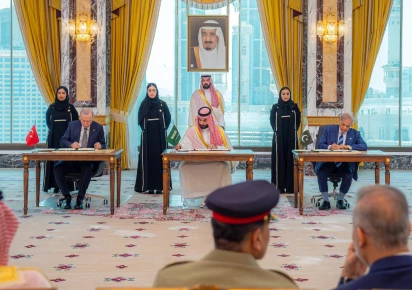
      DHAKA: Bangladesh has indicated that it is open to joining the Makkah Joint Defence Agreement signed by Pakistan, Saudi Arabia and Türkiye, as Dhaka looks to broaden its strategic partnerships while maintaining a foreign policy centred on national interests. According to the state-run Bangladesh Sangbad Sangstha (BSS), Bangladesh Prime Minister’s Adviser for Foreign Affairs Humayun Kobir said the country maintained a positive outlook towards the possibility of becoming part of an economic or defence framework involving Saudi Arabia, Pakistan and Türkiye. Kobir said any decision regarding participation would be considered in light of Bangladesh’s national interests as well as changing global economic and trade dynamics. He stressed that Dhaka was pursuing a balanced foreign policy under its “Bangladesh First”approach, with national priorities remaining at the heart of its international engagement. He said Bangladesh was also working to strengthen its bilateral relationship with Pakistan through normal diplomatic channels. According to Kobir, the two countries were particularly focusing on expanding trade and improving people-to-people contacts and connectivity. The Bangladeshi adviser’s remarks come amid signs of improving diplomatic engagement between Dhaka and Islamabad. He also said Prime Minister Tarique Rahman’s proposed visit to Riyadh, following an invitation from Saudi Crown Prince and Prime Minister Mohammed bin Salman was expected to be finalised after the summer. The possibility of Bangladesh joining the defence framework comes shortly after Pakistan, Saudi Arabia and Türkiye signed the Makkah Joint Defence Agreement in Makkah on August 7. Under the agreement, an armed attack against any one of the three participating countries is to be treated as an attack against all three. The pact also provides a framework for greater defence cooperation, coordination and collective deterrence among the signatories. The agreement has attracted regional and international attention because of its potential to expand security cooperation among key Muslim-majority countries. Turkish Foreign Minister Hakan Fidan has described the arrangement as technically comparable to NATO’s Article 5 principle of collective defence, while emphasising that the agreement is not aimed at Iran or any other specific country. Ankara has also suggested that the framework could potentially be expanded to include additional regional states. Egypt has previously been mentioned as a possible participant in the broader security arrangement. Pakistan has similarly maintained that the agreement is defensive in character and is not directed against any particular country. Islamabad has also indicated that the framework remains open to states that are willing to support its principles and objectives. Deputy Prime Minister and Foreign Minister Ishaq Dar has said the agreement does not seek to replace existing bilateral or multilateral defence and security arrangements. Instead, he said, it provides an additional platform for cooperation based on mutual respect, shared interests and peaceful resolution of disputes. Bangladesh’s latest position suggests that Dhaka is carefully assessing emerging regional partnerships while seeking to preserve strategic flexibility. Its potential participation could further broaden the Makkah agreement’s regional significance and strengthen cooperation among Pakistan, Saudi Arabia, Türkiye and other interested countries. For Bangladesh, however, any decision to join would ultimately depend on how the proposed framework aligns with its national interests, foreign policy priorities and assessment of the evolving regional and global security environment.

  • | |

    PTI may return to Senate committees after meeting …

    Senate Opposition Leader Allama Raja Nasir Abbas has said that Pakistan Tehreek-e-Insaf (PTI) could return to parliamentary standing committees if a meeting is arranged with the party’s founder, Imran Khan. Speaking to journalists in Islamabad, Raja Nasir Abbas said that if the government wanted Parliament to continue functioning, it should facilitate a meeting between PTI leaders and Imran Khan. He alleged that deliberate ambiguity was being created about Imran Khan’s health, saying the situation was also aimed at creating divisions within the party. Raja Nasir Abbas recalled that before the passage of the 26th Constitutional Amendment, a meeting with Imran Khan had taken place on the orders of the court. He said his party wanted a government that genuinely represented the people. Commenting on Interior Minister Mohsin Naqvi’s remarks about a possible collapse of the system, he said he agreed with the assessment. He added that the problem identified by Naqvi was real, but the proposed “medicine” to address it was illegal. The Senate opposition leader also claimed that he knew why negotiations between the government and PTI had failed. He said a complete plan for negotiations had been taken to Imran Khan at Adiala Jail, adding that the opposition had held a meeting at Khyber Pakhtunkhwa House before approaching the PTI founder. “We took several proposals to the founder,” he said, explaining that they did not want to visit the Prime Minister’s House and provide legal legitimacy to the government’s position. He said the same principle was behind their decision not to hold negotiations in the Speaker’s Office, as they did not recognise the arrangements as legally legitimate. Raja Nasir Abbas stressed that he distinguished between Imran Khan and the PTI as a political party, adding that he would stand by the former prime minister “until the last moment.” He reiterated that PTI could return to the standing committees if a meeting with Imran Khan was arranged. “If the government is serious about negotiations, it should come forward and talk,” he said, adding that the opposition was ready to hold talks in the Constitution Room of Parliament House.

  • | |

    PAC meeting reveals Rs1.06 billion embezzlement

      Islamabad: A meeting of the Public Accounts Committee (PAC) revealed a major financial irregularity involving the Hyderabad Electric Supply Company (HESCO), where more than Rs1.06 billion was allegedly embezzled through the payment of salaries to ghost employees and retired staff. The disclosure was made during the committee’s review of an audit report highlighting serious financial mismanagement within the power distribution company. According to the audit findings, salaries continued to be issued in the names of non-existent employees as well as individuals who had already retired from service, resulting in a massive loss to the national exchequer. The audit report stated that the alleged embezzlement was carried out through the collusion of officials from HESCO’s Drawing and Disbursing Officer (DDO) office, Executive Engineer (XEN) office, and Chief Financial Officer (CFO) office. The report indicated that weaknesses in internal financial controls and payroll monitoring allowed the irregular payments to continue for an extended period without detection. During the PAC meeting, members expressed serious concern over the scale of the fraud and questioned how such a significant amount of public money could be misappropriated without timely intervention. The committee emphasized the need for stronger financial oversight, transparent payroll management, and strict accountability to prevent similar incidents in the future. Responding to the audit observations, the Chief Executive Officer (CEO) of HESCO informed the committee that disciplinary action had already been taken against officials found responsible for the irregularities. According to the CEO, four employees have been dismissed from service, including three accounts officers and one finance officer. He stated that the company has adopted a zero-tolerance policy toward corruption and financial misconduct and is cooperating fully with the relevant authorities. Officials from the Federal Investigation Agency (FIA) also briefed the committee on the progress of the criminal investigation. They informed lawmakers that five criminal cases had been registered in connection with the fraud. According to the FIA, more than 130 individuals were allegedly involved in the scam, either directly or indirectly, making it one of the largest payroll fraud cases uncovered in a public sector utility. Despite the registration of multiple cases, the FIA reported that only Rs130 million has been recovered so far, a small portion of the total amount allegedly embezzled. Investigators said efforts are continuing to trace the remaining funds, identify all those responsible, and recover the outstanding amount through legal proceedings. The PAC directed the relevant authorities to expedite the investigation and ensure that all individuals involved are brought to justice, regardless of their position or influence. Committee members stressed that those responsible for the misuse of public funds must be held accountable to restore public confidence in government institutions. The revelations have once again highlighted the need for comprehensive reforms in payroll management, financial auditing, and internal accountability mechanisms within state-owned organizations. The committee reiterated that transparent governance and effective oversight are essential to preventing corruption and safeguarding public resources from financial abuse.

  • | |

    2 students killed in Philippines school shooting, …

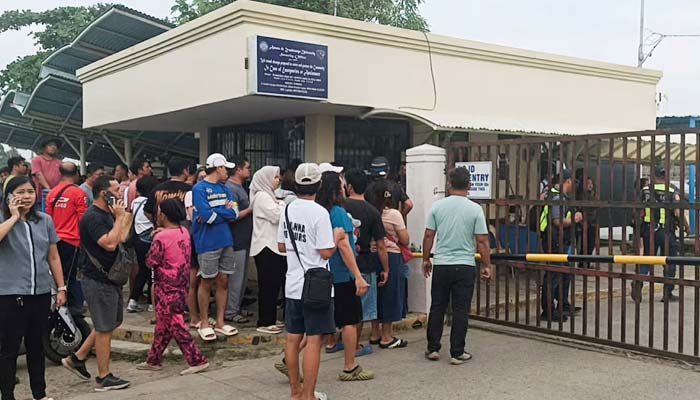
    Philippines: Two students were killed in a shooting at a high school in the southern Philippines on Tuesday, with authorities confirming that the suspected shooter was among the dead. The incident occurred at a school affiliated with Ateneo de Zamboanga University in Zamboanga City. Police said a Grade 9 student brought both a pistol and a rifle onto the campus and opened fire inside a classroom. A Grade 10 male student was killed in the attack, while the alleged shooter later took his own life. University President Ernald Andal said the situation had been brought under control and that there were no further deaths or reported injuries. He said the institution’s immediate priority was ensuring the safety of students and staff. Security personnel, including police and soldiers, were deployed around the school as investigators arrived to examine the scene. Students and parents were also seen gathering outside the campus following the incident. The shooting comes less than two months after another deadly attack at a public high school in Tacloban City. In that incident in June, at least three students were killed and around 20 others were injured after two students reportedly opened fire on the school grounds. School shootings are relatively uncommon in the Philippines, where firearm ownership is subject to regulations including background checks and psychological assessments. Authorities, however, continue to face challenges posed by the circulation of illegal weapons. The latest incident also comes less than 10 days after a separate school shooting in Thailand, adding to concerns over violence involving students in the region.

  • |

    France and Spain battle massive wildfires as another heatwave looms

    France and Spain are racing to contain devastating wildfires that have forced hundreds of thousands of people from their homes, with officials warning that another intense heatwave could make the crisis even worse. The blazes have spread across large areas of both countries, destroying forests, disrupting holidays, and stretching emergency services to their limits. The fires have been particularly severe in southwestern France near the famous Bordeaux wine region and in central Spain around Madrid. Authorities say more than 325,000 people have evacuated as flames continue to sweep through forests left dangerously dry after months of little rainfall and repeated heatwaves since May. Many residents escaped with only their most essential belongings. Olga Congacha, who fled her village near Madrid with her husband, said they had little time to react. She explained that they quickly gathered important documents and a few clothes before leaving as the situation became increasingly dangerous and frightening. Firefighters in France are dealing with an unusual and dangerous weather phenomenon caused by the blaze itself. Officials said the wildfire has created a massive fire cloud known as a pyrocumulonimbus. These clouds can generate their own winds, produce lightning, and in some cases even create tornadoes that ignite new fires. France’s National Federation of Firefighters said this is the first time such a phenomenon has been recorded in the country. Emergency crews continue to battle the flames with thousands of firefighters supported by water dropping aircraft. Thick smoke and rapidly changing winds have made firefighting efforts extremely difficult. One firefighter said the unpredictable wind patterns mean the fire is largely controlling the situation, forcing crews to constantly adjust their strategy. French President Emmanuel Macron is expected to chair an emergency cabinet meeting to review the growing crisis, while Spanish Prime Minister Pedro Sanchez plans to visit one of the worst affected areas in Valencia, where firefighters are tackling another fast moving wildfire. Spanish Civil Protection chief Virginia Barcones described the wildfire near Avila as a “monster” because of its enormous size. She said the fire has spread across a perimeter of about 280 kilometers and has burned approximately 77,000 hectares of land, making it one of the country’s largest wildfire emergencies in recent years. Scientists continue to warn that climate change is increasing the frequency and intensity of extreme weather events, including prolonged heatwaves and destructive wildfires. High temperatures combined with dry vegetation have created ideal conditions for fires to spread rapidly across southern Europe. In France’s Gironde region, authorities urged tourists to avoid the area and choose alternative destinations while emergency crews work to contain the blaze. Since last week, the wildfire has burned more than 42,000 hectares, an area several times larger than Manhattan. Around 220,000 people have been evacuated from the region, including visitors staying at 45 campsites that were forced to close, disrupting holidays for roughly 40,000 people. Another 30,000 residents have also been evacuated from other fire affected parts of the country. Some homeowners have chosen to stay behind despite evacuation orders in an effort to protect their properties. Georges Clivaz, whose home is near the advancing fire in Gironde, said he and his family were spraying water along nearby roads to slow the flames. He admitted firefighters had warned them the blaze could reach their home within hours, but they hoped their efforts might help save their property. Weather experts have warned that another heatwave is expected to hit parts of France from Tuesday, with temperatures forecast to reach as high as 40 degrees Celsius in some areas. In Spain, around 75,000 people have been evacuated from regions including Madrid, Avila, Toledo, and Castellon. Although officials reported some progress, several major fires remain out of control. One person has died in the wildfire near Valencia, while two French firefighters lost their lives earlier this week while battling the flames near Bordeaux.

  • |

    PSX sheds over 1,800 points as US-Iran peace deal uncertainty triggers selling

    KARACHI: Selling pressure intensified at the Pakistan Stock Exchange (PSX) on Tuesday, with the benchmark KSE-100 Index suffering a sharp decline as investors turned cautious amid growing uncertainty surrounding the prospects of a near-term peace agreement between the United States and Iran. By 1:24pm, the benchmark index had dropped 1,806.12 points, or 0.89%, to 178,896.29, compared with the previous close of 180,502.44. The decline reflected widespread profit-taking and fresh selling across several key sectors of the market. The KSE-100 started the session at 180,502.44 and initially moved higher, reaching an intraday peak of 180,602.44. However, the early gains failed to hold as investors began offloading positions, pushing the index steadily lower. During the session, the benchmark touched an intraday low of 178,488.91, highlighting the intensity of selling activity. At one stage, the index was down 1,545.52 points, or 0.86%, at 178,956.92, before losses widened further. Market sentiment was affected by renewed uncertainty over the possibility of a diplomatic breakthrough between Washington and Tehran. Investors remained concerned that prolonged tensions could create additional risks for energy supplies and regional trade, particularly if disruptions affect major oil-producing and transportation routes. The rise in international oil prices added another layer of concern for investors. Higher crude prices can increase Pakistan’s import bill and place additional pressure on external-sector balances, while also raising concerns about inflationary pressures and corporate costs. The selling was not confined to a single segment. Significant weakness was witnessed in automobile assemblers, cement manufacturers, commercial banks, oil and gas exploration companies, oil marketing companies and power generation firms. The broad-based nature of the decline suggested that investors were adopting a cautious stance rather than selectively rotating into individual sectors. Market participants appeared particularly sensitive to developments in global geopolitics and their potential implications for commodity prices and Pakistan’s macroeconomic outlook. Trading activity, meanwhile, remained robust despite the decline in the benchmark. Around 358.21 million shares had changed hands by midday, while the total traded value stood at approximately Rs22.47 billion, indicating considerable participation from investors. The latest decline came after the KSE-100 ended the previous trading session at 180,502.44, leaving the index vulnerable to profit-taking following its recent strong performance. Tuesday’s movement therefore reflected a combination of investor caution, external geopolitical concerns and selling in major market segments. Analysts and market participants are expected to closely monitor developments on the US-Iran front, movements in international crude oil prices and domestic economic indicators for direction in the coming sessions. Any improvement in geopolitical sentiment or a renewed expectation of progress toward a peace agreement could help restore confidence, while further escalation and sustained increases in global oil prices could continue to weigh on equities.

Leave a Reply

Your email address will not be published. Required fields are marked *