houthis launch deadly
|

Houthis launch deadly missile and drone strikes in Yemen

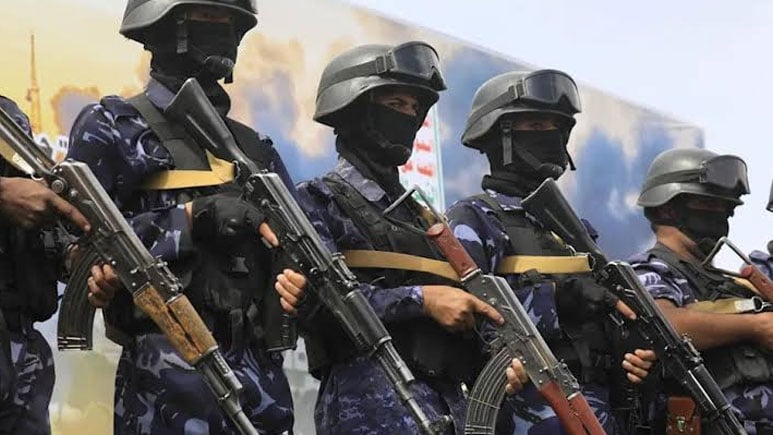
Houthi forces launched a series of missile and drone attacks on several Yemeni government military bases in the provinces of Hadramout and Marib, killing at least 30 soldiers and injuring 15 others, according to the Yemeni government.

Officials warned that the death toll could rise as some of the wounded remain in critical condition. Meanwhile, the Houthis claimed the attacks caused hundreds of casualties among government forces, although independent verification of that figure is not available.

Houthi spokesperson Yahya Saree said the strikes came in response to recent military movements by government forces. The Yemeni military confirmed the attacks and said they followed its own operations against Houthi positions.

Arab media reported that the Houthis fired eight missiles from Al Jawf province, targeting military camps in Al Thaniyah and Al Abr in Hadramout, as well as Al Rawk in Marib. The strikes hit while soldiers had gathered for training exercises, contributing to the high number of casualties.

The attacks rank among the deadliest military operations in Yemen since 2022 and come as clashes between the two sides have intensified in recent weeks, raising fears of further escalation.

The U.S. Embassy condemned the attacks, describing them as a “cowardly act of terrorism,” and expressed condolences to the families of the fallen Yemeni soldiers.

Separately, the Saudi-led coalition said a Houthi attack on the Saudi border city of Najran wounded 11 civilians, including a woman and a child. The Houthis have not immediately claimed responsibility for that incident.

Similar Posts

  • |

    Thank you for calling us Cockroaches’: activist reacts to Indian Education Minister’s resignation

    Following the resignation of Indian Education Minister Dharmendra Pradhan, Cockroach Janta Party (CJP) chief Abhijit Dipke addressed a protest rally at Jantar Mantar and thanked those who had referred to young people as “cockroaches.” Speaking at the demonstration, Dipke directly addressed Chief Justice of India Surya Kant, saying that if the chief justice had not used the term, he would not have returned to India and the protest movement would never have begun. According to Indian media reports, the youth-led campaign began after a Supreme Court hearing on May 15. During a case concerning the designation of senior advocates, Chief Justice Surya Kant reportedly compared some young people to cockroaches, saying they struggled to find employment and opportunities in their professions. The chief justice later clarified that his remarks were directed at people holding fake law degrees and were not intended to describe unemployed youth generally. However, the statement quickly spread across social media and triggered widespread criticism. The following day, Abhijit Dipke, a student based in Boston and a former communications strategist for the Aam Aadmi Party, announced the formation of the Cockroach Janta Party in a satirical social media post. Dipke presented the group as a platform for young people who considered themselves “cockroaches” — including unemployed youth, active social media users and those critical of the existing system. The campaign gained momentum as public anger increased over allegations surrounding a National Eligibility Test (NET) paper leak. Dipke returned to India in early June and began leading protests at Jantar Mantar. The protesters’ main demand was the resignation of Education Minister Dharmendra Pradhan over alleged irregularities in examinations. The movement later received wider attention when social activist Sonam Wangchuk began an indefinite hunger strike on June 28. He ended the hunger strike after 26 days following written assurances from the government. The assurances included a commitment that peaceful protesters would not face criminal cases. The government also agreed to consider examination reforms and accountability measures in Parliament. It further agreed to consider a proposal for compensation for families of students who allegedly died by suicide following the reported paper leak. Despite the end of Wangchuk’s hunger strike, the Cockroach Janta Party continued demanding Pradhan’s resignation. The protests continued even after demonstrators were reportedly subjected to a baton charge on July 20. Growing pressure eventually led to Pradhan stepping down. In his resignation, Pradhan said he was leaving his position with the future of students in mind. He also said the decision was necessary to prevent anti-national elements from taking advantage of the situation at Jantar Mantar and elsewhere across the country.

  • |

    Gazans welcome Hamas disarmament plan but remain doubtful of Israeli withdrawal

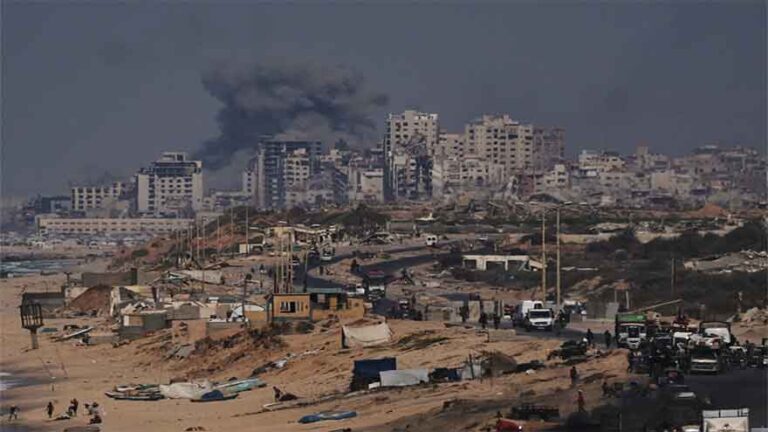
    Many Palestinians in Gaza have cautiously welcomed reports that Hamas has agreed to disarm under a new United States backed proposal, hoping it could eventually bring an end to the devastating conflict. However, despite this small sign of progress, many remain unconvinced that Israel will withdraw its forces or that lasting peace is within reach. US President Donald Trump recently announced that Hamas had accepted a plan to surrender its weapons as part of a broader roadmap aimed at stabilising Gaza and beginning reconstruction. Hamas later confirmed the agreement. Even so, Israeli military operations have continued, leaving many residents uncertain about whether the proposal will lead to any real change. Thousands of families remain displaced, while many others continue living in overcrowded tent camps where shortages of food, clean water, medicine and proper sanitation have created severe humanitarian conditions. Disease outbreaks and poor living conditions have become an everyday reality for much of the population. For many Palestinians, survival remains the immediate concern. Abdel Moneim Aboul Roos, a 24 year old tuk tuk driver who lost a leg in an Israeli airstrike, said discussions about disarmament and troop withdrawals mean little while people continue to struggle for basic necessities. He said access to food and medical care matters more than political agreements that have yet to improve conditions on the ground. The latest proposal builds on a ceasefire agreement reached last year with US support. That deal ended large scale fighting for a period, secured the release of Israeli hostages and increased humanitarian aid entering Gaza. It also included plans for a gradual Israeli military withdrawal, the formation of an international stabilisation force and the dismantling of Hamas’ weapons. However, the agreement soon stalled as both Israel and Hamas accused each other of violating its terms. Hamas retained its weapons while Israeli forces remained in the territory, causing negotiations to break down. The newly announced roadmap provides more detailed arrangements for transferring Hamas’ weapons to a technocratic Palestinian administration. According to the proposal, Israel would not participate in the disarmament process and would instead halt military operations to allow political transition and reconstruction efforts to move forward. Despite these commitments, many Gazans remain deeply sceptical because previous promises of peace failed to deliver lasting results. Displaced resident Ayman Ahmed said people have repeatedly been told that the war would end, only to see the violence continue. While he hopes Hamas eventually lays down its arms, he believes such a step is unlikely in the near future and expressed frustration that ordinary Palestinians continue to suffer while political leaders remain divided. The conflict began after Hamas launched its October 2023 attack on southern Israel, killing around 1,200 people and taking hundreds of hostages. Israel responded with a large military campaign in Gaza that has caused widespread destruction and heavy casualties. According to Gaza health authorities, more than 73,000 Palestinians have been killed during the war, while the fighting has displaced most of the territory’s population. The figures do not distinguish between civilians and fighters, although officials say women and children account for a large share of those killed. Many residents also fear that Israel has no intention of fully leaving Gaza even if Hamas is disarmed. Israeli officials have not publicly endorsed the latest roadmap and anonymous government sources have suggested that it does not match Israel’s security objectives. They have also indicated that Israeli forces intend to remain along the Yellow Line, a military zone separating Israeli controlled territory from the rest of Gaza. The military has strengthened its positions in these areas by building defensive barriers and carrying out demolition operations, leaving many displaced families uncertain whether they will ever return to their homes. Despite these fears, many Palestinians continue to hold onto hope. Anas Nakla, whose home in Rafah was destroyed during the war, said he still dreams of returning with his family even though nothing remains of his house. Mohamed Hamad, displaced from northern Gaza, believes that if the new plan results in even a partial Israeli withdrawal, it would restore hope that one day all displaced families could rebuild their lives in their own communities.

  • | | |

    Congo Ebola outbreak death toll crosses 2,000

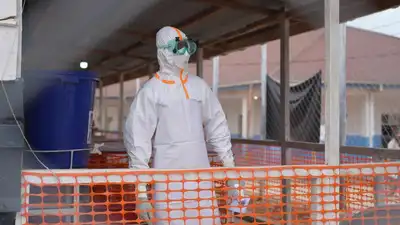
    KINSHASA: The Ebola outbreak in the Democratic Republic of Congo has intensified dramatically, with the death toll reaching 2,061 as authorities reported 4,449 confirmed cases, highlighting the growing challenge facing health workers and communities. The latest figures, reported by Congolese authorities on Tuesday, show how quickly the outbreak has expanded since it was officially declared on May 15. The outbreak is being driven by the Bundibugyo virus, a species of Ebola for which there is currently no licensed vaccine or specific treatment. Health authorities have been relying heavily on early diagnosis, supportive care, surveillance and infection-control measures. The outbreak began in Ituri province, with cases subsequently reported in other parts of the country. The World Health Organisation has warned that insecurity, population movement and limited healthcare infrastructure are complicating efforts to contain transmission. The current epidemic is Congo’s 17th Ebola outbreak, according to health authorities. Its rapid growth has raised concerns among international health agencies, particularly as affected communities face humanitarian and security challenges. Medical teams are working under difficult conditions, wearing protective equipment while treating patients and tracing contacts. WHO has said that strengthening surveillance, contact tracing, clinical care and community engagement remains central to the response. Recent research has also suggested that the outbreak may involve a previously unrecorded variant of the Bundibugyo strain and could have resulted from a new animal-to-human transmission event, underscoring the importance of monitoring potential spillover from wildlife. With thousands of confirmed infections and deaths already recorded, authorities face an urgent race to slow transmission and prevent the outbreak from spreading further across the region.

  • |

    Wildfires in south‑west France flare up as region braces for new 40°C heatwave

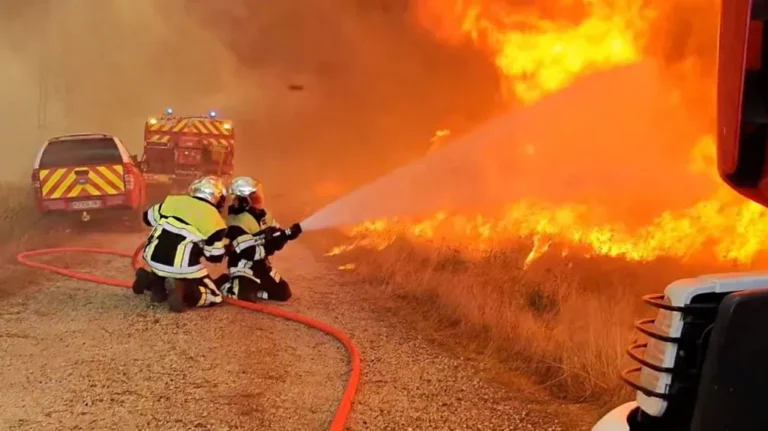
    Firefighters in France’s Gironde region are battling renewed blazes as the country braces for its fourth heatwave of the summer, with temperatures forecast to reach 40°C by Wednesday. Regional prefect Sophie Brocas said 14 areas already scorched by earlier fires saw fresh flare‑ups on Tuesday. “We are not in the clear,” she warned. More than 2,000 firefighters have been deployed, with national federation spokesman Eric Brocardi describing the struggle as “David against Goliath.” Four firefighters have died in recent weeks across France. The wildfires have forced more than 70,000 people to evacuate their homes. While Bordeaux is not currently under direct threat, one blaze came within 15km of the city earlier this week. Commander Rémi Lassoureille, leading the Gironde response, voiced concern about the impact on Bordeaux’s metropolitan area, where air quality has deteriorated sharply. Residents and tourists reported smoky skies, ash falling on clothes, and restaurants closing due to pollution. Spain has also endured severe fires, though some evacuation orders have been lifted, allowing 44,000 people to return home. Prime Minister Pedro Sánchez said the situation remained challenging but expressed hope that “light is beginning to appear at the end of the tunnel.” In Portugal, 400 firefighters are tackling a major blaze in the eastern Guarda area. French Health Minister Stéphanie Rist urged residents in affected zones to remain indoors, citing air pollution risks. “Many people have lost their homes or their businesses, not to mention the firefighters who have been hard at work for weeks now and who must be exhausted,” she said. Locals in Cap Ferret voiced fears for the peninsula’s forests, warning that while Bordeaux’s concrete structures may be safe, the destruction of woodland is catastrophic.

  • |

    Unesco reports 2.4 million Afghan girls barred from secondary education under Taliban rule

    Roughly 2.4 million Afghan girls have been systematically denied access to secondary education since the Taliban regained power in 2021, the United Nations Educational, Scientific and Cultural Organisation (Unesco) announced, urging an immediate end to the policy. The UN agency noted that the number of girls excluded from high school has grown by 200,000 over the past year and warned that the figure could reach nearly four million by 2030 if the restrictions remain in place. Afghanistan remains the only country in the world where female students are formally prohibited from attending school beyond the primary level. The current restrictions mark a stark reversal of educational progress achieved over the preceding two decades. In 2001, female enrolment was severely limited, but by 2021, nearly one million girls were actively attending secondary schools across the country. Beyond human rights concerns, Unesco highlighted the severe long-term economic fallout, estimating that the prohibition on female education and employment could cost the Afghan economy $9.6 billion (£7.5 billion) by 2066. The wider educational landscape in Afghanistan faces critical systemic strain. More than half of primary-school-aged children are out of school entirely, and over 90 per cent of 10-year-olds are unable to read basic text. Infrastructure deficits, including widespread shortages of clean drinking water, sanitation, and heating, alongside recurrent natural disasters continue to exacerbate the ongoing crisis.

Leave a Reply

Your email address will not be published. Required fields are marked *