देश-विदेश

  • | | | |

    Hezbollah signals major u-turn, seeks talks with S…

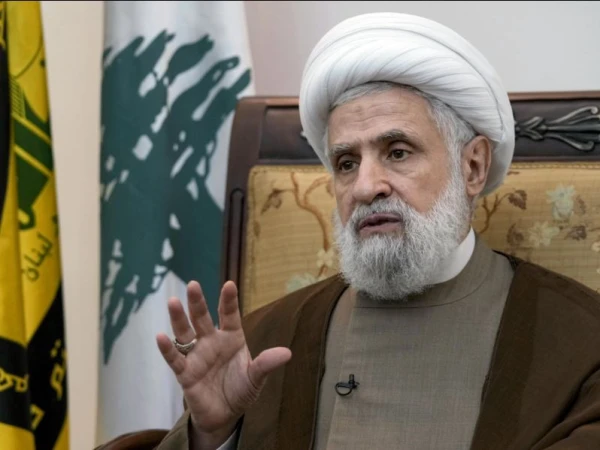
    BEIRUT/DAMASCUS: In what analysts are describing as a significant policy shift, Hezbollah Secretary-General Naim Qassem has expressed readiness to meet Syria’s new leadership, signaling a potential reset in relations after years of political uncertainty following the fall of former president Bashar al-Assad. Speaking during a televised address, Qassem said Hezbollah seeks “positive, brotherly and cooperative” ties with Syria and has no objection to holding an official meeting with the country’s current leadership if both sides consider the timing appropriate. He added that there were no barriers to public engagement once mutual conditions were met. The remarks mark the first time Hezbollah’s chief has openly endorsed the possibility of direct contact with Syria’s post-Assad leadership, a move that could reshape political dynamics across the region. For years, Hezbollah played a key role in supporting Assad’s government during Syria’s prolonged civil war. Throughout the conflict, Syrian territory served as a vital corridor for the movement of weapons and logistical supplies from Iran to Lebanon, making Damascus a strategic partner for the Iran-backed Lebanese group. However, the regional landscape changed dramatically after Syria’s new government assumed power in December 2024. The political transition created uncertainty over the future of relations between Damascus and Hezbollah, with observers questioning whether the alliance forged during the civil war would survive under the country’s new leadership. Political analysts believe Qassem’s latest comments indicate Hezbollah is adapting to the changing realities of the Middle East. By signaling openness to dialogue, the group appears to be seeking a pragmatic relationship with Syria’s new rulers while protecting its broader regional interests. Experts say any formal meeting between Hezbollah and Syrian officials would carry implications extending beyond the two neighbors. Such engagement could influence Iran’s regional strategy, Lebanon’s internal political landscape, and the broader balance of power in the Middle East. While no timetable for talks has been announced, Qassem’s statement is widely viewed as an important diplomatic opening, suggesting that former rivals and long-time allies alike are reassessing their positions as the region enters a new political era.

  • |

    Antarctic cold blast grips New Zealand’s South Island

      A powerful cold wave sweeping north from Antarctica has engulfed New Zealand’s South Island, bringing freezing temperatures, fierce winds, and unusually heavy snowfall that has severely disrupted daily life across the region. The city of Dunedin has been among the hardest hit, experiencing strong icy winds accompanied by significant snowfall. Residents woke up to streets, rooftops, and vehicles covered in several inches of snow, creating hazardous conditions for both pedestrians and motorists. The unusual weather has transformed the city into a winter landscape, while also causing widespread travel disruptions. Authorities reported that the heavy snowfall has blanketed roads, making many routes dangerous and, in some areas, impassable. Snowplows and emergency crews have been deployed to clear major highways and ensure safe access for emergency services. However, officials have urged residents to stay indoors unless travel is absolutely necessary, warning that icy roads and reduced visibility could lead to accidents. Public transportation has also been significantly affected. All bus services in Dunedin were suspended due to unsafe road conditions, leaving commuters stranded and forcing many schools, businesses, and public institutions to adjust their schedules. Local authorities continue to monitor the weather closely before deciding when transportation services can safely resume. The severe weather has also disrupted travel between New Zealand’s North and South Islands. Ferry services connecting the two islands have been suspended because of dangerous sea conditions caused by the powerful Antarctic storm system. Strong winds and rough waves have made navigation unsafe, affecting both passenger and freight transport. The suspension of ferry operations is expected to delay the movement of goods and impact travel plans for thousands of people. Meteorologists say the cold outbreak originated from Antarctica and pushed unusually frigid air across southern New Zealand. Such weather systems are capable of producing intense snowfall, especially when cold Antarctic air interacts with moisture over the surrounding oceans. While snowfall is common during winter in parts of the South Island, the intensity of this storm has been described as exceptional for several areas. Emergency management agencies have advised residents to prepare for continued freezing conditions. People have been encouraged to keep emergency supplies at home, avoid unnecessary travel, dress warmly, and check on elderly neighbors or vulnerable family members who may require assistance during the cold spell. The harsh weather has also raised concerns for farmers, who are working to protect livestock from freezing temperatures and strong winds. Agricultural authorities have urged farmers to provide adequate shelter and food for animals until conditions improve. Forecasters predict that the Antarctic cold blast may continue to affect parts of the South Island over the coming days, with additional snowfall and icy conditions possible in higher elevations. Officials remain on high alert as they assess the impact of the storm and work to restore essential services. Residents are advised to stay informed through official weather updates and follow safety instructions until the severe weather subsides.

  • |

    France tightens borders after deadly Ceuta migrant crisis

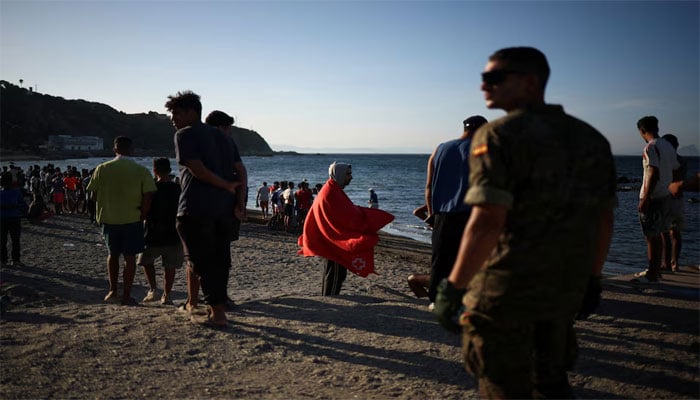
    France has strengthened security checks along its border with Spain following the recent migrant influx into the Spanish enclave of Ceuta, French Interior Minister Laurent Nunez announced on Tuesday. The enhanced border measures were introduced over the weekend on the instructions of French President Emmanuel Macron after tens of thousands of migrants crossed into Ceuta from Morocco over two days, triggering one of the region’s largest migration emergencies in recent years. Spanish authorities said the vast majority of migrants who entered the enclave had already been returned to Morocco. Officials also confirmed that at least 75 people died while attempting the dangerous crossing, highlighting the human cost of the crisis. Speaking after an emergency video conference with European interior ministers, Laurent Nunez said European Union member states had unanimously expressed solidarity with Spain and pledged support in managing the situation. He said France remained ready to provide additional assistance through Frontex, the EU’s border management agency, if required. The French minister noted that Ceuta operates under special rules within the Schengen Area and stressed that strict border controls had prevented the migration crisis from spreading to mainland Europe. Nunez also praised the cooperation between Spain and Morocco in responding to the situation, saying close coordination between the two countries had been vital in managing the large-scale arrivals. Rejecting calls from some political groups in France to suspend Spain from the Schengen free-movement zone, he said EU member states agreed that the Schengen system remained part of the solution rather than the cause of the crisis. He emphasized that the Schengen Area had not been threatened despite the surge in migration and reaffirmed France’s commitment to coordinated European efforts to address irregular migration.

  • |

    China’s Chongqing East becomes world’s largest railway station

    Almost everyone has travelled by train at some point and has seen railway stations. But do you know which country is home to the world’s largest railway station? If you do not, here is the answer: the world’s largest railway station is located in China and is nothing short of an architectural marvel. China is already known for numerous engineering wonders ranging from remarkable bridges to the world’s largest high-speed railway network. Chongqing East Railway Station Chongqing East Railway Station located in southwestern China is the world’s largest railway station in terms of area. It was opened to the public in June 2025. The railway station covers an area of approximately 13 million square feet equivalent to around 170 football fields. It is also about five times larger than New York’s Grand Central Terminal. The station has 15 platforms and 29 railway tracks and during peak hours, it can accommodate around 16,000 passengers per hour. Around 16,500 tonnes of steel were used for its roof. However, the most remarkable feature of the station is the speed at which it was constructed and it was built on top of a mountain. The Chongqing region is mountainous which has traditionally made the development of transportation infrastructure particularly challenging. The station was constructed in just 38 months with the help of around 40,000 workers and a fleet of robotic machinery. Although 38 months may seem like a long period, in many countries, simply obtaining approval for projects of this scale can take longer than that.

  • |

    UK police data breach exposes personal information of nearly 100,000 officers

      The personal details of nearly 100,000 police officers in the United Kingdom have reportedly been leaked and published on the dark web, raising serious concerns about the safety and security of law enforcement personnel across the country. According to reports, the leaked information includes the names and contact details of officers, exposing many of them to potential threats. Security experts and officials fear that the breach could have severe consequences, particularly for officers who have spent years investigating and taking action against organized crime groups, violent offenders, drug traffickers, and other dangerous criminals. The exposure of their identities could make them and their families vulnerable to intimidation, harassment, retaliation, or targeted attacks. According to reports, the incident is part of a broader and more sophisticated cyber campaign targeting some of the UK’s most important government institutions. The cyberattack is believed to have affected multiple departments and agencies responsible for national security, law enforcement, and criminal justice. Among the organizations reportedly impacted are the Ministry of Defence (MoD), the Home Office, the National Crime Agency (NCA), and the Crown Prosecution Service (CPS). These institutions play critical roles in protecting the country’s national security, combating serious and organized crime, and prosecuting criminal cases. The compromise of sensitive data from these agencies has intensified concerns over the growing threat posed by cybercriminals and hostile actors. The leak has prompted urgent discussions within the UK government regarding cybersecurity measures and the protection of sensitive information. Authorities are expected to investigate how the breach occurred, determine the full extent of the compromised data, and identify those responsible for the attack. Officials are also likely to assess whether additional classified or operational information was accessed during the cyber campaign. Cybersecurity experts warn that publishing personal information on the dark web significantly increases the risk of identity theft, phishing attacks, social engineering, and other forms of cybercrime. For police officers, however, the consequences can be even more serious, as criminals may attempt to track their locations, identify undercover personnel, or exploit personal details to threaten ongoing investigations. The incident highlights the increasing sophistication of cyberattacks targeting government agencies worldwide. As governments continue to digitize their operations and store large volumes of sensitive data electronically, they face mounting challenges in defending against hackers and state-sponsored cyber threats. The UK authorities are expected to strengthen security protocols, improve monitoring systems, and enhance cooperation with cybersecurity specialists to prevent similar incidents in the future. Meanwhile, affected officers may receive additional security guidance and support to reduce potential risks arising from the exposure of their personal information. The reported breach serves as a stark reminder of the importance of robust cybersecurity infrastructure and the need for continuous investment in protecting sensitive government data from increasingly advanced cyber threats. Investigations into the incident are ongoing, and further details are expected to emerge as authorities continue their assessment of the attack.

  • | |

    Gaza funeral held for 112 bodies retrieved from ru…

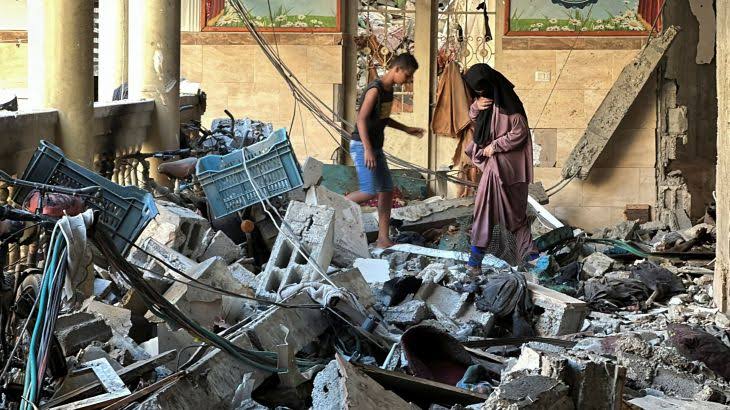
    Palestinians in Gaza held funeral prayers on Tuesday for 112 people whose remains were recovered from the rubble of homes destroyed during the war between Israel and Hamas. Thousands of mourners gathered for the funeral in Gaza City’s Sabra neighborhood, where the bodies, draped in Palestinian flags, were laid out near the ruins of the destroyed homes before the procession began. The victims are set to be buried afterward at the Baptist Cemetery in the Zeitoun neighborhood, south of Gaza City. The dead belonged to the Al Hasayneh and Abu Sharia families, who were killed when their homes were bombed while they were sheltering inside on November 23, 2023. Given the scale of the casualties, the funeral ranks among the largest recorded in Palestinian history. Civil defense teams recovered the bodies from the rubble on Saturday. A Civil Defence statement said the victims included 40 children, 38 women and seven people with disabilities. Civil Defence official Mohammad Abu Dan said search teams have so far been unable to locate 157 additional bodies still believed to be buried under the rubble. More than 73,000 people have been killed and over 174,000 injured in Gaza since the war began in October 2023, according to local health authorities. Despite a ceasefire agreement that took effect on October 10, 2025, Israeli forces have continued carrying out attacks across the territory, killing 1,250 Palestinians and injuring 4,110 others since the truce began, Gaza’s Health Ministry said. Palestinian authorities estimate that around 9,500 people remain missing under the rubble of buildings destroyed across the territory. A day earlier, at least 19 Palestinians were killed by Israeli fire over a 24 hour period, pushing the overall death toll since October 2023 to 73,375, according to the Health Ministry. Officials said the toll included 18 people killed directly by Israeli forces and one person who died from wounds sustained in an earlier attack. The ministry reported that 35 additional injured people were taken to hospitals during the same period, bringing the total number of injuries to 174,220. The ministry said Saturday that 152 people were killed in Gaza during July, the highest monthly death toll recorded since the start of the year, despite the ceasefire that took effect in October 2025. The truce followed nearly two years of war that began on October 8, 2023, and caused widespread destruction across the territory, affecting an estimated 90 percent of civilian infrastructure. The United Nations has put the cost of reconstruction at approximately 70 billion dollars, underscoring the scale of rebuilding that lies ahead even as sporadic violence continues despite the formal end of large scale hostilities.

  • | |

    Gen Z group behind India’s cockroach protest…

    The Cockroach Janta Party, the youth movement that forced a top Indian minister to quit, says it has no plans yet to contest elections despite its growing influence among young voters. Abhijeet Dipke, the founder of the group, told a foreign news agency on Tuesday that the organization intends to stay focused on grassroots mobilization rather than rush into formal politics. The statement comes weeks after protests led by Dipke swept through Delhi and spread to other parts of the country, ultimately pressuring Prime Minister Narendra Modi’s education minister to step down. Speaking from his family home in Maharashtra, Dipke said the group wants to first understand what young Indians actually want before deciding its next move. He announced that supporters would gather for a two day meeting starting Wednesday to map out priorities for the movement going forward. “The purpose will be to form the agenda for the Cockroach Janta Party and discuss how we can take this social movement forward,” Dipke said, as well wishers arrived at his home carrying flowers and gifts. Dipke made clear that entering electoral politics is not on the table for now, though he left the door open for the future. He said he would only consider building a formal party if a clear majority of supporters pushed for it, and that any decision to contest elections would come later, guided by public sentiment rather than a fixed timeline. He argued that Indian politics does not currently need another party competing for power. Instead, he said, the country requires a broader public campaign aimed at restoring faith in institutions that have lost credibility among ordinary citizens. Dipke said the group’s immediate priority is to give voice to the frustrations of India’s youth, many of whom, in his view, no longer trust the country’s political class, judiciary or press. He emphasized the importance of listening directly to young people before setting any formal agenda, saying it was necessary to understand their actual concerns rather than assume them. Dipke made these comments while still recovering from typhoid, which he contracted during the weeks he spent camped out during the Delhi demonstrations. A hero’s welcome at home Following the 36 day protest, Dipke traveled back to his hometown of Chhatrapati Sambhajinagar, where hundreds of supporters lined up outside his home to greet him, many carrying flowers in celebration of the movement’s success. Dipke’s rise to prominence has been rapid. After returning to India in June from his studies in the United States, he became a household name almost overnight when his call to protest against leaked medical entrance exam papers pulled tens of thousands of young demonstrators onto the streets of the capital. The pressure campaign achieved a significant result on July 25, when Education Minister Dharmendra Pradhan resigned from his post. Authorities had attempted to disperse the crowds using tear gas and baton charges, but the demonstrations continued regardless. In the aftermath, the government announced tougher legal penalties for those involved in leaking exam papers and formed a committee to reassess the broader examination system. The stakes attached to these entrance exams are enormous for India’s youth. Millions of students spend years preparing for them, viewing a strong result as their surest route to stable, well paying careers and financial security for their families. Wary of political traps Dipke explained that he is avoiding a formal political launch partly out of concern that the government could use investigations or legal pressure to undermine the party’s leadership if it formalized too quickly. He also said he has no intention of aligning the movement with any existing political party, even as opposition figures in India have tried to capitalize on the rare momentum the protests created against Modi’s government. Some of that caution appears to draw on regional experience. In neighboring Bangladesh, a youth led party that emerged after mass protests ousted long time leader Sheikh Hasina in 2024 went on to perform poorly in this year’s elections, a result that may be shaping how Dipke approaches the question of formal politics in India. Political observers say the true test of whether young Indians’ frustration translates into votes will come in elections scheduled for next year in Uttar Pradesh, India’s most populous state, along with Punjab and Modi’s home state of Gujarat. A bigger risk for the ruling Bharatiya Janata Party could emerge in the 2029 general election if the Cockroach Janta Party evolves into a formal political force by then. Political analyst Amitabh Tiwari said the movement is unlikely to cause major damage to the BJP in upcoming state elections but could grow into a more serious factor by the time of the next general election. He added that if the group builds a party structure, continues championing youth causes and sustains its current momentum, it stands a real chance of attracting broader support. Security concerns following the protests remain high. More than a dozen police officers have been stationed outside Dipke’s family home after he received threats on social media once his profile surged following the initial call to protest in May, a period in which the Cockroach Janta Party’s Instagram following grew to 22 million within days. Dipke said his greatest worry is not for his own safety but for that of his parents. He expressed relief at being back home and said he trusts that government provided security will keep his family safe in the coming weeks. The episode adds to a growing pattern across South Asia, where youth led movements have increasingly forced political concessions from long entrenched governments, even when those movements stop short of transforming into electoral parties themselves.

  • | |

    US military depletes long-range missile stockpile …

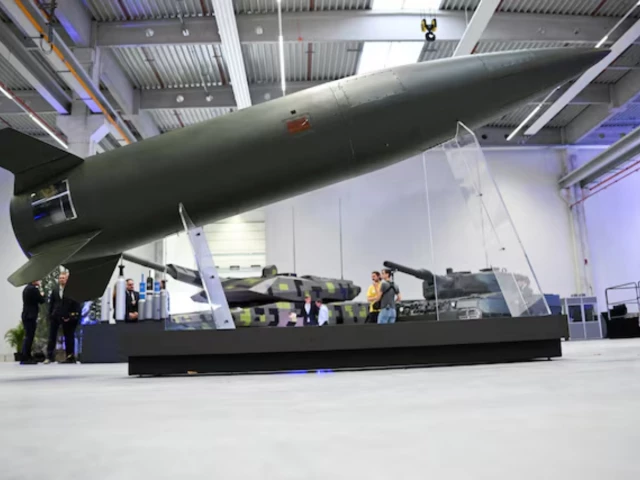
    The United States has burned through nearly all of its long-range precision missiles during five months of fighting in Iran, according to three people familiar with internal defense data, fueling concern inside Washington about military readiness for future crises. The weapons in question are primarily the Army’s ground launched systems, the Army Tactical Missile System and the newer Precision Strike Missile. Two of the sources said the military has expended virtually its entire supply of both. These munitions let forces strike targets accurately from a safe distance and have already proven vital in Ukraine, where American supplied versions allowed Ukrainian troops to hit targets deep inside Russian territory. The Precision Strike Missile represents a more advanced generation designed to eventually replace the shorter range ATACMS. Defense analysts note that such long-range munitions, each costing more than a million dollars, would also play a central role in any future confrontation with China. The sources declined to specify exact remaining quantities of either weapon. President Donald Trump launched the joint offensive against Iran alongside Israel in February, initially predicting a brief campaign. Instead, the conflict has stretched on for months, and the three sources said they worry that shrinking missile reserves could weaken the country’s ability to deter rivals such as Russia and China going forward. A fourth person familiar with the matter said Central Command, which oversees American forces across the Middle East, has nearly exhausted the land based missiles it held before the war started, though it has managed to replenish supplies by drawing from military stockpiles based elsewhere around the world. All four sources spoke on condition of anonymity. Asked to respond to the stockpile figures, the White House shared a statement from Trump asserting the country holds “far more munitions than anyone in the world” and more than it currently requires. He added that American defense manufacturers are producing at record volumes while also expanding factory capacity. Analysts largely agree that certain categories of weapons, including artillery shells and select missile types, are rolling off production lines at historic rates. Still, they caution that overall output may fall well short of what a prolonged conflict would demand. Lockheed Martin, which manufactures both the ATACMS and the Precision Strike Missile along with the THAAD missile defense system, did not respond to questions about the stockpile figures or the president’s remarks. Raytheon, maker of the Tomahawk cruise missile and the Patriot interceptor, also did not respond to inquiries. Chief Pentagon spokesperson Sean Parnell defended the state of American readiness, saying the military maintains a deep arsenal capable of protecting national interests and has carried out multiple successful operations across combatant commands. Internal debate over munitions The stockpile figures have circulated through federal government channels over the past week amid tense internal discussions about how much longer American forces can keep striking Iranian targets without depleting reserves needed to respond to crises elsewhere in the world. One source said the drawdown in ATACMS and Precision Strike Missile inventories reflects a deliberate choice by the administration to avoid riskier tactics, such as sending piloted aircraft to drop bombs directly over Iranian territory. Because these missiles allow strikes from a distance, analysts consider them especially valuable against an adversary with sophisticated air defenses, a category that includes China. A March assessment from the Center for Strategic and International Studies noted that these weapons have already been used against targets inside Iran. That same assessment found that Precision Strike Missile stocks started the conflict relatively low, since the weapon is still new to the arsenal, though the Army has placed large orders set for delivery in 2027. Military officials have said ATACMS production is winding down as manufacturing shifts toward the newer missile system. Military leaders have spent weeks warning the president that stocks of defensive weapons, including the Patriot interceptor system effective against ballistic missiles, are running low, according to two of the sources. Several news outlets reported last week that Trump opted against launching another large scale offensive inside Iran partly because military advisers raised concerns about dwindling supplies. A separate US official disputed that account, saying the president held off due to pressure from Gulf states rather than munitions concerns. The extended campaign has also reignited debate over the scope of presidential war powers, since no formal declaration of war or authorization for the use of military force has gone before Congress. Defensive systems also strained A separate assessment published last week by the Center for Strategic and International Studies estimated that the military used roughly 65 percent of its Patriot interceptor stock between February and July, while THAAD interceptor supplies fell by at least 38 percent compared with pre war levels. Two of the sources said those figures align with internal government data, though the underlying numbers could not be independently verified. The military has also used up close to half of its worldwide Tomahawk cruise missile inventory since fighting began, according to one source, a figure that likewise could not be independently confirmed. The Tomahawk, typically launched from Navy destroyers, cruisers and submarines, has long served as the primary tool for striking heavily defended targets without exposing pilots to risk. Raytheon, now part of RTX, has reached a preliminary multi year deal with the Pentagon to expand Tomahawk output alongside other munitions as officials work to rebuild depleted stockpiles amid the ongoing conflict.

  • | |

    Bessent says Hormuz shipping deal with Iran could …

    US Treasury Secretary Scott Bessent said on Tuesday that a deal to reopen the Strait of Hormuz to normal shipping traffic could be reached within a day or two, as diplomatic activity intensified across the Gulf region. Speaking in a television interview, Bessent said American officials are in active discussions with Iranian counterparts and expressed optimism about a near term breakthrough. “There is a chance we may have a deal today or tomorrow,” he said, adding that the goal is to move toward a more normalized posture in the conflict. Asked whether any agreement would let Iran charge ships a toll for using the waterway, Bessent said he expects the outcome to guarantee freedom of movement rather than a fee based system. He noted that vessel traffic through the strait has picked up in recent days despite lingering danger, and predicted that energy prices would ease once a deal takes hold. His comments followed a report from The New York Times saying Iran and Oman have moved close to an arrangement that would restore commercial shipping through the strait. Under the terms described in that report, inbound vessels would travel through a corridor close to the Iranian coast while outbound ships would use a route nearer Oman. Iranian officials told the newspaper that no formal tolls would apply, though they said a service charge tied to environmental protection, cargo security and staffing costs would be split evenly between Tehran and Muscat. A US official pushed back on that characterization, calling the Iranian version inaccurate and insisting any temporary shipping lanes would not need Iranian sign off or involve fees. The report also noted that some Pentagon officials worry the arrangement could look like a concession to Tehran, while some Iranian officials privately questioned whether it would actually stop further American strikes. Qatar’s Foreign Ministry said Tuesday that mediators including Doha, Pakistan and Oman continue to coordinate closely to bridge the gap between Washington and Tehran, exchanging draft proposals between the two sides. Ministry spokesperson Majed Al Ansari said there is still no clear timeline for a final agreement, and Qatar separately called for a return to normal conditions in the strait while diplomacy continues. Tension over the waterway remained visible even as talks progressed. A dry bulk carrier called the Minoan Pioneer, sailing under the Liberian flag, was struck by an unidentified projectile near Oman’s coast on Tuesday, according to maritime security sources. The strike reportedly hit the engine room and sparked a fire in the crew’s living quarters, forcing the entire crew to abandon ship. One crew member, the vessel’s third engineer, was reported missing. The ship’s Greece based operator did not immediately respond to requests for comment. The incident followed an earlier report from the UK Maritime Trade Operations center, which said a separate cargo vessel had broadcast that it was hit by an unknown projectile about 20 nautical miles northeast of Khasab, Oman. No group has claimed responsibility for either strike, and authorities have opened an investigation. In Tehran, President Masoud Pezeshkian used a televised address to reject reports that he had offered his resignation amid the ongoing standoff with Washington. “If I were going to resign, I would announce it publicly,” he said, denying any rift with Supreme Leader Ali Khamenei or the armed forces and insisting the leadership is working in full coordination. He separately said Iran intends to defend its territorial integrity but has no interest in expanding the conflict, while claiming Iranian missile and drone strikes had disrupted US military goals during a recent 17 day period of fighting. The regional picture grew more complicated elsewhere. Yemen’s Houthi movement claimed responsibility for a drone strike on Najran Airport in southern Saudi Arabia, with military spokesman Yahya Saree saying the attack struck its target accurately. He described the strike as retaliation for alleged Saudi drone incursions over Yemen’s Saada and Hajjah provinces and warned that further violations would draw a response. Saudi authorities had not commented on the claim as of Tuesday. In Lebanon, a seventh round of direct negotiations with Israel opened in Rome under American sponsorship, continuing talks tied to a framework agreement the two sides signed in June covering a phased Israeli withdrawal from Lebanese territory in exchange for Lebanese army deployment and the disarming of armed factions, a clear reference to Hezbollah. Hezbollah Secretary General Naim Qassem used a speech at an Arbaeen commemoration in Baalbek to criticize the talks, saying they have delivered only “shame, humiliation, despair and repeated concessions” for Lebanon. He accused Lebanese President Joseph Aoun of acting with bias rather than serving as a unifying figure and argued that only the earlier US brokered truce between Washington and Tehran had kept Israeli strikes at bay. Financial markets showed relief at the signs of diplomatic movement. Brent crude futures fell about 7 percent to near $83.77 a barrel on Monday, while the Dow Jones Industrial Average closed at a record high. Asian stocks and oil prices ticked higher again on Tuesday. In a Truth Social post, Trump described Iran’s leadership as “unbelievably duplicitous” while claiming more talks were scheduled for the near future. He also reasserted that the US Navy maintains full control over the strait, writing that nothing passes through unless Washington allows it. The exchange fits a broader pattern that has defined the conflict since it began roughly five months ago under the codename Operation Epic Fury. Trump has repeatedly threatened major military escalation only to step back and cite diplomatic openings, while Iran has publicly refused direct talks with Washington since a memorandum of understanding both sides signed collapsed in early July. Washington maintains that June’s memorandum obligated Iran to open the Strait of Hormuz to shipping, while Tehran insists the agreement preserved its authority over traffic through the waterway, a disagreement that continues to sit at the center of the standoff.

  • | |

    Moroccan footballer dies while trying to reach Ceuta

    Moroccan footballer Faten Ben Omar Al-Azizi has reportedly died after drowning while attempting to reach Ceuta, the Spanish-administered territory on the North African coast. According to local media reports, Al-Azizi had previously represented Moghrib Atletico Tetouan, and news of her sudden death has left Morocco’s football community in shock, particularly football circles in Tangier and northern Morocco. Reports suggest that the footballer attempted to make the dangerous journey to Ceuta by sea, but the trip ended in tragedy. She lost her life after encountering difficulties during the crossing, highlighting the severe risks faced by people who attempt to reach the Spanish territory through irregular migration routes. The incident comes amid growing attempts by migrants in northern Morocco to reach Ceuta by sea. Rough waters, strong currents and other dangers along the route have led to several deaths in recent weeks, with many people risking their lives in the hope of reaching European territory. Following Al-Azizi’s death, her former teammates, friends and members of the Moroccan football community expressed deep sorrow and paid tribute to her. Those who knew her described her as a hardworking, talented and kind-hearted person who made a positive impression on those around her. Her death has also drawn attention to the dangers associated with irregular migration routes in the region, where difficult sea conditions can quickly turn attempts to cross into deadly tragedies.