देश-विदेश

  • |

    White House reports $19B-$26B annual revenue loss from global tariff evasion

    A new White House report released Thursday estimates that the United States is losing between $19 billion and $26 billion annually in tax revenue due to foreign nations routing exports through third-party countries to evade American tariffs. The report emphasizes that Chinese manufacturers responded to 2018 trade duties by redirecting goods to more than 40 intermediate nations, including Mexico and Malaysia, for minimal assembly or repackaging prior to US entry. White House trade counselor Peter Navarro described the practice as “the great transshipment scam,” asserting that it masks the true volume of Chinese imports while undermining US domestic manufacturing, automotive, and electronics sectors. The findings come ahead of a scheduled September visit to Washington by Chinese Leader Xi Jinping. Navarro indicated that future trade agreements negotiated by the Trump administration will incorporate strict enforcement mechanisms and penalties to punish countries facilitating trade re-routing schemes.

  • |

    Colombia requests US joint military operations against cartels under new president

    US Defense Secretary Pete Hegseth announced that the newly inaugurated government of Colombian President Abelardo de la Espriella has formally requested US collaboration in joint military operations within Colombia to combat drug trafficking organizations. Speaking in Panama City during a meeting of the Americas Counter-Cartel Coalition, Hegseth confirmed that Colombia will join the US-led “Shield of the Americas” regional counter-narcotics initiative as its 19th member nation. De la Espriella, a conservative leader sworn into office last week, has taken a hardline stance against armed groups, reversing the policy direction of his predecessor, Gustavo Petro. Hegseth also urged participating Latin American nations to reject the jurisdiction of the International Criminal Court (ICC). Addressing legal scrutiny surrounding recent US military strikes against suspected regional drug networks, Hegseth maintained that US counter-cartel actions fully comply with international humanitarian law.

  • |

    Mali junta pardons French national sentenced over alleged coup plot

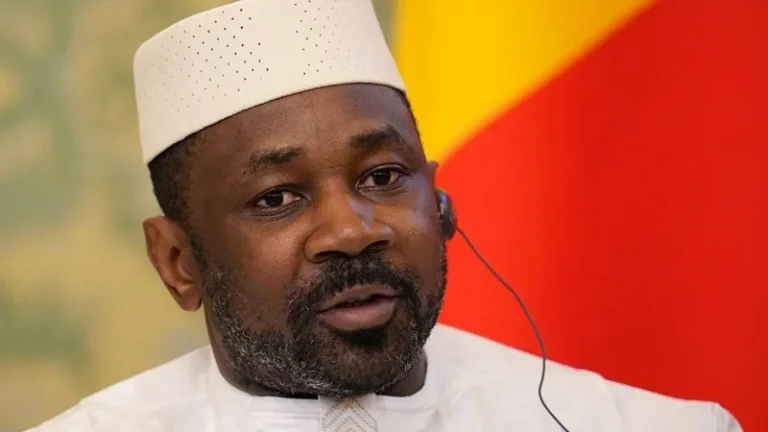
    Malian junta leader President Assimi Goïta has granted a presidential pardon to French national Yann Vezilier, who was serving a 20-year prison sentence following allegations of orchestrating a coup attempt against the military government. Vezilier was detained last year alongside several Malian military officers and political figures. Authorities accused him of acting on behalf of French intelligence services to destabilize the regime in Bamako. France’s Foreign Ministry consistently rejected the espionage allegations as unfounded. Malian state officials announced that the clemency order includes Vezilier’s immediate deportation from Malian territory. The unexpected decision comes during a period of ongoing political instability and severe security challenges, with insurgent groups expanding blockades around key cities, including the capital, Bamako.

  • |

    Russian assassination plot against Ukrainian-American thwarted in Warsaw

    Polish authorities have foiled a Russian intelligence plot to assassinate a Ukrainian-American citizen in Warsaw, Prime Minister Donald Tusk announced. Tusk noted that this marks the first instance of a Russian-directed assassination plot targeting a US citizen on the sovereign territory of a NATO member nation. The suspect was detained in Warsaw on 7 August following a joint operation between Polish security agencies and US intelligence services, and has been remanded in custody for three months. While Polish officials refrained from releasing the victim’s identity, Tusk stated that the targeted individual was deemed “inconvenient” by the Kremlin. The incident comes amid a broader wave of state-sponsored sabotage, arson, and targeted killings across Europe attributed to Russian security services since the 2022 invasion of Ukraine.

  • |

    Nearly 100 children wrongly detained as adults under UK-France migration deal

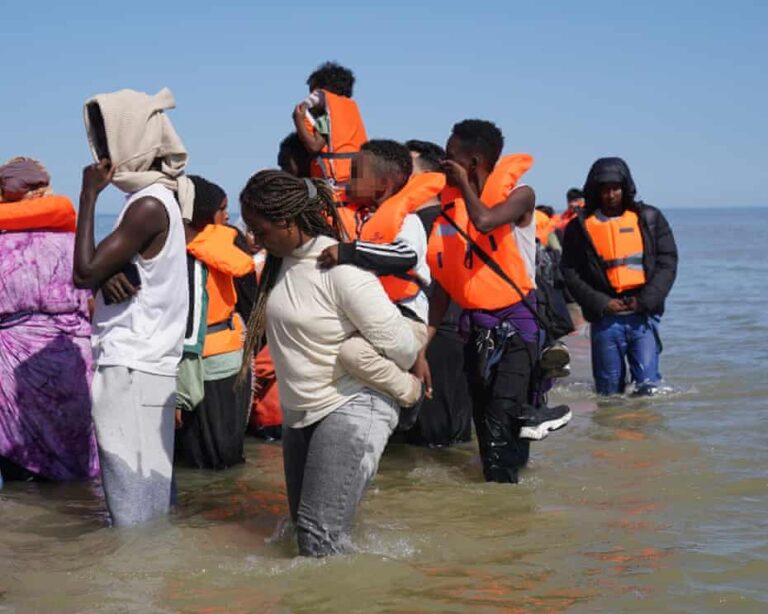
    At least 94 children were mistakenly identified as adults and held in immigration detention under Home Secretary Shabana Mahmood’s “one in, one out” agreement with France, according to details disclosed in a letter from the Independent Monitoring Boards (IMB). Between August 2025 and May 2026, Home Office officials recorded 304 age-disputed cases arising from the scheme, officially named Operation Hillmore, with 31% ultimately confirmed to be minors. Standard UK policy strictly prohibits the detention of unaccompanied minors beyond 24 hours. The critical findings, sent to Home Office Minister Anna Turley by interim IMB chair Jane Leech, highlighted severe safeguarding and procedural failures. Age assessments at immigration removal centers took up to 40 days to resolve in certain instances, while some individuals faced deportation delays of up to 27 weeks, far exceeding the scheme’s 28-day target. Additionally, detainees were slated for removal despite requiring urgent hospital care or suffering from active tuberculosis. The Refugee Council condemned the findings, urging the government to rely on social-worker-led assessments rather than administrative border checks. In response, a Home Office spokesperson stated that age assessment procedures are being modernized, including plans to roll out AI tools next year to support determinations.

  • |

    Romania shuts final nuclear reactor as severe Danube drought forces emergency energy measures

    Romania has completed a full shutdown of its Cernavoda nuclear power plant after severe drought dropped water levels in the Danube River to historic lows. The plant, which relies on the Danube for cooling and typically provides 20% of the country’s electricity generation, took its second reactor offline following the prior closure of its first reactor in late July. State operator Nuclearelectrica stated that the second reactor was shut down due to the ongoing drop in water levels, with no restart anticipated for at least ten days. To mitigate the energy shortfall, Romania declared a state of emergency for August, activated a 330-megawatt lignite-fired power plant, and requested that major industrial consumers and households curb power use during peak hours. Major automakers including Dacia and Ford have paused domestic production to help conserve power. The total shutdown immediately threatens energy security in neighbouring Moldova, which relies on Romanian imports to cover up to 60% of its electricity deficits. Moldovan authorities warned of potential rolling power cuts if alternative supplies cannot be secured from Ukraine or Western Europe. Across Europe, low river levels have similarly forced nuclear output reductions in France and triggered emergency engineering interventions in Hungary.

  • |

    Massachusetts teenager accused of killing mother and brother used ChatGPT, prosecutors say

    Seventeen-year-old Arjun Aravind has been remanded without bail in Massachusetts following his arraignment for the double murder of his mother, 45-year-old Sudha Venkatesan, and his 14-year-old brother, Siddharth Aravind. A not-guilty plea was entered on his behalf in Concord District Court to charges including two counts of murder and motor vehicle theft. The victims were discovered in their Acton home on Tuesday after a tutor was unable to make contact and alerted the teenager’s father. Police found the younger brother on the first floor and the mother in the basement, both having suffered severe blunt force trauma. Aravind was arrested early Wednesday morning inside his mother’s stolen car in nearby Wayland. Middlesex County District Attorney Marian Ryan disclosed that digital evidence revealed Aravind had used ChatGPT and internet searches to draft gothic fiction and explore theoretical scenarios involving the killing of his family. Defense attorney Debra DeWitt requested a mental responsibility evaluation, stating her client appeared to be in a state of shock.

  • |

    USS George Washington heads to Middle East as Linc…

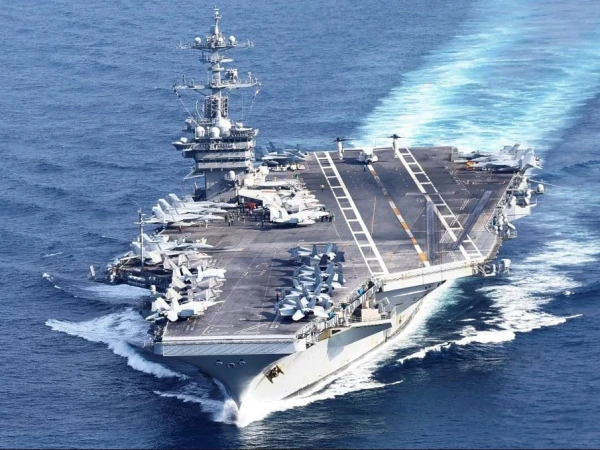
    WASHINGTON: The United States is preparing to send the aircraft carrier USS George Washington to the Middle East, where it is expected to replace the USS Abraham Lincoln after the carrier’s unusually long deployment in the region. The planned rotation comes as the United States remains deeply engaged in the ongoing conflict and heightened tensions with Iran, making the movement of another US carrier into the region closely watched. According to a Wall Street Journal report, the deployment plan had been prepared before the latest developments highlighted the difficulties facing the Abraham Lincoln and its crew. The planned handover, however, has underscored the growing strain on US Navy personnel and warships operating at sea for extended periods. Lincoln’s extraordinary deployment The USS Abraham Lincoln has been deployed in the region for more than eight months and has reportedly gone around 200 days without a port call. That is far longer than the typical schedule for a carrier, which would normally be expected to make a port visit after roughly 30 to 45 days. The prolonged deployment reflects the extraordinary operational demands created by the conflict and continuing instability across the Middle East. For the Lincoln’s crew, the arrival of a replacement carrier could provide an opportunity for rest and recovery after months of sustained operations. Washington moves west The USS George Washington had been operating in the western Pacific and recently visited Vietnam before beginning its journey towards the Middle East. The carrier has been moving west through the Strait of Malacca, before continuing across the Indian Ocean towards the Middle East. Its deployment is expected to maintain continuity in the US Navy’s carrier presence while allowing the Abraham Lincoln to leave the region. Aircraft carriers are among the US Navy’s most important military assets. They function as mobile bases at sea, carrying fighter aircraft, helicopters and other equipment capable of supporting operations far from US territory. Their mobility allows Washington to maintain airpower without relying entirely on land-based facilities in countries near a conflict zone. New carrier presence draws attention The arrival of the George Washington comes at a particularly sensitive moment. With tensions between Washington and Tehran remaining high and military operations continuing, the movement of a US carrier is likely to attract close attention from regional governments and military planners. The Navy’s immediate objective is understood to be maintaining an uninterrupted carrier presence rather than creating a completely new deployment structure. Still, the rotation highlights the pressures created by prolonged wartime deployments. For the United States, keeping powerful naval assets in the region provides strategic flexibility. For sailors aboard the Abraham Lincoln, however, the arrival of the George Washington could finally offer a long-awaited chance to return home and recover after one of the carrier’s most demanding deployments.

  • | | | |

    Two UAE-linked ships attacked in Strait of Hormuz,…

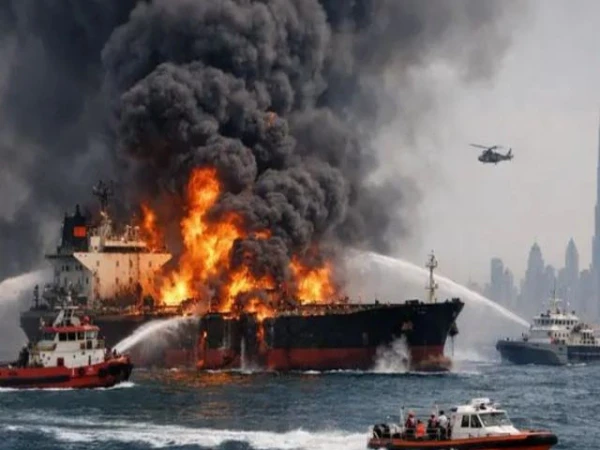
    DUBAI: Two vessels belonging to Abu Dhabi National Oil Company (ADNOC) were attacked while passing through the Strait of Hormuz on Thursday evening, according to the UAE state news agency WAM and ADNOC. No injuries or deaths were reported. ADNOC said the situation had been brought under control and that authorities were managing the incident. The company did not immediately provide detailed information about the vessels, their cargoes or the extent of any damage. The United Arab Emirates has accused Iran of carrying out the attack, while Tehran has not immediately commented on the allegation. The UAE Foreign Ministry condemned what it described as a hostile Iranian attack and said targeting commercial shipping posed a threat to regional stability and global energy security. The incident is the latest in a series of attacks involving ADNOC-linked vessels in the strategic waterway. The company said earlier this month that 15 of its vessels had been attacked by missiles and drones since the conflict began, with one crew member killed and 20 injured in previous incidents. ADNOC said the safety and wellbeing of its crews, particularly maritime workers, remained its highest priority. It also stressed the importance of maintaining safe navigation and freedom of movement through the Strait of Hormuz. The latest attack comes as shipping traffic through the waterway remains well below normal levels amid heightened tensions between Iran and the United States. Kpler data showed that only nine commodity vessels passed through the strait on Thursday, compared with an August daily average of about 12. The Strait of Hormuz, located between Iran and Oman, is one of the world’s most important energy chokepoints. Before the current conflict, roughly one-fifth of global oil and liquefied natural gas shipments passed through the narrow waterway. Repeated attacks and growing security concerns have forced shipping companies to reassess routes, while some vessels have delayed or avoided transit altogether. ADNOC urged the public to rely only on official and verified information about the latest incident and avoid spreading rumours or unconfirmed claims. With tensions still high around the waterway, the latest attack has renewed concerns over the safety of commercial shipping and the potential impact on global energy markets.

  • |

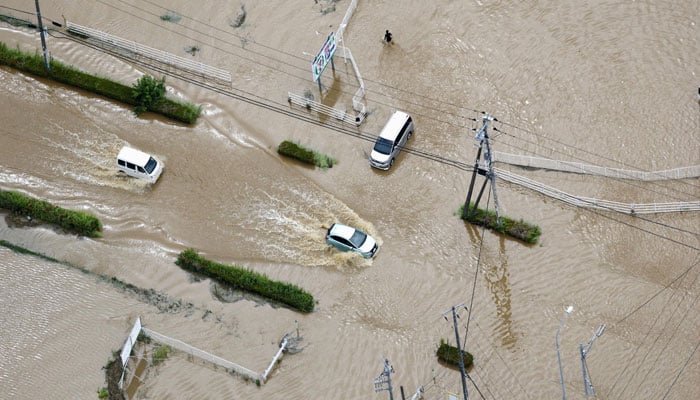
    Heavy rain kills four in Japan

      CHIBA, Japan: At least four people have died and another remains missing after record-breaking rainfall triggered flooding and severe disruption in Chiba Prefecture, east of Tokyo. Japan’s weather authorities reported that Chiba City received 367 millimetres of rain within 24 hours, marking an exceptionally heavy downpour for the region. The intense rainfall caused flooding, damaged infrastructure and disrupted daily life across several areas. More than 25,000 households lost electricity as the storm damaged power infrastructure. The severe weather also disrupted air travel, leaving more than 7,000 passengers stranded at airports. Authorities cancelled dozens of train services, while flooding and dangerous road conditions forced the closure of several major highways. Officials issued an emergency high alert for areas facing the greatest risk from flooding and further rain. Rescue teams have been working to reach affected communities, while the Japanese government has sought assistance from the Self-Defense Forces to support evacuation and relief operations. Authorities have urged residents in vulnerable areas to remain alert, avoid flooded roads and follow evacuation instructions as emergency crews continue searching for the missing person and assessing the extent of the damage.