देश-विदेश

  • |

    PhD exams face explosive questions over quality

    A renewed debate over the reliability of PhD examinations has emerged following questions surrounding the doctoral thesis of Professor Jason Arday. Arday submitted his PhD thesis at Liverpool John Moores University in July 2015. The controversy resurfaced after Professor Richard Dawkins publicly questioned whether the thesis had been thoroughly examined. Other commentators have also raised concerns about its academic quality and allegations of plagiarism. The debate has now expanded beyond the individual case. It has prompted questions about how universities assess doctoral research and whether the existing system consistently maintains the required academic standards. A PhD normally represents several years of specialised research. A doctoral thesis can contain tens of thousands of words and often requires extensive academic reading and analysis. The assessment is generally carried out by two examiners. One is usually from the candidate’s university, while the other comes from an external institution. Critics argue that the workload involved in examining a thesis is not always matched by the financial compensation provided to examiners. Examiners are commonly paid a relatively modest fee for reviewing lengthy and complex research. This has raised concerns that some may not devote sufficient time to the process. There are also concerns about inconsistencies in examination decisions. Some candidates have reportedly failed their PhDs despite believing that their research met the required standard. Others have received a pass even when questions remained about the quality of their work. The appeal process can be particularly difficult for unsuccessful candidates. A failed PhD can mean years of research being lost. Students who finance their own studies can also face substantial financial losses. For those hoping to build academic careers, the consequences can be even more serious. Another issue is the selection of examiners. Supervisors often play a role in recommending academics to assess their students’ work. Critics say professional relationships within academia could potentially influence the choice of examiners or the assessment itself. Academic misconduct presents another challenge. Universities can spend considerable time investigating allegations of plagiarism and other forms of cheating. Lengthy investigations can involve hearings, appeals and administrative procedures. The discussion has also highlighted the subjective nature of academic assessment. Different examiners can sometimes reach different conclusions about the same research. In some cases, candidates who fail with one set of examiners may later receive a pass from another panel after an appeal. There is no suggestion that these concerns necessarily apply to Arday’s examination. The available debate does not establish whether his thesis met or failed to meet the required standard. However, the controversy has renewed calls for universities to examine their doctoral assessment systems. Questions include how examiners are selected, whether they receive adequate compensation, how thoroughly theses are reviewed and how allegations of academic misconduct are handled. The wider debate is therefore about more than one doctoral thesis. It raises fundamental questions about the credibility, consistency and accountability of the PhD examination process.

  • | | | |

    Egypt weighs joining Pakistan-Saudi-Türkiye defen…

    CAIRO: Egypt has started a serious review of the possibility of joining the Makkah Joint Defence Agreement between Pakistan, Saudi Arabia and Türkiye. Egyptian Foreign Minister Badr Abdelatty said Cairo has close and strategic relations with all three countries. He said Egypt’s ties with Pakistan, Saudi Arabia and Türkiye extend beyond political cooperation. Abdelatty was asked about Egypt’s possible inclusion in the defence agreement. He said Egypt has been aware of the pact since the beginning. He confirmed that Egyptian state institutions are currently conducting a comprehensive assessment of the agreement. The minister said no final decision has been taken yet. He added that the relevant Egyptian authorities are examining the agreement and its possible implications. Abdelatty stressed that defence agreements involve important commitments. Therefore, Egypt must carefully assess all legal and constitutional aspects before making a decision. He said any possible Egyptian participation would have to comply with the country’s Constitution and existing legal requirements. The review will also consider the responsibilities that could arise from joining the agreement. The development comes days after Pakistan, Saudi Arabia and Türkiye signed the Makkah Joint Defence Agreement. The pact seeks to strengthen defence cooperation among the three countries and enhance their collective security. Under the agreement, an attack against any one of the three countries would be considered an attack against all three. The arrangement has been described as a major step towards closer defence and strategic cooperation.

  • |

    Luigi Mangione pleads guilty in US insurance CEO killing

    Luigi Mangione has pleaded guilty in federal court to charges linked to the fatal shooting of UnitedHealthcare executive Brian Thompson, bringing a major development in a closely watched case that sparked intense public debate over the US health insurance system. Mangione admitted in court that he shot Thompson in Manhattan on December 4, 2024. He pleaded guilty to two federal stalking charges involving Thompson and acknowledged that he had targeted the executive with the intention of killing him. “I shot Mr Thompson in Manhattan, and he died,” Mangione told the court. US District Judge Margaret Garnett warned Mangione that the federal charges could carry a maximum sentence of life imprisonment. She scheduled his sentencing for December 18. Federal prosecutors have indicated that they will seek a life sentence. The guilty plea eliminates the need for a federal trial over Thompson’s killing. It could also strengthen Mangione’s efforts to challenge or seek dismissal of separate murder charges filed against him in New York. Thompson, who headed UnitedHealth Group’s insurance division, was shot outside a Manhattan hotel while attending an investor conference. His death triggered widespread attention across the United States, while the circumstances surrounding the killing led to renewed public discussion about healthcare costs, insurance coverage and patients’ frustrations with the industry. Mangione, 28, told the court that he had experienced a serious back injury and had subsequently dealt with the health insurance system. He said he researched UnitedHealthcare’s investor conference before travelling to New York with the intention of killing Thompson. Prosecutors have alleged that Mangione used a 3-D printer to manufacture part of a firearm. He was later arrested in Pennsylvania following a nationwide manhunt. Thompson’s family welcomed the guilty plea, describing it as an important step toward justice. The family said it expected the court to impose a sentence that reflected the seriousness of the crime. The case has attracted enormous media and public attention since graphic footage of the shooting emerged and authorities launched a five-day search for the suspect. Mangione’s arrest also generated intense debate on social media, including criticism of the healthcare industry and reactions to the circumstances surrounding Thompson’s death. Mangione had previously denied the federal allegations and pleaded not guilty to murder, weapons and stalking charges in April 2025.

  • |

    India’s chief justice clarifies ‘Cockroach’ remark, days comments were misquoted

      India’s Chief Justice Surya Kant has clarified his controversial remarks involving the term “cockroach,” saying that his comments made during a Supreme Court hearing were misquoted and subsequently presented out of context. In a recent interview, Chief Justice Surya Kant addressed the controversy surrounding his remarks and alleged that the statement had been deliberately misrepresented. He said that his comments were presented in a misleading manner, creating confusion and misunderstanding, particularly among young people. The Chief Justice said that what he had actually stated during the court proceedings was different from the version that was circulated publicly. According to him, his remarks were taken out of context and presented in a way that misled the public and India’s youth. Surya Kant also expressed concern over the growing practice of sharing short video clips of court proceedings on social media without providing the necessary background or context. He said that isolated clips can create an inaccurate impression of what was actually said during judicial proceedings. The Chief Justice appealed to the media as well as citizens to recognize that constitutional rights come with corresponding responsibilities and duties. He stressed that while people have the right to express their views and access information, they must also understand their responsibility toward society. “When we talk about rights, we must also have the ability to perform our duties,” Surya Kant said, emphasizing the importance of maintaining social harmony. He added that society must make continuous efforts to promote harmony and responsible public discourse. The controversy dates back to May, when the Chief Justice reportedly compared holders of fake degrees and people allegedly misusing the Right to Information (RTI) system or social media to “cockroaches.” The remarks triggered a strong public reaction and generated widespread discussion on social media. Following the controversy, a satirical public political movement called the “Cockroach Janta Party” was reportedly established. The group used the Chief Justice’s controversial remarks as a basis for its political satire and public activities. The movement has also attracted attention through its recent protest over the alleged NET-UG paper leak issue in Delhi. Demonstrators reportedly gathered at Jantar Mantar one of the capital’s prominent locations for political protests and public demonstrations. The protest over the examination paper leak reportedly ended with calls for the resignation of Indian Education Minister Dharmendra Pradhan, highlighting the growing political and public anger surrounding the issue. The latest comments by Chief Justice Surya Kant appear aimed at clarifying his position and explaining the context in which the original “cockroach” remarks were made. His criticism of social media clips also reflects broader concerns within the judiciary about court proceedings being circulated online without the complete context. The controversy has sparked a wider debate in India over judicial language, freedom of expression, responsible use of social media and the responsibilities that accompany constitutional rights. By clarifying his remarks, the Chief Justice has urged the public and media to consider the complete context of judicial observations rather than relying solely on short clips or selectively quoted statements circulating on social media. He also emphasized the need for citizens to balance their rights with their responsibilities and work toward maintaining social harmony.

  • Nigel Farage reclaims Clacton seat in party-boycotted by-election

    Nigel Farage has won back his parliamentary seat after Reform UK triumphed in the Clacton by-election. The contest was notably boycotted by every other major Westminster party. Farage regained the seat by defeating his closest challenger, satirical candidate Count Binface, in an election he himself triggered by resigning last month. A Survation poll released Monday had projected Farage taking around 75% of the vote, with Binface trailing at 20%. The Reform UK leader declared victory even before the final vote count was completed. According to the Guardian, Farage secured 22,239 votes, while Binface followed with 9,455 votes. Voter turnout for the by-election stood at 44%. Despite the win, the final result wasn’t quite as dramatic as some earlier polling had suggested it might be. Farage and Binface ultimately topped a crowded field that included several joke candidates, independents and minor party representatives. With every major political party sitting the race out, the contest largely became a two-way face-off between the pair. The vacancy stemmed from a deepening scandal involving a £5 million gift Farage received from cryptocurrency billionaire Christopher Harborne. Facing mounting scrutiny, Farage resigned his seat in July and called the by-election himself. As results came in, Farage described the outcome as a convincing and overwhelming win. He said he wanted the people of Clacton, rather than Britain’s mainstream media, to serve as his judge in the matter. He added that voters in the constituency had firmly rejected the broader political establishment through their decision. Despite the win, Farage skipped the official vote count and cancelled a planned victory speech altogether. Addressing the allegations tied to the gift earlier, Farage maintained he had done nothing wrong and broken no laws. Many political observers continue to view him as a potential future contender for prime minister. Farage has pledged tougher migration policies if he gains greater power, including deploying the British navy to intercept asylum seekers arriving by boat. He was first elected to the Clacton seat in 2024, winning with 46.2% of the vote and an 8,400-vote majority.

  • |

    France’s top court blocks social media ban for under-15s

        France’s Constitutional Council, the country’s highest constitutional authority, has rejected a proposed law that would have banned children under the age of 15 from accessing social media. The decision represents a setback for President Emmanuel Macron, who had strongly supported measures aimed at protecting young people from the potential harms of social media. The proposed legislation would have prevented children below 15 from creating social media accounts from September 1. It also required social media companies to close accounts belonging to existing under-15 users within four months. Platforms would have been required to introduce an age-verification system approved by France’s privacy regulator to determine whether users met the minimum age requirement. However, the Constitutional Council ruled that important parts of the legislation did not provide sufficient legal safeguards. In particular, the council objected to the requirement that users prove their age without clearly defining the conditions and limits surrounding the collection and use of such information. According to the council, the legislation placed disproportionate restrictions on freedom of expression and communication. It also failed to adequately protect individuals’ right to privacy. The ruling effectively prevents the law from coming into force in its original form. French lawmakers had approved the legislation in July, making France one of the first European countries to pursue such a comprehensive restriction on social media use by young teenagers. The move followed Australia’s decision to introduce a world-first social media ban for children under 16 in December. The Australian restrictions cover major platforms such as Facebook, Snapchat, TikTok and YouTube. Australian lawmakers are now considering stronger penalties for companies that fail to comply, although early data has indicated that the ban has had mixed results. Several other countries have also taken steps to restrict young people’s access to social media. China, the United Arab Emirates and Türkiye have introduced measures or discussed plans aimed at limiting children’s access to online platforms. At the European Union level, authorities have also indicated that stronger protections may be needed to shield children from harmful features and content on social media platforms. Major technology companies have generallyFrance’s Constitutional Council, the country’s highest constitutional authority, has rejected a proposed law that would have banned children opposed blanket restrictions, arguing that they already provide tools and age-based safeguards to protect younger users. At the same time, companies have indicated that they would follow government regulations where required. Google, Meta, Snap and TikTok had not immediately issued comments on the French court’s decision. Following the ruling, Macron instructed Prime Minister Sebastien Lecornu to revise the proposed legislation and address the Constitutional Council’s concerns. The Elysee Palace said the French president remains committed to introducing the reform. The government wants a revised version of the legislation to take effect before spring 2027, when France is scheduled to hold its next presidential election. Macron is constitutionally barred from seeking a third consecutive term, making the issue a significant part of his government’s remaining agenda.

  • |

    US replaces warship in Mideast as crew faces mental health crisis

    The US Department of Defence has dispatched the aircraft carrier USS George Washington to the Middle East, replacing the USS Abraham Lincoln following mounting concerns over living conditions and mental health struggles among sailors aboard the long-deployed vessel. The USS George Washington departed Da Nang, Vietnam, passing through the Strait of Malacca toward the Indian Ocean. The deployment temporarily leaves the Asia-Pacific region without a US aircraft carrier presence, reflecting a strategic shift under the Trump administration, which views China as a manageable regional presence rather than a primary global threat. The deployment of the USS Abraham Lincoln has surpassed 260 uninterrupted days at sea, setting a modern record without a port call. Operational demands linked to the conflict with Iran disrupted traditional supply hubs, leading to severe shortages of fresh food, clean water, and hygiene items, alongside broken sanitation facilities and lost mail. Reports have also highlighted safety concerns and multiple incidents of sailors attempting to jump overboard. Congressional leaders have demanded answers regarding the ship’s operational conditions. Senator Richard Blumenthal pressed defense officials on fleet sustainability, while Senate Minority Leader Chuck Schumer called for Defense Secretary Pete Hegseth to be removed from his post. Hegseth rejected the criticisms, stating that reports of deteriorating conditions aboard the carrier were completely misrepresented.

  • |

    British firm begins salvage of grounded shadow fleet tanker leaking oil off Oman coast

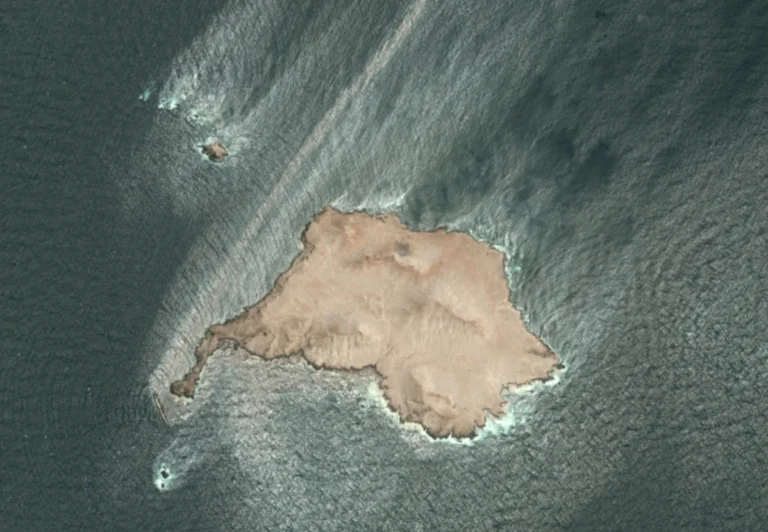
    British maritime response firm Ambrey has launched an emergency operation to contain an expanding oil spill from the grounded Russian shadow fleet tanker Caroline Bezengi off the coast of Oman, following weeks of worsening environmental damage. Specialist crews boarded the vessel with assistance from the Royal Air Force of Oman to evaluate its structural integrity and begin stabilization procedures. The 25-year-old vessel, carrying an estimated 800,000 barrels of sanctioned Russian crude, ran aground at Qabiliyah Island on 30 June after experiencing an unexplained explosion off Yemen earlier in the month. Severe weather conditions from the regional Khareef monsoon season have accelerated the spread of the slick, which has expanded across more than 2,000 square kilometers of sea. Oman’s Environment Authority confirmed that crude pollution has reached shoreline sediments in the Ras Madrakah area, more than 200 kilometers north of the grounding site, and warned that the slick threatens sensitive habitats including the protected Hallaniyat Archipelago reserve. Environmental advocates and maritime experts have warned that the disaster could worsen dramatically if the increasingly submerged hull breaks open completely, potentially releasing tens of millions of gallons of crude into the Arabian Sea. Recovery efforts remain hindered by monsoon conditions and the vessel’s lack of recognized Western insurance coverage.

  • |

    Turkish Vice President, top officials join Pakistan Day celebration in Ankara

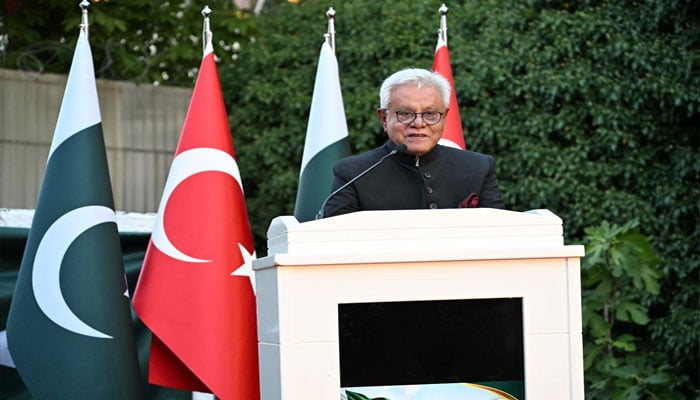
    ANKARA: Pakistan’s 79th Independence Day was celebrated with a grand ceremony at Pakistan House in Ankara, where Türkiye’s senior leadership joined Pakistani officials, diplomats and members of the community to highlight the deep and enduring friendship between the two countries. Türkiye’s Vice President Cevdet Yilmaz attended the event as chief guest, joined by senior political, military and diplomatic officials. The high-level participation underscored the importance Ankara attaches to its relationship with Islamabad and the longstanding bonds between the two nations. Among those attending were Turkish Defence Minister Yaşar Güler, Chief of General Staff Gen Selçuk Bayraktaroğlu, Naval Forces Commander Adm Ercüment Tatlıoğlu, Land Forces Commander Gen Metin Tokel and Air Force Commander Gen Ziya Cemal Kadıoğlu. Former senior officials, members of parliament, ambassadors, diplomatic representatives, Pakistani community members and media representatives also attended the ceremony. The event began with the recitation of the Holy Quran, followed by the national anthems of Pakistan and Türkiye. Students from the Pakistan Embassy International Study Group School added a colourful touch to the celebrations with national songs and traditional performances. Guests warmly applauded the cultural presentation. A documentary showcasing Pakistan’s history, cultural heritage, natural beauty, tourism potential and social and economic development was also screened. Yilmaz: Pakistan-Türkiye ties go beyond diplomacy Addressing the gathering, Vice President Yilmaz conveyed greetings from President Recep Tayyip Erdogan and the Turkish people to the government and people of Pakistan. He emphasised that the relationship between Pakistan and Türkiye went far beyond conventional diplomatic ties, describing it as a unique brotherly bond rooted in shared history and mutual solidarity. Yilmaz recalled the support shown by Muslims of the subcontinent to the Turkish people during the Turkish War of Independence, saying the historic connection continued to shape relations between the two countries. He reaffirmed Türkiye’s commitment to expanding bilateral cooperation with Pakistan and said both countries would continue working together to promote peace and stability in the region. The Turkish vice president also highlighted the importance of strengthening strategic cooperation and exploring new avenues for regional collaboration, including greater trilateral cooperation among Türkiye, Pakistan and Saudi Arabia. Pakistan envoy highlights sacrifices behind independence Pakistan’s Ambassador to Türkiye, Dr Yousaf Junaid, paid tribute to Quaid-i-Azam Muhammad Ali Jinnah and the sacrifices made during the Pakistan Movement. He said Pakistan’s independence was achieved through extraordinary courage, perseverance, determination and sacrifice. The ambassador urged Pakistanis to strengthen national unity and work collectively for the country’s stability, prosperity and development. Referring to Pakistan-Türkiye relations, Junaid said the partnership was based not merely on formal diplomacy but on shared values, history, mutual trust and strong public sentiment. He said cooperation between the two countries was expanding across defence, trade, investment, education, culture and people-to-people contacts. Jinnah exhibition adds historic touch The ceremony also featured a special photographic exhibition marking the 150th birth anniversary of Quaid-i-Azam Muhammad Ali Jinnah. Vice President Yilmaz, Ambassador Junaid and other dignitaries jointly inaugurated the exhibition, which highlighted Jinnah’s life, political vision, leadership and historic role in the creation of Pakistan. The event concluded with a traditional Pakistani dinner hosted in the gardens of Pakistan House. Against the backdrop of Pakistan’s green and white flags and warm Turkish hospitality, the Ankara celebration became more than an Independence Day ceremony. It served as a vivid reminder of a relationship built on history, affection and mutual trust — and of the two countries’ shared ambition to take that friendship into a stronger and broader future.

  • |

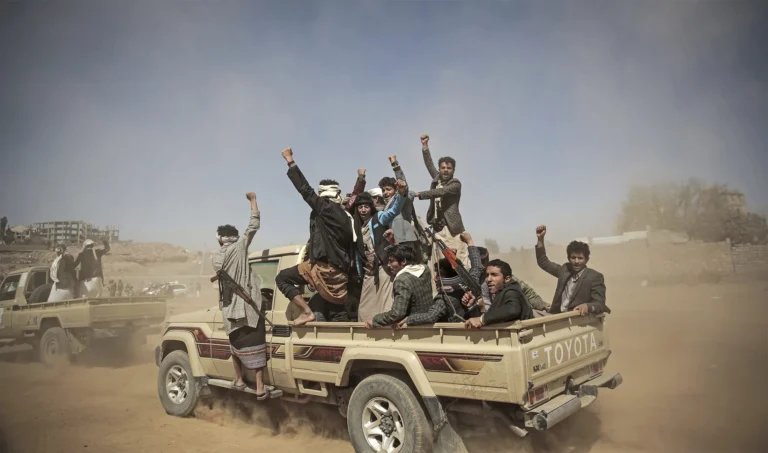
    Houthis clash with Yemeni government forces as regional tensions escalate

    Fighting between Iran-backed Houthi rebels and Yemeni government troops intensified in Taiz province, claiming the life of at least one government soldier and critically injuring another amid fears of a renewed civil war. Yemeni military officials reported that the recent flare-up is part of a broader wave of Houthi assaults across multiple provinces that have killed dozens of government troops over the past week. Concurrently, the Houthis claimed responsibility for a drone attack targeting a Saudi Aramco oil refinery in Jazan, marking the second reported strike on the facility following an incident last weekend that caused a localized fire. The military escalation coincides with a Houthi-announced blockade on Saudi maritime shipping, further threatening crucial red sea trade corridors. In response to regional instability, the US Navy directed the USS George Washington to deploy toward the Middle East, replacing the USS Abraham Lincoln following reported operational strains and crew welfare concerns aboard the long-deployed carrier.