nearly 100 children
|

Nearly 100 children wrongly detained as adults under UK-France migration deal

At least 94 children were mistakenly identified as adults and held in immigration detention under Home Secretary Shabana Mahmood’s “one in, one out” agreement with France, according to details disclosed in a letter from the Independent Monitoring Boards (IMB).

Between August 2025 and May 2026, Home Office officials recorded 304 age-disputed cases arising from the scheme, officially named Operation Hillmore, with 31% ultimately confirmed to be minors. Standard UK policy strictly prohibits the detention of unaccompanied minors beyond 24 hours.

The critical findings, sent to Home Office Minister Anna Turley by interim IMB chair Jane Leech, highlighted severe safeguarding and procedural failures. Age assessments at immigration removal centers took up to 40 days to resolve in certain instances, while some individuals faced deportation delays of up to 27 weeks, far exceeding the scheme’s 28-day target. Additionally, detainees were slated for removal despite requiring urgent hospital care or suffering from active tuberculosis.

The Refugee Council condemned the findings, urging the government to rely on social-worker-led assessments rather than administrative border checks. In response, a Home Office spokesperson stated that age assessment procedures are being modernized, including plans to roll out AI tools next year to support determinations.

Similar Posts

  • | |

    Pakistan Post issues high alert for mail bound for…

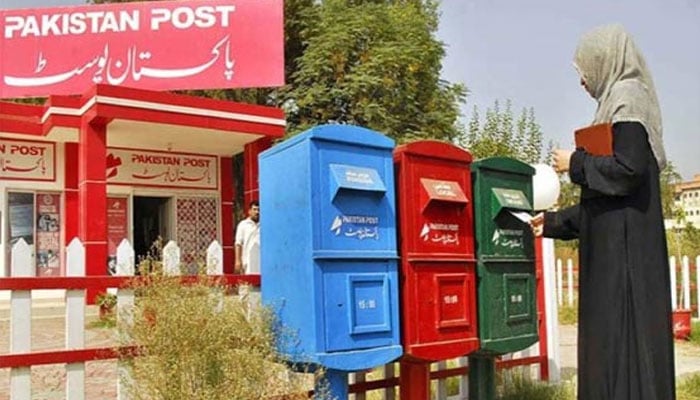
    Pakistan Post has issued a high alert for international mail destined for the United States and ordered tighter security measures for all such consignments. The postal service has directed officials and staff to strictly comply with the security and electronic information requirements set by the United States Postal Service. According to a circular issued by Pakistan Post headquarters, all relevant officers and employees have been instructed to exercise extra caution while handling mail destined for the US. The instructions cover all stages of the process, including the acceptance, preparation, processing and dispatch of international mail. Officials have been directed to ensure that the required security procedures and electronic information are completed accurately before consignments are dispatched. Pakistan Post has also stressed the need for vigilance during the handling of US-bound mail to prevent any security or compliance-related issues. The latest instructions are aimed at strengthening the screening and handling process for international postal items and ensuring that mail sent to the United States meets the required security standards.

  • |

    Trinasolar eyes Pakistan’s battery storage boom

    Pakistan has built one of the world’s fastest-growing distributed solar markets. According to recent research by Ember and Renewables First, it is estimated that Pakistan has approximately 38GW of distributed solar capacity across residential, commercial, industrial and agricultural sectors. As this installed solar base grows, the next challenge is making that energy more flexible and available when businesses need it most. Trina Storage, Trinasolar’s global battery energy storage business, says Pakistan’s expanding solar base is increasing interest in solar-plus-storage, particularly for utility-scale and microgrids for commercial & industrial (C&I). A Renewables First report estimates that Pakistan imported 4.6 GWh of BESS in 2025, representing 220% year-on-year growth. Rather than replacing existing solar assets, well-designed solar-plus-storage systems can help businesses optimize renewable energy use, improve operational flexibility and support more resilient energy management strategies, depending on each site’s design and operating requirements. However, adding BESS to an existing solar installation is not a simple plug-and-play exercise. Projects require careful assessment of the site’s electrical architecture, inverter configuration, demand profile, equipment compatibility, energy management system, safety requirements and commercial objectives. For many retrofit projects, an AC-coupled approach provides a practical solution by allowing battery storage to operate alongside an existing PV system through its own Power Conversion System (PCS), helping retain much of the original solar infrastructure. Compatibility must still be assessed at system level, including electrical interfaces, communications, controls and compliance with the applicable IEC and UL standards. Designed for utility-scale and C&I applications, Trina Storage’s Elementa Series is compatible and is designed for integration within solar-plus-storage systems using Trina or third-party equipment, with compatibility assessed according to the project architecture. Beyond supplying technology, Trinasolar can work with customers and EPC partners to assess system compatibility, determine the most suitable BESS configuration and develop an operating strategy aligned with each site’s technical and commercial requirements. Trinasolar’s energy storage expertise builds on its long-established presence in Pakistan’s solar market, where the company has supplied more than 500MW of 700W+ modules across commercial, industrial and residential applications and recently introduced the Vertex N G3 760W series. Globally, Trina Storage, established in 2015, has achieved BloombergNEF Tier 1 Energy Storage Manufacturer status for 10 consecutive quarters and is expected to surpass 30 GWh of cumulative shipments by the first half of 2026. Its latest 6.25MWh Elementa 3 platform combines advanced battery technology, intelligent thermal management and integrated safety features for large-scale energy storage applications. “Pakistan has already built a strong solar foundation. The next phase is to consider how battery storage can be integrated with those assets to make renewable electricity available across a wider range of operating conditions. That requires careful assessment of the existing equipment, the site’s load profile and the role the battery is expected to perform. Trinasolar’s PV experience and Trina Storage’s global BESS capabilities give us a useful perspective across both sides of that system,” said Edison Zhou, Head of Pakistan, Trinasolar.


  • |

    Israeli strikes kill two in Gaza as hospital medicine warehouses are destroyed

    Two Palestinians were killed in an Israeli air strike in Gaza on Saturday, while separate strikes destroyed warehouses storing medical supplies for Al Aqsa Martyrs Hospital, raising new concerns about access to healthcare in the territory as uncertainty continues over a possible agreement between Israel and Hamas. According to Palestinian health officials, the two people were killed in the Sheikh Radwan area of Gaza City. The Israeli military said the strike targeted Hamas fighters but did not provide further details about the operation or identify those killed. In another strike earlier the same day, two warehouses near Al Aqsa Martyrs Hospital in Deir al Balah were destroyed. Gaza’s Health Ministry said the buildings contained essential medicines and medical equipment used by the hospital to treat patients, including those receiving dialysis for kidney failure. Other supplies such as wound care materials and gauze were also stored there. The attack also damaged two additional medical storage facilities and the hospital’s outpatient clinic. Hospital officials said no injuries were reported among staff or patients during the incident, but they warned that the destruction of medical supplies would make it more difficult to provide treatment to those in need. Dr Khalil al Daqran, who works at the hospital, condemned the strike and said the destroyed warehouse contained critical medical resources needed for daily operations. He said the loss of the supplies would place further strain on healthcare services already struggling under difficult conditions. Witnesses said Israeli forces issued an evacuation warning before carrying out the strike. The Israeli military did not immediately comment on the attack targeting the warehouse complex. Under international humanitarian law, hospitals and civilian medical facilities are protected during armed conflict unless they are being used for military purposes. Israel has repeatedly accused Hamas and other armed groups of operating from within civilian infrastructure, including hospitals and surrounding buildings, an allegation Hamas has denied. Fatima Sharab, a displaced Palestinian staying in a nearby camp, said many families had chosen to shelter close to the hospital because they expected easier access to medical care if needed. She said the strike caused widespread destruction in the area and left many displaced people without shelter. The latest attacks come despite a ceasefire agreement reached last year through US mediation. Fighting and Israeli military operations have continued across Gaza in the months since. Palestinian health authorities say more than 1,200 people have been killed during that period, with many of the victims reported to be civilians, including women and children. Hamas has not regularly disclosed the number of its fighters killed. Attention is now focused on a possible breakthrough in negotiations to end the conflict. US President Donald Trump recently announced that Hamas had agreed to disarm as part of a broader peace initiative aimed at ending the war. However, Israeli Prime Minister Benjamin Netanyahu has not publicly confirmed whether Israel accepts the reported agreement. Israeli National Security Minister Itamar Ben Gvir has openly opposed the proposal, saying Israel should continue military operations and maintain its campaign against Hamas leaders. Meanwhile, Trump’s Board of Peace has released a roadmap outlining the final steps of its proposed plan, stating that Israel would halt military operations as part of the agreement if all parties move forward with its implementation.

  • |

    Trump approves landmark US-Saudi nuclear pact

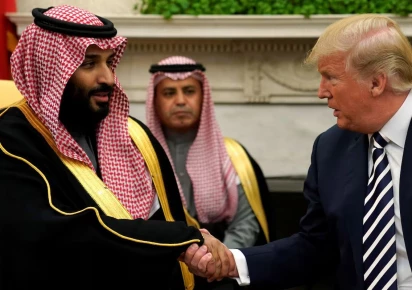
    US President Donald Trump has approved a landmark civilian nuclear agreement with Saudi Arabia, marking a major step in expanding strategic cooperation between the two countries. The proposed deal is expected to remain in effect for 30 years and is valued at tens of billions of dollars. The agreement is designed to support the development of Saudi Arabia’s civilian nuclear energy program while giving American companies a leading role in building the kingdom’s nuclear infrastructure. It is expected to create significant investment opportunities for US firms and strengthen long-term energy cooperation between Washington and Riyadh. Under the proposed framework, American companies could participate in constructing nuclear facilities across Saudi Arabia. The agreement also allows for the possibility of building a uranium enrichment plant in the kingdom if future joint studies by both governments determine that such a project is necessary. US officials say the deal will enable Washington to remain closely involved in the development of Saudi Arabia’s nuclear program. They believe this cooperation will help ensure that the kingdom’s nuclear activities remain focused on peaceful civilian purposes. The Trump administration is expected to submit the agreement to the US Congress in the coming days. The pact is being introduced under Section 123 of the US Atomic Energy Act of 1954, which provides the legal framework for civilian nuclear cooperation between the United States and foreign countries. Once submitted, Congress will have about 90 days to review the agreement. If lawmakers do not reject it during the review period, the agreement will automatically enter into force. Blocking the deal would require Congress to pass a joint resolution with enough votes to override a possible presidential veto. According to officials familiar with the proposal, the agreement does not include the “Gold Standard,” a condition that permanently bars partner countries from enriching uranium or reprocessing spent nuclear fuel. These activities can potentially be used in the production of nuclear weapons. The proposed agreement also reportedly does not include the International Atomic Energy Agency’s Additional Protocol. This protocol allows international inspectors to conduct broader inspections and monitor undeclared nuclear facilities. Its absence has raised concerns among some non-proliferation experts and lawmakers. US officials, however, insist that the agreement contains strong safeguards required under American law. They stress that the deal does not obligate the United States to transfer sensitive uranium enrichment technology or nuclear fuel cycle capabilities to Saudi Arabia. Instead, it establishes a legal pathway for future civilian cooperation while requiring separate approvals for any advanced technology transfers. The agreement follows earlier discussions between senior US and Saudi officials, who signed a preliminary framework last year to expand cooperation in the peaceful use of nuclear energy. The proposal has generated debate in Washington. Several Democratic lawmakers, along with some Republicans, have argued that stronger safeguards should be included before the agreement is approved. They believe stricter restrictions are necessary to reduce the risk of nuclear weapons proliferation in the Middle East. Saudi Arabia has repeatedly stated that its nuclear program is intended to meet growing energy demands and diversify the country’s energy resources. However, Crown Prince Mohammed bin Salman has previously said that if Iran were to acquire a nuclear weapon, Saudi Arabia would also seek similar capabilities. His remarks have fueled international concerns about a possible regional nuclear arms race.

  • | |

    Malaysian PM Anwar Ibrahim undergoes medical proce…

    KUALA LUMPUR: Malaysian Prime Minister Anwar Ibrahim is undergoing medical examinations and procedures, with his aide saying he is expected to remain under observation for two days. Anwar’s Press Secretary Tunku Nashrul Abaidah confirmed the development on Monday but did not disclose details about the nature of the medical procedures or the condition that prompted them. In a statement, the aide said Anwar was undergoing examinations and procedures arranged by a team of medical experts. The statement also appealed for prayers for the premier’s health and expressed hope that he would be able to return to his regular duties soon. “Let us pray … that he is blessed with long-lasting health so that he can return to his usual duties in the near future,” the statement said. The news prompted a message of support from Pakistan, with Prime Minister Shehbaz Sharif wishing his Malaysian counterpart a swift recovery. “Wishing my dear brother, Prime Minister Anwar Ibrahim, a swift and smooth recovery during his medical procedures,” Shehbaz wrote in a post on X. He added that the people of Pakistan were joining him in praying for Anwar’s continued good health and well-being, reflecting the close ties between the two countries. Anwar, who turned 79 on Monday, has served as Malaysia’s prime minister since 2022. His current medical observation has drawn attention partly because of previous health issues involving his back and shoulder. The Malaysian leader was hospitalised in 2018 after experiencing shoulder and back pain. More recently, he cancelled a planned visit to Pahang state in November last year because of back discomfort. Despite those previous problems, Anwar received a clean bill of health following a routine medical examination in January, according to a statement from the hospital where the check-up was conducted. The latest announcement has not indicated that Anwar is facing any serious health condition. Officials have also not provided details about when he is expected to leave medical care or resume his full schedule. For now, the Malaysian government and Anwar’s supporters are awaiting further updates from his medical team. His aide’s statement sought to reassure the public while asking for prayers as the veteran politician undergoes the procedures. Anwar’s health is closely watched as he continues to lead Malaysia through a period of economic and political challenges, making his expected return to official duties a matter of considerable public interest.

  • | |

    Hobbit Heroes reunite for dinner in Cambridge

    Nearly two decades after The Lord of the Rings trilogy brought them together on screen, four of Middle-earth’s most beloved hobbits have reunited for an evening of food, drinks and friendship. Elijah Wood, Sean Astin, Dominic Monaghan and Billy Boyd, who famously portrayed Frodo Baggins, Samwise Gamgee, Merry Brandybuck and Pippin Took, respectively, gathered at La Royal restaurant in Cambridge, Massachusetts, on August 8. The longtime friends spent the evening enjoying dinner, drinks and lively conversation, giving fans another glimpse of the enduring bond formed during the making of Peter Jackson’s acclaimed fantasy trilogy. Astin shared a selfie from the gathering on social media, writing, “The band’s all here,” alongside a photo of the four actors. Monaghan also documented the reunion, jokingly captioning his own post: “Four Halflings. Three cocktails. Two desserts. ONE great night of conversation!” The playful posts quickly delighted fans, many of whom have continued to follow the actors’ friendship long after the final chapter of the original trilogy reached theaters. Their regular reunions have become a nostalgic reminder of the close relationships that developed behind the scenes while filming The Lord of the Rings. The quartet last appeared together as their iconic characters in 2003’s The Lord of the Rings: The Return of the King, the Oscar-winning conclusion to Jackson’s trilogy. The film became a landmark in modern cinema and cemented Frodo, Sam, Merry and Pippin as some of fantasy’s most recognizable characters. The reunion also arrives as excitement continues to build around the wider Lord of the Rings universe. Wood is set to return to Middle-earth as Frodo in the upcoming film The Lord of the Rings: The Hunt for Gollum, once again connecting him with the franchise that transformed his career. For fans, however, the Cambridge dinner was about more than a famous film series. The photographs offered a warm glimpse of four actors whose friendship has endured long after their journey through Middle-earth ended. From the Shire to Cambridge, the hobbits may have left the screen years ago, but their friendship clearly remains an adventure worth celebrating. https://www.instagram.com/p/DbxAfQKp3RN/?igsh=ZzdnOHNuYXI4cDEy

Leave a Reply

Your email address will not be published. Required fields are marked *