diesel shortages intensify

Diesel Shortages Intensify Across Thailand, Pumps Run Dry

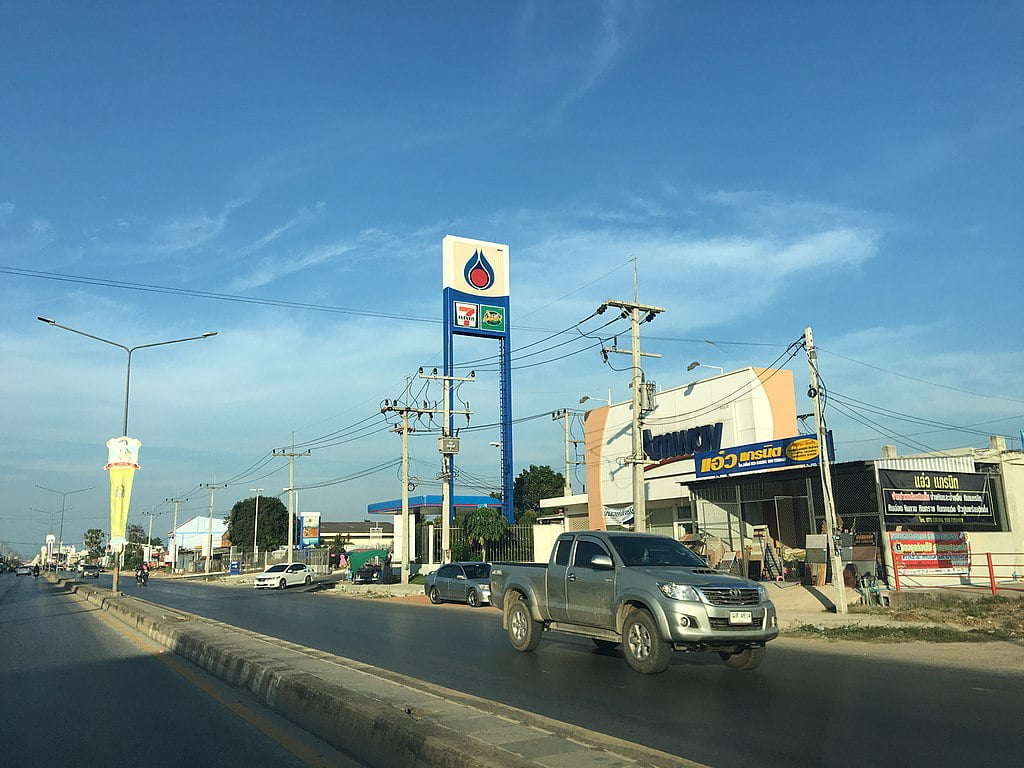
BANGKOK – Fuel shortages, particularly diesel, have intensified across several provinces, with long queues forming at petrol stations, supplies running out within hours, and motorists left waiting without certainty of refuelling as distribution struggles to keep pace with surging demand.

Rising Fuel Costs in Thailand Threaten to Push Grocery Prices Higher

The shortfall deepened in northern and northeastern provinces over the weekend, where limited deliveries could not keep up with strained supply and panic buying, local media reported on Sunday.

Critical Situation in Phrae

In Phrae province, the situation showed signs of becoming critical, especially in Long district, where many petrol stations had run out of diesel entirely. Motorists and truckers were seen queueing at pumps only to be told the supply had run out before their turn came. Some chose to remain parked on-site, unsure when the next delivery would arrive.

Station attendants said fresh supplies were being sent out but could not confirm when a loaded tanker would reach the area. The problem was not limited to a single outlet, with many outlets first limiting and then ceasing sales of diesel as inventories dwindled. Authorities advised motorists passing through Phrae to check fuel levels carefully and plan refuelling stops in advance to avoid being stranded.

Chiang Mai Queues Stretch for Hours

In Chiang Mai, the crisis persists, with heavy demand quickly depleting limited allocations. At a PTT station on the Superhighway near the Don Chan Interchange Bridge, approximately 10,000 litres of diesel were delivered, prompting long queues of pickups, vans, trucks and tour buses. Many drivers waited more than 30 minutes only to be turned away as supplies ran out. Some reported waiting nearly an hour without being able to refuel.

Another station on Chotana Road inbound in Mae Rim district received just 8,000 litres, which was exhausted within four hours, leaving dozens of vehicles still waiting as pumps ran dry.

Rationing in Nakhon Ratchasima

In Nakhon Ratchasima, queues were reported in Sikhiu and Bua Yai districts, where pickup trucks and heavy vehicles lined up for diesel. Some stations capped purchases for trucks and pickups at 1,500 baht each and allowed sales into jerrycans in an effort to manage demand. At one station, staff distributed sweets to waiting motorists as a gesture of support amid long delays.

In Bua Yai, diesel supplies ran out before being replenished, forcing residents to wait for incoming deliveries. Locals said the shortage, coupled with rising fuel prices, was affecting daily life and farming, with some relying on stored fuel to power irrigation pumps and farm vehicles.

In nearby Buriram, outlets that had fuel were limiting sales, often to just 500 baht. Some motorists opted to top up with expensive premium diesel, rather than leave without anything.

Supply Uncertainty Fuels Concern

The situation in these provinces and elsewhere underscores the growing pressure on fuel distribution in provincial areas, as demand continues to outpace available supply. The diesel price cap of 30 baht per litre was lifted with a 50-satang hike on March 18, with further gradual increases planned up to 33 baht to reduce subsidy costs, according to officials.

The price of standard diesel at PTT service stations in Bangkok and vicinity on Sunday stood at 31.14 baht per litre, while premium diesel was priced at 44.64 baht.

Wider Impact

The shortages are affecting not only motorists but also the agricultural sector, where farmers rely on diesel to power irrigation pumps and farm machinery. In farming communities, some have been forced to tap into stored reserves to continue essential operations.

Industry representatives have warned that prolonged disruptions could affect supply chains and push prices higher for consumers, compounding existing economic pressures. The government has implemented measures including allowing 24-hour fuel deliveries to ease distribution bottlenecks, but provincial shortages persist as demand shows no signs of abating.

Rising Fuel Costs Force Fishing Fleets Across Thailand to Dock

For now, motorists across affected provinces continue to wait in long queues, hoping that the next delivery will arrive before their fuel runs out entirely.

-Thailand News (TN)

Similar Posts

  • Thai Soldier Loses Leg to Landmine in Sisaket Ahead of Ceasefire

    SISAKET – A Thai soldier was severely injured after stepping on an anti-personnel landmine in Sisaket province on Saturday, just thirty minutes before a 72-hour ceasefire between Thailand and Cambodia took effect. The incident occurred during an operation in the Khao Sattasom area. Thai Marine Injured by Landmine During Border Clearance in Trat Private Narin […]

  • | | |

    Pakistan seeks to revive Iran-US mediation efforts

    ISLAMABAD: Pakistan is making fresh diplomatic efforts to revive its role as a mediator between Iran and the United States. Interior Minister Mohsin Naqvi travelled to Tehran on Tuesday for talks with senior Iranian officials. During his visit, he met Iranian Foreign Minister Abbas Araghchi and President Masoud Pezeshkian. The visit is aimed at keeping Pakistan’s mediation channel active. Islamabad is seeking progress on the Islamabad Memorandum of Understanding (MoU), which emerged from earlier efforts to ease tensions between Iran and the United States. Naqvi was received in Tehran by Iranian Interior Minister Eskandar Momeni. He later held discussions with Araghchi on bilateral relations and regional developments. Pakistan’s diplomatic efforts had slowed after Oman became more directly involved in talks concerning arrangements for navigation through the Strait of Hormuz. However, recent contacts between Oman and Iran appear to have created an opportunity for Islamabad to renew its broader mediation initiative. A diplomatic source said Pakistan wants to follow up on the Islamabad MoU and encourage both sides to return to a wider diplomatic process. The situation around the Strait of Hormuz remains particularly sensitive. The waterway is vital for international energy and trade routes. Iran has maintained that the Islamabad MoU remains the key framework for resolving the wider dispute. Tehran has also linked the full reopening of the Strait of Hormuz to implementation of the commitments contained in the agreement. Iran and Oman have been discussing arrangements for safer passage through the strategic waterway. Their discussions include possible shipping routes and mechanisms for managing navigation. However, Tehran has indicated that any understanding with Oman would initially address technical matters. It would not necessarily represent a complete resolution of the wider dispute. Iran has also called for concrete assurances from Washington before moving towards the next stage of negotiations. Tehran wants guarantees that can be verified rather than verbal commitments. Pakistan has continued to encourage dialogue between the two sides. Defence Minister Khawaja Asif also indicated that Washington and Tehran could be moving closer to an understanding. He said recent signals suggested that the two countries were again moving towards a possible peace arrangement or deal. Meanwhile, Pakistan has invited Iranian Foreign Minister Araghchi and Iranian Parliament Speaker Bagher Ghalibaf to visit Islamabad. Iranian officials have said the visit would take place at an appropriate time. Naqvi’s trip to Tehran is therefore significant because Islamabad is maintaining direct engagement instead of waiting for the Iranian delegation to visit Pakistan. During his meeting with President Pezeshkian, Naqvi described Pakistan-Iran relations as strong and longstanding. He conveyed Islamabad’s intention to further strengthen ties with Tehran. Pezeshkian also stressed the importance of bilateral relations. He said stronger cooperation between Pakistan and Iran could serve their national interests and contribute to regional stability. The discussions come amid broader diplomatic and security developments in the region. Pakistan recently signed a trilateral defence agreement with Saudi Arabia and Turkiye. Islamabad has maintained that the arrangement is defensive and is not directed against any country. Deputy Prime Minister and Foreign Minister Ishaq Dar also discussed the agreement with his Iranian counterpart. He briefed Araghchi on its objectives and stressed its focus on strategic cooperation and regional peace. At the same time, US President Donald Trump has adopted a tougher tone towards Iran’s negotiating team. Trump described Iranian negotiators as difficult and accused them of making commitments privately and later presenting them differently in public. He also warned that Iran’s economic problems and inflation were becoming increasingly difficult to sustain. Trump said Washington could continue applying economic pressure on Tehran. He also suggested that the United States could take stronger measures if necessary. The contrasting positions underline the difficulties facing diplomatic efforts. Pakistan is now attempting to keep communication channels open with Tehran while encouraging a broader political process involving Iran and the United States.

  • | |

    Report details Trump’s covert aircraft switc…

    President Donald Trump quietly switched planes while departing a NATO summit in Turkey last month as part of an elaborate security maneuver designed to counter a possible Iranian threat, according to a US media report. The report said Trump boarded Air Force One in full public view before being discreetly transferred to a separate military aircraft with the help of a catering truck used to shield the movement from onlookers. Journalists and some White House staff traveling with the delegation reportedly had no idea at the time that Trump had already been moved off the plane. Officials said security teams had identified a credible Iranian threat involving a possible missile strike against the aircraft. During the Ankara summit, Trump had described Iran as the country’s top target. According to the report, Trump had traveled to Turkey aboard a newer Boeing 747-8 previously donated by Qatar, but chose to depart on the older Air Force One instead, saying at the time it was “for old time’s sake.” Footage released on July 9 showed Trump boarding the presidential aircraft at Ankara airport before being secretly transferred to a smaller C-32A military jet, a modified Boeing 757 typically used to transport the vice president. Defense Secretary Pete Hegseth reportedly boarded the C-32A through a separate exterior entrance as part of the effort to keep the flight’s appearance routine. Journalists and staff who boarded Air Force One were told to lower their window shades during the departure. While in the air, Trump spoke with reporters on board and acknowledged concerns about threats from Iran, though he made no mention of the earlier switch between aircraft. Explaining why passengers had been asked to keep their windows lowered during the flight from Turkey, Trump said the flight carried added risk “because of the sleazebags we have to deal with.” A previous report had already raised questions about security risks tied to the Qatari donated jet, noting that the Secret Service had urged Trump to change planes during his return from the NATO summit. The United States has spent months upgrading the $400 million Boeing 747-8 to bring it up to presidential standards, while older Air Force One aircraft carry laser based countermeasures designed to disrupt the guidance systems of incoming missiles.

  • Nakhon Si Thammarat’s Phra Mahathat Temple Earns UNESCO Status

    BUSAN, South Korea / BANGKOK, Thailand — The Phra Mahathat Woramahawihan Temple in Nakhon Si Thammarat has been officially inscribed on the UNESCO World Heritage List, marking a historic milestone as Thailand’s ninth World Heritage site and the very first to be located in the southern region of the country. Wat Arun Pagoda Added to […]

  • | |

    PM Shehbaz praises ISPR’s Balochi patriotic song

    ISLAMABAD: Prime Minister Shehbaz Sharif has praised the singers, performers and production team behind a new Balochi patriotic song released by the Inter-Services Public Relations (ISPR) for Independence Day. The prime minister shared the song’s video on X and expressed his appreciation for everyone involved in the project. Shehbaz said the song beautifully reflected the spirit of love for Pakistan. He added that the patriotic composition had filled him with pride. The prime minister particularly acknowledged the artists and singers for presenting the national message through the Balochi language. He said the song showcased the cultural richness of Balochistan while reinforcing feelings of patriotism. He also commended the producers and other members of the team for their contribution. According to Shehbaz, their efforts had successfully conveyed a powerful message of devotion to the homeland. The Balochi-language song forms part of the Independence Day celebrations being held across Pakistan. It combines patriotic sentiments with the region’s distinctive cultural identity. The prime minister said such creative initiatives help highlight Pakistan’s linguistic and cultural diversity. He noted that regional languages provide meaningful ways to express national pride and strengthen a shared sense of identity. Independence Day preparations are underway across the country, with patriotic songs, cultural programmes and other activities planned to mark the occasion.

  • | |

    ECP proposes new powers to verify lawmakers’ ass…

    The Election Commission of Pakistan (ECP) has proposed amendments to the Election Rules, 2017, aiming to strengthen scrutiny of lawmakers’ annual declarations of assets and liabilities by allowing the commission to seek information directly from relevant institutions. According to a notification issued by the ECP, the proposed amendment would add a new provision to Rule 137 of the Election Rules. Under the proposed change, the commission would be empowered to seek clarification whenever it finds ambiguity or inconsistency in the asset and liability statements submitted by members of the National Assembly, Senate and provincial assemblies. The proposal would also authorize the ECP to obtain information not only from the concerned lawmaker but also from any individual, government department, organisation or financial institution that may possess relevant records. If approved, all entities approached by the commission would be legally required to provide the requested clarification or information within the timeframe specified by the ECP. The electoral body said the amendment has been proposed under the powers granted to it by Section 239 of the Elections Act, 2017. The draft amendment has been published to invite public feedback before it is finalised. Citizens and stakeholders have been invited to submit objections or suggestions regarding the proposed amendment to the ECP Secretariat in Islamabad by August 15, 2026. The commission said it will review all submissions and provide an opportunity for hearing before making a final decision. The draft amendment has also been uploaded to the ECP’s official website to ensure transparency and allow public participation in the legislative process.

Leave a Reply

Your email address will not be published. Required fields are marked *