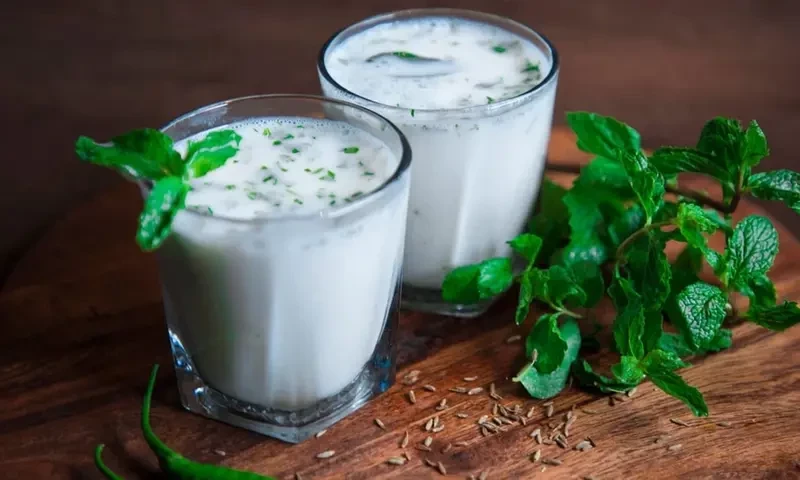
easy masala lassi

Easy masala lassi recipe for summer

Masala lassi is a refreshing and flavorful summer drink. It is a great choice for people who prefer salty and spicy flavors instead of sweet drinks.  It is easy to make at home and can be enjoyed on a hot day.

Ingredients

•1 cup yogurt

•1 teaspoon roasted cumin

•½ teaspoon chaat masala

•½ teaspoon black pepper powder

A few fresh coriander leaves

•A few fresh mint leaves

•Salt to taste

•Water as needed

•Ice cubes as needed

How to make masala Lassi

Add yogurt roasted cumin, coriander mint, chaat masala salt and black pepper to a blender. Blend until the mixture becomes smooth.

Add a little water and blend again until all the ingredients are well mixed. You can also use a hand blender to get a smooth and creamy texture. Pour the lassi into a large jug. Add more water according to your preferred consistency then add some ice cubes and mix well.

Pour into glasses and garnish with fresh coriander or mint leaves. Your homemade masala lassi is ready. Serve chilled and enjoy this refreshing drink on a hot summer day.

Similar Posts

  • How to remove shower head Limescale

    If the water coming from your shower has become weak or sprays unevenly limescale buildup inside the shower head could be the reason. Experts say a simple citric acid solution is one of the easiest and most effective ways to restore normal water flow. Limescale forms when minerals such as calcium and magnesium commonly found in hard water collect inside the tiny holes of the shower head. Over time these deposits reduce water pressure block the spray nozzles, and can shorten the life of the fixture. To clean it experts recommend mixing 2–3 tablespoons of citric acid with warm water. Remove the shower head if possible and soak it in the solution for 30 minutes to one hour. After soaking gently scrub the nozzles with an old toothbrush and rinse thoroughly with clean water. If the shower head cannot be removed pour the citric acid solution into a plastic bag and secure it around the shower head with a rubber band so the nozzles remain fully submerged. After soaking remove the bag scrub away any remaining deposits and rinse well. Experts say this method helps dissolve stubborn limescale improves water pressure restores an even spray pattern and can extend the lifespan of the shower head. To prevent future buildup clean your shower head at least once a month wipe it dry after use whenever possible and consider installing an anti-limescale or water softening filter if you live in an area with hard water. Regular maintenance can keep your shower working efficiently and reduce the need for costly replacements.

  • How to keep your inverter battery healthy

    Inverter batteries have become common in many homes especially in areas where power cuts are frequent.  However many people forget to maintain the battery properly.  Knowing when to check the water level and how much water to add can help keep a battery working well. Check the water level regularly In traditional lead acid batteries the water level slowly decreases with use.  That is why it is important to check it from time to time. If the inverter is used less often checking the battery every two to three months may be enough. With heavier use it may need to be checked more often. A very low water level can affect the battery’s internal parts and may reduce its lifespan. Watch for signs of low water If your inverter is giving less backup than before the battery feels unusually hot, or its performance keeps getting worse check its condition and water level.  However low water is not always the only reason for battery problems. If the issue continues have the battery checked by a professional. Add the right amount of water When adding water, check the level marked on the battery. The water should stay between the minimum and maximum lines. If the level is below the minimum mark add the required amount carefully.  Never fill the battery above the maximum level. Do not overfill the battery Adding extra water does not make a battery last longer.  Overfilling can cause the electrolyte to spill out and may damage nearby parts.  Always keep the water within the recommended level. Use distilled water Avoid using ordinary tap water in batteries that require topping up. Minerals and other substances in tap water can damage the battery over time. Distilled water is generally recommended but always follow the instructions provided by the battery manufacturer. Not every battery needs water Not all inverter batteries are the same.  Some are maintenance free and do not need to be opened or filled with water. Before opening a battery or adding anything to it check its type and read the manufacturer’s instructions. Be careful while Checking the battery Lead acid batteries can contain corrosive liquid so wear protective gloves and protect your eyes when handling them.  Keep cigarettes flames, and sparks away from the battery. If the battery is swollen, leaking or becoming extremely hot, do not try to open or repair it yourself. Contact a qualified technician. •Regular Maintenance •Can extend battery life •Taking simple care of your inverter battery can help maintain its performance. Check the water level when needed use the correct type of water keep the battery clean and follow the manufacturer’s instructions to help keep it in good condition.

  • Not all green foods are healthy

    Vegetables and fruits are generally considered an important part of a healthy diet.  Health experts also recommend including them in a balanced meal. However not everything that is green is automatically good for everyone. Some raw undercooked artificial or  rich green foods may cause health problems in  certain people. People with weak immune systems may be more sensitive to some foods and could experience allergies food reactions or other health problems. Green potatoes some green seafood products and foods with artificial green coloring are examples that may require extra care. Some people can also develop an allergy or intolerance to certain green foods. For example spinach may cause skin rashes or other allergic symptoms in sensitive individuals. In rare and serious cases a food allergy can lead to a dangerous reaction called anaphylaxis. Anyone who notices allergy symptoms after eating a particular food should seek medical advice. People with IBS (Irritable Bowel Syndrome) may also need to be careful with certain green vegetables.  Foods such as cabbage broccoli and Brussels sprouts can cause gas bloating stomach discomfort and pain in some people. People with kidney problems should also pay attention to their food choices. Spinach and Swiss chard contain high amounts of potassium. Eating too much of these foods may be risky for people with advanced kidney disease because their kidneys may have difficulty removing extra potassium from the body. This can lead to an unhealthy electrolyte balance. Eating too much of any food can cause problems and green foods are no exception. Large amounts of raw vegetables may cause bloating, constipation stomach pain or digestive discomfort in some people. In certain cases excessive intake of particular foods may also increase the risk of kidney stones electrolyte problems low blood sugar or allergic reactions. Some green fruits and vegetables may also cause digestive problems when eaten raw.  For example raw bananas and papaya may cause gas or stomach discomfort in some people. People who take warfarin a blood thinning medicine also known by the brand name Coumadin should talk to their doctor about eating large amounts of green leafy vegetables. These vegetables are often high in vitamin K, which can affect how warfarin works. The important thing is usually to keep vitamin K intake consistent rather than suddenly changing the amount. Spinach, Swiss chard and beetroot are also high in oxalates.  For some people who are prone to kidney stones, eating large amounts of these foods may increase the chance of developing stones again. Raw or lightly cooked green vegetables can provide many nutrients but they can sometimes be difficult to digest.  Vegetables such as cabbage broccoli and Brussels sprouts contain fiber that may cause digestive discomfort in some people especially when eaten in large amounts. Green potatoes are another important exception. When a potato turns green it may contain higher levels of a natural chemical called solanine.  Eating a large amount of solanine can cause nausea, vomiting, and in severe cases nervous system problems. Green potatoes should therefore be handled with care. Green tea is also not completely harmless in every situation. Poor quality green tea may contain unwanted impurities or low quality ingredients. Drinking very strong or very hot green tea may cause stomach discomfort in some people. Green tea also contains caffeine and too much caffeine can lead to nervousness shaking sleep problems or other side effects. Artificially green foods are not necessarily healthy either. Green colored candies sweet drinks and other processed foods may contain large amounts of sugar and provide little nutritional value.  Eating these foods regularly can contribute to tooth damage high blood sugar and other health problems. The main point is that green color alone does not make a food healthy.  The type of food the amount eaten how it is prepared and a person’s health condition all matter. People with food allergies, IBS, kidney problems or those taking certain medicines should be especially careful and seek medical advice when needed.

  • AI creates new viruses not found in nature

    US researchers have claimed to have developed new viruses with the help of artificial intelligence (AI) that did not previously exist in nature. The development is being described as an important breakthrough in the scientific community. According to a study published in the scientific journal Science, researchers from Stanford University and the Broad Institute of MIT and Harvard used a naturally occurring phage as a basis and employed AI to generate thousands of genetic designs. A phage is a type of virus that infects bacteria. The researchers chemically synthesized around 300 of these genetic designs and tested them in a laboratory. Of these, 16 viruses proved to be viable. According to the study, a combination of the AI-designed viruses was more effective than naturally occurring viruses at eliminating E. coli bacteria. The researchers said the approach expands the scope of synthetic genomics and could pave the way for more effective phage therapies against rapidly evolving pathogens. However, experts have expressed concerns about potential biological security risks alongside the possible medical benefits of the development. Isaac Bogoch, an infectious disease specialist at the University of Toronto and Toronto General Hospital said AI-designed viruses could have certain benefits such as creating specialized bacteriophages that could help tackle antibiotic-resistant infections. He warned that the same ability to design complete and functional viruses could pose a serious biological security threat if used to create harmful pathogens. Therefore, strong safety regulations, screening and monitoring are necessary alongside the technology. Professor Fatima Wafai of the University of New South Wales in Sydney said the current research does not pose a direct threat to humans because phages infect only bacteria. However, she noted that the methods used in the research could potentially be misused for harmful purposes. Tom Ellis, an expert in synthetic genome engineering at Imperial College London described the research as impressive but said it also demonstrates that AI is still far from being able to design complex genomes, cells and large viruses. He explained that the phage genome used in the study is very small and relatively simple while the genome of the virus that causes COVID-19 is approximately six times larger. The complexity of designing larger genomes increases rapidly. According to Ellis, the research does have implications for biological security. However, modifying naturally occurring viruses remains a more serious and immediate threat than creating new pathogens with AI. Hsu Li Yang, director of the Asia Centre for Health Security in Singapore also said that it may be possible to use AI to make viruses more dangerous. However, he cautioned against exaggerating the implications of the research. He clarified that the study does not mean that anyone with basic scientific or laboratory knowledge can now create life-saving or dangerous viruses at home. Considerable technical expertise is still required to physically produce a virus in a laboratory after it has been designed. Experts say the research is both medically promising and concerning from a biological security perspective as it demonstrates a technology that could potentially be used for both beneficial and harmful purposes.

  • | |

    Shakespeare’s sorcery and silicon valley

    For over four centuries, William Shakespeare’s plays have served for understanding human nature, politics, psychology, and empire. Yet, as scholars Xin Chen Chai and Xin Ying Lim argue, his work offers surprising insights into a decidedly modern phenomenon. The hidden human and physical infrastructure driving artificial intelligence. When millions of users enter prompts into generative AI chatbots every day, the experience feels weightless, instantaneous and virtual. However, behind every generated sentence lies a physical network of high-powered data centers. These facilities consume massive volumes of electricity and millions of gallons of water to cool servers. This illusion of effortless command reflects the dynamic in Shakespeare’s The Tempest. In the play, the exiled duke Prospero rules a remote island through sorcery. He forces the spirit Ariel and the native inhabitant Caliban into servitude. Prospero’s magical feats appear grand and detached from the labor and coercion required to maintain his power. Modern AI systems operate on a similar logic. The seamless magic of AI algorithms obscures the extractive resource demands and physical labor that sustain them. Prospero’s dominance depended on usurping Caliban’s land and subjugating its inhabitants. Similarly, the expansion of tech infrastructure often targets marginalized or rural territories. The reasons are land and natural resources that can be acquired with minimal resistance. A real-world example unfolded within the Mvskoke Nation in Oklahoma. A proposed legislative bill, NCA 25-077, sought to establish the Mvskoke Technology and Innovation Park. The bill was put on the table to bring major data centers to tribal lands. However, Indigenous citizens, including Jordan Harmon and Mackenzie Roberts, showed strong opposition. They highlighted the facilities’ ravenous water and energy consumption. They raised concerns regarding digital surveillance.  Framing the development as a continuation of historical colonial exploitation. Due to community pressure and concerns, the tribal council ultimately rejected the proposal. Postcolonial scholars have long viewed The Tempest as a critique of colonial dynamics. They have  drawn direct parallels between Prospero’s rule and imperial subjugation. In the play, Prospero surrenders his magical powers only after securing his own political goals. It demonstrates that rulers rarely give up power purely out of goodwill.   The successful resistance within the Mvskoke Nation highlights an essential difference between literature and real-life action. Unlike Shakespeare’s characters, real communities are actively demanding accountability from corporate giants. Their resistance demonstrates that the unchecked expansion of data centers is not an inevitable trajectory. By pushing back against resource-extractive technology models, Indigenous and local communities are forcing a necessary public conversation about who truly benefits from artificial intelligence and who pays the hidden costs.

  • Why our brain repeats old choices

    Have you ever noticed that many people eat the same food for breakfast every day?  Even when they have many other options they often stick to what they already know. Scientists have been trying to understand why people repeat the same choices again and again.  A new study from TU Dresden University in Germany may have found the answer. Researchers analyzed data from more than 700 people from earlier studies.  They found that our past choices strongly influence the decisions we make later. According to the researchers when we choose something repeatedly it slowly becomes a habit.  Once it becomes familiar our brain tends to choose it again even when a better option is available. This habit of repeating past choices can affect many parts of daily life including shopping eating habits and everyday routines. The study suggests that many of our decisions are not completely new. Instead our brain often relies on what worked for us before and simply repeats the same choice.

Leave a Reply

Your email address will not be published. Required fields are marked *