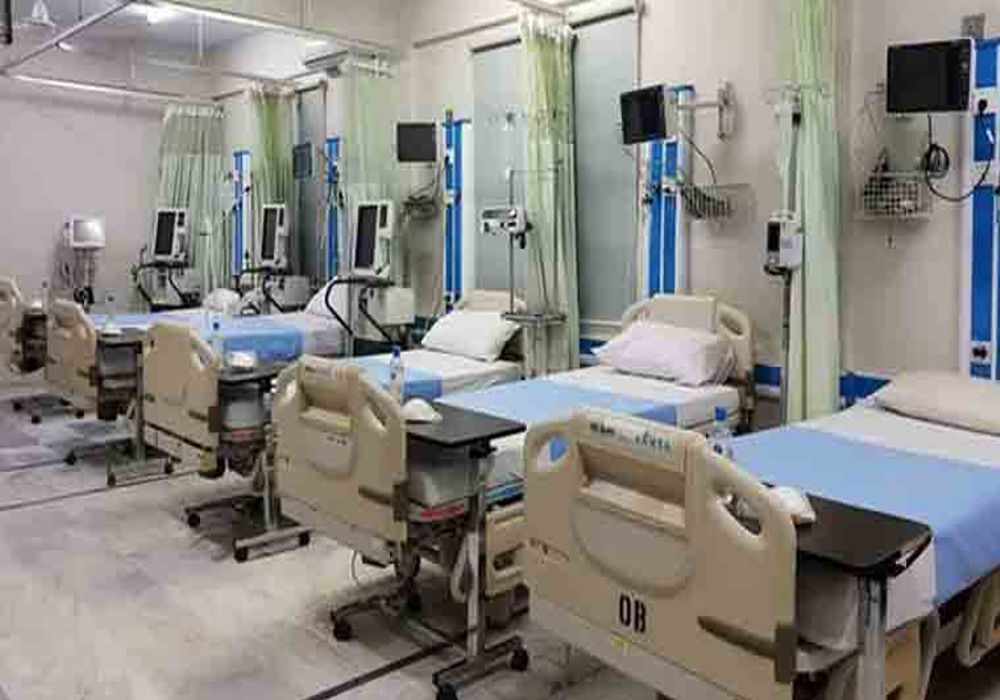
favoritism civil hospital
|

Favoritism at Civil Hospital Turbat

Patients visiting Civil Hospital Turbat deserve equal treatment, but many complain that this is not always the case. Poor patients often wait for hours to see a doctor, while the relatives or acquaintances of doctors are allowed to enter directly without waiting their turn. Such favoritism is unfair and causes great hardship to those who have no influence or connections.

A public hospital should serve every patient equally, regardless of their social status or personal relationships. The hospital administration should ensure that all patients are examined according to a fair queue system and take action against any practice that gives unjust preference to certain individuals.

Equal treatment is a basic right. Fairness and accountability are essential to restore public trust in Civil Hospital Turbat.

Similar Posts

  • Monsoon may raise stroke risk

    The rainy season brings relief from extreme heat and makes the weather pleasant but it can also create health challenges for some people. Health experts say sudden weather changes high humidity and increased chances of infections during the monsoon season may be risky for people who already have conditions like high blood pressure diabetes high cholesterol or heart problems. Neurology experts explain that changes in temperature and humidity can affect the body’s natural system and may cause blood pressure levels to become unstable. This can increase the risk of stroke, especially among people with existing heart or blood vessel problems. During the rainy season cases of viral infections cold cough stomach problems and dehydration often increase. These conditions can put extra stress on the body and disturb blood sugar and blood pressure control. Reduced physical activity poor sleep and improper use of medicines can also increase health risks. Doctors advise people to remember the BE FAST rule to identify early signs of stroke. B – Balance: Sudden loss of balance or coordination E – Eyes: Sudden vision problems F – Face: One side of the face becomes weak or droops A – Arms: Weakness in one arm or leg S – Speech: Difficulty speaking or understanding words T – Time: Get emergency medical help immediately Experts say quick treatment can save lives and reduce the chances of long term disability. Health professionals recommend that high risk people regularly check their blood pressure and blood sugar take medicines on time stay physically active eat a balanced diet reduce salt intake avoid smoking and drink enough water. Experts also highlight that the monsoon season itself is not dangerous. The real risk comes from ignoring existing health conditions. Keeping blood pressure diabetes cholesterol and heart diseases under control throughout the year can greatly reduce the risk of stroke and other complications.

  • Many smokers still miss major health risks

    A new study has found that public understanding of the health risks of smoking has improved only slightly over the past 20 years. Researchers studied more than 240,000 smokers from 46 countries. Most participants knew that smoking can cause lung cancer.  However far fewer were aware that smoking can also greatly increase the risk of heart disease heart attacks and strokes. Gaps in public awareness The study also found that many smokers do not fully understand the dangers of secondhand smoke.  They may not know that breathing in someone else’s cigarette smoke can also increase the risk of heart disease heart attacks and strokes. The research was published in the journal BMJ Open. Researchers said that despite health warnings on cigarette packs tobacco control policies and years of public awareness campaigns important gaps in knowledge still remain. Heart risks often overlooked Lead author Janet Chung Hall, a scientist with the University of Waterloo’s International Tobacco Control Policy Evaluation Project said the lack of awareness about the serious effects of smoking and secondhand smoke is concerning. Experts estimate that smoking related heart and blood vessel diseases cause more than two million deaths worldwide every year. The researchers say stronger public health campaigns are needed to help people understand that smoking does not only damage the lungs. It can also seriously affect the heart and blood vessels. Better awareness of these risks could encourage more smokers to quit and help reduce the harmful effects of tobacco on both smokers and people around them.

  • Everything you need to know about air turbulence

    Many people have experienced a flight suddenly shaking while flying thousands of feet above the ground.  It can feel as if the airplane has hit a large bump in the sky, leaving passengers frightened. This is called air turbulence a common part of air travel that is usually harmless but can sometimes be severe. What causes turbulence? Airplanes fly through different layers of moving air called air currents.  When the speed or direction of these air currents changes suddenly the aircraft passes through rough air causing it to shake. This is known as turbulence. Aviation experts say that most turbulence is mild and modern airplanes are built to handle forces much stronger than those experienced during normal flights. In most cases turbulence does not cause an aircraft to crash. The biggest risk is to passengers who are not wearing their seat belts. Types of air turbulence There are several types of turbulence Clear Air Turbulence (CAT) This is one of the hardest types to predict because it happens in clear skies and often cannot be detected by weather radar. It usually occurs between 30,000 and 40,000 feet due to fast moving jet streams. Wake Turbulence. This happens when a large aircraft leaves powerful swirling air behind it and another plane flies through it. Thermal turbulence On hot days warm air rises from the ground. If an aircraft flies through these rising air currents passengers may feel bumps. Frontal turbulence This occurs when warm and cold air masses meet often during storms rain or cloudy weather. Can turbulence be dangerous? Turbulence is usually more dangerous for people than for the airplane itself. Passengers who are standing or not wearing seat belts can be thrown from their seats and may suffer injuries to the head neck or bones. Strong turbulence can also cause luggage food carts and other loose items inside the cabin to move around increasing the risk of injury. Some passengers may also experience fear or anxiety during the shaking. In rare cases pilots may change the flight path or make a precautionary landing if the turbulence is unusually severe. How to stay safe Aviation experts recommend keeping your seat belt fastened whenever you are seated even if the seat belt sign is off. This is the best way to stay safe if unexpected turbulence occurs. Scientists also say that climate change may be increasing the number of clear air turbulence events in some parts of the world. To improve safety airlines use advanced weather forecasts satellite data and warning systems to avoid areas with severe turbulence whenever possible. Although turbulence can feel frightening experts stress that modern aircraft are designed to withstand very strong air movements. Staying calm following the crew’s instructions and keeping your seat belt fastened are the best ways to stay safe during a turbulent flight.

  • Journalism Education in AI Era: Harmonizing Traditional Skills and Emerging Technologies

    By Muhammad Aaraiz Altutmish  Two weeks ago, I attended a workshop under the project titled “Digital Trust and Free Expression in the AI Era” at the Department of Media and Development Communication, University of the Punjab, supported by the U.S. Mission to Pakistan in partnership with the Pakistan-U.S. Alumni Network (PUAN). The Workshop fetched together students, media persons, and experts to address one of the most significant topics framing advanced communication: the impression of AI on Media & Journalism.  Across the set of captivating sessions, presenters highlighted how Artificial Intelligence revolutionizing newsrooms, altering the way journalists collect information, inspect the facts and generate content. The fast development of technology specifically Artificial Intelligence (AI) has reshaped the advance digital world. AI is no longer a far-off concept; it has already integrated into the newsrooms and become a part of modern media networking. Therefore, media professionals and journalists can’t neglect this technology anymore. Instead they are continuously expected to develop their expertise and to modernize their skillset according to the changing media environment. This circumstance raises a significant question for journalism students who aim to foster their careers in the media industry. Should they first concentrate on learning the traditional basics or foundations of journalism, or should they prefer AI and developing technologies? While AI is transforming the means of working in media industry, journalism students are still needed to practice and learn the conventional principles and standards of journalism that have long been instructed in academic institutions. The AI development has brought prominent changes to writing, editing, publishing and content creation. Most of the operations can now be done in more quick and efficient way. Research functions have become effortless and many of newsroom tasks have been managed via technological tools. These advancements have transformed the media organizations operate and have affected many aspects of journalistic practices. Regardless of these changes, journalism education proceeds to emphasize the conventional methods of reporting, news values, interviewing techniques, fact- verification, and other foundational skills. Students are expected to master these standard practices while they also have to upskill themselves understanding and adapting to AI driven technologies and tools. As a result, journalism students often face the challenge of learning both traditional techniques and mastering themselves to developing technological skills within the same academic timeframe. This challenge becomes even more substantial for upcoming generations of media education and profession. They will have the same timeframe of study as former generations, still they may need to master a wide range of subjects and practical skills. Alongside traditional training of journalism, they will also require to develop their skillset related to AI, Digital media technologies, data driven networking and developing newsroom techniques. Consequently, media instructors, academic institutions, field professionals, and experts are set upon with a significant problem. They must reflect upon that how journalism education can accommodate both traditional practices of journalism and developing technological requirements. The hurdle stems in empowering students to master a wider spectrum of knowledge and practical experience within the existing timeframes and educational structures. The development of AI in journalism has therefore produced a new educational reality. While conventional journalism stands a central component of media education, technological developments continues to transform professional expectations. This continuing transformation spotlight the growing requirement to confront how future journalists can productively learn both the traditional practices of journalism and developing skills needed in an AI-driven media environment. The views, thoughts, and opinions expressed in this blog are solely those of the author and do not necessarily reflect the official policy or position of the U.S. Mission to Pakistan or USEFP/PUAN.

  • |

    Why you should stop sitting on your wallet

    Pain in the lower back hip or leg is often blamed on spine problems.  However doctors say a simple daily habit may also be responsible. Sitting for long periods with a thick wallet in your back pocket can put pressure on an important nerve causing pain numbness or tingling. This condition is commonly known as “wallet sciatica” or “fat wallet syndrome.” It is not a disease but a problem caused by pressure on the sciatic nerve. Because its symptoms are similar to sciatica caused by spine problems many people mistake it for a back condition. The sciatic nerve is the largest nerve in the body. It starts in the lower back and runs through the hips and down each leg. Sitting on a thick wallet can make one side of the body higher than the other creating an uneven sitting position.  Over time this can put extra pressure on the nerve and lead to discomfort. Doctors say this constant pressure may reduce blood flow to the nerve cause irritation and lead to inflammation. In some cases it may also contribute to a condition called piriformis syndrome which can be confused with a spine problem. Common symptoms include a dull ache in the lower back or hip burning or shooting pain down the back of the leg tingling or numbness in the leg or foot and pain that gets worse after sitting for a long time. These symptoms usually appear on the same side where the wallet is carried. Experts warn that similar symptoms can also be caused by a slipped disc spinal narrowing or other nerve conditions. For this reason people should not rely on online information to diagnose themselves. If the pain continues a medical check up is important to find the real cause. People who sit for long hours such as office workers drivers and frequent travelers may face a higher risk. Carrying a wallet packed with cards receipts and cash makes the problem even more likely. The good news is that many people improve simply by changing this habit. Keeping your wallet in a front pocket jacket or bag removing unnecessary items and using digital payments can help reduce pressure on the nerve. Doctors also recommend standing up and walking for a few minutes every 30 to 45 minutes sitting with good posture and doing gentle stretching exercises with professional guidance. If pain numbness or difficulty walking continues or becomes severe seek medical care immediately. Experts say ongoing back or leg pain should never be ignored as it may sometimes be a sign of a more serious nerve or spine problem.

  • Japan’s PM shares funny cockroach story

    Japanese Prime Minister Sanae Takaichi has shared a surprising story about finding a cockroach at her official residence in Tokyo. The 65 year old prime minister recently answered questions about the residence on X, formerly known as Twitter. She was more scared of a Cockroach than a ghost One person asked Takaichi if she had ever seen a ghost at the official residence which has been the subject of various ghost stories. She said she had never seen a ghost there but she did have a frightening experience with a cockroach. Takaichi explained that she had never seen a cockroach while living in accommodation provided for lawmakers.However after moving into the prime minister’s official residence she once spotted one near her feet. She said she had carefully cleaned the floor under her dining table and removed food crumbs. So when a cockroach suddenly appeared she was hocked. Why she did Not Kill It Interestingly, Takaichi decided not to kill the insect. She explained that she has loved the Japanese manga Phoenix since childhood. The story focuses on themes of life death and rebirth. Because of this she said she could not bring herself to kill the cockroach. Instead she thought that perhaps the insect was also part of the long cycle of life and rebirth. So, she left the cockroach in the room and walked away. Her secretaries took action Takaichi said she tolerated the situation for some time and hoped the cockroach would eventually leave on its own. However when she told her secretaries about it they became frightened. One of them eventually arranged an operation to remove the unwanted visitor. After that Takaichi did not see another cockroach at the residence. She felt surprisingly lonely The funny part of the story came afterward. Although Takaichi felt relieved that the cockroach was gone she admitted that she also felt a little lonely and sad. She said she experienced both relief and a strange sense of loneliness after the insect disappeared.

Leave a Reply

Your email address will not be published. Required fields are marked *