remove shower head

How to remove shower head Limescale

If the water coming from your shower has become weak or sprays unevenly limescale buildup inside the shower head could be the reason.

Experts say a simple citric acid solution is one of the easiest and most effective ways to restore normal water flow. Limescale forms when minerals such as calcium and magnesium commonly found in hard water collect inside the tiny holes of the shower head.

Over time these deposits reduce water pressure block the spray nozzles, and can shorten the life of the fixture.

To clean it experts recommend mixing 2–3 tablespoons of citric acid with warm water.

Remove the shower head if possible and soak it in the solution for 30 minutes to one hour. After soaking gently scrub the nozzles with an old toothbrush and rinse thoroughly with clean water.

If the shower head cannot be removed pour the citric acid solution into a plastic bag and secure it around the shower head with a rubber band so the nozzles remain fully submerged.

After soaking remove the bag scrub away any remaining deposits and rinse well. Experts say this method helps dissolve stubborn limescale improves water pressure restores an even spray pattern and can extend the lifespan of the shower head.

To prevent future buildup clean your shower head at least once a month wipe it dry after use whenever possible and consider installing an anti-limescale or water softening filter if you live in an area with hard water.

Regular maintenance can keep your shower working efficiently and reduce the need for costly replacements.

Similar Posts

  • 40,000-Year-Old ivory birds discovered in a German cave

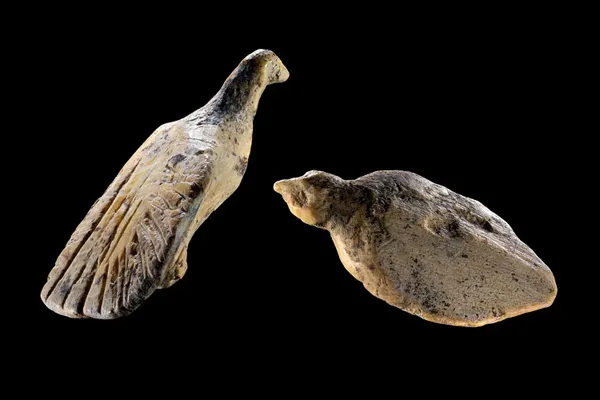
    Archaeologists have recently uncovered two thumbnail-sized sculptures of birds carved from mammoth ivory approximately 40,000 years ago. These delicate figurines, which have spent dozens of millennia buried in sediment, offer an intimate glimpse into the minds, environments, and creative capacities of our ancient ancestors during the Ice Age. The astonishing discoveries were made in the Hohle Fels Cave, a site deeply embedded in the Swabian Jura region of Germany. This location has long been celebrated as one of the most critical archaeological sites in the world for understanding early modern human culture in Europe. The newly found sculptures are extraordinarily small. Each measures less than a single inch in length and weighs merely a fraction of an ounce. It makes them roughly the size of an average human thumbnail. Despite their diminutive scale, the level of detail the prehistoric artist managed to achieve is nothing short of masterful. Rather than relying on abstract or highly stylized representations, the Ice Age carver recorded specific, anatomical observations. The figurines feature carefully incised markings that clearly delineate feathers, as well as distinctively carved eyes. One of the miniature sculptures portrays a bird with its wings fully spread, capturing a moment of dynamic movement, although a few fragments of its body have unfortunately been lost to time. Remarkably, this particular piece now holds the record as the smallest Ice Age artwork ever found in the region. The second figurine, which survived completely intact, depicts a bird in a resting posture. It appears to be lying down, a pose that researchers speculate might represent the animal tending to its eggs. Experts analyzing the avian features believe that at least one of the sculptures represents a ptarmigan, a robust bird belonging to the grouse family that would have been familiar to inhabitants of the harsh Ice Age landscape. While the identity of the second bird remains slightly less certain, it too could be a ptarmigan, or possibly a small bird of prey. Because the two ivory pieces were found just about five feet apart during the 2025 excavation season and share stylistic similarities, archaeologists strongly suspect they were crafted around the exact same time, quite possibly by the very same artist. The excavation was led by Nicholas Conard and a dedicated team from the University of Tübingen, who have been meticulously studying the Hohle Fels site for nearly three decades. The process of unearthing such fragile artifacts requires incredible patience. Researchers painstakingly remove layers of earth before washing and sifting the prehistoric sediment through extremely fine mesh screens. It was during this rigorous process that Elisa Luzi, a paleontologist at the university, first spotted one of the tiny birds. She described the profound emotional weight of the moment, emphasizing the sheer privilege of being the first human being to lay eyes on the carving in 40,000 years, and feeling an instant connection to the humanity of its maker. The Hohle Fels Cave These findings belong to the Aurignacian period, an epoch that coincides with the early settlement of Homo sapiens in Europe. The Hohle Fels Cave which is protected as a UNESCO World Heritage site has previously yielded some of the oldest known figurative art and musical instruments on the planet. The collection includes early bone flutes and the famous Venus of Hohle Fels. Exactly why these early humans took the time to carve such intricate, tiny birds remains a mystery. Researchers have proposed various theories, wondering if they were utilized as personal talismans meant to bring good fortune, or as cultural symbols associated with the specific identity of their owner. While we may never have a definitive answer regarding their prehistoric purpose, these thumbnail-sized masterpieces firmly remind us that the human desire to observe, create, and capture beauty is as ancient as humanity itself.  

  • |

    Android 17 feature may help reduce motion sickness 

    Some people may suddenly experience nausea and dizziness while travelling by plane, train, ship or car. This condition is medically known as motion sickness and people affected by it may experience nausea, vomiting, dizziness and other symptoms. If you are also one of those people who experience dizziness or nausea while travelling in a moving vehicle, you are not alone. Many people around the world experience this problem. Generally, experts advise people suffering from motion sickness to avoid using their phones. However, Google has now introduced a new feature called Motion Assist for Android smartphone users. According to a report by Android Authority, Google has started gradually rolling out this feature. It is part of the Android 17 operating system and is being introduced first for Google Pixel phones. The feature is designed to help reduce the severity of motion sickness while travelling in a vehicle. What causes motion sickness? Motion sickness is a somewhat mysterious condition and its exact cause is not fully understood. However, experts have identified several possible reasons. One thing is clear: motion sickness can occur when our senses send conflicting signals to the brain. For example, if you are sitting on a swing that is moving up and down, your eyes may see one thing, your muscles may sense something else while your inner ear experiences something completely different. The brain may struggle to process these conflicting signals resulting in dizziness or nausea. Experts believe that the inner ear plays an important role in motion sickness because it helps control our sense of balance. The inner ear is part of a network known as the vestibular system which sends information about the body’s movement and surroundings to the brain. The brain combines information from different parts of the body to make sense of what is happening but sometimes these signals can become confusing. For example, while traveling on an airplane, you may feel movement but your eyes may tell your brain that you are sitting still. A similar situation can occur while travelling on a river or at sea. You may be sitting or standing on a stable surface while still experiencing a sensation of movement. Some passengers particularly those sitting away from the driver’s seat in a car can experience the same thing. All of these situations can result in motion sickness. What is Google’s new feature and how does it work? Google has been working on this feature for quite some time. The code for the feature was first spotted in December 2024 and development has continued since then. It has now become part of Android 17. Once the feature becomes available, users will be able to find it by going to Settings then Your Profiles and All Services. From there, users can access the Personal and Device Safety section and enable the feature. Once enabled, Motion Assist will automatically activate when the phone detects that it is inside a moving vehicle. Google will also provide a Motion Assist option in Quick Settings allowing users to manually turn the feature on or off. When the feature is active, users will have several customization options. They will be able to change the colour, appearance and other aspects of the motion indicators. During a journey, motion dots will appear on the screen to help reduce the feeling of nausea. It should be noted that the feature does not guarantee complete relief from motion sickness but it may still prove helpful. Are there other simple ways to prevent motion sickness? According to the U.S. Centers for Disease Control and Prevention (CDC), several simple measures may help reduce or prevent motion sickness. These include: Prefer sitting in the front seat of a car or bus. Choose a window seat on an airplane or train. If possible, lie down and close your eyes. Drink plenty of water and avoid tea or coffee. Avoid eating large meals before travelling. Avoid smoking. Distract yourself with activities such as listening to music but avoid reading. Take deep breaths to stay calm or close your eyes and count backward from 100. Look at a stationary object such as looking at the sky while traveling in a vehicle. If available, chewing a small amount of ginger may also help. The smell of mint or using mint candies may also provide some relief.

  • 80 Years, still no justice

    Chiniot: A family in Chiniot is still waiting for justice in a theft case that was reportedly registered shortly after Pakistan came into being in 1947. The case dates back nearly 80 years. According to the affected family, a large amount of gold silver expensive clothes and other valuables were stolen from their home on the night between August 14 and 15, 1947. The family says the case was among the first cases registered in Chiniot after independence and was recorded as FIR No. 8. According to the family, around 112 to 120 tolas of gold, silver items, Boski fabric and other expensive clothes were stolen.  The value of these items would be worth millions of rupees today. Despite the passage of almost eight decades the stolen property has never been recovered and the family says there is still no clear record of what happened to the case. To mark 80 years of waiting for justice the family held a unique protest. They had a cake made featuring the text of the old FIR and cut it to draw the attention of the authorities. Family members say their elders spent years visiting police stations and courts in the hope of recovering their belongings.  However several generations have passed without any clear result. A family member Sajid Ismail Dar, said that applications had also been submitted to senior Punjab Police officials in the past.  Some officials took notice of the matter but the case later went quiet again. The family has now appealed to the Inspector General of Punjab Police and the Chief Minister of Punjab to review the decades old case investigate whether the stolen property can still be traced and provide justice to the family.

  • Natural sugar may help cancer spread, study finds

    A new study has revealed that fructose (natural sugar) consumed as part of the daily diet may help certain types of cancer spread throughout the body. According to the study published in the scientific journal Nature Aging, cancer cells that survive chemotherapy do not remain inactive. Instead, they release fructose which activates other cancer cells allowing them to leave their original location and spread to other parts of the body. Experts say that excessive consumption of sugary drinks and beverages containing high levels of fructose may also increase the risk of cancer spreading even in patients who are not undergoing chemotherapy. The study further found that fructose causes changes inside cancer cells that make it easier for them to move from one part of the body to another. The research was conducted on ovarian cancer but experts believe that a similar process could also occur in pancreatic, colorectal and liver cancers.

  • Where Tradition Meets Tomorrow: Discovering China through Life at Yanshan University

    By Areeba Younis The first rays of sunlight spread across the campus of Yanshan University as students quietly begin another day. Some walk purposefully toward classrooms with books in hand, while others pause beneath tree-lined pathways to enjoy the calm before lectures begin. In the distance, the modern skyline of Qinhuangdao reflects the morning light, while the quiet rhythm of campus life unfolds with remarkable order. For an international student, these seemingly ordinary moments reveal something extraordinary: a place where centuries of cultural heritage and the ambitions of a modern nation exist in harmony. When I first arrived in China from Pakistan, I expected to encounter advanced technology, modern cities, and world-class universities. Those expectations were quickly fulfilled. What I did not anticipate was how naturally tradition and innovation would coexist in everyday life. At Yanshan University, I discovered that China’s progress is not defined by replacing its past but by building upon it. Every day offers new evidence that preserving cultural identity and embracing innovation are not opposing goals—they are complementary forces shaping the country’s future. Walking across campus, I often see students reading beneath ancient-style pavilions before entering laboratories equipped with cutting-edge technology. Traditional Chinese architecture blends seamlessly with modern academic buildings, creating an environment that respects history while encouraging discovery. This balance extends beyond the university itself. Whether observing cultural festivals enthusiastically celebrated by both Chinese and international students or attending lectures on artificial intelligence, engineering, and sustainable development, I have witnessed how the values of the past continue to guide the innovations of tomorrow. The experience extends beyond the classroom. Nearby streets reflect the same remarkable balance. Local restaurants continue to prepare recipes passed down through generations, while customers pay using digital platforms within seconds. Morning markets preserve customs that have connected communities for decades, yet efficient transportation systems, smart city infrastructure, and digital services demonstrate how technological advancement has become part of everyday life. Rather than replacing tradition, innovation appears to strengthen it by making daily life more connected, accessible, and efficient. Yanshan University itself represents this philosophy. Its reputation for excellence in engineering and scientific research reflects China’s commitment to technological advancement, yet the university also places great importance on cultural exchange, community, and mutual respect. As international students, we are encouraged not only to pursue academic success but also to understand Chinese culture through festivals, volunteer activities, language learning, and interactions with local communities. These experiences transform education into something far greater than earning a degree—they become lessons in understanding different perspectives and appreciating shared human values. Living in Qinhuangdao has further deepened this understanding. The city’s coastal beauty, green parks, and historic landmarks exist alongside expanding infrastructure, modern industries, and sustainable urban development. The coexistence of natural landscapes and economic progress reflects a broader vision of development that values both environmental stewardship and long-term prosperity. As someone studying economics and business, I find this balance particularly meaningful because it demonstrates that development can be measured not only by growth but also by the quality of life it creates. Perhaps the greatest lesson I have learned is that China’s future is being built without losing sight of its cultural foundations. Respect for education, family, community, and tradition continues to shape daily life even as technology transforms industries and society. This combination has challenged many of my previous assumptions about modernization. Rather than viewing tradition and innovation as competing forces, I have come to see them as partners in creating resilient and sustainable progress. As the evening lights illuminate the campus and students gather to discuss assignments, share meals, or simply enjoy a walk with friends, Yanshan University becomes more than a place of higher learning. It becomes a meeting point where cultures, ideas, and aspirations come together. Every conversation, every shared experience, and every lesson contributes to a broader understanding that education is not confined to classrooms—it is found in the relationships we build and the perspectives we gain. For me, studying at Yanshan University has been more than an academic journey. It has been an opportunity to witness how a nation can confidently embrace the future while honoring its past. In an increasingly interconnected world, this balance offers an important lesson: true progress is achieved not by abandoning tradition, but by allowing it to inspire innovation. Here, where tradition meets tomorrow, I have found not only a university but also a deeper appreciation of China’s enduring spirit and its vision for the future.

  • | |

    Modern fiction Is turning to non-human storytellers

    In contemporary literature, narrative perspective is being handed over to dogs, octopuses, whales, birds, and endangered wildlife. Talking animals have long been a fixture of children’s fables and folklore.  However, today’s literary fiction is doing something far more ambitious. Authors are adopting animal vantage points to grasp  profound existential questions, ecological grief, and the bewildering complexity of human society. Why readers and writers alike are suddenly captivated by animal narrators? This interest reveals much about our current cultural moment and the unique psychological role that fiction plays in times of global crisis. One of the most compelling reasons for the rise of animal storytellers is their ability to cut through human cynicism. We live in a world saturated with social media fatigue, and moral ambiguity. So, human characters often arrive with heavy psychological baggage. Readers may instantly judge a human narrator based on their socio-economic background, political leanings, or lifestyle choices. An animal narrator, by contrast, operates outside these human constructs. Whether it is a rescue dog observing a broken family or a pelican observing coastal transformation, an animal offers a clean perception. Their observations are rooted in immediate sensory experience: hunger, instinct, weather, fear, affection, and loyalty. Non-human narrators re-open channels of emotional honesty by stripping away political pretense. They allow readers to engage with burdening themes like grief, isolation and love. In literary theory, the concept of defamiliarization refers to the art of making the familiar look strange so that readers can see it clearly for the first time. Human beings have become accustomed to concrete jungles, light pollution, plastic waste, and digital distraction. To us, these phenomena are simply the backdrop of daily life. When we view through the eyes of a non-human entity, modern human habits suddenly appear bizarre. A bird that’s trying to navigate glass skyscrapers. Whale interpreting the deafening sonar of industrial ships. Forest mammal trying to cross a highway. They all illuminate the bizarre artificiality of human civilization. By shifting the vantage point, authors force readers to step outside their anthropocentric bubble. Thus, readers recognize how dramatically human choices disrupt the living ecosystem. We live in an era marked by accelerating biodiversity loss and climate instability. We own a reality that frequently induces emotional paralysis or denial in human populations. Directly reading about ecological devastation in news reports can lead to apathy or fatigue. Fiction narrated by animals offers a way to process ecological mourning on a deeply personal level. The abstract concept of climate change transforms into an immediate tragedy when the perspective is of an animal suffering habitat destruction. The non-human perspectives give dignity to  creatures that are seen as collateral damage in human progress. It transforms passive statistics into active, feeling individuals whose survival matters to the reader. At its core, the novel has always been an engine for cultivating empathy. For centuries, that empathy was restricted to other human beings of different cultures, genders, or eras. Modern fiction is taking the logical next step by stretching the boundaries of empathy beyond our own species. How do you depict a mind that experiences the world primarily through smell, echolocation, or instinct rather than human logic? Successful books navigate this by taking an imaginative leap with scientific understanding. Thereby, resisting the urge to turn animals into simple humans in fur or feathers. In doing so, they remind us that human intelligence is not the only valid way of experiencing reality. The surge in animal-led fiction reflects a growing realization that human stories do not exist in a vacuum. Our reluctance to listen to non-human perspectives has come at a high cost. Modern literature is not retreating from reality into fantasy. It is confronting our reality with clarity. It is reminding us of the wild world we share and the urgent need to preserve it.  

Leave a Reply

Your email address will not be published. Required fields are marked *