
senate seeks action

Senate seeks action to protect Pakistan’s historical archives

Islamabad: Pakistan’s historical records and national documents came under Senate focus as lawmakers raised concerns over the protection, preservation and possible illegal movement of valuable archival material.

The Senate Standing Committee on Delegated Legislation reviewed new rules for the National Archives and called for stronger measures to protect important historical documents from damage, smuggling and misuse.

The committee, chaired by Senator Naseema Ehsan, examined the draft National Archives Rules and Archival Material Preservation and Export Control Rules during a meeting at Parliament House.

Officials informed the committee that under the proposed rules, documents of major national importance would be officially declared archival material after 25 years. This step would provide stronger legal protection and help prevent the illegal removal of historical records from Pakistan.

The committee stressed that old documents are not just papers but a valuable record of the country’s history, identity and national memory. Members emphasized the need to create awareness among young people about protecting historical records.

The committee directed that the draft National Archives Research and Reference Rules 2026 should be finalized after considering members’ recommendations. Chairperson Senator Naseema Ehsan also directed the Cabinet Division to consult provincial governments before finalizing the rules to develop a coordinated system across Pakistan.

During the meeting, officials briefed the committee about efforts to modernize the National Archives of Pakistan. Officials informed the committee that around nine million archival documents have already been digitized and the next phase will focus on making these records available to the public through an online electronic library.

The committee appreciated the digitization project but stressed that strong cybersecurity and data protection measures must be included to protect digital records from misuse or unauthorized access. Officials informed the committee that a Rs 285 million modernization project is underway to improve fire safety systems, lighting and environmental controls at the National Archives.

However, officials highlighted a shortage of skilled archivists due to low salaries and limited career opportunities in the field. The committee recommended cooperating with universities and academic institutions to introduce specialized courses in archival preservation and improve professional opportunities for experts.

The committee also reviewed rules related to the preservation, exhibition and export control of archival material owned by both government institutions and private individuals. Members welcomed the introduction of a licensing system aimed at controlling the illegal movement of historical records outside Pakistan.

The committee expressed particular concern over archival collections held in provincial areas and stressed the need for their digitization and proper preservation through cooperation with provincial authorities. The chairperson directed that the legal framework should include stronger penalties for smuggling archival material.

The committee also called for disaster management plans to protect historical records from floods, fires and other natural risks. During the meeting, officials also briefed the committee on the progress of the Balochistan Child Protection Commission. The committee was informed that the Balochistan Cabinet had approved Child Protection Rules 2026, while legislation related to child marriage was under consultation.

The Ministry of Human Rights informed the committee about the lack of rehabilitation facilities for children affected by drug dependency and support centres for girls abandoned by their families. The committee stressed the need for awareness campaigns about safe social media use among children and encouraged parents to play an active role in protecting children online.

Senator Naseema Ehsan appreciated the steps taken for child protection and emphasized that continuous efforts are required to safeguard children’s rights.
Similar Posts

  • | | | |

    JPMC launches free advanced breast cancer radiothe…

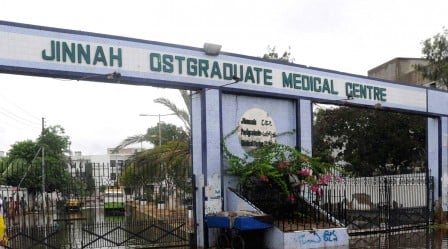
    KARACHI: In a significant step towards improving cancer care in Pakistan, the Jinnah Postgraduate Medical Centre (JPMC) has established a state-of-the-art Breast Radiation Bay that promises faster, safer and completely free treatment for breast cancer patients. The new facility is expected to transform care for thousands of women by reducing treatment time while improving precision and patient safety. Named the Bilquis and Abdul Sattar Edhi Breast Radiation Bay, the project has been developed through a joint collaboration between the Sindh government, the Patient Aid Foundation and the Edhi Foundation. Equipped with advanced tomotherapy technology worth more than Rs1 billion, the facility is in its final stages of completion and is expected to begin serving patients soon. According to Prof. Tariq Mahmood, head of the CyberKnife Department at JPMC, the cutting-edge technology will dramatically shorten the duration of treatment. Radiation therapy that previously required 20 to 22 sessions can now be completed in just five sessions, reducing the physical and emotional burden on patients. He explained that the new system delivers radiation with exceptional accuracy, targeting cancerous tissues while protecting healthy organs, particularly the heart. This precision is expected to improve treatment outcomes and reduce the risk of side effects, making cancer care both safer and more effective. The Breast Radiation Bay will have the capacity to treat around 160 breast cancer patients every day, providing life-saving care to thousands annually. In addition to advanced radiotherapy, the centre will offer a complete range of diagnostic services, including mammography, biopsy, high-resolution CT imaging, and 360-degree helical radiation therapy, allowing patients to receive comprehensive care under one roof. Medical experts say breast cancer remains the most commonly diagnosed cancer among women in Pakistan, with Karachi reporting one of the country’s highest incidence rates. They stress that early detection through regular screening greatly increases the chances of successful treatment. Doctors also urge women to seek immediate medical advice if they notice warning signs such as breast lumps, changes in breast size or shape, skin dimpling, nipple discharge or changes in nipple appearance. While these symptoms do not always indicate cancer, timely evaluation is essential. Health specialists believe the new facility marks a major milestone in Pakistan’s fight against breast cancer by expanding access to world-class treatment regardless of a patient’s financial circumstances. With advanced technology, free care and greater diagnostic capacity, JPMC aims to give thousands of women a better chance at early recovery and long-term survival.

  • |

    Attock to get major education boost

      RAWALPINDI: Punjab Education Minister Rana Sikandar Hayat has announced a series of initiatives to improve education facilities and equip students in Attock with modern skills and technology. Speaking at a ceremony in Attock, where he distributed certificates and laptops among high-achieving students, the minister said the Punjab government, under Chief Minister Maryam Nawaz Sharif, was working to build a modern education system and expand access to higher education for students from low- and middle-income families. Rana Sikandar Hayat announced that the government would upgrade IT laboratories in 110 schools across Attock at a cost of Rs300 million. The upgraded facilities will offer training in artificial intelligence, freelancing, data analysis, robotics and other emerging fields. He said the government would also modernise IT laboratories in Attock’s colleges. According to the minister, the number of computers available to students has improved considerably, with the government aiming to provide one computer for every 10 students. The minister said Punjab had allocated Rs750 billion for the education sector to improve institutions and provide students with better facilities. He added that the Learn and Earn programme would help Attock students develop practical skills and pursue education alongside employment opportunities. Rana Sikandar Hayat also announced two new university campuses in Attock, five Pink Buses for girls’ colleges and a study tour to Türkiye for students accompanied by teachers. In addition, 10 top-performing teachers from the district will be sent to Saudi Arabia for Umrah. Highlighting the government’s focus on girls’ education, the minister said more than 50,000 female students across Punjab were studying IT at the matriculation level. He also highlighted initiatives involving solar panels, rainwater conservation and improved technology facilities in schools. The minister said the Education Department was focusing on merit, transparency and performance while taking action against corruption and bribery. He added that more than 100,000 students had benefited from the Honhaar Scholarship Programme. The ceremony was attended by MNA Sheikh Aftab Ahmed, MPA Malik Itibar Khan, Deputy Commissioner Attock Dr Mudassar Ahmed Shah, DPO Attock Captain (Retd.) Ali Bin Tariq, former provincial sports minister Jahangir Khanزادہ, Chairman WASA Punjab Chaudhry Sher Ali, education officials, teachers and students. The event concluded with the distribution of certificates and laptops among students who achieved outstanding academic results.

  • |

    Buleha” faces suspension as Senate demands name change and removal of Bulleh Shah dialogue

    Islamabad: A controversy over the Pakistani film “Buleha” after a Senate committee questioned whether the movie damaged the image of legendary Sufi poet Baba Bulleh Shah by showing a character connected with violence, weapons and personal justice. During a heated discussion, Senator Pervaiz Rashid questioned how a film carrying the name of a famous symbol of peace and love was approved despite scenes and dialogues that critics said were opposite to Bulleh Shah’s teachings. The controversy intensified when members of the Censor Board admitted that some important points were overlooked during the approval process. Dr. Sultan Azam Taimuri, a senior member of the board, accepted responsibility and said the concerns raised about the connection between the fictional character and Baba Bulleh Shah should have been discussed more carefully. The committee argued that Baba Bulleh Shah was known for promoting peace, humanity and love, while the film appeared to show a character using force and weapons to fight criminals. Members questioned whether such a portrayal could create confusion among young viewers about the real message and personality of one of Punjab’s most respected Sufi poets. The debate became intense when a Senator Pervaiz Rashid asked if a film about another respected poet, such as Khushal Khan Khattak or Ghalib, showed that personality in a completely opposite way, would the Censor Board approve it. A censor board member admitted that such a film would not be acceptable and said it would be wrong to show a historical personality against their actual beliefs. The committee then questioned why the same standard was not applied to “Buleha.” The Censor Board defended its decision by saying the movie was not a biography of Baba Bulleh Shah. Officials explained that the character in the film was fictional and had no direct connection with the real life of the Sufi poet. They said the board considered the movie a fictional story and believed the name alone was not enough reason to stop its release because Bulleh Shah himself used the word “Bullah” in his poetry. However, the committee pointed out that the board’s explanation created confusion. Members questioned how the film could have no connection with Bulleh Shah but still use a name and dialogue strongly linked with him. The discussion became more serious when Dr. Sultan admitted that the committee’s concerns had a point. He said the board did not discuss this angle properly at the time of approval and accepted responsibility. He also admitted that a dialogue in the film where the character compares himself with Bulleh Shah could be controversial. Another Censor Board member, Syed Farooq Hassan, also accepted that the board overlooked this perspective. He said the board knew Baba Bulleh Shah’s teachings were completely different from the violence shown in the film, but members believed the character was fictional and not based on the actual life of Bulleh Shah. The board members also explained that Pakistan’s film industry was already struggling, and they wanted to support local movies within acceptable limits. They said promoting cinema was also one reason behind their decision. The committee, however, questioned whether supporting the film industry should come before protecting the image of respected cultural and historical figures. During the meeting, criticism was also directed at the writer of the film. Members questioned whether being a successful film writer was enough qualification to handle the story of a major historical and spiritual personality. They argued that the writer’s fame came mainly from action based films and said success in commercial cinema does not automatically mean expertise in history, culture or the lives of national figures. One committee member strongly criticised the idea of approving a film simply because it was written by a famous writer. He said the writer was known for introducing violent action elements in films but was not known as an expert on Sufi personalities or Pakistan’s cultural traditions. The committee also rejected the argument that other provincial censor boards had already approved the film. Officials said Punjab and Sindh censor boards had approved the movie without cuts, and it had also been aired on Local TV. However, committee members said approval by other boards did not remove the responsibility of reviewing the film’s impact. The discussion also raised questions about the knowledge and background of Censor Board members. Members suggested that people approving films about major personalities should have knowledge of history, literature, culture and society. They said the selection criteria for board members should ensure they understand how films can influence children and families. The committee argued that showing respected personalities incorrectly could affect how younger generations understand their history. At the end of the meeting, the committee made a strong recommendation regarding the film. The committee suggested that the film name should be changed and the dialogue in which the character calls himself Bulleh Shah should be removed. It further recommended that the film’s exhibition licence should remain suspended until these changes are made and that online versions should also be removed if available. The Senate Standing Committee on Information and Broadcasting has also included the film “Buleha” issue in its upcoming agenda, calling Censor Board members and producers to explain the certification process and the discussions behind the film’s approval.

  • | | |

    PM Shehbaz calls Makkah pact a ‘historic milesto…

    Prime Minister Shehbaz Sharif has described the signing of the Makkah Agreement for Joint Defence between Pakistan, Saudi Arabia and Türkiye as a historic step towards strengthening peace, security and regional stability. In a post on X, the prime minister said he had the honour of signing the agreement alongside Saudi Crown Prince and Prime Minister Mohammed bin Salman and Turkish President Recep Tayyip Erdogan. Shehbaz said the agreement reflected the unity of the three brotherly countries, which share deep-rooted ties, common values and a commitment to protecting the interests of their peoples. He said the pact represented a shared vision to strengthen the foundations of peace, security and stability and expressed hope that it would become a lasting pillar of cooperation among the three nations. The prime minister prayed that the agreement, signed in the sacred precincts of Makkah, would serve as a strong shield for peace and promote greater cooperation and integration among the three countries for generations to come. He also expressed hope that the pact would contribute to economic prosperity and benefit not only the peoples of Pakistan, Saudi Arabia and Türkiye but the wider Muslim world. Shehbaz Sharif particularly praised Field Marshal Syed Asim Munir for his role in making the agreement possible. He described Asim Munir’s efforts, commitment and dedication as instrumental in turning the shared vision of the three countries into a concrete agreement. The prime minister said the agreement would further strengthen regional security and stability while advancing the common interests of the three partner nations.

  • | |

    Abdullah Tahir murder case: suspect woman arrested…

    Police have arrested a female suspect allegedly involved in the murder case of former Pakistan Tehreek-e-Insaf (PTI) ticket holder Abdullah Tahir. The suspect was taken into custody from Sialkot and later shifted to Lahore for further investigation. According to police officials, the arrested woman played a role in the case by allegedly honey-trapping Abdullah Tahir’s driver, which helped investigators trace the events surrounding the killing. Authorities said the suspect is reportedly a friend of the shooter involved in the murder. Police further claimed that the woman had previously been involved in similar honey-trapping activities targeting other individuals. Investigators are now examining her alleged connections and role in the planning and execution of the attack. Abdullah Tahir, a former PTI ticket holder, was killed in Lahore a few days ago. Following the incident, police launched an investigation and collected evidence to identify those responsible for the targeted killing. The arrest of the female suspect is being considered a significant development in the case as investigators continue efforts to uncover the full chain of events behind the murder. Police are expected to record the suspect’s statement and gather additional information regarding the involvement of other individuals. Authorities have not yet disclosed further details about the motive behind the killing or the identities of all suspects involved. The investigation remains ongoing, with police working to establish the complete network connected to the crime. The case has attracted attention due to Abdullah Tahir’s political association and the circumstances surrounding his death. Law enforcement officials have assured that further legal action will be taken after completing the investigation and collecting sufficient evidence.

  • | |

    Pakistan keeps petrol and diesel prices unchanged …

    The Government of Pakistan has decided to keep petrol and diesel prices unchanged for the next two days after implementing fuel price increases over five consecutive days. The Petroleum Division of the Ministry of Energy issued an official notification confirming that current prices will remain in effect on July 26 and 27, 2026. According to the notification, the price of petrol will remain at Rs. 335.18 per litre, while high-speed diesel (HSD) will continue to be sold at Rs. 383.46 per litre during the two-day period. The decision comes after a series of recent adjustments to petroleum prices under the government’s revised pricing mechanism. Authorities said no further changes would be made during the specified period, providing temporary stability for consumers following multiple increases. The latest notification confirms that the existing fuel rates announced on July 25 will remain effective through July 27. Officials from the Petroleum Division stated that the move is in line with the government’s current fuel pricing policy. Just a day earlier, the government had raised petrol prices by Rs. 3.66 per litre and high-speed diesel prices by Rs. 4.80 per litre. Those increases followed another hike in which petrol became Rs. 4.40 per litre more expensive and diesel increased by Rs. 3.62 per litre. Before the latest revisions, petrol was priced at Rs. 331.52 per litre, while high-speed diesel was available at Rs. 378.66 per litre on July 24. The recent adjustments reflect ongoing fluctuations in petroleum pricing driven by changes in international oil markets and domestic pricing policies. Fuel prices play a significant role in Pakistan’s economy, influencing transportation costs, industrial production, and the prices of essential goods and services. Any increase or decrease in petroleum prices has a direct impact on businesses and household budgets across the country. The government’s decision to maintain current prices for two days is expected to provide short-term certainty for consumers and businesses. However, future revisions will continue to depend on global oil prices, exchange rate movements, and the government’s fuel pricing framework. Motorists and businesses are advised to follow official announcements from the Petroleum Division for any future changes in fuel prices. The current notification confirms that petrol and diesel rates will remain unchanged until the end of July 27, unless a new directive is issued by the government.

Leave a Reply

Your email address will not be published. Required fields are marked *