economic empowerment minorities
| |

Economic empowerment of minorities, women remains …

By: Hur Hussaini


Lahore: Punjab Minister for Minorities Affairs, Sardar Ramesh Singh Arora, visited the Head Office of the Rural Community Development Programme (RCDP), where he was warmly received by Muhammad Murtaza, Founder and Chief Executive Officer of RCDP and Vice Chairman of the Pakistan Microfinance Network.

During the visit, the Minister held a comprehensive meeting with representatives of the microfinance sector to discuss strategies for promoting financial inclusion, with particular focus on the economic empowerment of religious minorities, women, and other marginalized communities.

Addressing the meeting, Sardar Ramesh Singh Arora emphasized that financial inclusion is a powerful instrument for reducing inequality, empowering vulnerable segments of society, and creating equal opportunities for sustainable economic growth. He stated that under the leadership of Chief Minister Maryam Nawaz Sharif, the Government of Punjab is committed to ensuring inclusive development and equal economic opportunities for every citizen without discrimination.

The Minister underscored the importance of expanding access to affordable and inclusive financial services for religious minorities, women, and low-income households, enabling them to become financially independent and active contributors to the province’s socio-economic development.

Participants also discussed the role of microfinance institutions in advancing human rights and strengthening financial resilience among underserved communities. Both sides agreed to enhance collaboration to make microfinance initiatives more effective and accessible across Punjab.

Representatives of the Pakistan Microfinance Network reaffirmed their commitment to expanding comprehensive financial services through the Network’s platform, while the Rural Community Development Programme (RCDP) pledged its continued support for initiatives aimed at promoting the financial independence and economic well-being of minorities and women.

The meeting concluded with a shared commitment to strengthening partnerships and undertaking joint initiatives to promote financial inclusion, social protection, and sustainable economic opportunities for vulnerable and marginalized communities throughout Punjab.


Similar Posts

  • | |

    Britney Spears reveals how 13-year conservatorship…

    Britney Spears is opening up again about the lasting emotional impact of the 13-year conservatorship that controlled much of her life. The pop star recently shared a deeply personal reflection on Instagram, saying people still do not fully understand the damage the conservatorship caused to her “heart and soul.” Spears was placed under the legal arrangement in 2008, and it remained in place until November 2021. (Page Six⁠) Looking back, Spears said she had always been a deeply sensitive and shy person. Performing on stage gave her a way to become someone different, allowing her to step outside her natural personality. However, the pressure surrounding her career eventually became overwhelming. Spears recalled experiencing shaking and asthma when she had to meet large numbers of people during meet-and-greets. She said that despite her sensitivity, she was expected to interact with huge crowds, including occasions when she was made to meet as many as 70 people. The experience, she explained, changed something fundamental inside her. Spears said she “lost the sensitivity” of her soul and described feeling like a robot or machine. Her latest comments echo what she previously wrote in her memoir, The Woman in Me, where she described the conservatorship as stripping away important parts of her identity and damaging her relationship with music and performing. (The Standard⁠) The singer also reflected on a sense of connection she once had with other people. She described that relationship as something sacred that she misses, suggesting that years of pressure and control affected not only her career but also the way she experienced ordinary human relationships. Spears has previously spoken about how difficult it was to reclaim her independence after the conservatorship ended. Her recent comments show that, even years after gaining her freedom, she continues to process what happened during that period. The Grammy-winning singer also acknowledged how becoming a mother changed her relationship with performing and public attention. She shares two sons, Sean Preston and Jayden James, with her former husband Kevin Federline. (Page Six⁠) For Spears, freedom appears to mean more than simply ending a legal arrangement. It means rediscovering the sensitive, private and authentic parts of herself that she feels were lost along the way. Her latest reflection offers another glimpse into the personal cost of years spent living under extraordinary restrictions—and her ongoing journey toward finding herself again.

  • |

    Rising fuel prices drive global surge in electric vehicle sales

    Global sales of electric vehicles rose sharply during the second quarter of 2026 as soaring fuel prices linked to the conflict in the Middle East encouraged more consumers to switch away from petrol and diesel powered cars, according to a new report by the International Energy Agency. The agency said electric vehicle sales increased by 35 percent between April and June compared with the first three months of the year. Record sales were reported across 50 countries despite a slowdown in the overall global automobile market. According to the IEA, the renewed interest in electric vehicles was largely driven by the sharp rise in oil prices following the conflict involving Iran, Israel, and the United States. The report said the resulting energy crisis reminded governments and consumers of the economic risks associated with dependence on imported oil. Oil prices climbed dramatically during the year after Iran effectively closed the Strait of Hormuz, one of the world’s busiest energy shipping routes, in response to military strikes carried out by Israel and the United States. Crude prices rose from around 60 dollars per barrel at the beginning of the year to nearly 120 dollars, increasing fuel costs around the world and putting additional pressure on households and businesses. The IEA said the situation has brought energy security back to the centre of government policy discussions. Since road transport accounts for nearly half of global oil consumption, the agency noted that expanding the use of electric vehicles can reduce reliance on imported fuel while protecting consumers from sudden increases in fuel prices. The report said electric vehicles are now being viewed as an important tool for improving national energy security, particularly in countries that rely heavily on imported oil. By reducing dependence on global oil markets, governments hope to make their economies more resilient during periods of international instability. Several countries in Southeast Asia that were particularly affected by rising fuel costs responded by introducing temporary tax incentives to encourage people to buy electric vehicles. Similar government support measures have also been expanded in parts of Latin America and Europe as officials seek to accelerate the transition to cleaner transport. Based on the strong performance in the second quarter and continued policy support in many regions, the IEA expects global electric vehicle sales to increase by around 10 percent over the full year. If that forecast is achieved, electric cars are expected to account for approximately 29 percent of all new vehicle sales worldwide in 2026. The agency also predicted that the overall global car market will shrink this year, meaning electric vehicles are continuing to gain market share even as total vehicle demand weakens. The report noted that the year began on a slower pace for the electric vehicle industry. Sales dropped during the first quarter, mainly because of weaker demand in China and the United States, the world’s two largest EV markets. In the United States, the removal of government subsidies reduced consumer demand, while China’s slowing economy and reductions in financial incentives also affected purchases. Because China represents the largest electric vehicle market in the world, weaker sales there had a significant impact on global figures despite healthy growth in many other regions. Europe recorded the strongest performance during the first half of the year. According to the IEA, electric vehicle sales across the continent rose by more than 30 percent as supportive government policies, expanding charging infrastructure, and higher fuel prices encouraged more drivers to choose electric cars over conventional vehicles. The agency believes these trends could continue if governments maintain incentives and energy prices remain elevated.

  • | |

    Brad Pitt responds as children continue dropping ‘Pitt’ surname

    Hollywood star Brad Pitt has spoken publicly for the first time about several of his children choosing to remove “Pitt” from their surnames, saying he understands their decision as the family continues to deal with the fallout of his long-running split from ex-wife Angelina Jolie. His remarks came after weeks of renewed attention surrounding the legal name changes of several of the couple’s children. The issue resurfaced after Vivienne Jolie-Pitt, 18, filed a petition in Los Angeles County Superior Court to legally change her name to Vivienne Marcheline Jolie, citing “personal” reasons. She joins siblings Shiloh, Zahara and Maddox, who have either legally dropped or publicly stopped using the Pitt surname in recent years. According to reports, Pitt addressed the matter during a recent press interaction, acknowledging his children’s choice and expressing support despite the emotional toll it has taken on him. “I understand,” Pitt said when asked about the surname changes. He added, “And if they don’t want it, neither do I.” The Oscar-winning actor continued, “I want them to know that I stand with them as they bravely turn the page on the hell I put them through.” The remarks marked the first time Pitt has publicly commented on the issue since multiple children moved to distance themselves from his surname. Sources present at the event said the actor appeared emotional while discussing the situation. Pitt reportedly admitted it was painful to realise that some of his children no longer wished to be associated with his name. Reflecting on their decision, he said, “So when they decide that being associated with me is just an unacceptable way to live the rest of their lives.” Despite his disappointment, Pitt stressed that he respected their choice. “That’s what being a dad’s all about,” he said, adding that he offered his “100%” support to Shiloh, Zahara, Maddox and Vivienne as they move forward with their decisions. Pitt and Jolie finalised their divorce in December 2024, ending years of legal proceedings that began after Jolie filed for divorce in 2016. Since then, reports have consistently described a strained relationship between Pitt and several of the couple’s six children. The family rift has often been linked to an alleged altercation aboard a private plane in 2016, after which Jolie initiated divorce proceedings. While the actor had largely remained silent on the matter, reports suggested he had intentionally kept his distance from the public discussion to avoid escalating tensions within the family. On the same day his comments emerged, Pitt was photographed spending time with his girlfriend, Ines de Ramon, in Carmel Highlands, California. The couple, who have reportedly been together since November 2022, appeared relaxed during the outing despite continued public interest in Pitt’s relationship with his children. The surname changes continue to attract widespread attention, reflecting the ongoing estrangement within one of Hollywood’s most closely watched families. Pitt’s latest remarks suggest he is choosing acceptance over confrontation as his children make deeply personal decisions about their identities.

  • | |

    Nolan’s Odyssey explores the cost of flawed choices

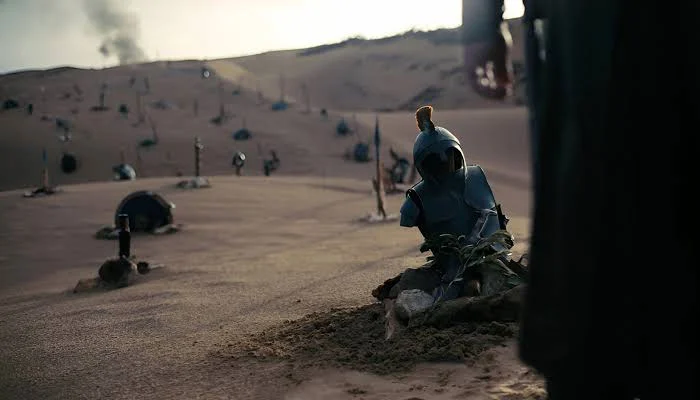
    Christopher Nolan’s The Odyssey explores a character who is far from a conventional hero. Odysseus is brave, intelligent and determined. He is also deeply flawed. That complexity appears to be at the centre of Nolan’s interest in the ancient Greek epic. The nearly 3,000-year-old story follows Odysseus as he attempts to return to Ithaca after the Trojan War. His journey is filled with violence, loss, temptation and encounters with powerful gods and mythical creatures. Yet the film is not simply about a warrior trying to find his way home. It is also about the consequences of his decisions. Odysseus repeatedly makes choices that produce consequences he struggles to control. His actions often begin with understandable motives. Revenge, anger, pride and a desire to protect his men push him into increasingly dangerous situations. His treatment of the Trojans is one example. Odysseus considers himself a man who respects the rules of combat. However, the Trojan War forces him into tactics that contradict his personal principles. The wooden horse becomes the most striking example of this conflict. His deception helps the Greeks defeat Troy, but it also establishes a chain of events that follows him long after the war ends. His encounter with the Cyclops Polyphemus further exposes his weaknesses. Odysseus and his crew manage to escape the Cyclops’ cave. But instead of leaving quietly, Odysseus attacks again. His decision is driven by anger and revenge. The consequences are devastating. Polyphemus calls upon his father, Poseidon, to punish Odysseus. The resulting curse turns the journey home into an extended ordeal. Odysseus continues trying to save his men. However, his efforts repeatedly end in tragedy. One decision leads to another, and the consequences gradually become impossible to contain. His crew members begin to lose faith in their commander. The man determined to bring them home becomes the leader whose decisions ultimately contribute to their deaths. This moral conflict is familiar territory for Nolan. The director has repeatedly built stories around protagonists whose choices carry enormous consequences. Bruce Wayne, for example, attempts to protect Gotham by allowing a dangerous lie surrounding Harvey Dent to survive. The consequences eventually force him to confront the price of that decision. In Oppenheimer, the central character develops the atomic bomb in an attempt to help defeat Nazi Germany. Yet his success leaves him haunted by the destructive power he helped unleash. Dunkirk presents another interpretation of home. For the soldiers trapped on the beaches of France, home represents survival, safety and the possibility of returning with their dignity intact. For Oppenheimer, however, home becomes something more complicated. It represents the peace of mind he can no longer recover after witnessing the consequences of his work. For Odysseus, home is deeply personal. Ithaca represents his family, his kingdom and the identity he lost during two decades away. Returning home is therefore more than reaching a physical destination. His journey changes him. He leaves as a king and eventually returns disguised as a beggar. Along the way, he encounters monsters, hostile forces and divine punishment. He also watches his companions disappear one by one. By the time Odysseus reaches the end of his journey, the question is no longer simply whether he can return home. The bigger question is whether a man who has experienced so much violence can ever truly return as the person he once was. That question sits comfortably within Nolan’s broader storytelling style. His characters often achieve their goals but pay an enormous personal price. Their victories rarely come without consequences. The Odyssey brings that recurring theme to one of its most ancient and powerful forms. Odysseus survives the journey, but survival does not erase what happened along the way. His homecoming becomes a reckoning with the violence, losses and choices that shaped him. Nolan’s interpretation therefore turns the epic into more than an adventure story. It becomes a meditation on guilt, responsibility, identity and the lasting cost of extraordinary choices. At its heart, The Odyssey asks what happens when a man spends years fighting to return home, only to discover that the journey has changed the meaning of home itself.

  • | |

    US military depletes long-range missile stockpile …

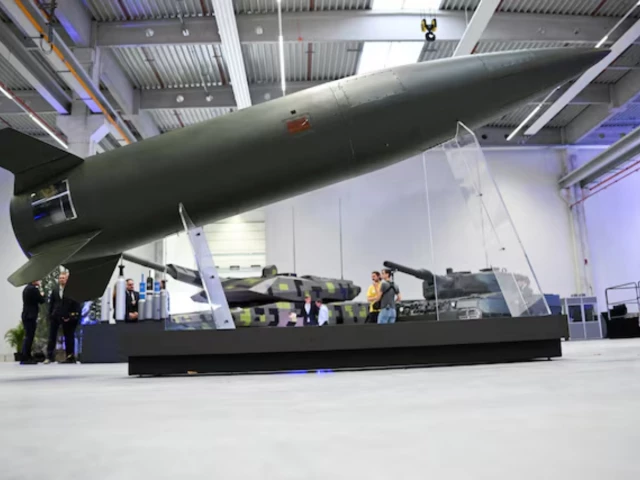
    The United States has burned through nearly all of its long-range precision missiles during five months of fighting in Iran, according to three people familiar with internal defense data, fueling concern inside Washington about military readiness for future crises. The weapons in question are primarily the Army’s ground launched systems, the Army Tactical Missile System and the newer Precision Strike Missile. Two of the sources said the military has expended virtually its entire supply of both. These munitions let forces strike targets accurately from a safe distance and have already proven vital in Ukraine, where American supplied versions allowed Ukrainian troops to hit targets deep inside Russian territory. The Precision Strike Missile represents a more advanced generation designed to eventually replace the shorter range ATACMS. Defense analysts note that such long-range munitions, each costing more than a million dollars, would also play a central role in any future confrontation with China. The sources declined to specify exact remaining quantities of either weapon. President Donald Trump launched the joint offensive against Iran alongside Israel in February, initially predicting a brief campaign. Instead, the conflict has stretched on for months, and the three sources said they worry that shrinking missile reserves could weaken the country’s ability to deter rivals such as Russia and China going forward. A fourth person familiar with the matter said Central Command, which oversees American forces across the Middle East, has nearly exhausted the land based missiles it held before the war started, though it has managed to replenish supplies by drawing from military stockpiles based elsewhere around the world. All four sources spoke on condition of anonymity. Asked to respond to the stockpile figures, the White House shared a statement from Trump asserting the country holds “far more munitions than anyone in the world” and more than it currently requires. He added that American defense manufacturers are producing at record volumes while also expanding factory capacity. Analysts largely agree that certain categories of weapons, including artillery shells and select missile types, are rolling off production lines at historic rates. Still, they caution that overall output may fall well short of what a prolonged conflict would demand. Lockheed Martin, which manufactures both the ATACMS and the Precision Strike Missile along with the THAAD missile defense system, did not respond to questions about the stockpile figures or the president’s remarks. Raytheon, maker of the Tomahawk cruise missile and the Patriot interceptor, also did not respond to inquiries. Chief Pentagon spokesperson Sean Parnell defended the state of American readiness, saying the military maintains a deep arsenal capable of protecting national interests and has carried out multiple successful operations across combatant commands. Internal debate over munitions The stockpile figures have circulated through federal government channels over the past week amid tense internal discussions about how much longer American forces can keep striking Iranian targets without depleting reserves needed to respond to crises elsewhere in the world. One source said the drawdown in ATACMS and Precision Strike Missile inventories reflects a deliberate choice by the administration to avoid riskier tactics, such as sending piloted aircraft to drop bombs directly over Iranian territory. Because these missiles allow strikes from a distance, analysts consider them especially valuable against an adversary with sophisticated air defenses, a category that includes China. A March assessment from the Center for Strategic and International Studies noted that these weapons have already been used against targets inside Iran. That same assessment found that Precision Strike Missile stocks started the conflict relatively low, since the weapon is still new to the arsenal, though the Army has placed large orders set for delivery in 2027. Military officials have said ATACMS production is winding down as manufacturing shifts toward the newer missile system. Military leaders have spent weeks warning the president that stocks of defensive weapons, including the Patriot interceptor system effective against ballistic missiles, are running low, according to two of the sources. Several news outlets reported last week that Trump opted against launching another large scale offensive inside Iran partly because military advisers raised concerns about dwindling supplies. A separate US official disputed that account, saying the president held off due to pressure from Gulf states rather than munitions concerns. The extended campaign has also reignited debate over the scope of presidential war powers, since no formal declaration of war or authorization for the use of military force has gone before Congress. Defensive systems also strained A separate assessment published last week by the Center for Strategic and International Studies estimated that the military used roughly 65 percent of its Patriot interceptor stock between February and July, while THAAD interceptor supplies fell by at least 38 percent compared with pre war levels. Two of the sources said those figures align with internal government data, though the underlying numbers could not be independently verified. The military has also used up close to half of its worldwide Tomahawk cruise missile inventory since fighting began, according to one source, a figure that likewise could not be independently confirmed. The Tomahawk, typically launched from Navy destroyers, cruisers and submarines, has long served as the primary tool for striking heavily defended targets without exposing pilots to risk. Raytheon, now part of RTX, has reached a preliminary multi year deal with the Pentagon to expand Tomahawk output alongside other munitions as officials work to rebuild depleted stockpiles amid the ongoing conflict.

  • |

    Pakistan set to appoint Mike Smith as batting coach

    LAHORE: Pakistan are reportedly close to appointing Mike Smith as the batting coach of the national Test team, with the experienced South African expected to take charge ahead of this month’s crucial three-match Test series against England. According to sources, Smith is the leading candidate for the role and could officially join the team before the England tour begins. The Pakistan Cricket Board (PCB) has yet to make a formal announcement regarding the appointment. Smith is a Level 4-qualified coach and a former South African first-class cricketer. He is also familiar with Pakistan cricket, having previously worked with Multan Sultans in the Pakistan Super League (PSL), where he earned praise for his coaching methods and player development. If appointed, Smith will replace the interim coaching arrangement currently being handled by former Pakistan batter Asad Shafiq, who has been serving as the team’s temporary batting coach. The PCB began its search for a permanent batting coach in May, inviting applications from qualified candidates. The deadline for submissions was June 7, after which the board evaluated potential applicants before shortlisting candidates for the position. Pakistan’s move to strengthen its coaching staff comes at an important time, with the national team preparing for a challenging Test assignment in England. The series is expected to be a significant test for Pakistan’s batting unit, which has faced criticism for inconsistent performances in recent overseas matches. Adding an experienced batting specialist is seen as part of the PCB’s broader strategy to improve the team’s red-ball performances and provide greater technical support to the players. Smith’s previous experience in franchise cricket and his reputation for working closely with batters could make him a valuable addition to Pakistan’s coaching setup. Although an official confirmation is still awaited, reports suggest the appointment process is in its final stages. With the England Test series approaching rapidly, the PCB is expected to finalize the coaching staff soon as Pakistan aims to build a stronger batting lineup capable of delivering consistent performances in challenging overseas conditions.

Leave a Reply

Your email address will not be published. Required fields are marked *