everything you need

Everything you need to know about air turbulence

Many people have experienced a flight suddenly shaking while flying thousands of feet above the ground.  It can feel as if the airplane has hit a large bump in the sky, leaving passengers frightened. This is called air turbulence a common part of air travel that is usually harmless but can sometimes be severe.

What causes turbulence?

Airplanes fly through different layers of moving air called air currents.  When the speed or direction of these air currents changes suddenly the aircraft passes through rough air causing it to shake.

This is known as turbulence.

Aviation experts say that most turbulence is mild and modern airplanes are built to handle forces much stronger than those experienced during normal flights.

In most cases turbulence does not cause an aircraft to crash. The biggest risk is to passengers who are not wearing their seat belts.

Types of air turbulence

There are several types of turbulence

Clear Air Turbulence (CAT) This is one of the hardest types to predict because it happens in clear skies and often cannot be detected by weather radar.

It usually occurs between 30,000 and 40,000 feet due to fast moving jet streams.

Wake Turbulence.

This happens when a large aircraft leaves powerful swirling air behind it and another plane flies through it.

Thermal turbulence On hot days warm air rises from the ground. If an aircraft flies through these rising air currents passengers may feel bumps.

Frontal turbulence This occurs when warm and cold air masses meet often during storms rain or cloudy weather.

Can turbulence be dangerous?

Turbulence is usually more dangerous for people than for the airplane itself.

Passengers who are standing or not wearing seat belts can be thrown from their seats and may suffer injuries to the head neck or bones.

Strong turbulence can also cause luggage food carts and other loose items inside the cabin to move around increasing the risk of injury.

Some passengers may also experience fear or anxiety during the shaking.

In rare cases pilots may change the flight path or make a precautionary landing if the turbulence is unusually severe.

How to stay safe

Aviation experts recommend keeping your seat belt fastened whenever you are seated even if the seat belt sign is off. This is the best way to stay safe if unexpected turbulence occurs.

Scientists also say that climate change may be increasing the number of clear air turbulence events in some parts of the world.

To improve safety airlines use advanced weather forecasts satellite data and warning systems to avoid areas with severe turbulence whenever possible.

Although turbulence can feel frightening experts stress that modern aircraft are designed to withstand very strong air movements.

Staying calm following the crew’s instructions and keeping your seat belt fastened are the best ways to stay safe during a turbulent flight.

Similar Posts

  • Ukraine moves against Russian Kids’ cartoon

    Ukraine has imposed sanctions on the producers and distributors of the popular Russian children’s cartoon “Masha and the Bear.” Ukrainian officials say the show may help spread a positive image of Russia and could pose a risk to the country’s national security. According to Al Jazeera, Ukraine’s Culture Minister Tatiana Berezhna announced the decision on social media.  She said the sanctions could allow legal steps to limit the cartoon’s content and restrict its distribution and earnings on global platforms. Ukrainian President Volodymyr Zelenskyy signed the related decree on Thursday.  The measures include Animaccord the studio behind the cartoon along with other people and organizations connected to the series. A Worldwide Children’s hit “Masha and the Bear” follows the adventures of a playful young girl named Masha and her friend a retired circus bear. The show has become hugely popular around the world. Its YouTube videos have received more than 37 billion views while some individual episodes have been watched more than four billion times.  The cartoon is shown in around 100 countries. Ukraine raises concerns Ukraine and some of its allies, including the UK and Estonia have criticized the show. They argue that it presents Russia in a positive way and could be used as a form of soft power to increase Russian cultural influence. Ukraine’s culture minister said children’s programs should not be used to promote Russian propaganda.  The government wants to reduce the cartoon’s reach inside Ukraine and also limit its income and distribution through international platforms. Still popular in Ukraine Despite the war and restrictions on Russian cultural content, “Masha and the Bear” remains popular among Ukrainian children. According to Ukrainska Pravda, the cartoon’s Ukrainian YouTube channel became the country’s most popular children’s channel in August last year. It now has more than 18 million followers. Russia rejects the claims Russia has rejected Ukraine’s accusations. Kremlin spokesman Dmitry Peskov defended the cartoon saying it has become popular worldwide and promotes positive human values. Ukraine had also raised concerns in June when Netflix reportedly sought rights to stream new seasons of the show. Following the latest sanctions Ukrainian authorities may take further steps to restrict the cartoon’s content and distribution in the country.

  • Can you take a bath during fever?

    During the rainy season and changing weather cases of dengue malaria viral fever typhoid and other illnesses often increase. When people develop a fever many wonder whether taking a bath could make their condition worse. Health experts say that taking a bath during fever is generally safe. A bath with lukewarm water can help the body feel more comfortable and may temporarily reduce body temperature. However the water should not be extremely hot or cold. Avoid very cold water Experts advise against bathing with ice-cold or very cold water during a fever.  Sudden exposure to cold water can cause shivering. This may make the body work harder to produce heat and can increase discomfort. Very hot water should also be avoided. It can raise body temperature and may make weakness and tiredness worse. Do not use alcohol on the skin Some people use alcohol or spirit on the skin to try to lower fever. Health experts do not recommend this method. Alcohol can be absorbed through the skin and may cause harmful effects. It should especially never be used on children for this purpose. What should you do during a fever? Fever is usually not a disease itself. It is often a sign that the body is fighting an infection.  Therefore it is important to find and treat the cause of the fever instead of only trying to lower the temperature. Drink plenty of fluids during a fever to prevent dehydration. Water, ORS coconut water soup and other suitable drinks can help. Wear light comfortable clothes and make sure the room has good airflow. If a full bath feels difficult you can gently clean the body with a soft cloth dipped in lukewarm water. Eating light and easily digestible foods such as porridge, khichdi, and other soft foods may also help the body recover. When should you see a doctor? A mild fever may improve with rest enough fluids and medicines recommended by a doctor. However medical help should be sought if the fever lasts for more than two to three days or is accompanied by confusion breathing problems severe headache repeated vomiting unusual skin rashes, or other serious symptoms. A baby under three months old with a fever should be examined by a doctor immediately. Overall taking a lukewarm bath during fever is usually not a problem. Staying hydrated, getting enough rest eating light food and finding the actual cause of the fever are much more important for recovery.

  • | | |

    Body fat new study reveals its crucial role in met…

    A new scientific study has highlighted that body fat is much more than a source of extra weight. Researchers say fat tissue functions as an essential organ that helps regulate metabolism, stores energy, and produces hormones needed for the body’s normal functioning. According to the researchers, while excessive body fat is widely associated with conditions such as diabetes and heart disease, having too little body fat can also pose serious health risks. The findings suggest that maintaining a healthy balance of body fat is important for overall metabolic health. The study focused on a rare inherited disorder known as Familial Partial Lipodystrophy Type 2 (FPLD2). People with this condition lose fat from specific parts of the body or experience abnormal fat distribution, increasing their risk of diabetes and other metabolic disorders. A research team led by American endocrinologist Dr. Elif Oral examined patients with the condition and found that affected fat cells develop significant structural and functional abnormalities. These changes can disrupt the body’s metabolism and contribute to a range of health complications. To better understand the disease, scientists created a mouse model in which the Lamin A/C gene was switched off only in fat cells. This is the same gene known to be affected in individuals with FPLD2. The model allowed researchers to closely examine how defects in fat tissue influence the body’s metabolic processes. Researchers believe the findings could improve understanding of rare fat disorders while also opening new avenues for the development of treatments for diabetes and other metabolic diseases. The study reinforces the idea that healthy fat tissue plays a vital role in maintaining the body’s balance and overall well-being.

  • |

    Remembering Marjane Satrapi: an author who humanized Iran

    The global arts community is mourning the unexpected passing of Marjane Satrapi. She is the pioneering French-Iranian author, illustrator, and film director best known for her graphic memoir Persepolis. Satrapi passed away in Paris at the age of 56. Relatives confirmed that her death was tied to profound heartbreak following the loss of her husband, Swedish producer Mattias Ripa, who died the previous year. Her death sparked an outpouring of tributes from political leaders, cultural institutions, and readers worldwide. French President Emmanuel Macron paid homage to Satrapi as a monumental talent who converted her childhood in revolutionary Iran into an accessible, universal human story, blending sharp irony, vulnerability, and courage. Born in 1969 in the northern Iranian city of Rasht, Satrapi grew up in Tehran during one of the most turbulent eras in modern Middle Eastern history. As a child of progressive, middle-class parents, she witnessed the overthrow of the Shah in 1979, followed by the rapid consolidation of power by the fundamentalist Islamic regime and the devastating Iran-Iraq War. Concerned for her safety and rebellious spirit, her family sent her to study at the Lycée Français in Vienna when she was just fourteen. Her years in Austria were marked by acute feelings of social isolation, homelessness, and cultural displacement. The struggles that would later become central themes in her creative career. After returning to Tehran to complete her university education in visual communication, Satrapi ultimately chose a life in exile, relocating permanently to France in 1994. In 2000, Satrapi published the first volume of Persepolis, a monochrome graphic novel that fundamentally altered how Western audiences viewed everyday life in Iran. Drawn in a bold, stripped-down visual style influenced by expressionist art, the book chronicled her youth with remarkable humor and emotional honesty. Satrapi demystified a country often flattened by geopolitical headlines. The book became an international bestseller, translated into dozens of languages and adopted into school curricula worldwide. In 2007, Satrapi co-directed an animated film adaptation alongside French artist Vincent Paronnaud. The film won the Jury Prize at the Cannes Film Festival, earned an Academy Award nomination for Best Animated Feature, and cemented Satrapi’s standing as a multi-talented cinematic voice.        “I don’t want to return to a dictatorship and spend the rest of my life in jail being tortured.” — Marjane Satrapi Satrapi’s artistic career extended well beyond Persepolis. She directed live-action feature films including Chicken with Plums (2011), the dark comedy The Voices (2014) starring Ryan Reynolds, and Radioactive (2019), a biopic celebrating Marie Curie. In addition, she was an accomplished painter and was elected to the prestigious French Academy of Fine Arts. Yet, Satrapi remained fiercely principled. She consistently criticized the Iranian regime while demanding true integrity from Western governments. In early 2025, she publicly rejected France’s prestigious Légion d’honneur, citing European political hypocrisy regarding human rights in Iran. Following the 2022 Iranian protests triggered by the death of Mahsa Amini, she edited the collective work Woman, Life, Freedom, uniting artists and historians to support the civil rights uprising. Through her uncompromising honesty, sharp wit, and visual mastery, Marjane Satrapi left behind a legacy that proved art can dismantle prejudice, bridge divide, and speak truth to power.  

  • How to protect your phone screen without protector?

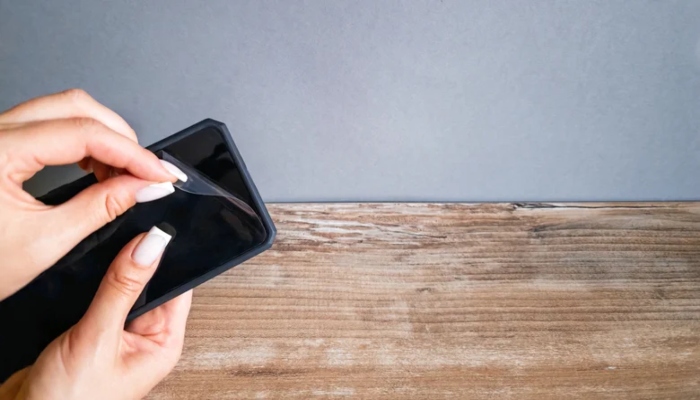
    If you have recently purchased a flagship smartphone, there is a good chance that you may not need a screen protector. In fact, most flagship smartphones now come with Corning Gorilla Glass protection which makes them highly resistant to scratches. However, many people still use screen protectors to provide their phone screens with additional protection. A screen protector is particularly useful when a phone is dropped from a height and hits the floor with significant force. But what should you do when the screen protector that has been on your phone for some time becomes damaged or covered with scratches? This can happen for various reasons such as accidentally placing the phone screen-down on a hard surface. Scratches can also occur when the phone is kept in a pocket with keys or coins. Although screen protectors are highly resistant to scratches, they are not completely scratch-proof. Dust and dirt can also affect the phone’s screen and increase the risk of scratches. So, if your screen protector becomes damaged, you can simply continue using the phone without replacing it immediately. Just try to keep the screen free from dust and make a habit of cleaning it regularly using a suitable screen-cleaning liquid and a soft cloth.

  • Health benefits of eating papaya during monsoon

    The monsoon season brings relief from the heat but it can also increase the risk of infections and digestive problems. Health experts say that eating nutritious foods can help the body stay strong. Papaya is one fruit that can be a healthy addition to the diet during rainy weather. Rich in vitamins fiber water and natural enzymes, papaya may support digestion immunity heart health and skin health. Supports immunity and digestion During the rainy season some people may become more likely to develop colds flu or other seasonal infections.  Papaya contains vitamins A and C which support the normal function of the immune system. Papaya also contains an enzyme called papain which helps break down proteins and may support digestion. Its fiber and water content can also help keep the digestive system working properly. May help with constipation Papaya is rich in fiber and water making it a useful fruit for people who struggle with constipation.  Eating enough fiber and drinking plenty of water can help support regular bowel movements. What about dengue? Dengue cases can increase during the monsoon because mosquitoes become more common. Papaya leaves are sometimes promoted as a way to increase platelet levels but there is not enough strong evidence to consider papaya or papaya leaves a treatment for dengue. People with dengue should follow their doctor’s advice and should not rely on papaya as a replacement for proper medical care. May support weight and heart health Papaya is relatively low in calories and contains fiber which can help you feel full for longer. This may make it a useful choice for people trying to maintain a healthy weight. It also provides nutrients such as potassium and fiber that can support overall heart health as part of a balanced diet. Good for skin and eyes Papaya contains antioxidants and nutrients such as vitamins A and C which can support healthy skin. Its antioxidants may also help protect cells from damage caused by free radicals. The fruit also contains carotenoids such as beta-carotene lutein and zeaxanthin which are linked to eye health. Eat It in Moderation Papaya is a nutritious fruit and can be part of a healthy monsoon diet.  However no single food can prevent diseases or replace medical treatment. It is best to eat papaya as part of a balanced diet and consult a doctor before making major dietary changes if you have a medical condition.

Leave a Reply

Your email address will not be published. Required fields are marked *