health benefits eating

Health benefits of eating papaya during monsoon

The monsoon season brings relief from the heat but it can also increase the risk of infections and digestive problems.

Health experts say that eating nutritious foods can help the body stay strong. Papaya is one fruit that can be a healthy addition to the diet during rainy weather.

Rich in vitamins fiber water and natural enzymes, papaya may support digestion immunity heart health and skin health.

Supports immunity and digestion

During the rainy season some people may become more likely to develop colds flu or other seasonal infections.  Papaya contains vitamins A and C which support the normal function of the immune system.

Papaya also contains an enzyme called papain which helps break down proteins and may support digestion. Its fiber and water content can also help keep the digestive system working properly.

May help with constipation

Papaya is rich in fiber and water making it a useful fruit for people who struggle with constipation.  Eating enough fiber and drinking plenty of water can help support regular bowel movements.

What about dengue?

Dengue cases can increase during the monsoon because mosquitoes become more common.

Papaya leaves are

sometimes promoted as a way to increase platelet levels but there is not enough strong evidence to consider papaya or papaya leaves a treatment for dengue.

People with dengue should follow their doctor’s advice and should not rely on papaya as a replacement for proper medical care.

May support weight and heart health

Papaya is relatively low in calories and contains fiber which can help you feel full for longer.

This may make it a useful choice for people trying to maintain a healthy weight.

It also provides nutrients such as potassium and fiber that can support overall heart health as part of a balanced diet.

Good for skin and eyes

Papaya contains antioxidants and nutrients such as vitamins A and C which can support healthy skin. Its antioxidants may also help protect cells from damage caused by free radicals.

The fruit also contains carotenoids such as beta-carotene lutein and zeaxanthin which are linked to eye health.

Eat It in Moderation

Papaya is a nutritious fruit and can be part of a healthy monsoon diet.  However no single food can prevent diseases or replace medical treatment. It is best to eat papaya as part of a balanced diet and consult a doctor before making major dietary changes if you have a medical condition.

Similar Posts

  • Gym and height myth or fact?

    You may have heard people say that going to the gym or lifting weights can stop your height from growing.  Because of this belief some young people avoid exercise and weight training. But is this really true?  Let’s find out. Going to the gym has become very popular among people who want to stay fit and healthy.  Some people exercise to lose weight while others want to gain muscle and strength. Gym workouts are especially popular among young people. However several myths about weight training still create confusion. One common myth is that going to the gym at a young age can stop height growth. This belief is especially common among teenagers and young people between 18 and 20 years old. Can weightlifting stop height growth? Many people believe that lifting heavy weights at a young age can prevent the body from growing taller especially when a person carries heavy weights on their shoulders. However there is no strong scientific evidence that normal strength training stops a person’s height from increasing.  Weightlifting itself does not automatically stop growth. However young people should be careful when doing heavy workouts.  Using too much weight or exercising with the wrong technique can cause injuries.  Younger people should learn proper form and when possible exercise under the guidance of a qualified trainer. What actually affects height? A person’s height is mainly influenced by genetics. Hormones nutrition sleep and overall lifestyle can also play a role in healthy growth.if the body does not produce certain growth related hormones properly it can affect normal development. Poor nutrition can also prevent the body from getting the nutrients it needs for healthy growth. The body also contains growth plates which are areas near the ends of certain bones that help bones grow longer during childhood and adolescence.  These growth plates naturally close as a person reaches physical maturity. Therefore going to the gym does not simply stop height growth.  A healthy diet proper exercise enough sleep and safe workout techniques are more important for overall growth and fitness.

  • The relationship between past tradition and present innovation

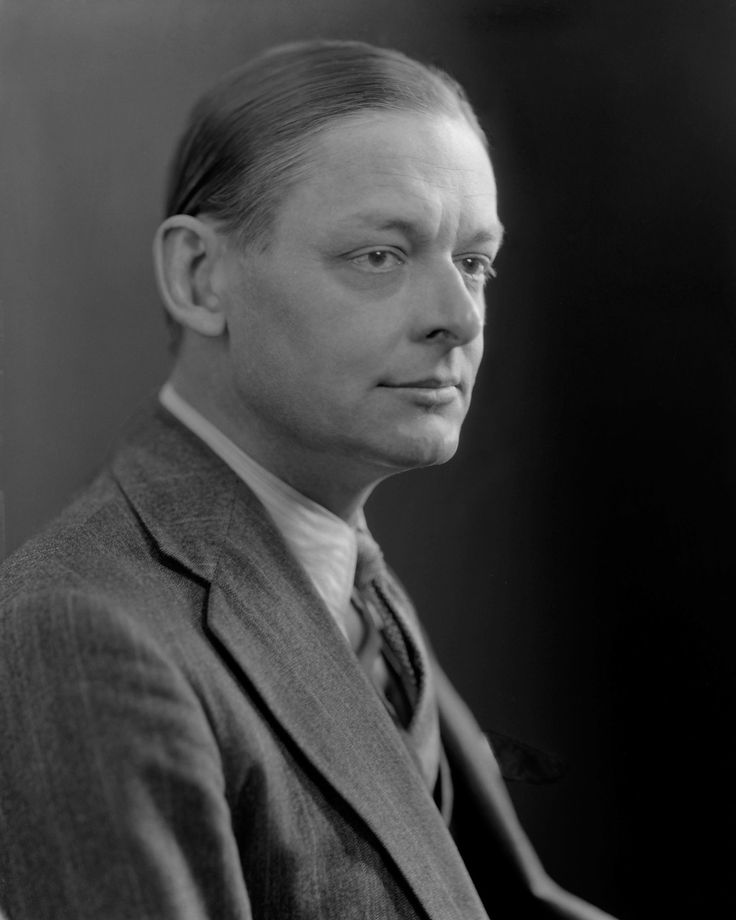
    In T.S. Eliot’s Tradition and the Individual Talent (1919), the relationship between tradition and innovation is conceived as a structural rejection of the Romantic rebels who came a century before. The English Romantics (Wordsworth, Coleridge, Byron, Shelley, and Keats) built an aesthetic identity on iconoclasm, intense individualism and radical rupture. In contrast, Eliot’s Modernist manifesto counters with historical humility, restraint and continuity. The Romantics operated as cultural iconoclasts. They emerged alongside the upheaval of the French Revolution. Poets like Shelley (Mont Blanc, Prometheus Unbound) explicitly rejected established institutional, religious and literary orthodoxies. For the Romantics, literature advances by breaking away from previous generations (especially Neoclassicism). The past is often viewed as a restrictive cage or a set of dead conventions that inhibit free human consciousness. Originality means creating something unprecedented from within the self. Authenticity is an act of poetic rebellion against tradition. In Tradition and the Individual Talent, Eliot argues that attempting to exempt oneself from the past is a delusion. Originality does not mean destroying past structures. In fact, it means acquiring a historical sense through arduous labor. Eliot reframes innovation as an internal readjustment of an existing system. A new poet cannot be rebellious in isolation. The poet’s work only gains aesthetic value when set among the dead poets of Western literature. It’s to see how it reshapes the entire dynamic order. Wordsworth famously defined poetry as the spontaneous overflow of powerful feelings. The Romantic movement centered the poet’s personal ego, subjectivity and unique psychological vision as the ultimate authority of art. The poet was a heroic prophet pouring out their soul. Eliot mounts a direct attack on this subjective expressivism. He famously counters: Poetry is not a turning loose of emotion, but an escape from emotion. It is not the expression of personality, but an escape from personality. To Eliot: The poet is not a heroic rebel, but a receptacle or catalyst (the platinum filament metaphor). The artist’s progress is a continuous extinction of personality and surrender to the literary heritage. Art should be judged as an autonomous, objective entity. It must be completely detached from the biographical life or emotional state of the human being who wrote it. Where the Romantic rebels viewed art as a wild, subjective act of liberation. Where the individual genius stands against society and past history. There and then, T.S. Eliot lowers the ego of the artist. Eliot redefines the individual talent not as a lone rebel storming the doors of literature. Individual talent is as ahistorically conscious craftsman who earns a place in the canon. This can only be by submitting to, learning from, and subtly altering the tradition that came before.  

  • Why Popcorn became the ultimate movie snack

    Watching TV or a movie often feels incomplete without something to eat. For many people popcorn is the first snack that comes to mind. But have you ever wondered how popcorn became the most popular food at movie theaters? The tradition began in the 19th century when popcorn became a popular snack at fairs festivals and circuses. In those days it was usually sold from small street carts. A major turning point came in 1885 when the first popcorn machine was invented. This made it easier to prepare fresh popcorn quickly and sell it to large crowds. By 1907, the United States had nearly 5,000 movie theaters with tickets costing just 5 cents. Popcorn sellers started placing their carts outside theaters where moviegoers could easily buy popcorn before going inside. As movie theaters became more modern and luxurious many owners banned outside food. However the rule did not last long. By the 1930s theaters began selling popcorn inside and outside their buildings realizing it was a profitable business. Today popcorn is one of the biggest sources of income for many cinemas with some estimates suggesting it accounts for up to 85% of concession stand sales. Another reason popcorn became the perfect movie snack is that it is light easy to eat and does not make much noise allowing people to enjoy their film without disturbing others.

  • KFC launches fried chicken flavored toothpaste

    KFC has introduced a surprising new product fried chicken flavored toothpaste. The toothpaste is inspired by the brand’s famous 11 Herbs and Spices giving users a taste and smell similar to KFC’s Original Recipe chicken. According to the company the toothpaste is designed to make brushing feel like enjoying a hot juicy piece of KFC chicken while still leaving the mouth feeling fresh. The limited edition product was created in partnership with Hismile a well known Australian oral care company. Hismile’s Marketing Manager, Koban Jones, said the company enjoys creating fun and unexpected products. He added that turning KFC’s famous flavor into an everyday item like toothpaste was a bold and exciting idea. Although the fried chicken flavored toothpaste is currently unavailable customers can still buy the KFC Electric Toothbrush from the company’s website. The toothbrush features three cleaning modes soft bristles and a built in timer for a better brushing experience.

  • |

    Longing for other lives

    You might be driving along a quiet stretch of highway at dusk and notice a remote house set against the rolling hills. Its porch light glowing softly against the fading twilight. It happens in an instant. Your mind steps inside for a fleeting moment. You picture yourself standing in that kitchen, tending to a warm pot of soup, learning the rhythms of the local wildlife and forget the press of unread emails. Or perhaps it happens when you see a cozy cottage on a distant coast. Might be an apartment perched above a neighborhood bookstore. Or a tiny rural train station where only a few passengers wait. For a few seconds, you inhabit that alternate life. But as quickly as the thought arrives, reality hits back. For many people, these sudden bursts of romantic daydreaming trigger a wave of subtle unease. It is common to treat such longings like a mild psychological symptom. It is an indicator that something in our current existence is lacking. We wonder if we made wrong turns along the path, selected the wrong career or settled into the wrong neighborhood. We assume that fantasizing about a simpler life means we are secretly desperate to escape our reality. However, a change in perspective shows that this assumption may misinterpret how the human mind functions. Understanding Fernweh: The Opposite of Homesickness The key to re-evaluating this feeling lies in a concept from the German language: fernweh. The word is translated literally as far-pain. Fernweh describes a deep, aching yearning for distant places. It stands as the emotional mirror image of homesickness. While homesickness pulls us back toward the familiar, fernweh pushes toward the unfamiliar. Fernweh is neither a practical plan for relocation nor a symptom of dissatisfaction. It exists in a unique middle ground. It is more than a mere desire to escape reality, yet far less than a literal plan to manifest a new lifestyle. When we treat longing as a sign of discontent, we force ourselves into an unnecessary dilemma. We start assuming we must either change our lives or suppress our thoughts entirely. In reality, these brief mental excursions rarely end with us packing a suitcase. Instead, they leave us returning to our daily routine feeling subtly expanded, as if our capacity for wonder has been stretched open. The Multiple Selves and the Purpose of Imagination The alternative selves we envision during daydreams: the quiet caretaker of a lighthouse, the keeper of a village shop, or the isolated writer in a secluded cabin, are not criticism on our present choices. They do not demand that we abandon our jobs or start over from scratch. Rather, these imagined lives serve as quiet reminders that human beings are inherently complex. The person managing household budgets, answering routine emails and searching for misplaced keys is not the entirety of who we are or who we could be. Human imagination evolved specifically to explore endless possibilities without requiring us to physically execute every scenario. Seeing Distant Peace as Invitation Instead of seeing distant places as destinations we failed to reach, we can view them as invitations. They invite us to reconnect with our curiosity, our creativity and our capacity for reinvention. They reassure us that another way of seeing the world remains entirely possible, even within the routine of daily living.   Ultimately, longing for another life or a distant land does not mean you chose the wrong life. It simply demonstrates that your imagination remains curious and alive. As long as a distant porch light or a road over a hill can capture your wonder, you can take comfort in a profound truth. The truth is your internal life will always be far larger than the single outer life you happen to inhabit.

  • Why Safe Migration Begins with Information 

    By Tahseen Ullah  Imagine a young Pakistani sitting in a village in Punjab, Khyber Pakhtunkhwa or Sindh, scrolling through his phone. He sees an attractive job offer for Germany, Italy, Saudi Arabia, the UAE—or even an IT position in Southeast Asia. The salary is impressive, accommodation is promised and the visa will supposedly be arranged within weeks. A WhatsApp number is provided, and someone in his community has already shared the opportunity. He has ambition, perhaps a degree or technical skills. What he may not have is reliable information. This information gap can turn an aspiration for overseas employment into financial loss, irregular migration, exploitation, human smuggling or even trafficking. For Pakistan, this is an increasingly important challenge. Overseas employment is a lifeline for millions of Pakistani families, supporting children’s education, access to healthcare, improved living standards and household economic security, while remittances make a vital contribution to the national economy. At the same time, rapidly changing global labour markets are creating new opportunities beyond traditional destinations. Yet, as these opportunities grow, so do the risks of fraudulent recruitment, misinformation, disinformation, human smuggling and trafficking. Ensuring that Pakistanis can access authentic and accurate information, guidance, verify employment opportunities and make informed decisions is therefore essential to turning migration aspirations into safe and dignified and productive employment opportunities. A fake job advertisement, misleading social media post or fraudulent agent can create a false impression of employment and migration opportunities. Misinformation may be shared unknowingly, while disinformation is deliberately designed to deceive. For prospective migrants, however, the consequences can be equally serious. The risks are particularly concerning for young, educated, and IT skilled Pakistanis. In parts of Southeast Asia, deceptive job advertisements and promises of visit visas that are later claimed to be convertible into work visas have reportedly been used to lure individuals into situations involving human trafficking for forced criminality, where victims may be coerced into participating in online scams and other criminal activities. What initially appears to be a lucrative employment opportunity can therefore become a pathway to exploitation, coercion and serious harm. In the migration journey, information is not just knowledge, it is protection. Before accepting any overseas opportunity, prospective migrants should ask: Is the employer genuine? Is the recruiter authorised? Is the visa appropriate for the job? Is there a written employment contract? Are the salary and working conditions clear? What are the actual costs? Most importantly, where can this information be verified? The principle should be simple: check before you trust, verify before you pay and consult before you travel. To make an informed decision, prospective and intending migrants should first verify job offers and recruitment arrangements from the Bureau of Emigration & Overseas Employment and its field offices, the Protectorates of Emigrants, while seeking information, guidance and referral from Government departments, Migrant Resource Centres (MRCs) Pakistan and other recognised migration information and counselling services before paying, signing or travelling. These sources can help migrants understand legal/ regular migration pathways, recruitment procedures, employment contracts, workers’ rights and available complaint mechanisms. Before making a migration decision, understand the process and seek guidance. Consult relevant sources before paying an agent, signing documents or travelling—a few minutes of verification can prevent years of financial and personal consequences. However, information alone is not enough. Safe migration also requires quality skills, reskilling and upskilling. International labour markets increasingly demand technical competencies, language skills, digital literacy and recognised qualifications. TVET institutions and universities should therefore align training with genuine labour-market demand and equip young people with both occupational and migration-related knowledge. A skilled worker who cannot identify a fraudulent opportunity remains vulnerable. Conversely, reliable information without relevant skills can leave genuine opportunities beyond reach. Skills and information must therefore go together. A comprehensive approach to migration must move beyond simply facilitating departure. Safe migration requires informed preparation before departure, protection during employment and support upon return, supported by strong coordination among government institutions, international organization, civil society organizations, Pakistani missions abroad, bilateral agreements with destination countries, training providers, employers, recruiters, universities, and migration information and counselling services. The message to young Pakistanis should be clear: Do not migrate on the basis of a social media post, WhatsApp message or an agent’s promise. Seek information, consult the relevant authorities, verify the opportunity, acquire the required skills and follow the legal and regular migration pathway. Migration should be a pathway to opportunity—not a pathway to exploitation. In today’s information environment, knowing where to seek information, whom to consult and what to verify before migration may be as important as the skills required for the job itself. Safe migration begins long before the airport. It begins with an informed decision. Tahseen Ullah is a development and migration sector practitioner specialising in migration management, education and child protection. He can be reached at tahseenanthro@gmail.com.   LinkedIn: Tahseen Ullah  The views expressed are his own and do not reflect the views of his employer or any affiliated organisation.

Leave a Reply

Your email address will not be published. Required fields are marked *