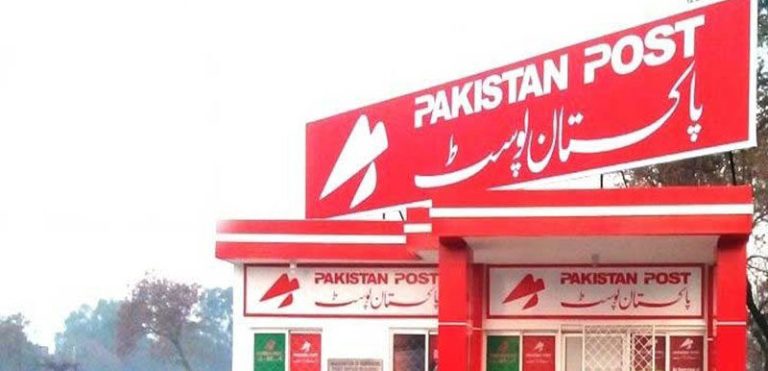
senate questions fbr
|

Senate questions FBR over Rs1,120bn tax-exempt imports

Islamabad: The Senate Sub Committee has raised serious questions over the Federal Board of Revenue’s failure to provide complete records related to Rs1120 billion worth of tax exempted imports in former FATA and PATA regions, while also seeking detailed tax information from major tobacco companies including Pakistan Tobacco Company and Philip Morris Pakistan Limited.

The matter came up during a meeting of the Senate Sub Committee convened by Senator Saifullah Abro at Parliament House. The Committee was reviewing press freedom concerns, cigarette smuggling networks, tax evasion issues and possible misuse of duty exemption systems.

At the beginning of the meeting, Pakistan Federal Union of Journalists President Afzal Butt raised concerns regarding remarks made about a private channel reporter during an earlier Committee meeting. Senator Saifullah Abro assured that the Committee respects every citizen and considers the media an important partner in highlighting national issues. He stated that the Committee would continue working on matters related to illegal tobacco trade and economic losses faced by the country.

At the beginning of the meeting, Pakistan Federal Union of Journalists President Afzal Butt raised concerns regarding remarks made about a private channel reporter during an earlier Committee meeting. Senator Saifullah Abro assured that the Committee respects every citizen and considers the media an important partner in highlighting national issues. He stated that the Committee would continue working on matters related to illegal tobacco trade and economic losses faced by the country.

The main focus of the meeting shifted towards the Federal Board of Revenue’s pending information regarding tax exempted areas. The Committee noted that raw materials worth Rs1120 billion entered tax exempt regions between 2018 and 2026 under exemption arrangements. Members expressed concern that manual tracking systems and a lack of automated verification could create risks of illegal movement of goods into taxable markets.

The Committee once again directed FBR to provide complete details of consumption certificates issued against the Rs1120 billion imports and submit tax related information for the tobacco sector, especially regarding Pakistan Tobacco Company and Philip Morris Pakistan Limited.

During the meeting, officials also discussed investigations into cigarette theft cases and illegal activities in the tobacco sector. The Federal Investigation Agency briefed the Committee about cigarette theft cases in Peshawar, Khyber Pakhtunkhwa.

The Committee also reviewed the investigation regarding senior officials and a tax charge sheet issued against Deputy Commissioner Inland Revenue Fahim Rashid in connection with Paramount Tobacco Company.

Another serious matter discussed was the theft of 2,828 cigarette cartons from an FBR warehouse. The cartons were reportedly valued at Rs25 crore. The Committee directed FBR to prepare clear Standard Operating Procedures for registering, handling and managing seized goods to prevent such incidents in the future.

The Committee also examined concerns related to cigarette smuggling and tax losses, stressing that illegal trade not only affects government revenue but also creates unfair competition for legal businesses.

The meeting also discussed government advertisement spending and tobacco industry media campaigns. The Committee reviewed information provided by the Press Information Department and Pakistan Electronic Media Regulatory Authority and stressed the need for greater transparency in advertisement payments and media related spending.

The meeting was attended by Senators Umer Farooq, Muhammad Talha Mehmood and Dilawar Khan as well as senior officials from the Ministry of Interior and Narcotics Control, Ministry of Information and Broadcasting, Press Information Department, FBR Inland Revenue, Customs, FIA, National Cyber Crime Investigation Agency and other relevant departments.

Senator Saifullah Abro directed all concerned institutions to provide the required information and continue cooperation with the Committee. The Committee made it clear that investigations into tax exemptions, tobacco sector irregularities and smuggling networks would continue until complete records and explanations were provided.

Similar Posts

  • | |

    IHC reserves decision on Imaan Mazari, Hadi Chatth…

    The Islamabad High Court on Friday reserved its decision on whether petitions seeking the suspension of prison sentences awarded to lawyers and human rights activists Imaan Zainab Mazari-Hazir and Hadi Ali Chattha can proceed. The petitions relate to the couple’s convictions in a case involving alleged controversial social media posts under the Prevention of Electronic Crimes Act (PECA). The hearing was conducted by Justice Muhammad Azam Khan, who considered preliminary arguments from both the prosecution and the defence before reserving his ruling on the maintainability of the petitions. During the proceedings, lawyers representing the National Cyber Crime Investigation Agency (NCCIA) argued that the requests for suspension of sentence had been filed too early. They maintained that the court should first decide the prosecution’s objection challenging the admissibility of the petitions before considering any request for relief. The prosecution submitted that hearing the suspension petitions before deciding its objection would make its legal challenge ineffective. It therefore requested the court to first determine whether the petitions were legally maintainable. Counsel for Imaan Mazari and Hadi Chattha opposed the objection and said he was ready to argue the prosecution’s application immediately. He suggested that both the objection and the suspension requests should be heard together to avoid unnecessary delays in the proceedings. The judge advised the defence to fully prepare its arguments, observing that doing so would better protect the legal rights of the convicted lawyers. However, the defence maintained that it was prepared to proceed without delay and formally waived any request for additional preparation time. After hearing submissions from both sides, Justice Azam Khan stated that the court would first determine whether the petitions seeking suspension of sentence were legally maintainable. Only after resolving that issue would the court consider the merits of the requests for suspension of the sentences. At the end of the hearing, the Islamabad High Court reserved its decision on the prosecution’s objection. The ruling will determine whether the petitions can move forward for further consideration. Imaan Mazari and Hadi Ali Chattha were convicted by a sessions court earlier this year and received a combined sentence of 17 years’ imprisonment on multiple charges under PECA

  • |

    SBP orders same-day settlement for Premium Prize Bond sales

    Karachi – The State Bank of Pakistan (SBP) has introduced a new system for the sale of Premium Prize Bonds and issued important instructions to commercial banks. According to details, the State Bank of Pakistan has directed all commercial banks to settle the proceeds from the sale of Premium Prize Bonds on the same day. In a circular issued by the SBP, it was stated that the new system has been introduced after reviewing the existing mechanism for reporting transactions related to the sale of Premium Prize Bonds. Under the new procedure, banks will report details of Premium Prize Bond sales through the Data Acquisition Portal within the prescribed time. The State Bank Banking Services Corporation will then deduct the reported sales amount from the relevant bank account on a daily basis. The State Bank has clarified that if a bank fails to settle the sales proceeds on the same day, it will have to pay charges for using the funds during the delay. These charges will be imposed for each day of delay at the SBP’s overnight reverse repo selling rate. The circular further stated that the calculation and recovery of these charges will be carried out by the SBP Karachi Office. The amount will be deducted from the relevant bank account and deposited into the Central (Non-Food) Account. The State Bank also clarified that if profit or prize money is incorrectly paid due to inaccurate, delayed or incomplete reporting of sales, encashment or transfer transactions, the concerned bank will be fully responsible. However, where applicable, adjustments will be made to the income tax amount.

  • |

    South Korea’s Bankware Global secures Rs1.57 billion Pakistan Post Contract

    ISLAMABAD: South Korean core banking and financial technology company Bankware Global has secured a contract worth 7.98 billion South Korean won, equivalent to approximately Rs1.57 billion, to develop a banking and financial services system and provide software for Pakistan Post Office Department (PPOD). The Seoul-based technology company disclosed the development in a notice submitted to the Korea Exchange on Tuesday, marking a significant expansion of its presence in Pakistan’s financial technology and public-sector digitalisation market. According to the company, the project will be implemented from August 7, 2026, to March 6, 2028. The value of the contract represents around 12.6% of Bankware Global’s total sales recorded during 2025. The company said the project would be executed through a joint venture, with the arrangement covering the development and supply of the required technology infrastructure and software solutions for the Pakistan Post Office Department. Bankware Global also outlined the payment mechanism for the project. Under the agreed terms, 20% of the contract amount will be paid upfront, while the remaining 80% will be released in phases. Subsequent payments will be linked to project implementation, sector-wise inspection and the commencement of operations and maintenance services. Pakistan Post seeks digital transformation The contract comes as Pakistan Post continues efforts to modernise its operations and introduce greater use of digital technologies across its extensive network. The Pakistan Post Office Department is one of the country’s largest public-sector service networks, with approximately 13,000 post offices operating across Pakistan. Besides traditional postal services, the department provides a range of financial and public services, including domestic and international mail, remittance facilities, utility bill collection and selected identity-related services such as CNIC renewals. With the growing demand for faster and technology-driven financial services, Pakistan Post has been seeking to upgrade its systems and integrate modern digital platforms into its operations. The introduction of a modern core banking and financial technology system is expected to support more efficient processing, improve service delivery and strengthen the department’s ability to manage financial transactions through its widespread network. Bankware Global expands international footprint Bankware Global has been operating in the financial technology sector for more than 17 years. The South Korean company specialises in core banking platforms and other technology solutions designed for financial institutions. Its portfolio includes component-based and cloud-native core banking systems, financial enterprise resource planning (ERP) solutions, card-processing platforms and software-as-a-service (SaaS) banking products. The company has supplied technology solutions to financial institutions in several Asian markets, positioning it as a regional player in the digital banking and fintech sector. The Pakistan Post project is expected to further strengthen Bankware Global’s international business portfolio while providing the company with an opportunity to participate in Pakistan’s ongoing digital transformation efforts. For Pakistan Post, the project could represent an important step toward upgrading its technological infrastructure and improving the delivery of financial and public services through its nationwide network. The contract will remain in force until March 6, 2028, with implementation and payments scheduled according to the agreed project milestones.

  • | |

    Two police personnel martyred in Lahore’s badami…

    Two police personnel were martyred after armed assailants opened fire on them in Lahore’s Badami Bagh area on Thursday evening, according to police officials. The victims were identified as Sub-Inspector Adeel and Head Constable Asad, both of whom were deployed at Lorry Adda police station. Police said the two officers were attacked within the jurisdiction of Badami Bagh police station. According to initial reports, armed assailants opened fire on the officers before fleeing the scene. Both personnel suffered critical bullet injuries and later succumbed to their wounds. Police have identified Rehan Butt as the alleged main suspect in the attack, while efforts are continuing to determine the identities and whereabouts of his suspected accomplices. DIG Operations Faisal Kamran reached the scene with a heavy police contingent and supervised the initial investigation. The area was cordoned off as investigators collected evidence and examined the circumstances surrounding the shooting. The DIG directed the SP City to ensure the immediate arrest of those involved. Police teams have been deployed across different locations and are conducting raids to apprehend Rehan Butt and the other suspects. Preliminary police information described Butt as a suspected dangerous shooter who was already wanted by authorities. Investigators are also examining whether the attack could be connected to an earlier police encounter involving his brother, Faizan Butt. Police said the case was being investigated from all angles and that further information would be released as the investigation progresses. DIG Kamran described the deaths of the two officers as a tragic loss, saying they had sacrificed their lives while carrying out their duties. He vowed that police would continue their efforts until all suspects were arrested. Punjab Inspector General of Police Abdul Karim also took notice of the incident and sought a report from the Lahore DIG Operations. He directed police to use all available resources to arrest those responsible. The IG paid tribute to the martyred officers and ordered that their bereaved families receive complete care and welfare support. The Lahore Badami Bagh firing has prompted an intensified police operation, with investigators continuing raids and gathering evidence to establish the full circumstances behind the deadly attack.

  • | |

    Doctor suspended after performing laparoscopic sur…

    Islamabad: The Medical Tribunal has upheld a one year suspension of Dr Irfan Ashraf after finding that he performed laparoscopic surgery despite not completing the required training for independent laparoscopic procedures and operated at a healthcare facility that lacked an Intensive Care Unit and other essential facilities needed to deal with serious complications. The Tribunal also upheld a Rs100,000 fine and a ban preventing Dr Irfan Ashraf from performing laparoscopic procedures until he completes proper certified training. The judgment, announced on July 8, 2026, came in an appeal filed by Muhammad Zahid Niaz, whose father Niaz Ahmad died after a chain of medical treatment that began with laparoscopic surgery at Saleem Polyclinic in Mian Channu on December 31, 2016. The case took a serious turn when the disciplinary inquiry examined the actual training record of Dr Irfan Ashraf. The inquiry found that although he had taken part in laparoscopic procedures during his postgraduate training, most of his experience was as an observer or assistant. According to the judgment, Dr Irfan Ashraf had not completed the required number of procedures at the higher training levels needed to show independent surgical ability. The record showed that he had not completed even a single Level V procedure, which represents the stage at which a trainee is expected to perform laparoscopic surgery independently without supervision. The Tribunal said this was not simply a case where a normal surgical complication had occurred. The main concern was that Dr Irfan Ashraf undertook an elective laparoscopic operation without having demonstrated the required independent competence and at a facility that did not have the necessary backup facilities. The patient, Niaz Ahmad, suffered an injury to the common bile duct and hepatic vascular structures during the surgery. He was later taken to Bahawal Victoria Hospital in Bahawalpur for further treatment. He subsequently received treatment at Sheikh Zayed Hospital in Lahore and underwent an interventional radiological procedure at Lahore Medical Complex. Despite prolonged treatment at several hospitals, he died on March 4, 2017. The Punjab Healthcare Commission had earlier investigated the matter. It found that Saleem Polyclinic did not have the required infrastructure, qualified human resources and licensing needed for such surgical procedures. The Commission imposed a financial penalty on the owner of the healthcare establishment and referred the conduct of Dr Muhammad Saleem Akhtar and Dr Irfan Ashraf to the medical regulator for disciplinary action. The medical disciplinary committee later appointed Prof Dr Tanwir Khaliq, an experienced general surgeon, as an independent medical expert. He examined the medical record and assessed the standard of care, the management of laparoscopic complications and the facilities available at the clinic. Prof Dr Tanwir Khaliq concluded that the operation had been performed at a relatively small healthcare facility without an ICU and other essential backup facilities. He also found that Dr Irfan Ashraf was not sufficiently proficient in laparoscopic surgery, particularly when dealing with complications. The Tribunal noted that Dr Irfan Ashraf himself acknowledged that Saleem Polyclinic did not have an ICU or the facilities required to manage serious complications from laparoscopic surgery. The Tribunal also noted that Dr Irfan Ashraf had been working as a Senior Registrar at Bahawal Victoria Hospital, where better surgical support was available. When questioned about why the operation was carried out at the private facility, the explanation was that the patient wanted the surgery there. The Tribunal rejected this reasoning. It said a patient’s preference cannot remove a surgeon’s professional responsibility to determine whether a healthcare facility is safe enough for the planned procedure. The case also raised questions about what doctors tell patients about their professional skills. The disciplinary committee found that Dr Irfan Ashraf had represented himself as independently competent to perform laparoscopic surgery even though his training record did not show that he had completed the required independent procedures. The Tribunal said the evidence supported three major findings against Dr Irfan Ashraf. He performed an elective laparoscopic operation at a facility that could not properly manage foreseeable complications. He represented himself as independently competent despite incomplete training. He also exposed the patient to avoidable risk by choosing a facility without the necessary support instead of a properly equipped tertiary hospital. However, the Tribunal did not hold every doctor involved in the patient’s treatment responsible. Dr Muhammad Saleem Akhtar, the owner of Saleem Polyclinic, received a warning rather than a disciplinary punishment. The Tribunal found that there was no evidence that he personally performed the operation or took part in the surgical decision making. The Tribunal said ownership of a healthcare facility alone was not enough to impose the same disciplinary punishment on Dr Muhammad Saleem Akhtar as the operating surgeon. However, the warning required him to ensure that his facility was not used for procedures beyond its capacity. Dr Khurram Shafiq Khan was also cleared of professional negligence. His involvement came later, after the patient had already suffered complications from the earlier surgery. His role was connected with an embolization procedure to control bleeding from the hepatic artery. After examining his role, the disciplinary committee found no clear connection between the procedure performed by Dr Khurram Shafiq Khan and the patient’s eventual death. The Tribunal found no reason to disturb that decision. Muhammad Zahid Niaz had appealed because he believed the punishment against Dr Irfan Ashraf was too weak considering that his father’s treatment ultimately ended in death. He also wanted stronger action against Dr Muhammad Saleem Akhtar and Dr Khurram Shafiq Khan. The Medical Tribunal, chaired by Justice (Retired) Safdar Saleem Shahid, rejected the request for harsher punishment. The Tribunal said a tragic medical outcome does not automatically mean that every doctor involved was negligent. It explained that medical procedures can have known complications even when reasonable care is taken. The important question is whether a doctor failed to meet the level of skill and care expected from a competent doctor in similar circumstances. In the case of Dr Irfan Ashraf, however, the Tribunal found that the disciplinary committee had enough evidence

Leave a Reply

Your email address will not be published. Required fields are marked *