expensive sugar export
| |

Expensive sugar export decision raises concerns


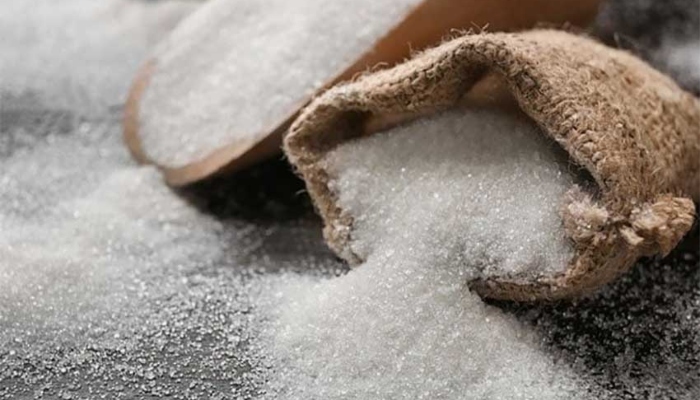
Lahore: The federal Ministry of Industries and Production has reportedly allowed the export of sugar that was imported at a higher cost, raising concerns over potential losses to the national exchequer.

Sources within the ministry said the government has yet to approve the export of around 250,000 tonnes of locally produced sugar, which is available at a comparatively lower cost. Instead, authorities have decided to permit the export of only 100,000 tonnes, a move that industry sources have described as disappointing.

According to the sources, the decision could create further difficulties for the sugar industry and affect the procurement of sugarcane from farmers. Sugar mill owners have already warned the Ministry of Industries and Production that they may face difficulties purchasing the upcoming sugarcane crop under the current circumstances.

The sources expressed concern that allowing the export of expensive imported sugar while holding back cheaper locally produced stocks could increase financial pressure on the country. They also questioned the rationale behind exporting only 100,000 tonnes when a significantly larger quantity of locally produced sugar remains available.

Sugar industry stakeholders have warned that the situation could affect the entire supply chain, particularly farmers who depend on sugar mills for the purchase of their sugarcane crop. If mills struggle to sell their existing stocks or face financial constraints, they may find it difficult to make timely purchases from growers.

The development has also raised questions about the government’s sugar management policy, particularly its approach to balancing domestic availability, imports, exports and the interests of farmers and millers. Industry representatives are now seeking a clearer policy to prevent disruptions in sugarcane procurement and avoid further losses to the national economy.


Similar Posts

  • Huge Drug Bust: Police Seize 1 Ton of Crystal Meth

    BANGKOK – Metropolitan police recently stopped a massive drug smuggling operation headed straight for the capital city. Officers successfully seized exactly one ton of crystal methamphetamine during a highly coordinated roadside sting operation. The bust safely took place at a busy gas station in Chai Nat province on August 8. The smuggling ring tried to […]

  • | |

    PTI chairman barrister Gohar Says Noreen Niazi’s…

    Rawalpindi: Pakistan Tehreek-e-Insaf (PTI) Chairman Barrister Gohar Ali Khan has clarified that the recent statement made by Noreen Niazi regarding the “Battle of Truth” (Maarka-e-Haq) does not reflect the official policy of the party. Speaking to the media in Rawalpindi, Barrister Gohar emphasized that the remarks were Noreen Niazi’s personal views and should not be interpreted as PTI’s official position. During the media interaction, Barrister Gohar said that every Pakistani takes pride in the country’s success in what he described as the Maarka-e-Haq. He stressed that Pakistan’s defense is strong and capable of protecting the country from any external threat. According to him, the nation remains united when it comes to safeguarding its sovereignty, and no enemy has the ability to defeat Pakistan. Addressing questions about Noreen Niazi’s comments, Barrister Gohar explained that, according to the information available to him, the interview in question had actually been recorded around three months ago. He stated that the remarks expressed during that interview represented Noreen Niazi’s personal opinion and not the official stance of Pakistan Tehreek-e-Insaf. He reiterated that the party’s policies are determined through its official leadership and decision-making process, not through individual statements. The PTI chairman further said that the party has consistently been trying to improve the overall political atmosphere in the country. He noted that political leaders should avoid reopening old controversies and instead focus on reducing tensions. According to Barrister Gohar, this is a time for restraint and reconciliation rather than confrontation. He remarked that everyone should avoid revisiting past disputes if the goal is to create a more stable political environment. Speaking about the current political climate, Barrister Gohar also referred to comments made by Jamiat Ulema-e-Islam (F) chief Maulana Fazlur Rehman. He pointed out that the senior politician had already clarified his earlier remarks. Barrister Gohar observed that, during emotional speeches, public figures may sometimes say things that they later need to explain. However, he added that if a statement is incorrect, it should be acknowledged as such regardless of who made it. He further emphasized that certain sensitive matters should not be discussed publicly if doing so could worsen the political situation. According to him, some issues are better left untouched in order to help the country move toward greater political stability and national harmony. He urged political leaders and stakeholders to exercise caution in their public statements and avoid comments that could increase tensions. Barrister Gohar also spoke about PTI’s position regarding the upcoming Azad Jammu and Kashmir (AJK) elections. He stated that, at present, the party’s official decision is to boycott the elections. However, he indicated that the decision is not necessarily final and could be reviewed if political conditions improve in the future. He revealed that there had been internal discussions within the party about reconsidering the boycott. According to Barrister Gohar, some members believed that PTI should revisit its decision and participate in the elections. Nevertheless, he explained that the party leadership could not reach a consensus on changing the existing policy. As a result, the decision to boycott the AJK elections remains in place for now. The PTI chairman concluded by reiterating the party’s commitment to promoting political stability and constructive dialogue. He stressed that while differences of opinion are a normal part of politics, all political actors should prioritize national unity and work toward creating an environment that supports peace, democratic processes, and institutional stability.

  • | | | | |

    Trump drops major statement on Iran: what China an…

    Washington: U.S. President Donald Trump has said he does not believe that China or Russia are supplying weapons to Iran, citing assurances he received from the leaders of both countries. Speaking to reporters, Trump said Chinese President Xi Jinping had assured him that Beijing would not provide weapons to Iran under any circumstances. According to Trump, the Chinese leader also stated that the policy applies to Chinese companies, preventing them from supplying arms to Tehran. Trump said he trusts President Xi’s commitment in the context of U.S.-China relations and believes China is adhering to that position. The U.S. president also said Russian President Vladimir Putin had informed him that Moscow would not sell weapons to Iran. Trump’s remarks come amid continued international attention on Iran’s military capabilities and regional security. However, he did not provide additional details or evidence to support the statements, nor did he elaborate on whether the assurances were part of recent diplomatic discussions. The comments reflect Washington’s ongoing focus on limiting the transfer of advanced military equipment to Iran as regional tensions and global security concerns continue to evolve.

  • |

    Mustafa Kamal calls for more administrative units

    MULTAN:Federal Minister for Health Mustafa Kamal has once again called for the creation of additional administrative units in Pakistan, arguing that the country’s existing governance structure is no longer capable of effectively addressing its growing challenges. Speaking at a ceremony in Multan, Kamal said Pakistan currently operates through a federal government and four provinces, but the system needs major restructuring to improve governance and service delivery. He said Pakistan is larger than around 180 countries in terms of population and administrative needs, making it necessary to consider creating more administrative units to ensure better management and development. Reflecting on his political career, Kamal said he became Karachi’s mayor 21 years ago and was elected as a member of the provincial assembly 12 years ago. He added that political leaders often remain caught up in a continuous race without fully understanding whether the existing system is delivering the desired results. The federal minister also focused on the country’s healthcare challenges, saying that simply constructing more hospitals would not solve Pakistan’s health crisis. He pointed out that hospitals across the country remain overcrowded, while the government must focus more on preventive healthcare and improving public health infrastructure. Kamal said effective healthcare begins with measures such as ensuring adequate gaps between births and completing childhood vaccination schedules. He warned that a large number of children remain vulnerable to waterborne diseases due to inadequate sanitation and unsafe water supplies. He also highlighted the lack of an effective sewage treatment system in Pakistan, saying poor sanitation continues to contribute to the spread of preventable diseases. He stressed the need to address the root causes of health problems instead of relying solely on hospitals and medicines after people fall ill. Discussing population growth and maternal health, Kamal said Pakistan’s birth rate stands at around 3.5 percent, while the population growth rate is approximately 2.5 percent. He claimed that around 11,000 mothers die every year in the country, describing the situation as a serious public health concern. The minister said Pakistan also faces a major shortage of trained nurses. According to him, the country needs around 900,000 nurses, while international demand for Pakistani-trained nursing professionals could reach 2.5 million. He said the government should focus on developing professional skills so that trained workers can contribute to the national economy and earn valuable foreign exchange for the country. Kamal also addressed concerns surrounding medicine prices and availability. He clarified that the federal health minister alone does not have the authority to decide whether medicine prices should increase or decrease. He said the Drug Regulatory Authority of Pakistan (DRAP) has deregulated the prices of certain medicines, while decisions regarding price reductions fall within the broader domain of the federal cabinet. He added that a cabinet committee is currently examining the issue of reducing medicine prices. The minister further pointed out that although Pakistan manufactures a large number of medicines locally, the pharmaceutical industry still relies heavily on imported active pharmaceutical ingredients (APIs). He said shortages of some medicines have also created difficulties for patients, with certain drugs disappearing from the regular market and becoming available through agents at significantly higher prices. Kamal’s remarks came a day after Interior Minister Mohsin Naqvi also called for the creation of new administrative units, describing such reforms as essential for the country’s development. Addressing an event in Islamabad, Naqvi reportedly said the existing system had failed to deliver effectively and argued that new administrative units or provinces could provide a way forward. The repeated calls from senior federal ministers for additional administrative units have renewed debate over whether Pakistan needs a major restructuring of its administrative and governance framework to improve public service delivery, strengthen local administration and address the growing demands of its expanding population.

  • | |

    Father challenges medical report in Mir Raza case

    The mystery surrounding the death of young businessman Mir Raza Ali Khan remains unresolved as investigators continue to examine evidence, while the victim’s family insists he was murdered and has raised questions about the findings of the preliminary medical report. Mir Raza’s father, Hussain Raza, has rejected the possibility of suicide. He claimed his son was killed and alleged that attempts were being made to present the case as a suicide. He expressed concern over the medical report, saying it mentioned only the gunshot injury and did not describe what he believes were signs of physical violence on his son’s body. According to the father, Mir Raza had injuries on his face, hands and other parts of his body. He also claimed his son was shot from behind and questioned why the report did not include details of the alleged injuries. He further asked investigators to explain what happened during the period between his son’s disappearance on July 28 and the recovery of his body the following day. He said Mir Raza had spoken to his sister before leaving home and appeared to be in good spirits. The taxi driver who transported him also reportedly told investigators that Mir Raza seemed relaxed and was listening to music during the journey. The family has appealed to senior authorities for a transparent and impartial investigation. The investigation has made further progress with the recovery of another CCTV recording showing Mir Raza’s movements before his death. The footage reportedly captures him taking his mobile phone out of his pocket and throwing it away. Investigators are conducting forensic and technical analysis of the video to determine its significance. Police said the preliminary medical examination found that Mir Raza died from a gunshot wound to the chest. However, the firearm used in the incident and the spent bullet casing have not yet been recovered, leaving investigators without key physical evidence. As part of the ongoing investigation, police are also looking into Mir Raza’s financial dealings. Initial inquiries suggest he had borrowed money from several individuals. Authorities are preparing a list of those people and are questioning them to determine whether any financial dispute may have contributed to the incident. Investigators have so far included 12 individuals in the inquiry and recorded statements from 15 people connected to the case. Earlier CCTV footage showed Mir Raza leaving his shop in Bahadurabad during the early hours after taking a security guard’s pistol from a drawer. He later returned home, where he left behind his car, smartwatch, house keys and Rs39,000 before booking an online taxi. Further footage showed him traveling alone to Gulistan-e-Jauhar. Investigators believe he switched off his mobile phone near Johar Mor before reaching Block 2, where he was last traced.

  • Abrar Hussain Tanoli honoured with Tamgha-e-Imtiaz for Hajj services

    RIYADH: Abrar Hussain Tanoli, a Pakistani financial professional based in Saudi Arabia and a native of Mansehra district in Khyber Pakhtunkhwa, has been honoured with the prestigious Tamgha-e-Imtiaz in recognition of his decade-long services to Pakistani pilgrims and the wider Pakistani community in the Kingdom. Tanoli was among the Pakistani nationals honoured with the prestigious civil award for outstanding social and community services in Saudi Arabia. The award was presented at a special ceremony organised by the Embassy of Pakistan in Riyadh. Pakistan’s Ambassador to Saudi Arabia, Ahmed Farooq, presented the award on behalf of President Asif Ali Zardari, recognising Tanoli’s sustained contribution to Hajj volunteerism, community welfare, healthcare initiatives and emergency assistance. Tanoli is a founding member and Riyadh Coordinator of the Pakistan Hajj Volunteers Group (PHVG), an organisation that has been assisting pilgrims during Hajj since 2011. Over the years, he has played a key role in mobilising, coordinating and training Pakistani volunteers from different parts of Saudi Arabia to facilitate pilgrims during the annual pilgrimage. The volunteers provide assistance to pilgrims in a range of situations, including guiding them to their designated tents, helping wheelchair users, facilitating movement around Hajj facilities and assisting sick and injured pilgrims in performing Tawaaf-e-Ziyarah while receiving treatment at Pakistan Medical Mission facilities. PHVG works in coordination with the Pakistani Hajj Mission, Embassy of Pakistan and relevant Saudi authorities. In 2024, the organisation mobilised and trained more than 1,500 volunteers to serve pilgrims, with their services also receiving recognition from Saudi authorities. Speaking at the ceremony, Ambassador Ahmed Farooq highlighted the demanding nature of the volunteers’ responsibilities during Hajj. He said the volunteers remain engaged around the clock during the five days of Hajj and continue serving pilgrims despite the challenging weather and extreme heat. He said volunteers assist pilgrims who require medical attention, become separated from their groups or need wheelchairs and other support. Their services, he noted, are not limited to Pakistani pilgrims and are available to anyone who requires assistance. The ambassador said the Saudi Ministry of Hajj and Umrah also facilitates the volunteers by providing information about pilgrims requiring assistance, reflecting the importance attached to their services during Hajj. “We are very proud of all three of you for the work that you have done and for the good way that you have carried out these services,” Ambassador Farooq said. For Abrar Tanoli, the Tamgha-e-Imtiaz represents recognition not only of his Hajj volunteerism but also of a broader record of community service spanning more than a decade. Alongside his Hajj-related activities, Tanoli has been involved in organising free medical camps for the Pakistani community in Saudi Arabia in collaboration with the Pakistan Doctors Group and the Embassy of Pakistan. These initiatives have helped provide healthcare services to members of the community, particularly those requiring support. He is also a founding member of the Al-Bir Group, which provides assistance to Pakistanis facing financial difficulties and other social challenges. Tanoli’s community welfare activities became particularly significant during the COVID-19 pandemic. Through PHVG, he participated in efforts to support Pakistani families stranded or facing difficulties during the crisis. Volunteers helped arrange and distribute food, medicines and other essential supplies to families struggling to meet their basic needs. His welfare work has also extended to Pakistan, where he continues to support underprivileged families, deserving individuals and communities facing financial hardship. The recognition has been warmly welcomed by members of the Pakistani community, who described the award as an honour for Tanoli, his family and his native area in Mansehra. Messages of congratulations have highlighted his services to Pakistani pilgrims and the wider community in Saudi Arabia. The award is also being seen as recognition of the spirit of volunteerism among overseas Pakistanis who devote their time and resources to serving fellow citizens and pilgrims. Tanoli’s journey reflects a sustained commitment to public service alongside his professional career in the financial sector. From assisting Hajj pilgrims and supporting medical camps to providing emergency relief and helping families facing financial difficulties, his community work has remained an important part of his contribution to Pakistanis in Saudi Arabia and at home. The Tamgha-e-Imtiaz therefore marks a significant national recognition of Abrar Hussain Tanoli’s long-standing services to pilgrims, community welfare and humanitarian assistance.

Leave a Reply

Your email address will not be published. Required fields are marked *