fazlur rehman urges
| |

Fazlur Rehman urges dialogue to end AJK crisis


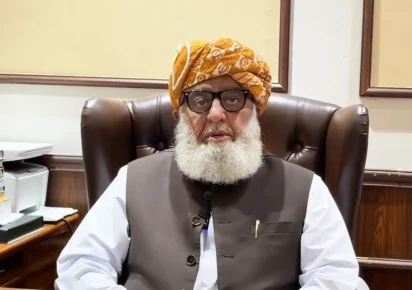
Jamiat Ulema-e-Islam-Fazl (JUI-F) chief Maulana Fazlur Rehman has urged the federal government to address the ongoing unrest in Azad Jammu and Kashmir (AJK) through dialogue, stressing that reconciliation is the only path to a lasting solution.

In a video message shared on the party’s X account on Saturday, Fazlur Rehman called on the government and state institutions to recognise the seriousness of the situation instead of responding with force. He said authorities should work to restore peace and stability rather than allowing further bloodshed.

“The government and state institutions must understand the gravity of the crisis. Instead of turning our homeland into a place of violence, they should focus on healing divisions through meaningful dialogue,” he said.

His remarks came after violent clashes were reported in Rawalakot between law enforcement personnel and protesters affiliated with the banned Jammu and Kashmir Awami Action Committee (JAAC). Reports circulating on social media claimed multiple casualties and injuries, with both security officials and the JAAC alleging loss of lives.

Fazlur Rehman said the JAAC’s sit-in had continued for more than two months. He recalled that after tensions intensified on June 5, the committee had formally requested him to mediate between the protesters and the government. According to him, he accepted the role and remained in contact with both sides through JUI-F AJK chief Maulana Saeed Yousaf Khan and Sardar Kamran Azam Khan.

The JUI-F chief expressed concern over the situation faced by residents of AJK, saying people expect their government to protect them rather than leave them living in fear. He alleged that women, children and families had endured months of insecurity while the authorities failed to address their concerns.

He further claimed that force had been used against unarmed protesters and alleged that, according to the information available to him, the death toll had reached around 80 people. However, no official confirmation has been issued regarding that figure.

Despite the violence, Fazlur Rehman appealed to the JAAC leadership and protesters to remain peaceful and avoid any action that could worsen the situation. He urged them to allow more time for mediation efforts, expressing hope that a fair and lasting political settlement could still be achieved.

He also criticised the government’s approach, claiming that although the protesters had shown confidence in his mediation efforts, the authorities had not taken the initiative seriously and had instead relied on force rather than negotiations.

Warning of wider implications, Fazlur Rehman said the movement had gained support across Kashmir as well as among Pakistanis and the Kashmiri diaspora, particularly in Europe.

The recent violence has drawn condemnation from political parties and human rights organisations. The Human Rights Commission of Pakistan (HRCP) expressed deep concern over reports of deaths and injuries, stressing that maintaining law and order should never come at the expense of the right to life or the freedoms of peaceful assembly and expression. The commission called for a prompt, impartial and independent investigation into the incidents.

Opposition parties, including PTI, also demanded an independent judicial inquiry into the clashes, while other political groups criticised what they described as the excessive use of force against protesters.

The current dispute is linked to long-standing demands by the JAAC, which has been seeking constitutional and governance reforms in AJK. Among its key demands are the abolition of 12 reserved seats in the AJK Legislative Assembly allocated to Kashmiri refugees and the removal of the existing quota system. Although the government and the JAAC reached an agreement after protests last year to establish a high-level committee to review the issue of refugee seats, negotiations have since stalled. The JAAC continues to insist on abolishing the reserved seats, while the government remains opposed to the proposal.
Similar Posts

  • |

    Maulana Tariq Jamil’s yoga video sparks mixed reactions online

    Maulana Tariq Jamil, one of Pakistan’s most respected Islamic scholars, has become the center of an online debate after a video of him performing yoga exercises surfaced on social media. Widely admired for his calm demeanor and inclusive approach to religious teachings, Maulana Tariq Jamil enjoys a large following across different schools of thought in Pakistan and abroad. Over the years, he has built a reputation for promoting unity, compassion, and moral values through his lectures. In addition to his religious work, he has also ventured into business with his own brand, a move that has occasionally drawn criticism from some quarters who question the commercialization of religious personalities. The latest discussion surrounding the scholar, however, has little to do with his sermons or business activities. Instead, it centers on a recently circulated video featuring him alongside Dr. Affan Qaiser, in which he demonstrates several yoga-inspired stretching exercises. The clip quickly gained traction across social media platforms, with many viewers expressing surprise at the scholar’s flexibility. Considering his age and previous health challenges, several users praised his physical fitness and commitment to maintaining an active lifestyle. Many described the video as inspiring, saying it highlighted the importance of mobility, exercise, and healthy aging. Others, however, questioned whether the video should have been recorded and shared publicly. Some critics argued that such content was unexpected from a religious figure of Maulana Tariq Jamil’s stature, while others believed it was unnecessary to turn a private fitness session into a public spectacle. The video also prompted reactions from public figures. Among those commenting was politician Hina Parvez Butt, who voiced her disapproval of the clip, adding another layer to the discussion already unfolding online. As the debate intensified, social media users remained sharply divided. Supporters argued that the movements shown in the video were simply physical exercises aimed at improving flexibility and overall health. They maintained that stretching routines and yoga-based movements should not be viewed negatively when practiced solely for fitness purposes. Others defended the scholar by pointing out that maintaining physical health is encouraged and that there was nothing inappropriate about engaging in exercises designed to improve strength and mobility. Many also praised Maulana Tariq Jamil for staying physically active despite his advancing age. On the other hand, critics expressed discomfort with the video, saying they did not expect to see the religious scholar performing such poses. Some users felt the footage should not have been made public, while others questioned whether it aligned with the public image associated with a prominent Islamic preacher. Despite the differing opinions, the video has generated widespread discussion online, with thousands of users continuing to share their views. While some see it as a positive reminder of the importance of health and fitness, others believe the clip has crossed personal or cultural boundaries. The viral video has once again demonstrated how social media can rapidly turn everyday moments involving public figures into nationwide conversations, leaving audiences divided over interpretation, intent, and public perception.

  • | |

    Girls dominate Hyderabad Board Class X results

    HYDERABAD: Female students have secured several top positions in the Class X annual examinations conducted by the Board of Intermediate and Secondary Education Hyderabad, with the results being announced after a delay of nearly one month. The results for both Science and General groups were released late Thursday, providing students with the long-awaited outcome of their examinations. In the Science Group, Sarah, daughter of Nisar Ahmed, from Foundation Grammar High School, Tando Allahyar, claimed the top position by securing 991 marks. Aswad Amir of Government High School No 1, Matli, stood second with 986 marks, while Mukarrama Abid of St Mary’s Convent Girls Higher Secondary School, Hyderabad, secured third position with 982 marks. A total of 78,935 candidates had registered for the Science Group examinations. Of these, 77,703 students appeared. Among the candidates who took the examination, 10,799 achieved A1 grade, while 40,769 secured A grade. Another 17,248 students obtained B grade, 3,816 received C grade and 239 were placed in D grade. The board declared 4,781 candidates unsuccessful. Results of 32 students were withheld because of reported use of unfair means and other reasons. The General Group also produced strong performances by female students. Wajihullah Khan of Deaf Reach Higher Secondary School secured first position with 873 marks. Habiba from Government Girls High School, Latifabad Unit No 6, Hyderabad, secured second position with 865 marks. Her schoolmate Halima stood third with 861 marks. The General Group had 1,570 registered candidates, of whom 1,488 appeared in the examinations. Three candidates achieved A1 grade, while 332 obtained A grade. A total of 808 students secured B grade, 227 received C grade and 18 were placed in D grade.

  • | |

    UK assures swift action on Pakistani student visas

    British High Commissioner Jane Marriott has assured Pakistan that the issue of delays in student visas will be addressed. Marriott gave the assurance during a meeting with Federal Minister for Law and Justice Azam Nazeer Tarar. The meeting was held as concerns grow over delays faced by Pakistani students seeking to travel to the United Kingdom for higher education. During the meeting, Tarar raised the issue of delayed visa processing with the British envoy. He conveyed the government’s concerns over the difficulties being faced by Pakistani students. The minister said hundreds of Pakistani students could lose their academic year because of the delays. Many students require timely visa decisions to join their universities and begin their studies according to the scheduled academic calendar. Tarar stressed the importance of resolving the issue at the earliest. He said unnecessary delays could create serious academic and financial difficulties for students and their families. The British High Commissioner assured the minister that efforts would be made to address the matter. The two sides also discussed broader issues of mutual interest. They exchanged views on strengthening institutional communication and cooperation between Pakistan and the United Kingdom. The meeting highlighted the importance of maintaining effective coordination between the relevant institutions of both countries. Better institutional engagement could help resolve issues affecting students and other Pakistani citizens seeking services in the UK. The assurance comes amid concerns among Pakistani students about securing timely visas for their higher education programmes.

  • | |

    China leans on AI forecasting tools as Typhoon Dol…

    China has ramped up investment in artificial intelligence powered weather forecasting as the country works to track a rising number of natural disasters and predict extreme weather events such as powerful typhoons, intense rainfall and prolonged heatwaves tied to climate change. The country has positioned itself as a leading force in data driven meteorology, increasingly running AI systems alongside traditional forecasting methods rather than replacing them outright. As meteorologists monitored Typhoon Dolphin’s approach toward China in recent days, a newer generation of AI weather models operated in parallel with conventional forecasting systems, underscoring China’s expanding role in the broader push to improve storm prediction. Unlike standard numerical weather models, which depend on powerful supercomputers to simulate the physics of the atmosphere, AI based systems instead learn from decades of historical weather data. That approach lets them generate forecasts within seconds or minutes while using only a small fraction of the computing power traditional methods require. According to a state affiliated newspaper, some of China’s most prominent AI forecasting tools include Fengwu, built by the Shanghai AI Laboratory, Huawei’s Pangu Weather system, and Fuxi, developed at Fudan University. These models are increasingly being put through real world testing during East Asia’s intense typhoon season, a period when even modest improvements in tracking a storm’s path can help authorities plan flood responses, coordinate evacuations and manage disruptions to transportation networks. Fengwu in particular has shown strong results in predicting storm trajectories, with researchers noting that AI based systems can produce forecasts far faster than conventional models while matching or, in some cases, surpassing them on certain accuracy measures. The rapid progress in AI driven weather forecasting has sparked growing competition among technology firms, research institutions and national meteorological agencies worldwide, with China establishing itself as one of the sector’s most active players. Even so, meteorologists caution that AI tools currently serve as a complement to physics based forecasting rather than a full replacement. These systems still struggle to accurately capture sudden shifts in storm intensity, and they remain largely untested when it comes to long term climate modeling. As a result, traditional forecasting methods are expected to remain a core part of weather prediction for the foreseeable future, even as AI tools continue to mature and take on a larger role alongside them. The push toward AI assisted forecasting fits into a broader global trend, as governments and research institutions increasingly explore machine learning as a tool for anticipating the growing frequency and intensity of extreme weather linked to a changing climate.

  • | |

    Pakistan takes helm of UN disarmament conference, …

    GENEVA: Pakistan is set to assume the presidency of the United Nations Conference on Disarmament on Monday, taking on a key diplomatic role in international efforts to advance arms control and global security. Tahir Andrabi, Pakistan’s representative, has arrived in Geneva to take charge of the presidency and will chair important sessions of the Conference during his tenure. He will continue performing his responsibilities as spokesperson for Pakistan’s Ministry of Foreign Affairs alongside his new assignment. As president, Andrabi will be responsible for steering the Conference’s proceedings in an organised, balanced and consensus-driven manner. Pakistan is expected to focus on facilitating dialogue among member states and helping move discussions forward on key disarmament issues. During his tenure, Andrabi will also oversee the preparation of the Conference’s annual report, which will be presented to member states for consideration and approval. Diplomatic sources said Pakistan will subsequently engage in negotiations aimed at securing agreement on a resolution based on the annual report. The resolution is expected to be taken up by the UN General Assembly for approval in November. Pakistan’s presidency provides Islamabad with an opportunity to play a prominent role in international discussions on disarmament while promoting dialogue, consensus and multilateral cooperation on global security challenges.

  • | |

    Diesel cut brings freight fare relief

    RAWALPINDI: Goods transport and long-distance public transport operators have lowered fares following a Rs32.63-per-litre reduction in diesel prices, offering temporary relief to passengers and businesses. The Goods Transport Federation announced a 10 per cent reduction in freight charges, while fares for long-distance routes to nearby areas have been cut by 5 per cent. The fare revision, however, has not extended to all local transport. Taxis, Qingqis and motorbike rickshaws have raised their fares by another 5 per cent after petrol prices increased by Rs3 per litre. The standard stop-to-stop fare remains Rs50. Freight charges have also been reduced significantly on major routes. The cost of transporting containers and trailers from Karachi to Rawalpindi has fallen by Rs50,000, while charges for containers, trailers and heavy vehicles travelling from Karachi to Peshawar have dropped from Rs800,000 to Rs750,000. Transport federations said the reduced fares would remain in effect for only 24 hours. They warned that any increase in petroleum prices expected later in the week would result in the fare cuts being withdrawn proportionately. They further said bookings made by Thursday evening for heavy vehicles, trailers and containers operating on routes including Karachi-Peshawar, Peshawar-Lahore, Karachi and Multan could be revised if fuel prices rise, with additional charges imposed accordingly.

Leave a Reply

Your email address will not be published. Required fields are marked *