mqmp calls administrative
|

MQM-P calls for administrative units based on popu…

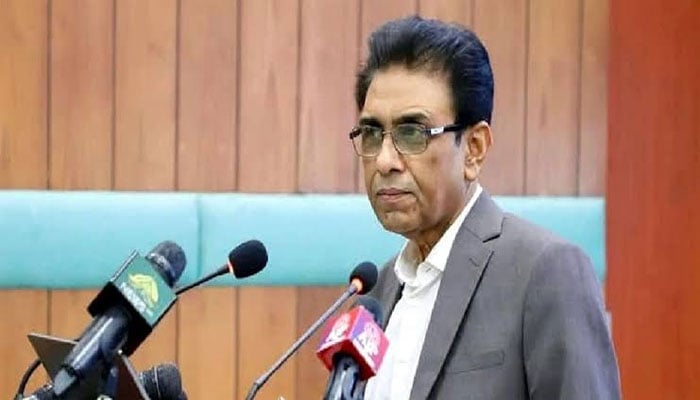
Muttahida Qaumi Movement-Pakistan (MQM-P) Chairman Dr Khalid Maqbool Siddiqui has called for the creation of new administrative units across Pakistan based on population size, arguing that the country needs a more effective system of governance to meet the needs of its growing population.

Speaking at a press conference in Karachi, Siddiqui said the business community across the country had also raised concerns similar to those voiced by his party regarding the existing administrative structure. He argued that Pakistan’s administrative system needed reforms to ensure better governance and a more balanced distribution of resources.

Siddiqui said the provincial structure had changed after the abolition of the One Unit system, but the country had failed to restore an administrative framework that fully addressed the needs of its population. He stressed that his party’s demand for new administrative units did not target the country’s territorial integrity or seek to undermine the existing provinces.

“We demand the creation of administrative units in Pakistan according to the population,” Siddiqui said, emphasizing that the objective was to improve administration and ensure that people received better public services.

Addressing concerns over the boundaries of potential new administrative units, the MQM-P chief said his party had never called for a debate over the division of Pakistan’s territory. He described Pakistan as the “motherland” and said all four provinces remained an integral part of the country.

Siddiqui maintained that the country itself was indivisible, while the Constitution allowed for changes in the administrative structure. He said the Constitution provided a mechanism for altering provincial boundaries and creating new administrative arrangements, although he believed the existing procedure had become impractical under current circumstances.

The MQM-P chairman also pointed to the significance of August 1, the beginning of Pakistan’s independence month. He said the month carried a strong ideological connection with the creation of Pakistan and should encourage political leaders to discuss reforms aimed at strengthening the country.

Siddiqui further revealed that his party had already introduced a constitutional amendment in the National Assembly to address the issue. He argued that Pakistan needed to revisit its administrative framework and consider reforms that could make governance more efficient and bring government closer to the people.

The MQM-P has repeatedly advocated the creation of additional administrative units, maintaining that a more decentralized system could improve governance, facilitate service delivery and ensure a fairer distribution of resources. The demand, however, remains a politically sensitive issue, particularly in the context of debates over provincial boundaries and autonomy.

Similar Posts

  • | | |

    Saeed Ghani rejects MQM’s demand for new provinc…

    Sindh Provincial Minister Saeed Ghani has rejected the demand for dividing Sindh and creating a new province, saying that no matter how much pressure is exerted, a new province will not be established in the province. Ghani accused the MQM of creating hatred by repeatedly raising the issue of a separate province. He said several other political parties were also opposed to dividing Sindh, while MQM leader Mustafa Kamal had himself acknowledged that people in Sukkur had rejected the idea of a new province. The provincial minister questioned the political standing of a few MQM leaders and said that even within the party, its members were not willing to sit together. Speaking about local government arrangements, Ghani said protests had previously been held against the dual local government system in Sindh. He maintained that Karachi had been given a separate system under an agreement reached with the MQM. Commenting on Jamaat-e-Islami’s protests, Ghani said the party claims to be protesting over public issues, but shutting down Karachi at multiple locations would not resolve people’s problems. He advised JI leader Hafiz Naeemur Rehman to hold protests at locations where people would respond sympathetically. Ghani also criticized demands for abolishing the levy, questioning whether making life difficult for Karachi’s residents would force Prime Minister Shehbaz Sharif to accept the protesters’ demands. He said all provinces contribute their share of revenue to the federation, adding that Sindh had also fulfilled its financial responsibilities. According to Ghani, the political and administrative circumstances in Punjab and Khyber Pakhtunkhwa are different, and the demand for a new province in Sindh remains unacceptable.

  • | | |

    Lt Gen Amir Raza promoted to four-star general

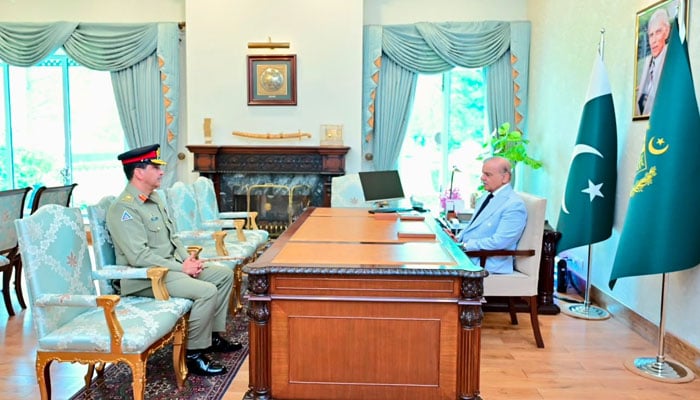
    The government has promoted Chief of General Staff Lieutenant General Amir Raza to the rank of four-star general and appointed him as Commander of the National Strategic Command. Prime Minister Shehbaz Sharif announced the promotion and new appointment, congratulating General Amir Raza, Hilal-i-Imtiaz (Military) and Sitara-i-Basalat, on taking up the senior military position. The prime minister also extended his best wishes to General Amir Raza and expressed confidence in his ability to carry out the important responsibilities associated with his new role. The promotion marks a significant step in General Amir Raza’s military career and places him in charge of a key strategic command. Prime Minister Shehbaz Sharif wished him success in fulfilling his duties and serving the country in his new capacity.

  • | |

    Wanted terrorist commander killed in Bannu operati…

    BANNU: A highly wanted terrorist commander carrying a bounty of Rs6 million has been killed during an intelligence-based operation (IBO) in Bannu, police said on Thursday. The slain militant was identified as Naseer Muhammad, alias Geedarh, according to Bannu District Police Officer (DPO) Captain (Retd.) Muhammad Furqan Bilal. The operation was jointly conducted by Bannu Police and the Counter Terrorism Department (CTD) following intelligence reports about the presence and movement of suspected terrorists in the area. Police said security teams launched targeted actions in Akbar Ali Khan Kili, Sada Khel, Sadarwan and surrounding areas under the supervision of DPO Bilal. Search and surveillance activities were also carried out during the operation. Security was strengthened in different parts of Bannu Township and areas falling within the Domel police jurisdiction. Authorities said further information about the operation and the identity and activities of the slain terrorist would be released after the operation was fully completed. The latest action is part of intensified counterterrorism operations in Bannu, where security forces have carried out several intelligence-based raids in recent weeks. On August 10, a joint operation in the Miryan area resulted in the killing of a suspected terrorist and the detention of eight others. District police, CTD, Elite Force and Pakistan Army personnel participated in that operation. According to police, the suspect killed during the August 10 operation was allegedly attempting to plant an improvised explosive device when security personnel intercepted him. Weapons and ammunition were also recovered. A similar operation was conducted in Bannu on July 20, when another suspected terrorist was killed and eight others were detained by a joint security team. The latest operation comes amid continued security concerns across Khyber-Pakhtunkhwa. The province has witnessed a series of attacks targeting police, security personnel and public infrastructure in recent months. On July 15, terrorists attacked the Miryan police station in Bannu using an explosives-laden vehicle before engaging security personnel in a prolonged gun battle. The attack left several police officers and civilians injured. Security officials have since increased surveillance and intelligence-based operations across sensitive areas of the district. Bannu and other parts of southern K-P have remained particularly vulnerable because of their proximity to the Afghan border and the continued threat posed by militant networks. The federal government has repeatedly called on Afghan authorities to prevent militant groups from using Afghan territory to plan and carry out attacks against Pakistan. The security situation has also resulted in increased operations targeting suspected militant hideouts, movement routes and support networks. Earlier incidents in Bannu included attacks on public infrastructure and attempts to damage key transport links through explosives.

  • “Azadi Kay Rang” painting competition held in Rawalpindi

    RAWALPINDI: The Punjab Council of the Arts, Rawalpindi held the prize distribution ceremony of its Independence Day painting competition, “Azadi Kay Rang,” today. Mr. Rizwan Khalil Shamsi, Chief Manager, State Bank, and Ms. Shazia Rizwan, Parliamentary Secretary for Information and Culture, Government of the Punjab, attended the ceremony as Chief Guests. The competition provided young artists with a creative platform to express their vision of independence, patriotism, and love for Pakistan through art. Addressing the gathering, Mr. Rizwan Khalil Shamsi, Chief Manager, State Bank, appreciated the enthusiasm and artistic talent displayed by the young participants. He said that creative activities of this nature provide an effective platform for young people to express their ideas and strengthen their connection with the country. He also appreciated the Punjab Council of the Arts, Rawalpindi for providing opportunities for emerging artists. Shazia Rizwan, Parliamentary Secretary for Information and Culture, Government of the Punjab, appreciated the participants for portraying the spirit of independence through their artwork. She emphasized that art and cultural activities play an important role in nurturing creativity, national awareness, and a positive outlook among the younger generation. She distributed prizes and certificates among the winning participants and congratulated all the artists. Muhammad Shakoor, Director, Punjab Council of the Arts, Rawalpindi, thanked both Chief Guests, the judges, participating artists, and guests for their presence and support. He particularly appreciated the efforts of Senior Artist Azeem Iqbal, who played a key role in organising and coordinating the painting competition. He acknowledged his dedication and valuable contribution in making the event successful and said that such efforts are essential for providing young artists with meaningful opportunities to showcase their talent. He reaffirmed the Council’s commitment to encouraging emerging artists and promoting art and cultural activities in the region.

  • | |

    Russia blasts Japan over Putin’s Kuril visit

    MOSCOW: Russia has strongly condemned recent remarks by Japanese Prime Minister Sanae Takaichi and Foreign Minister Toshimitsu Motegi concerning President Vladimir Putin’s visit to Iturup Island. Russian Foreign Ministry spokeswoman Maria Zakharova described Tokyo’s criticism as unacceptable and rejected Japan’s objections to Putin visiting the island, which Moscow considers part of Russian territory. Zakharova accused senior Japanese officials of attempting to dictate where the Russian president could travel within his own country. She said Moscow regarded the Japanese statements as politically motivated and legally invalid, arguing that Russia’s sovereignty over the southern Kuril Islands was not open to question. The dispute over the islands remains one of the most sensitive issues in Russia-Japan relations. Japan refers to the southern islands as the Northern Territories and maintains its own claim over them. Zakharova said Tokyo’s current approach reflected what she called an increasingly hostile policy towards Russia. She criticised Japan for joining Western sanctions against Moscow and for providing political, military and technical support to Ukraine. According to the Russian spokeswoman, these policies have seriously damaged bilateral relations that had been developed over decades. She also accused Japan of undermining international legal principles while attempting to lecture Moscow on international law and the future of bilateral relations. Zakharova further argued that Japan’s policies did not serve the interests of its own population or contribute to regional stability. Moscow maintains that the southern Kuril Islands became part of the Soviet Union following the Second World War and argues that their status was established through post-war agreements. The Russian official also accused Tokyo of reviving what she described as revisionist and revanchist narratives. She warned that such rhetoric could have wider consequences for peace and security across the Asia-Pacific region. Russia said the latest Japanese statements risked further damaging already strained relations between the two countries and ran counter to broader regional efforts to promote stability, cooperation and peace.

  • |

    KP launches digital transformation policy & roadmap 2030 to accelerate e-governance

    PESHAWAR: Chief Minister Khyber Pakhtunkhwa Muhammad Suhail Afridi has officially launched the Khyber Pakhtunkhwa Digital Transformation Policy and Roadmap 2030, describing it as a landmark initiative aimed at establishing transparent governance, improving public service delivery, and building a sustainable digital economy across the province. Speaking at the launch ceremony at the Chief Minister’s House in Peshawar, the chief minister said the policy is among Pakistan’s most comprehensive digital transformation frameworks and provides a long term roadmap for modernising governance through innovation, technology, and digital reforms. He said the provincial government is committed to implementing the vision of “Digital Khyber Pakhtunkhwa” and praised the Khyber Pakhtunkhwa IT Board and other stakeholders for preparing the roadmap through extensive consultations, international best practices, and future-oriented planning. The Digital Transformation Policy and Roadmap 2030 is built on five strategic pillars, nine core objectives, 32 thematic domains, and 915 strategic interventions. It includes clear implementation timelines, institutional responsibilities, and a comprehensive monitoring framework to ensure effective and sustainable execution. The chief minister said the introduction of paperless governance and digital reforms would significantly improve transparency, accountability, efficiency, and service delivery. He added that reducing human intervention in administrative processes would strengthen merit, transparency, and accountability. Under the roadmap, public services will be digitised in phases and made citizen centric, enabling people to access government services and information through a single digital platform. The initiative is also expected to reduce unnecessary visits to government offices, particularly benefiting residents of remote areas. Highlighting the importance of artificial intelligence and emerging technologies, Afridi said the government would equip more than 100,000 young people with AI and advanced digital skills, creating new opportunities in employment, freelancing, entrepreneurship, and investment while strengthening the provincial economy. He added that digitisation would not only improve governance but also reduce government expenditure, ensure more efficient use of public resources, minimise paper consumption, and contribute to environmental protection through greener administrative practices. Referring to the province’s fiscal performance, the chief minister said the government collected Rs150 billion in revenue during the previous fiscal year against a target of Rs129 billion, without imposing any new taxes. For the current fiscal year, the revenue target has been set at Rs180 billion, with expectations of reaching Rs200 billion through improved governance and financial management. During a detailed briefing, officials informed participants that the policy also includes measures to promote green ICT procurement, environmentally sustainable digital infrastructure, carbon footprint reduction, and the establishment of a carbon credit registry to support Khyber Pakhtunkhwa’s transition towards a modern and environmentally responsible digital economy. In line with the policy’s digital-first approach, the roadmap has not been issued as a printed publication. Instead, all policy documents have been made available through a QR code, demonstrating the government’s commitment to digital accessibility and paperless governance.

Leave a Reply

Your email address will not be published. Required fields are marked *