openai takes meta
| |

FBI arrests Saudi OpenAI engineer over covert recording device, DOJ says

US federal agents arrested a Saudi national who was an OpenAI engineer and charged him with installing a hidden audio recording device in an executive conference room at the AI company, the Justice Department said on Tuesday, October 13.

The case highlights growing security concerns around sensitive AI research as companies and governments compete fiercely for the talent and technology that could confer economic and strategic advantages.

Abdulrahman Alfozan, 35, had worked as an engineer at OpenAI since July 2025, the Justice Department said in a statement. An email sent to an address associated with that name did not elicit a response, and it was not immediately clear who his lawyer was.

OpenAI discovered the recording device plugged into a USB port on the back of a television in an executive conference room at one of its San Francisco buildings on September 30, according to the department.

The thumb-sized device, which had a microphone and could connect to a camera, was concealed in toilet paper, according to an FBI complaint. It was installed on or about September 28, while its stored data was encrypted and inaccessible. Investigators later found a similar customized device in Alfozan’s personal bag.

OpenAI said in a post on X that it used its internal AI models to identify the person responsible for planting the device and trace its origins.

The company said it had evidence that the employee intended to place additional recording devices in sensitive areas of its offices to secretly record meetings.

“At this time, we have no indications of this individual inappropriately accessing or exfiltrating model weights, source code, or customer data. The employee was terminated,” the company said.

OpenAI referred the matter to the FBI, which is continuing to investigate. The Saudi embassy in the United States did not immediately respond to a Reuters request for comment.

“Abdulrahman Alfozan allegedly concealed a covert recording device inside his employer’s executive conference room to secretly capture sensitive communications about the company’s super intelligence technology,” FBI Director Kash Patel said in a statement.

Alfozan also used an AI productivity agent to seek information about meeting-room calendars and capabilities for about a month through September 16, according to the FBI complaint. He has been a legal permanent resident of the US since September 2020.

If convicted, Alfozan faces up to five years in prison, a $250,000 fine and three years of supervised release.

A LinkedIn profile showed that Alfozan studied at the Massachusetts Institute of Technology and the University of California, Berkeley. He previously worked at Meta and Microsoft, it said.

Reuters could not independently verify the details mentioned in his LinkedIn profile.

Separately, the Information reported that OpenAI was in early talks to acquire Trail of Bits, a startup that identifies and fixes vulnerabilities in open-source software. The talks were ongoing and could fall apart, the report said, citing people familiar with the matter.

OpenAI and Trail of Bits did not immediately respond to Reuters requests for comment.

OpenAI said on Friday it fired three researchers after an investigation found they had violated company policies on handling sensitive information.

The researchers, Jasmine Wang, Tomek Korbak and Mikita Balesni, had published a letter detailing the circumstances of their dismissal and arguing that the abrupt firings could create uncertainty among employees and undermine a culture in which researchers could raise safety concerns. – Rappler.com
Similar Posts

  • |

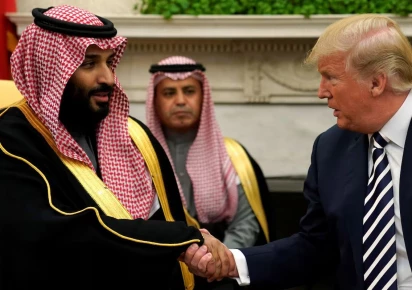
    Trump approves landmark US-Saudi nuclear pact

    US President Donald Trump has approved a landmark civilian nuclear agreement with Saudi Arabia, marking a major step in expanding strategic cooperation between the two countries. The proposed deal is expected to remain in effect for 30 years and is valued at tens of billions of dollars. The agreement is designed to support the development of Saudi Arabia’s civilian nuclear energy program while giving American companies a leading role in building the kingdom’s nuclear infrastructure. It is expected to create significant investment opportunities for US firms and strengthen long-term energy cooperation between Washington and Riyadh. Under the proposed framework, American companies could participate in constructing nuclear facilities across Saudi Arabia. The agreement also allows for the possibility of building a uranium enrichment plant in the kingdom if future joint studies by both governments determine that such a project is necessary. US officials say the deal will enable Washington to remain closely involved in the development of Saudi Arabia’s nuclear program. They believe this cooperation will help ensure that the kingdom’s nuclear activities remain focused on peaceful civilian purposes. The Trump administration is expected to submit the agreement to the US Congress in the coming days. The pact is being introduced under Section 123 of the US Atomic Energy Act of 1954, which provides the legal framework for civilian nuclear cooperation between the United States and foreign countries. Once submitted, Congress will have about 90 days to review the agreement. If lawmakers do not reject it during the review period, the agreement will automatically enter into force. Blocking the deal would require Congress to pass a joint resolution with enough votes to override a possible presidential veto. According to officials familiar with the proposal, the agreement does not include the “Gold Standard,” a condition that permanently bars partner countries from enriching uranium or reprocessing spent nuclear fuel. These activities can potentially be used in the production of nuclear weapons. The proposed agreement also reportedly does not include the International Atomic Energy Agency’s Additional Protocol. This protocol allows international inspectors to conduct broader inspections and monitor undeclared nuclear facilities. Its absence has raised concerns among some non-proliferation experts and lawmakers. US officials, however, insist that the agreement contains strong safeguards required under American law. They stress that the deal does not obligate the United States to transfer sensitive uranium enrichment technology or nuclear fuel cycle capabilities to Saudi Arabia. Instead, it establishes a legal pathway for future civilian cooperation while requiring separate approvals for any advanced technology transfers. The agreement follows earlier discussions between senior US and Saudi officials, who signed a preliminary framework last year to expand cooperation in the peaceful use of nuclear energy. The proposal has generated debate in Washington. Several Democratic lawmakers, along with some Republicans, have argued that stronger safeguards should be included before the agreement is approved. They believe stricter restrictions are necessary to reduce the risk of nuclear weapons proliferation in the Middle East. Saudi Arabia has repeatedly stated that its nuclear program is intended to meet growing energy demands and diversify the country’s energy resources. However, Crown Prince Mohammed bin Salman has previously said that if Iran were to acquire a nuclear weapon, Saudi Arabia would also seek similar capabilities. His remarks have fueled international concerns about a possible regional nuclear arms race.

  • |

    Cuba plunges into darkness as national electric grid collapses

    Cuba’s state-owned grid operator, Union Electrica de Cuba, announced that the national electricity system collapsed late on Sunday night, leaving approximately 10 million residents without power. The widespread outage marks the fourth major blackout to hit the country in recent weeks following three similar grid failures recorded throughout July. The worsening energy crisis is driven by severe fuel shortages, which have left the nation’s ageing power generation facilities unable to meet basic electrical demand. Sanctions and geopolitical shifts have severely restricted the island’s ability to import crude oil. Following the ouster of Venezuelan President Nicolas Maduro in January, a US-imposed oil blockade cut off Cuba’s primary source of imported fuel, while alternative shipments from Mexico have also stopped under pressure from Washington. To mitigate the escalating power supply emergency, the Cuban government has initiated unprecedented reforms by allowing private businesses and foreign-backed entities into its domestic wholesale fuel market.

  • |

    MH370 families renew search for answers as Beijing court hears appeal

    Twelve years after Malaysia Airlines Flight MH370 disappeared without a trace, relatives of Chinese passengers returned to a Beijing court seeking answers they say they have been denied for more than a decade. The families insist that financial compensation alone cannot resolve their pain and are urging the court to focus on establishing the truth behind one of aviation’s greatest unsolved mysteries. The appeal comes after a Beijing court ruled in December that Malaysia Airlines should pay compensation of 2.9 million yuan to each of eight Chinese families. While the ruling acknowledged their loss, two families challenged the decision, arguing that it failed to address the airline’s responsibility or explain what happened to the aircraft and the 239 people on board. Flight MH370, a Boeing 777 travelling from Kuala Lumpur to Beijing on March 8, 2014, disappeared from radar with 239 passengers and crew members. Nearly two thirds of those on board were Chinese nationals. Despite years of international search operations across the Indian Ocean, investigators have never located the aircraft’s main wreckage or recovered its flight recorders, leaving the fate of those on board unknown. The latest court hearing in Beijing was held behind closed doors, but family members gathered outside to express their frustration. Li Eryou, whose son was among the passengers, said the original court ruling left him feeling insulted because it focused only on financial compensation while ignoring the deeper questions surrounding the disappearance. Li said no one had apologized to the families during the past 12 years and argued that the case deserved to be treated as an international tragedy rather than a routine legal dispute. He believes the compensation awarded by the lower court does not reflect the seriousness of the disaster or the emotional suffering experienced by relatives who continue to live without closure. Over the years, aviation experts have proposed several possible explanations for the disappearance. Theories have included deliberate actions by the pilot, hijacking, a missile strike or a technical failure. Another widely discussed possibility suggests that a fire involving electronic equipment may have filled the cabin with smoke, causing everyone on board to lose consciousness before the aircraft continued flying on autopilot until it ran out of fuel and crashed into the Indian Ocean. However, none of these theories has been confirmed because investigators have never recovered enough evidence to determine exactly what happened. The absence of definitive findings has continued to fuel uncertainty and speculation, leaving many families convinced that important questions remain unanswered. Jiang Hui, whose mother was on the missing aircraft, said the appeal is not primarily about receiving more money. Instead, he said the families want the court to establish the facts surrounding the case and examine whether Malaysia Airlines responded appropriately after the aircraft disappeared. According to Jiang, determining responsibility and uncovering the truth are far more important than the compensation itself. People from 14 different countries were on board Flight MH370, including 50 Malaysian passengers and crew members. While legal proceedings continue in China, there are currently no similar cases pending against the airline in Malaysia. Last month, the Malaysian government announced that the search for MH370 would continue until June next year. The renewed operation is being carried out by private exploration company Ocean Infinity, which has previously led several unsuccessful search missions in the southern Indian Ocean. Although earlier efforts failed to locate the aircraft, relatives remain hopeful that new technology and expanded search areas could finally provide long awaited answers. Jiang welcomed Malaysia’s decision to extend the search and urged authorities to allow families to organize their own independent search missions alongside official efforts. For many relatives, discovering what happened to Flight MH370 remains their greatest priority, believing that only the truth can finally bring closure after more than a decade of uncertainty.

Leave a Reply

Your email address will not be published. Required fields are marked *