gillian anderson makes
| |

Gillian Anderson makes shocking confession about h…

Gillian Anderson has opened up about a deeply personal part of her past, revealing that one of her first relationships was with an older girl during her high school years.

The X-Files star made the candid admission during a recent interview with The Sunday Times. Anderson, 58, reflected on her teenage years and explained that the relationship felt very different from the romantic experiences she would have later in life.

According to Anderson, the relationship was “secretive and illicit” and something the two girls felt they had to hide. She also revealed that a boyfriend eventually discovered the relationship and ended their romance because of it. (Page Six⁠)

At the time, Anderson said she did not identify herself as gay. She had already dated boys, and she explained that she did not have the language to fully understand or describe what she was experiencing.

Her comments offer a glimpse into how Anderson’s understanding of her sexuality developed over time. She has previously spoken publicly about relationships with women, but her latest interview provides more detail about one of her earliest experiences.

Anderson also reflected on her later relationships with women. She explained that, when she was younger, she did not necessarily imagine those relationships becoming lifelong partnerships. Her perspective has since evolved.

Today, Anderson says she does not believe the gender of a person should determine whether they can be considered a life partner. She explained that the person she currently considers her life partner happens to be male, but she could feel the same way about a woman. (The Times⁠)

The actress has been linked to The Crown creator Peter Morgan since 2016, although the pair have generally kept their relationship private. Anderson has also been married twice and has three children. (The Times⁠)

Her openness about relationships comes at a time when sexuality and identity are also central themes in some of her recent work. Anderson stars in Teenage Sex and Death at Camp Miasma, a film that explores sexuality, identity and complicated relationships.

For Anderson, however, the revelation is not simply about her teenage romance. It is about looking back at a younger version of herself and recognizing that she did not always have the words to understand her feelings.

Her latest comments have given fans a rare glimpse into her personal journey while showing how her views on love and relationships have continued to evolve.

Similar Posts

  • | |

    Centre, Sindh join hands to tackle marine pollutio…

    ISLAMABAD: The federal government and the Sindh administration have agreed to launch a coordinated campaign to combat marine pollution, safeguard coastal ecosystems, and promote the sustainable growth of Pakistan’s blue economy. The decision was reached during a meeting between Federal Minister for Maritime Affairs Muhammad Junaid Anwar Chaudhry and Sindh Governor Kamran Tessori’s successor, Governor Nehal Hashmi, where both sides reviewed the growing environmental challenges facing the country’s coastline and discussed their impact on marine biodiversity, fisheries, coastal communities, and critical infrastructure. Speaking on the occasion, the maritime affairs minister said marine pollution had evolved into a major environmental, economic, and public health challenge. He noted that pollution was not only damaging coastal ecosystems but was also threatening livelihoods and economic activities dependent on marine resources. The minister said the Ministry of Maritime Affairs, through its Marine Pollution Control Board, was already implementing measures to address the issue and proposed a joint meeting with the Sindh government and relevant provincial departments to develop a comprehensive response. He identified the discharge of untreated sewage into the sea as one of the most serious threats to Pakistan’s marine environment, warning that the continuous release of wastewater was harming mangrove forests, fish habitats, coral ecosystems, and other sensitive coastal resources. Emphasizing the importance of environmental conservation, he said protecting marine ecosystems was essential for ensuring the long-term sustainability of the country’s blue economy. Governor Nehal Hashmi described marine pollution as a growing public health concern, particularly for residents of Karachi’s coastal communities, who face increasing health risks due to contaminated seawater. He stressed the need for stronger coordination among federal, provincial, and local authorities to improve wastewater management and prevent untreated sewage from reaching the sea. The meeting concluded with both sides agreeing to strengthen institutional coordination and jointly formulate long-term strategies aimed at reducing marine pollution, preserving coastal ecosystems, and supporting sustainable economic development through a healthier marine environment.

  • |

    EU calls emergency meeting following mass migrant crossings into Ceuta

    The European Union has convened an emergency meeting after 22 member states issued a joint letter demanding coordinated action to strengthen the bloc’s external borders following the arrival of 60,000 migrants in Spain’s North African enclave of Ceuta. The influx has triggered severe political friction within the EU, leading Italy, Finland, and Denmark to suspend or question passport-free Schengen travel arrangements with Spain. Spanish Prime Minister Pedro Sánchez condemned the unilateral measures as unlawful and selfish, maintaining that border control was fully restored within 48 hours and preventing onward movement into continental Europe. EU officials confirmed the death toll from the crossing attempt has risen to at least 67 while the vast majority of individuals who entered the enclave have since returned to Morocco. The joint letter addressed to EU leadership stresses that uncoordinated responses risk creating a perception that illegal entry into the bloc is possible, which would encourage further crossing attempts across member states. In response to the crisis, Spanish authorities have installed floating security barriers off the Ceuta coastline while working alongside international partners to secure the border perimeter.

  • |

    China missile test deepens pacific’s struggle fo…

    SUVA: A Chinese ballistic-missile test in the Pacific has exposed a growing dilemma for the region’s small island nations: how can they preserve their vision of an “Ocean of Peace” while increasingly finding themselves caught between the military ambitions of major powers? China’s July missile launch, its first known ballistic-missile test into the Pacific since September 2024, has intensified concerns about the region’s rapid militarisation. The test came just hours after Fiji signed a major defence agreement with Australia, its first-ever military alliance. The timing highlighted the competing security interests shaping the Pacific, where the United States and China are increasingly contesting influence. Yet despite widespread concern among Pacific leaders, the region failed to agree on a joint statement condemning the Chinese missile test during a meeting of foreign ministers in Suva last week. Papua New Guinea Foreign Minister Justin Tkatchenko described the launch as “totally inappropriate”, saying that while China remained a close friend and partner of Papua New Guinea, the missile test was not helpful. Beijing had informed Papua New Guinea about the launch beforehand, Tkatchenko said, but did not provide details about where the missile would land. China defended the exercise at the time. Foreign Ministry spokesperson Mao Ning said the test had been conducted safely and urged other countries not to “over-interpret” the event. Pacific caught between major powers The missile launch was the latest in a series of military developments that have transformed the Pacific into an increasingly contested strategic space. Chinese naval deployments and live-fire exercises, including drills in the Tasman Sea, have become more visible. At the same time, US allies have expanded military exercises around Guam and Hawaii, while Washington maintains major military facilities and forces across Hawaii, Guam and the Marshall Islands. For Pacific island governments, the growing military activity creates an uncomfortable contradiction. Many have repeatedly insisted that their region should not become another battleground for global power competition. In September 2025, Pacific leaders endorsed the Ocean of Peace Declaration, pledging to protect the region and strengthen international peace and security. The initiative was intended to put Pacific countries themselves at the centre of discussions about their security rather than allowing outside powers to define the region’s strategic priorities. David Peebles of the Australian National University’s Pacific Security College said Pacific nations had historically resisted security agendas imposed by larger countries. But the growing number of defence agreements is now testing that principle. Defence deals bring benefits — and fears For some Pacific governments, security partnerships offer practical advantages. They can provide surveillance against illegal fishing, disaster-response capabilities, policing assistance, military equipment and training. Australia’s new defence agreement with Fiji, known as the Ocean of Peace Alliance, reflects that approach. But critics fear that a growing network of bilateral security arrangements could gradually draw Pacific nations deeper into the strategic competition between China and the United States. Tuvalu’s permanent foreign secretary, Pasuna Tuaga, speaking in a personal capacity, expressed concern over increasing militarisation, including security arrangements such as the AUKUS partnership between Australia, Britain and the United States. The concern is not simply about military exercises or missiles. Pacific governments also worry that agreements could eventually influence how their territory, waters and critical infrastructure are used. Solomon Islands Foreign Minister Rick Houenipwela, who chaired the Suva talks, stressed that the region’s security agenda must remain “conceived by the Pacific, shaped by the Pacific”. Yet achieving that unity is becoming increasingly difficult. China divides Pacific consensus The failure to produce a common statement on China’s missile test revealed just how sharply interests differ among Pacific nations. Officials familiar with the discussions said Kiribati and Nauru did not support the wording of a proposed statement. Both countries have strengthened relations with Beijing after switching diplomatic recognition away from Taiwan. New Zealand Foreign Minister Winston Peters attributed the failure to reach consensus to foreign influence, although he did not identify any country. The disagreement reflects a broader challenge. Some Pacific governments, particularly those closer to longstanding US military facilities, favour stronger security ties with Washington and its allies. Others remain cautious about becoming involved in military competition between major powers and maintain close economic or diplomatic relations with Beijing. Fiji faces a difficult balancing act Fiji is now at the centre of this debate. The country signed its defence agreement with Australia and participated for the first time in the US-led RIMPAC military exercises last month. At the same time, Fiji has publicly supported the vision of a peaceful Pacific free from major-power confrontation. Foreign Minister Sakiasi Ditoka acknowledged the tension, saying Pacific nations wanted to be free from “all these war-making paraphernalia” while recognising that some security capabilities were necessary to protect them. For Pacific leaders, the challenge is increasingly about finding the right balance. The region does not want to choose sides in a rivalry between Washington and Beijing. But as military exercises expand, defence agreements multiply and missiles are tested in Pacific waters, remaining completely outside that rivalry is becoming harder. The issue is expected to return to the spotlight when Pacific leaders gather in Palau in three weeks for the Pacific Islands Forum summit. The missile test may have lasted only moments, but its political impact could linger far longer — forcing Pacific nations to confront whether their dream of an “Ocean of Peace” can survive amid an increasingly militarised region.

  • | |

    Sindh government spokesperson accuses Hafiz Naeem …

      Sindh government spokesperson Sadia Javed has accused Jamaat-e-Islami Pakistan Emir Hafiz Naeem ur Rehman of distorting the context of what she described as sincere national agreements reached in the past. In a statement issued from Karachi, Sadia Javed said that Hafiz Naeem was presenting previous national agreements in a misleading manner. She criticised the Jamaat-e-Islami leader for allegedly attempting to portray past understandings between political stakeholders in a way that did not reflect their original spirit or context. She questioned Hafiz Naeem’s position on electricity generated from Thar coal, asking why he remained silent about what she described as some of the cheapest electricity being produced through the country’s indigenous coal resources. “Why is Hafiz Naeem silent on the inexpensive electricity generated from Thar coal?” she questioned, while responding to his criticism of the Sindh government and the Pakistan Peoples Party (PPP). Sadia Javed also strongly rejected what she described as allegations against the Sindh government, saying that Hafiz Naeem had no justification for issuing what she termed “mafia certificates” to others. She challenged the Jamaat-e-Islami leader to examine his own political record before making accusations against others. According to her, political leaders should first reflect on their own actions and positions before questioning the credibility or performance of others. The Sindh government spokesperson further defended the provincial government’s policies and highlighted the importance of Thar coal in meeting Pakistan’s energy requirements. She suggested that criticism of the provincial government should be based on facts and a complete understanding of the agreements and projects under discussion. Another Sindh government spokesperson, Ghanhor Khan, also criticised Jamaat-e-Islami and Hafiz Naeem, accusing them of making allegations based on what he described as political hypocrisy. Ghanhor Khan said that making accusations against the PPP over the issue of Independent Power Producers (IPPs) was part of what he called Jamaat-e-Islami’s unsuccessful political strategy. He argued that the party was attempting to use the controversial issue of IPPs to create political pressure against the PPP and the Sindh government. The dispute comes amid renewed political debate over Pakistan’s electricity sector, particularly the cost of power generation, agreements with IPPs and the role of domestic energy resources. Political parties have frequently criticised successive governments over electricity prices, power-sector contracts and energy policies. The Sindh government has continued to highlight Thar coal as an important component of its energy strategy, while its political opponents have raised questions about governance, transparency and the broader impact of energy-sector agreements. The exchange between the Sindh government and Jamaat-e-Islami reflects growing political tensions over energy policy and the interpretation of past agreements. While Hafiz Naeem has criticised the government’s handling of the power sector, Sindh government representatives have rejected his allegations and questioned the consistency of his political position. Both sides have continued to defend their respective positions, with the Sindh government emphasising its energy initiatives and Jamaat-e-Islami maintaining its criticism of the power-sector policies.

  • |

    Norway’s ‘People’s King’ dies: What comes next?

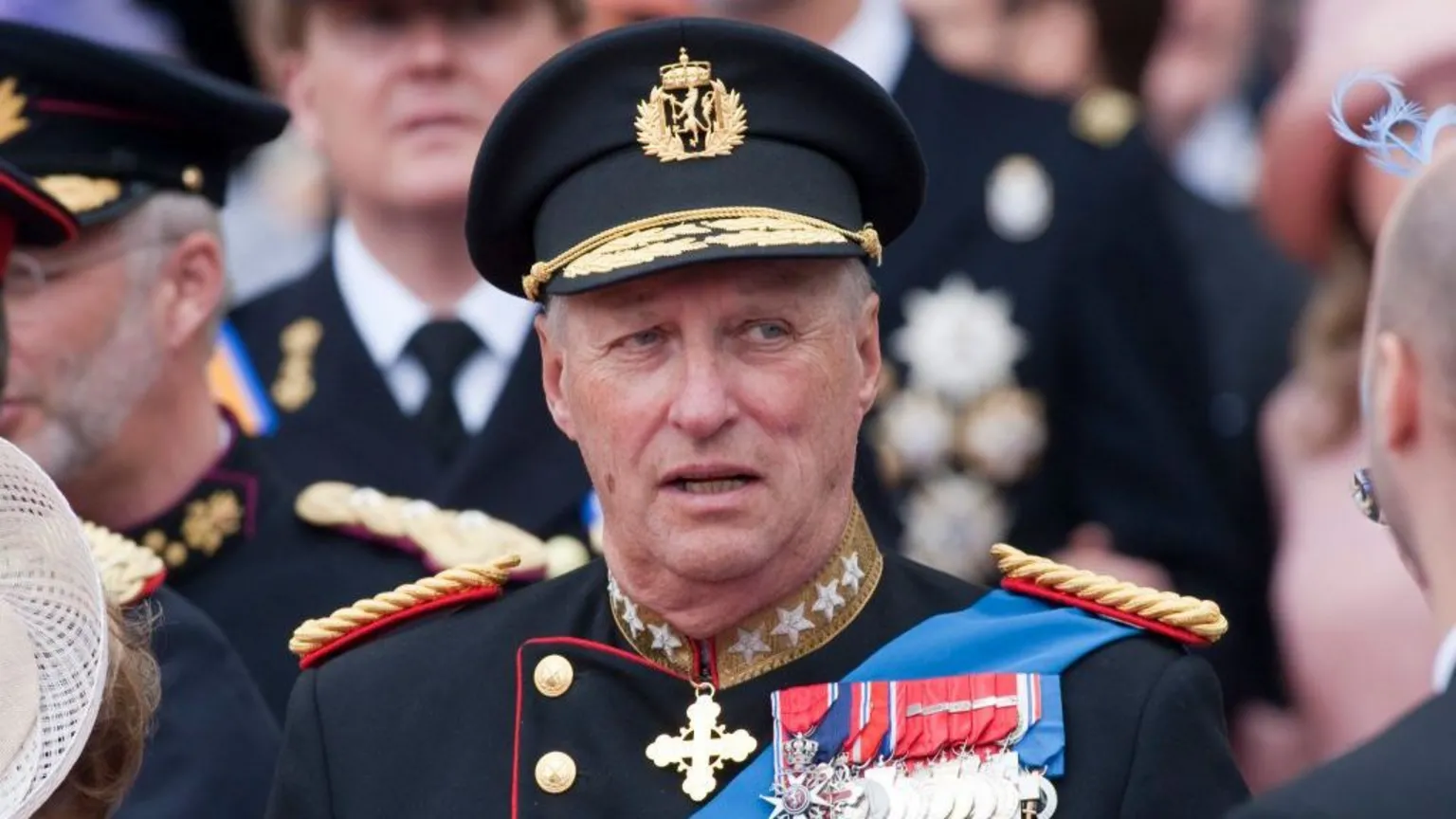
    Norway is mourning the death of King Harald V, who passed away on Friday at the age of 89 after more than three decades on the throne. The Norwegian royal palace said Harald died peacefully at Oslo University Hospital at 6:35am local time. He had been receiving treatment after being hospitalised earlier this month with a serious illness and a bacterial infection in his blood. Harald’s death brings an end to a 35-year reign during which he became one of Norway’s most respected and popular public figures. He was widely regarded as a modernising monarch who helped make the royal institution more open, accessible and closely connected with ordinary citizens. His son, Crown Prince Haakon, immediately became king following his father’s death. Haakon, 53, is expected to formally address the government and parliament as Norway begins the transition to a new reign. Born on February 21, 1937, Harald was the first Norwegian-born heir to the throne in almost six centuries. His childhood was shaped by the Second World War. When Nazi Germany invaded Norway in 1940, the young prince left the country with his mother and sisters. The family spent time in Sweden before travelling to the United States, where they lived during the war. Harald returned to Norway after the war and later completed his education and military service. He studied social sciences, history and economics at Oxford University before becoming increasingly involved in royal duties. One of the defining moments of his personal life came in 1968, when he married Sonja Haraldsen, the daughter of a businessman. The marriage broke with royal tradition because Sonja was a commoner. Harald had reportedly waited years for permission to marry her and eventually made clear that he would rather remain unmarried than give her up. Queen Sonja remained his partner throughout his nearly six decades of marriage and his entire reign. Harald became king in January 1991 following the death of his father, King Olav V. Over time, he developed a reputation for showing emotion and speaking openly on issues affecting Norwegian society. His role as a national unifier became particularly important after the 2011 terrorist attacks in Oslo and on Utøya, in which 77 people were killed. Harald’s public response focused on solidarity, compassion and rejecting fear. He also became known for advocating tolerance and diversity. In a widely remembered speech in 2016, he emphasised that Norway was home to people of different nationalities, religions and sexual orientations. Outside his official duties, Harald was a passionate sailor and represented Norway at three Olympic Games. He was also interested in environmental conservation and supported efforts to protect nature. His later years were marked by repeated health problems. In 2024, he was hospitalised while visiting Malaysia and later received a pacemaker. He subsequently reduced his public engagements but rejected calls for abdication, maintaining that his commitment to the throne was lifelong. Harald’s death also comes at a difficult time for Norway’s royal family. Crown Princess Mette-Marit has faced scrutiny over her past contacts with convicted sex offender Jeffrey Epstein, while her son Marius Borg Høiby was convicted this year of rape and domestic violence. Mette-Marit has also undergone a lung transplant after suffering from a serious pulmonary condition. Despite the controversies surrounding members of his family, Harald himself retained strong personal popularity among Norwegians. Tributes have poured in from European leaders and fellow monarchs. Britain’s King Charles III described Harald as a much-loved relative and friend, while Sweden’s King Carl XVI Gustaf remembered him as a close friend of his family and Sweden.

  • |

    Aly Goni, Jannat Zubair win Laughter Chefs Season 3

    After weeks of entertaining audiences with cooking challenges, laughter, and teamwork, Aly Goni and Jannat Zubair emerged as the winners of Laughter Chefs Season 3. The popular duo lifted the winner’s trophy in the grand finale, bringing an exciting season of culinary tasks and light-hearted competition to a memorable close. Throughout the season, Aly and Jannat consistently proved to be one of the strongest teams in the competition. Their chemistry, quick thinking, and ability to handle a variety of cooking challenges helped them stand out among the contestants. Whether preparing difficult dishes under time pressure or tackling unexpected twists, the pair impressed both the judges and viewers with their teamwork and determination. As the finale concluded, celebrations quickly began, with Aly sharing the happy moment on social media. Posting a series of photos with Jannat and the championship trophy, the actor reflected on the emotional journey they experienced together during the competition. In his heartfelt caption, Aly expressed that the victory represented much more than simply winning a reality show. He wrote that they had earned not only a trophy but also the love and trust of their supporters while overcoming every challenge that came their way. Describing their partnership as one built on unwavering support and resilience, he dedicated the victory to the bond they developed throughout the competition, calling them champions who stood together until the very end. Jannat also took to social media to celebrate the special occasion. Sharing photographs from the grand finale, she thanked everyone who had supported her throughout the season and reflected on the memories she would cherish long after the show ended. The actress said the experience had given her unforgettable moments, meaningful friendships, and relationships she would always treasure. She admitted it was difficult to fully express her emotions after the finale, adding that the show had become much more than just another television project. She also thanked fans for showering the team with love during the season and said she was already looking forward to reuniting with everyone on set in the future. The duo’s victory was met with an enthusiastic response across social media, where fans congratulated the winners and praised their consistent performances throughout the season. Many viewers highlighted their strong partnership, positive attitude, and entertaining presence as reasons they deserved to win the title. Fellow television personalities also extended their congratulations, celebrating the pair’s successful journey on the show. Laughter Chefs Season 3 combined comedy with cooking, giving celebrity contestants a chance to showcase their culinary skills while entertaining audiences with fun-filled tasks, playful banter, and friendly rivalries. The unique format kept viewers engaged from the premiere to the finale, with each episode featuring new challenges that tested both cooking ability and teamwork. As the curtain falls on another successful season, Aly Goni and Jannat Zubair leave the competition as deserving champions. Their consistent performances, strong friendship, and ability to stay composed under pressure helped them secure the coveted title, making their victory one of the season’s most celebrated moments.

Leave a Reply

Your email address will not be published. Required fields are marked *