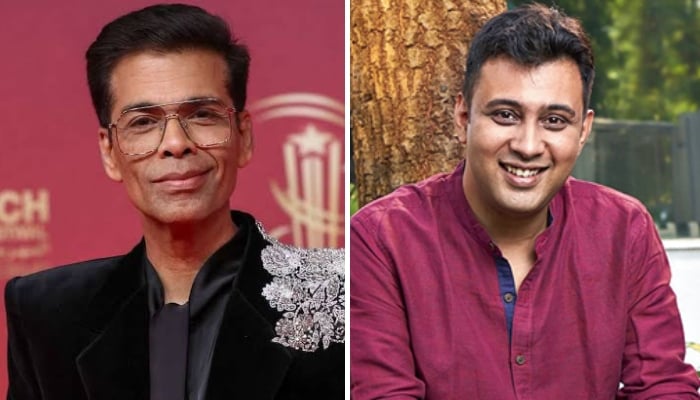
grammy ceo responds
| |

Grammy CEO responds after BTS boycott shakes up 20…

BTS has stunned fans and the music industry by announcing that they will not submit their music for consideration at the 69th Grammy Awards in 2027. The decision has quickly become one of the biggest entertainment stories of the year, with the Recording Academy’s CEO, Harvey Mason Jr., publicly responding to the K-pop group’s unexpected boycott. 

The seven-member group shared a joint message explaining that they hope their music will be “heard and loved for what it is, rather than being divided by region or language.” Although BTS did not directly criticize the Recording Academy, their statement has widely been interpreted as a protest against the newly introduced Best Asian Pop Music Performance category, which will debut at the 69th Grammy Awards. 

Responding to the announcement, Recording Academy CEO Harvey Mason Jr. said he was “saddened” by BTS’ decision but respected the group’s choice. He emphasized that the new Asian Pop category was created to celebrate the growth and diversity of Asian music rather than separate it from mainstream recognition. 

Mason also addressed concerns that artists placed in the new category would be excluded from the Grammys’ top honors. He clarified that submitting work for a genre-specific category does not affect eligibility for major awards such as Album of the Year, Song of the Year, or Record of the Year. According to Mason, artists can compete in both genre and general field categories at the same time. 

The controversy has sparked intense debate among fans and industry observers. Supporters of BTS argue that music should be evaluated based on artistic merit rather than geographical origin or language. Others believe the new category could provide greater recognition for Asian artists who have historically been underrepresented at the Grammys. 

The boycott is particularly notable because BTS returned this year with their comeback album ARIRANG after completing military service. The album topped charts worldwide, making many fans expect the group to compete strongly during the upcoming awards season. Instead, the band has chosen to make a statement about representation in global music. 

Whether BTS’ decision influences other K-pop artists remains to be seen, but it has already ignited an important conversation about how international musicians are recognized on one of music’s biggest stages. As the 2027 Grammys approach, the Recording Academy will likely continue facing questions over balancing inclusivity with equal competition for artists from around the world. 
Similar Posts

  • Thailand Cracks Down on Cannabis: Strict New Rules Target Flower Sales and Exports

    Thailand is dramatically shifting its approach to the rapidly booming domestic cannabis industry. The government recently announced incredibly strict new controls targeting the sale and export of cannabis flowers. Officials have officially designated the popular cannabis plant as a highly regulated “controlled herb.” This sudden regulatory move signals a definitive end to the brief era […]

  • | |

    Javed Jabbar urges stronger support for NAPA

    Former senator and ex-federal minister Javed Jabbar has called on both the government and the private sector to strengthen their support for the National Academy of Performing Arts, arguing that the institution has reached a point in its evolution where it can meaningfully expand its contribution to Pakistan’s cultural life, but only if it receives the backing it deserves. Speaking to media in his capacity as a member of NAPA’s Board of Directors, Jabbar acknowledged the progress the academy had made over the past two decades while warning that future growth would not happen on its own. “What we have achieved over the past twenty years can now be expanded on a much broader scale,” he said, adding that while continued government support remained necessary, greater private sector participation was equally important to the academy’s sustainability. His remarks carried a particular weight given the sustained neglect Pakistan’s performing arts sector has historically faced from commercial institutions. Jabbar drew a direct parallel with other sectors that have benefited from private philanthropy. Pakistan has a strong tradition of charitable giving in healthcare and education, he noted, and he argued that the performing arts deserved the same recognition and financial investment. Patronage, he said, should go beyond purchasing tickets and attending events. It should translate into structural, sustained support for institutions doing the long-term work of building a creative culture. He also addressed the need for NAPA itself to remain current and adaptable. With rapid technological changes reshaping the media and entertainment industries, he stressed that the academy would need to regularly update its faculty and curriculum to ensure students graduate with skills relevant to the world they are entering. The performing arts landscape of today is not the one of twenty years ago, and the training institutions responsible for the next generation of artists and practitioners must reflect that reality. At the same time, Jabbar made clear that responsibility did not rest with institutions alone. Students, he said, must bring the same commitment to the opportunities NAPA provides. They should not take those opportunities for granted and must maintain the discipline the performing arts require. NAPA was established in 2005 at the request of then-President Pervez Musharraf and was founded by the legendary Zia Mohyeddin, who was trained at the Royal Academy of Dramatic Art in London and had dedicated his life to theatre, film and television across both local and international productions. The academy offers programmes in theatre arts and music, with students taught by practicing musicians, musicologists and visiting maestros. Students also receive practical training in performance and are given the opportunity to present their work to live audiences. Javed Jabbar himself is one of Pakistan’s most distinguished public intellectuals, with a career spanning advertising, documentary filmmaking, politics and writing. He has authored 19 books, directed over 300 commercials, and produced landmark documentary and cinematic works including the 1972 documentary Moenjodaro: The City That Must Not Die, which won the Silver Prize at the Asian Film Festival. He has also served as Minister of State for Information and as a member of the Senate Forum for Policy Research. His advocacy for NAPA reflects a longstanding commitment to the role of culture and the arts in Pakistan’s national life.

  • |

    Man admits transporting body of Scottish woman in suitcase in Athens

    Greek authorities have arrested a 26-year-old man who confessed to transporting the body of 38-year-old Scottish woman Elisabeth-Jane Ross in a suitcase to an abandoned building in Athens. The victim’s body was discovered on 18 July in the Kypseli district following a missing person report, with subsequent investigations leading police to identify the suspect via video footage. Law enforcement officers arrested the suspect on suspicion of manslaughter, robbery, and weapons offences after finding he had used the victim’s bank cards and seized a knife and replica pistol at his home. Greek police are fast-tracking toxicology reports to determine the precise cause of death while continuing efforts to trace American acquaintances Ross was scheduled to visit before her disappearance. The Scottish Government confirmed it is providing official support to the victim’s family alongside the Foreign, Commonwealth and Development Office.

  • |

    Pakistani leadership arrives in Jeddah

    Pakistani Prime Minister Shehbaz Sharif arrived in Jeddah on Thursday evening to begin three-day official visit. This high profile visit aims at bilateral ties, strategic defense cooperation and economic alignment between Islamabad and Riyadh. The Pakistani leader was invited by Saudi Crown Prince and Prime Minister Mohammed bin Salman bin Abdulaziz Al Saud. The Pakistani premier leads a prominent delegation of top cabinet ministers and senior military leadership at a pivotal juncture for regional security and economic growth.  Diplomatic Reception in Jeddah Upon landing at King Abdulaziz International Airport, the Prime Minister and his accompanying delegation were formally greeted on the tarmac with full diplomatic protocol. Deputy Governor of the Makkah Region, Prince Saud bin Mishaal bin Abdulaziz, spearheaded the Saudi delegation receiving the Pakistani leadership. High-level Saudi officials, including Minister of Environment, Water, and Agriculture Engineer Abdulrahman bin Abdulmohsen Al-Fadley, alongside Pakistan’s Ambassador to Saudi Arabia Ahmad Farooq and key diplomatic representatives, were present to facilitate the delegation’s arrival. The cordial reception reflects the long-standing warmth, mutual trust, and shared history defining relations between the two brotherly nations. High-Powered Delegation Reflects Strategic Focus The composition of the Pakistani delegation highlights the multi-faceted priorities of the three-day state visit, spanning defense, diplomacy, and communication. Traveling alongside Prime Minister Sharif is the Chief of Defence Forces and Chief of Army Staff, Field Marshal Syed Asim Munir, whose presence underlines the vital military-to-military and security architecture underpinning the bilateral relationship. The delegation also includes Defence Minister Khawaja Muhammad Asif, Information Minister Attaullah Tarar, and Special Assistant to the Prime Minister Tariq Fatemi. Adding further diplomatic weight, Deputy Prime Minister and Foreign Minister Muhammad Ishaq Dar is joining the delegation directly in the Kingdom. Dar arrived following a brief stopover in Madinah after completing an official trip to Jordan, where he attended high-level ministerial consultations regarding regional affairs and Jerusalem. Key Summit Agenda: Defense, Economy, and Regional Stability At the center of the visit is a bilateral summit between Prime Minister Shehbaz Sharif and Saudi Crown Prince Mohammed bin Salman. Discussions between the two leaders are expected to review progress on economic collaboration, trade expansion, joint investment ventures, and defense coordination. Building upon mutual commitments to bolster regional deterrence and security cooperation, both delegations will evaluate mechanisms to streamline economic investments aligned with Saudi Arabia’s Vision 2030 and Pakistan’s national development strategy. The leaders will also engage in exchanges regarding the evolving security dynamics across the Middle East and South Asia. Islamabad and Riyadh continue to maintain close strategic alignment. Both  advocating for conflict resolution, stability, and unified diplomatic positions within the broader Islamic world. Spiritual Obligations and Long-Standing Alliance In addition to formal bilateral talks and official engagements, Prime Minister Sharif and members of his entourage will perform Umrah in the Holy City of Makkah. The delegation is also scheduled to travel to Madinah Munawwarah to pay respects at the Roza-e-Rasool (Peace Be Upon Him).  

  • |

    NCA, LCCA grounds finally get the upgrade

    Work has officially started on upgrading two of Pakistan’s key cricket facilities. Both the National Cricket Academy (NCA) and the LCCA ground are set to receive major upgrades, bringing them closer to international standards. According to sources, the first step has already begun. The boundary wall that separates the NCA and LCCA grounds is being taken down. This is expected to open up the space for a larger, more connected training hub. Once the wall is cleared, work will begin on a new pavilion at the LCCA ground. The pavilion will come equipped with modern facilities. The ground’s drainage system is also getting an upgrade as part of the same project. The National Cricket Academy itself is set for a bigger transformation. Sources say a modern gym will be added. A swimming pool is also part of the plan. Along with these, new training and rehabilitation facilities will be built specifically for national cricketers. Once finished, both grounds are expected to offer training facilities on par with international standards. Officials believe this upgrade will make a real difference in how players train and prepare going forward. Fitness levels, recovery, and overall match readiness are all expected to improve as a result. This move comes at a time when Pakistan cricket has faced repeated calls for better domestic infrastructure. Many current players have had to look abroad for facilities like rehabilitation centers and proper swimming pools. A setup like this could help change that. Combining the NCA and LCCA grounds into one upgraded space is also expected to simplify things for coaches and support staff. Managing schedules, monitoring fitness, and coordinating training sessions should become easier with everything centralized in one location. So far, no official timeline has been announced for when the project will be completed. Still, the early progress, especially the wall coming down, suggests that the plan is already moving forward without unnecessary delays. If everything goes as planned, this could turn out to be one of the more meaningful infrastructure upgrades for Pakistan cricket in recent memory. Giving players access to modern training resources at home, instead of depending on facilities overseas, could go a long way in supporting long-term player development. For now, all eyes remain on how quickly the project moves from demolition to full completion.

  • Tourists Injured in Terrifying 3 Vehicle Crash in Phetchabun, Thailand

    PETCHABUN – A terrifying three-vehicle crash occurred on a steep mountain curve leading up to Phu Thap Boek in Phetchabun province. The heavy collision involved a passenger van, a sedan, and a pickup truck carrying sixteen Thai and foreign tourists. Local emergency workers rushed to the scene shortly after noon to treat the victims and […]

Leave a Reply

Your email address will not be published. Required fields are marked *