guterres make historic
|

Guterres to make historic Syria visit after 17 years

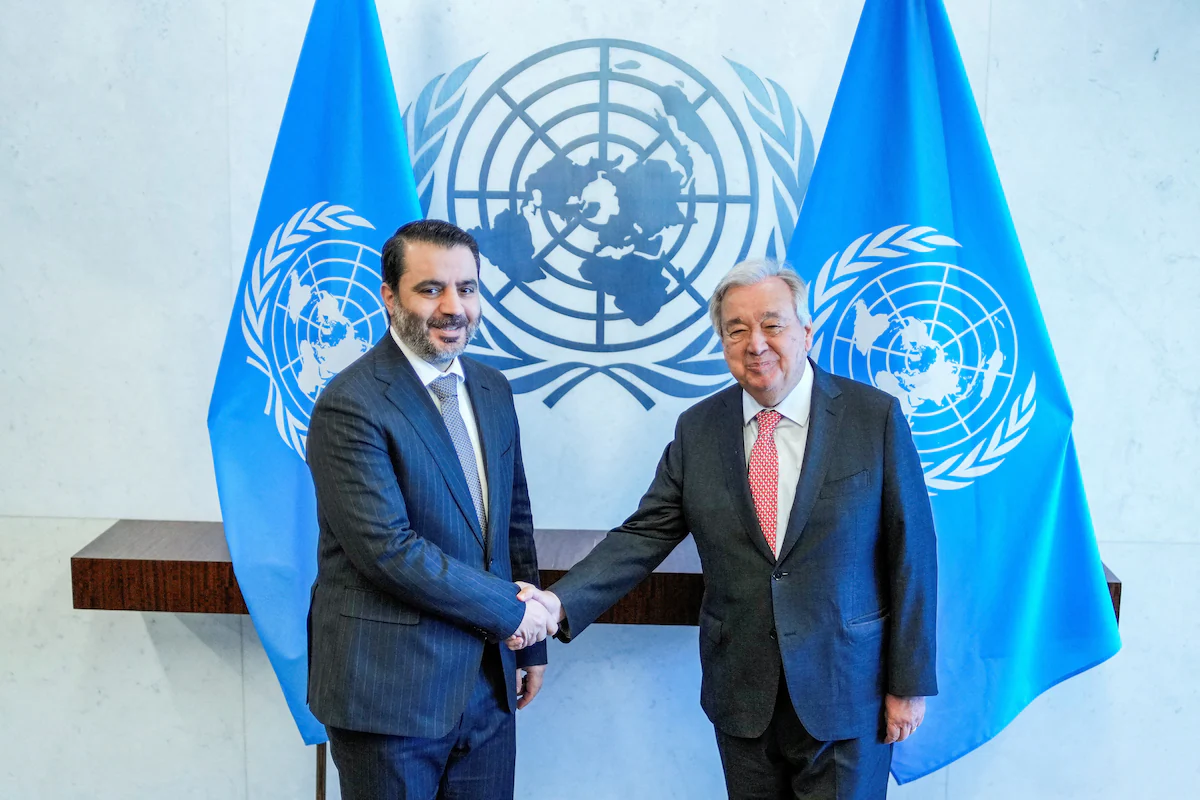
United Nations Secretary-General Antonio Guterres will visit Syria on Saturday. It will be the first visit by a serving UN secretary-general to the country since 2009.

The visit comes at a major turning point for Syria. The country is trying to rebuild after years of war, political instability and international isolation.

Syria’s conflict began in 2011. It continued for almost 14 years. The war killed hundreds of thousands of people. Millions more were forced to leave their homes.

The conflict ended with the fall of former President Bashar al-Assad in late 2024. Syrian opposition forces removed Assad from power after a rapid offensive.

The country is now being led through a transitional period under President Ahmed al-Sharaa. His administration is seeking to establish a new political system and restore Syria’s relations with the international community.

Guterres is expected to meet Sharaa during his visit to Damascus. He will also hold talks with Foreign Minister Asaad al-Shaibani.

The UN secretary-general is also expected to meet other Syrian officials. He will hold discussions with representatives of civil society as part of his visit.

The United Nations says Guterres will focus on Syria’s future. He is expected to underline the importance of creating a stable, inclusive and prosperous country.

The visit is also expected to highlight the need for national reconciliation. Syria faces major challenges after years of destruction and displacement.

The country’s transition has not been without difficulties. Sectarian violence remains a serious concern.

Large numbers of Alawites were killed in violence in Syria’s coastal region last year. The Alawite community was closely associated with the former Assad government.

Violence later affected the Druze community in southern Syria. Hundreds of people were reportedly killed during clashes.

Guterres has expressed concern over both episodes of violence. He has called for accountability and protection for Syria’s minority communities.

The new Syrian government is also working to restore diplomatic relations. Damascus wants to move beyond the alliances that dominated the country during Assad’s rule.

Syria had long relied heavily on Russia and Iran. The new leadership is now seeking broader international engagement.

Sharaa has already taken steps towards rebuilding Syria’s global diplomatic presence. Last year, he became the first Syrian president since 1967 to attend the UN General Assembly in New York.

Washington has also taken steps towards improving relations with Damascus. The United States has removed most of its broad sanctions on Syria.

US President Donald Trump has also indicated that Washington intends to remove Syria from its list of state sponsors of terrorism.

Guterres is expected to address Syria’s new parliament on Monday. The speech could focus on the country’s political transition and its future relationship with the international community.

He will also visit a UN peacekeeping force operating near the Israeli-Syrian frontier. The force has maintained a buffer zone between Israeli and Syrian forces for decades.

The situation in southern Syria remains sensitive. Israeli forces have occupied additional areas in the region since Assad’s removal.

The Syrian government has demanded the withdrawal of Israeli troops. Damascus has also called for a return to the 1974 disengagement agreement.

Guterres’ visit therefore carries significant diplomatic importance. It comes as Syria attempts to rebuild its institutions, economy and international relationships.

For the United Nations, the visit also provides an opportunity to engage directly with Syria’s new leadership.

Similar Posts

  • | |

    Amy Winehouse’s father loses court battle over s…

    Amy Winehouse’s father, Mitch Winehouse, has suffered a major legal setback after losing a High Court battle over the sale of the late singer’s personal belongings. The ruling brings an end to a long-running dispute involving two of Amy’s closest friends and has resulted in Mitch being ordered to pay nearly £1 million in legal costs.  The case centered on dozens of items once owned by the Grammy-winning singer, who died in 2011 at the age of 27. Acting as the administrator of Amy Winehouse’s estate, Mitch Winehouse claimed that her longtime stylist, Naomi Parry, and close friend, Catriona Gourlay, had improperly sold the singer’s possessions at auctions in the United States in 2021 and 2023 without his consent. He argued that the items belonged to the estate and sought financial compensation.  However, the High Court rejected Mitch’s claims after hearing evidence from both sides. Naomi Parry and Catriona Gourlay maintained that the belongings had either been gifted to them by Amy herself or already belonged to them. The court accepted their explanation and ruled that there had been no deliberate attempt to conceal the auction sales.  Deputy High Court Judge Sarah Clarke was also critical of Mitch Winehouse’s handling of the case. According to the judgment, the court found that he had pursued weak claims without properly checking the facts before initiating legal proceedings. The judge further stated that he was an unreliable witness and awarded legal costs on an indemnity basis, a decision that reflected the court’s disapproval of the way the litigation had been conducted.  Following the ruling, Mitch was ordered to make interim payments totaling just under £1 million toward the legal costs incurred by Parry and Gourlay. In addition to those payments, reports indicate that Mitch also accumulated substantial legal expenses of his own during the lengthy court battle.  Naomi Parry welcomed the verdict, saying the judgment completely cleared her name after years of accusations that she described as deeply damaging to her reputation. She also expressed relief that the legal dispute had finally come to an end.  Amy Winehouse remains one of Britain’s most celebrated musical talents, remembered for iconic songs including Rehab and Back to Black. Although the legal dispute has concluded, the case has once again drawn public attention to the management of her legacy and the challenges surrounding the preservation of her personal belongings. With the court’s ruling now in place, the long-running dispute appears to have finally reached its conclusion. 

  • |

    Iran advances in Hormuz talks with Oman

      Iran and Oman have made significant progress in negotiations over a shipping route through the Strait of Hormuz, with both sides agreeing on the precise maritime coordinates. Iranian Foreign Ministry spokesperson Esmaeil Baghaei said a joint statement is currently being prepared, although its release depends on the absence of outside interference. He stressed that the understanding, while important, would not by itself guarantee complete security in the strategically vital waterway. According to sources, the proposed arrangement would place Iran in charge of overseeing vessels entering the Gulf through the Strait of Hormuz. The sources described the proposal as one of Tehran’s most substantial concessions in the ongoing discussions. However, they dismissed claims made by US President Donald Trump that a comprehensive agreement to fully reopen the strait was close, saying several key issues remain unresolved. Baghaei described the negotiations with Oman as constructive and professional, noting that both countries have reached consensus on the shipping corridor. He added that officials are now working on the final wording of the joint declaration. An Iranian diplomatic source also expressed optimism that an agreement could be reached within the next couple of days if no external actors complicate the process. The source further clarified that the Strait of Hormuz has never been closed due to disagreements between Iran and Oman, insisting that any disruption to navigation depends on actions taken by the United States. Separately, Ebrahim Azizi, chairman of the Iranian parliament’s National Security Committee, said the time would eventually come when US military forces would withdraw from the region. He argued that countries hosting American bases would ultimately be responsible for financing their own security after the departure of US troops. Iranian state media also maintained that any shipping agreement with Oman would not automatically result in the reopening of the strait if Washington continued policies that Tehran considers hostile. A source quoted that the discussions with Oman are strictly bilateral and unrelated to negotiations involving the United States. In another development, United Nations High Commissioner for Human Rights Volker Türk voiced concern over a sharp increase in executions in Iran since March. He said at least 56 individuals have been executed on national security charges during this period, including 27 people connected to earlier anti-government protests. Meanwhile, Yemen’s Houthi movement claimed responsibility for launching ballistic missiles at the Saudi oil tanker Wafaa near Yanbu in the northern Red Sea. A Houthi spokesperson said the missiles struck their intended target and described the attack as part of the group’s continuing blockade against Saudi Arabia. According to the group, the tanker is the eighth vessel targeted since the blockade began in July. Iranian parliamentarian Esmail Kowsari criticised President Trump’s public statements on the Strait of Hormuz, accusing him of making inconsistent and misleading claims about the negotiations. He argued that repeated assertions about the strait reopening and Iran’s position have failed to match developments on the ground. President Trump, however, said the waterway would reopen soon and warned that Iran would face severe consequences if negotiations collapsed. He also claimed that easing tensions in the region could lead to a significant drop in global oil prices. Qatar said diplomatic mediation efforts are making steady progress, with the country’s Emir discussing the latest developments with President Trump in an effort to narrow differences between Washington and Tehran. At the same time, Israeli officials reportedly expressed concern that the United States appears willing to secure an agreement regardless of the terms, adding that Israel is receiving updates on the Hormuz negotiations only through indirect channels.

  • |

    US investigates possible Russian role in Iranian strikes on CIA facilities

    US intelligence agencies are examining whether Russia helped Iran carry out drone attacks on CIA facilities in the Gulf, raising fresh concerns about growing military cooperation between Moscow and Tehran. Officials are reviewing intelligence to determine whether Russia provided targeting information, advanced drone technology, or other forms of support that may have increased the accuracy of the attacks. According to sources familiar with the investigation, analysts have not reached any final conclusions about Russia’s involvement. However, the precision of the strikes and Russia’s long history of military and technical cooperation with Iran have led intelligence officials to explore whether Moscow played a direct role in planning or supporting the operations. The investigation follows a series of Iranian drone attacks that targeted sensitive US intelligence locations in the region. At least two CIA facilities were reportedly hit in March. One of the sites was located inside the US Embassy in Riyadh, Saudi Arabia, while another was in eastern Iraq. Officials familiar with the matter said additional CIA locations may also have been attacked, although they declined to reveal further details because of security concerns. Western intelligence officials have also reviewed reports suggesting that Russia may have assisted Iran in selecting the targets. One intelligence assessment reportedly concluded that Russia likely contributed to identifying regional CIA facilities, although officials stressed that the findings remain under review and have not been publicly confirmed. According to officials briefed on intelligence reports, the attack on the US Embassy compound in Riyadh involved two upgraded versions of Iran’s Shahed drones. They said one drone created an opening in the embassy’s outer structure while the second entered through the damaged area before exploding inside. No casualties were reported, but the operation demonstrated a level of accuracy that surprised intelligence analysts. The investigation comes as tensions between the United States and Iran remain high following months of military exchanges across the Middle East. American officials are also examining recent Iranian strikes on a US military base in Jordan where ballistic missiles killed two American soldiers. Those attacks have intensified concerns that Iran may be receiving more advanced military support from Russia. Analysts believe Russia has spent years helping Iran improve its drone capabilities. Intelligence sources say Moscow has assisted Tehran in increasing the range and precision of its Shahed drones through technical upgrades. Reports also suggest Russia supplied Iran with the Kometa M satellite navigation system, which is believed to provide greater accuracy and stronger resistance to electronic interference than Iran’s previous guidance systems. Russia has denied supplying the technology and dismissed earlier reports on the matter. The White House referred questions about the investigation to the CIA, which declined to comment. Iran’s mission to the United Nations, the Russian Defense Ministry, and Saudi authorities also did not respond to requests for statements. The exact number and locations of the targeted CIA facilities remain classified. Intelligence sources said more than one site but fewer than a dozen were struck during the attacks. Overseas CIA operations often include embassy based stations as well as secure facilities used for surveillance, logistics, intelligence gathering, and other sensitive missions. US analysts are also investigating whether Russia supplied the intelligence used to identify the Riyadh facility. Some officials remain cautious, noting that Iran may have intended to strike the US Embassy as a whole rather than specifically targeting the CIA station located within the compound. Others believe very few countries possess both the intelligence capabilities and the strategic motivation to identify and support attacks against such highly sensitive US facilities. Former CIA station chief Daniel Hoffman said closer military cooperation between Russia and Iran makes such assistance plausible. He argued that both countries share a common interest in reducing American influence across the Middle East and other regions where they seek greater strategic control. The investigation remains ongoing as US intelligence agencies continue to assess the available evidence.

  • | |

    Justice Shahid Karim’s retirement to leave 21 va…

      A spokesperson has confirmed that Justice Shahid Karim is currently ranked sixth on the seniority list of judges serving at the Lahore High Court. His position on the seniority roster reflects his extensive judicial experience and years of service within Pakistan’s higher judiciary. According to the spokesperson, Justice Shahid Karim has been hearing cases related to smog prevention and environmental pollution for the past several years. During this period, he has presided over numerous hearings concerning environmental protection, air quality, and measures aimed at reducing the harmful effects of smog, particularly in Punjab. His courtroom has become a focal point for addressing environmental issues that have increasingly affected public health and the quality of life in the province. Justice Karim has been widely recognized for taking an active interest in environmental matters. Under his supervision, various government departments have been directed to implement policies and practical measures to tackle air pollution and improve environmental standards. His hearings have often involved officials from environmental agencies, local governments, industries, and other stakeholders responsible for ensuring compliance with environmental regulations. The issue of smog has become one of the most pressing environmental challenges in Pakistan, especially during the winter months, when air quality deteriorates significantly due to industrial emissions, vehicle exhaust, crop residue burning, and unfavorable weather conditions. Through his judicial oversight, Justice Shahid Karim has consistently emphasized the need for coordinated action among government institutions to protect public health and reduce environmental degradation. The spokesperson further stated that Justice Shahid Karim’s retirement will create another vacancy in the Lahore High Court. Following his retirement, the total number of vacant judicial positions at the court will rise to 21. This increase in vacancies is expected to place additional pressure on the existing judges, who already manage a heavy workload involving thousands of pending civil, criminal, constitutional, and administrative cases. Judicial vacancies are a matter of concern because they can contribute to delays in the disposal of cases and increase the burden on the remaining members of the bench. Legal experts have frequently stressed the importance of filling vacant judicial positions promptly to ensure timely access to justice and maintain the efficient functioning of the court system. The retirement of a senior judge such as Justice Shahid Karim is also significant because of the experience and expertise he brings to the judiciary. Over the years, he has handled a wide range of important legal matters, but his role in environmental litigation has particularly distinguished his judicial career. His decisions and observations have highlighted the importance of environmental conservation, sustainable development, and government accountability in addressing pollution-related challenges. With his departure from the bench, authorities are expected to initiate the process of appointing new judges to fill the growing number of vacancies in the Lahore High Court. These appointments will be important in ensuring that the court continues to function effectively and that the backlog of pending cases does not increase further. Justice Shahid Karim’s retirement marks the end of an important chapter in the Lahore High Court’s judicial history. His contributions, particularly in the field of environmental justice and smog control, have had a lasting impact on legal and policy discussions surrounding environmental protection in Pakistan. As the Lahore High Court prepares for this transition, the appointment of qualified judges will be essential to maintaining the efficiency, credibility, and effectiveness of the judicial system.

  • | |

    Iran says Oman deal nears completion but insists U…

    Iran said on Sunday that a deal with Oman establishing new shipping lanes through the Strait of Hormuz has entered its final stages, though Tehran maintained the critical waterway will remain closed until Washington satisfies a broader set of conditions tied to the ongoing standoff between the two countries. A US official told Reuters on Friday that an agreement between Iran and Oman appeared close and could soon lead to the reopening of the strait, a passage that carried roughly a fifth of global oil and liquefied natural gas shipments before Iran shut it down in response to American and Israeli military strikes earlier this year. Iranian Foreign Minister Abbas Araqchi confirmed on Sunday that negotiations over the strait, which sits between Iran and Oman, had reached their final stages. However, he repeated comments made a day earlier stressing that the waterway would not reopen unless additional conditions set by Tehran were met first. Iran’s Mehr news agency quoted Araqchi as saying the emerging agreement would establish the new shipping lanes to be used once the United States fulfils those conditions and the strait formally reopens. Araqchi said Iran and the United States are not currently engaged in direct talks and that Tehran has no plans to begin them as long as Washington continues to breach an interim agreement the two countries signed in June. He added that messages between the two sides are being exchanged through intermediaries rather than direct contact. Iran demands compensation and sanctions relief The United States launched air strikes against Iran in late February, saying the campaign aimed to prevent the Islamic Republic from acquiring nuclear weapons or using missiles and regional proxy forces to threaten the wider Middle East. Washington and Tehran agreed to a ceasefire in June, but the United States reimposed a blockade on Iranian shipping in the Gulf in July, a move Iran characterised as a violation of a truce that had already shown signs of collapse. A US official, speaking to Reuters on condition of anonymity, said the blockade on Iranian ports would lift once a deal restoring unimpeded commercial shipping is formally announced. The official added that any American actions would remain directly tied to Iran fulfilling its own commitments under the emerging agreement, pointing to a carefully sequenced approach that both sides appear to be navigating cautiously. The arrangement under discussion appeared, according to sources who previously spoke to Reuters, to grant Tehran a degree of control over vessels entering the Gulf through the strait, an arrangement that shipping industry sources have said would be difficult to implement in practice. The precise current status of the agreement remained unclear on Sunday, and Iran’s latest statements suggested several additional factors could still complicate its finalisation. Araqchi said the strait’s reopening would depend in part on the United States providing compensation to Iran for what Tehran describes as widespread attacks on its territory and interests. Mohammad Baqer Zolqadr, secretary of Iran’s top national security body, outlined a broader list of demands, including an end to US threats against Iran, a halt to what Tehran calls aggression against its allies in Lebanon, the Palestinian territories, Yemen and Iraq, the lifting of the shipping blockade and broader sanctions, and the release of frozen Iranian financial assets. Supreme Leader’s condition remains unclear Ultimate decision making authority in Iran rests with Supreme Leader Mojtaba Khamenei, who has not appeared in public since an air strike killed his father and predecessor on February 28, the first day of the joint US and Israeli air campaign against Iran. State media reported on Sunday that Iranian President Masoud Pezeshkian met with Khamenei in late July, and a paramilitary leader promised that footage of the supreme leader would soon be released publicly. Khamenei was reportedly injured in the same strike that killed his father, according to earlier reporting. Separately, the United Arab Emirates said on Saturday that Iran had attacked a vessel affiliated with its state oil company. Iran did not immediately respond to the allegation. The country’s powerful Revolutionary Guards have attacked commercial vessels in the past, arguing that ships transiting the strait without coordinating their passage with Iranian authorities are not protected from such action. Houthi attacks widen regional shipping crisis Iran’s strikes on shipping in the Strait of Hormuz have coincided with intensified attacks from its Yemen based allies, the Houthis, who have targeted vessels at a separate chokepoint located between the Red Sea and the Gulf of Aden on the opposite side of the Arabian Peninsula. The Houthis declared a naval blockade against Saudi Arabia in the Red Sea last month, framing the move as retaliation for what they described as a Saudi imposed siege in Yemen, an accusation the Saudi government has firmly denied. Riyadh continues to back Yemen’s internationally recognised government in the country’s ongoing conflict. The group claimed responsibility for an attack on Saudi Aramco’s Jazan refinery on Sunday, coming just two days after the kingdom signed a defence pact with fellow Sunni Muslim majority nations Turkey and Pakistan amid growing concern over regional instability stemming from the US and Israeli military campaign against Shiite led Iran. Saudi Arabia’s energy ministry confirmed that a fire broke out at the refinery following the attack but was later extinguished without causing any injuries, and that authorities were continuing to manage the aftermath of the incident. The ministry did not specify a cause for the blaze. Houthi military spokesperson Yahya Saree said on social media platform X that the group used a drone to strike the facility. The Houthis have targeted Aramco sites in Jazan before, a refinery that processes approximately 400,000 barrels of crude oil daily in southwestern Saudi Arabia. It remains unclear whether or to what extent Pakistan or Turkey would participate in any Saudi response to the latest attack. Turkish Foreign Minister Hakan Fidan said the newly formed alliance between the three countries was not directed against Iran or any other nation, describing it instead as a general commitment to

  • |

    Nine dead after Thai teenager mounts deadly rampage at home and school

    The death toll from a mass shooting in Thailand has risen to nine after a 12-year-old girl died in hospital from injuries sustained during Friday’s attack. Police confirmed that the 14-year-old perpetrator spent up to two years researching firearms online and consuming violent media. The teenager shot and killed his two grandparents at their Bang Bua Thong residence in the early hours of Friday morning before travelling to Debsirin Nonthaburi School, northwest of Bangkok. Armed with a legally registered 9mm handgun belonging to his grandfather, a knife, and additional ammunition, the student opened fire inside the school, killing staff and injuring dozens before turning the weapon on himself. Over a dozen victims, mostly aged between 12 and 14, remain hospitalised with critical injuries. Deputy Commissioner of Province 1 Police Region Atthapol Anusit stated that detectives have interviewed 17 witnesses so far. While police noted the boy had shown signs of school-related stress, relatives claimed they were unaware of any prior behavioral issues. In response to the tragedy, Thailand’s Ministry of Education announced plans to implement comprehensive campus safety reforms within three months, including emergency response training, weapons restrictions, and mental health screening mechanisms. Meanwhile, Prime Minister Anutin Charnvirakul pledged to introduce stricter legislative controls on gun ownership across the country.

Leave a Reply

Your email address will not be published. Required fields are marked *