henderson completes chelsea
|

Henderson completes Chelsea switch after Brentford exit

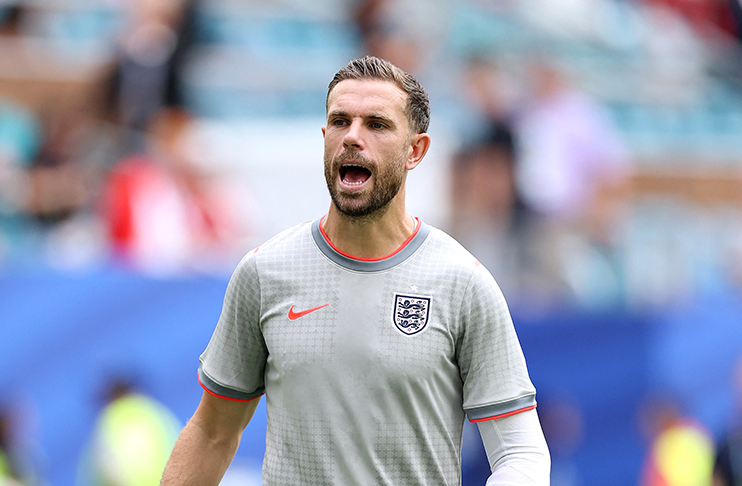
Chelsea have brought in England midfielder Jordan Henderson on a free transfer, ending his short stint at Brentford and giving the veteran a fresh chapter at Stamford Bridge.

The former Liverpool skipper, who was part of England’s squad at this year’s World Cup in North America, has put pen to paper on a two-year deal with the Blues.

Henderson said joining a club of Chelsea’s stature, working under a manager he rates highly, and playing alongside such a talented squad made the move impossible to turn down. He also pointed to the clear ambition shown by the club’s ownership as something that impressed him deeply. Looking ahead, he said his focus would simply be on working hard every day, on and off the pitch, to help his new teammates and push the team forward.

Reports had already surfaced last week confirming that Henderson’s Brentford deal had been cancelled once Chelsea’s interest in the midfielder became apparent, setting the stage for a move between the two west London-adjacent rivals.

The 36-year-old rose to prominence during his years at Liverpool, where he won both the Premier League and the Champions League. He departed Anfield in 2023 to join Saudi side Al-Ettifaq, before switching to Dutch giants Ajax only half a year later. His return to English football came last year through a two-year contract with Brentford.

A veteran of 91 caps for England, Henderson featured in this year’s World Cup squad but played only sparingly, and later suffered a broken arm during the tournament.

His move to Chelsea comes just two days after the club completed the signing of experienced striker Danny Welbeck from Brighton. It has been an active summer in the transfer market for the Blues, who already broke the British transfer record by paying £117 million ($157 million) for Aston Villa’s Morgan Rogers, while also adding French defender Maxence Lacroix and Atalanta man Marco Palestra to their ranks.

Chelsea’s previous campaign ended in disappointment, as they finished 10th in the Premier League table, narrowly behind Brentford, and missed out on European qualification altogether. Manager Xabi Alonso will now be eager to turn things around when his side begins the new season with an away trip to face Fulham at Craven Cottage on August 24.

Similar Posts

  • |

    Gold prices in Pakistan today – 26 August , 2026

    Gold prices in Pakistan today on 26 August 2026, of 24k gold stands at Rs. 484,000 per tola, while the rate for 10 grams is Rs. 414,960. The gold rate for 22k gold today is Rs. 443,789 per tola and Rs.380,380 per 10 grams in Pakistan. These fluctuations are closely linked to changes in the value of the US Dollar, underscoring the intricate relationship between currency values and gold prices. It is important to note that the gold rate in Pakistan today can experience significant variations throughout the day, influenced by trends in the global market. Gold Prices in Pakistan following cities: City 24k Gold per tola (PKR) 24k Gold 10 grams (PKR) 22k Gold per tola (PKR) Lahore 484,000 414,960 443,789 Islamabad 484,000 414,960 443,789 Karachi 484,000 414,960 443,789 Peshawar 484,000 414,960 443,789

  • |

    Trump blames Canada for wildfire smoke as scientists reject sanctions threat

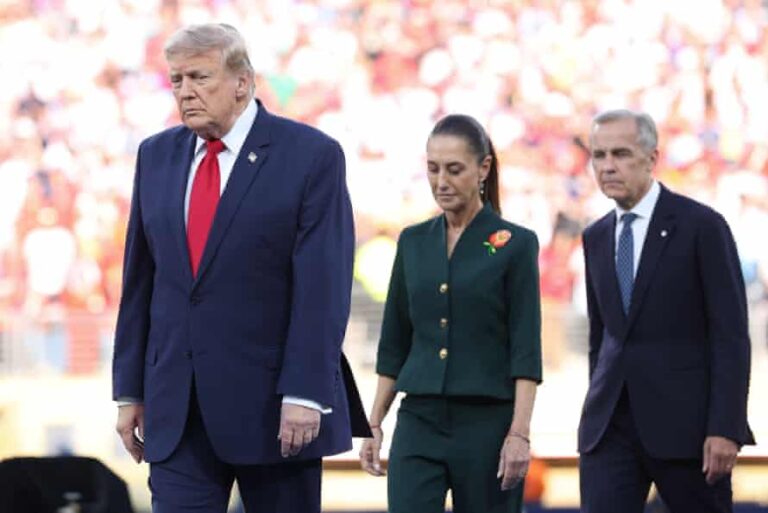
    US President Donald Trump has accused Canada of “poisoning” American air with smoke from widespread forest fires, threatening to impose 50% tariffs and demand compensation from its northern neighbour. Speaking following the World Cup final, Trump claimed he urged Canadian Prime Minister Mark Carney to halt the blazes from crossing the border, declaring that the US was being “unnecessarily invaded by filthy, polluted and unhealthy air”. In support, Republican Senator Bernie Moreno announced plans to introduce legislation sanctioning Canada for alleged forest mismanagement. Over 8.1 million acres of Canada’s boreal forest have burned following a severe heat dome, causing hazardous, hazy air across major US and Canadian cities. Leading climate scientists and ecologists have forcefully dismissed Trump’s claims, describing the rhetoric as unfounded, logistically impossible, and a form of victim-blaming. Experts, including Michael Mann and Lori Daniels, emphasised that the intensified fires are a direct symptom of global climate change rather than improper forest management. They pointed out that clearing or “raking” Canada’s vast, remote boreal forests is physically unfeasible, noting that the smoke flows both ways across the border and requires international climate action rather than trade penalties.

  • |

    Pakistan posts Rs3.6tr primary surplus as fiscal position improves in FY2025-26

    ISLAMABAD: Pakistan closed the financial year 2025-26 with a primary budget surplus of around Rs3.6 trillion, marking the third consecutive year of a surplus and allowing the country to comfortably meet a key fiscal condition agreed with the International Monetary Fund (IMF). The improvement came despite the government falling short of its tax collection targets, with stronger petroleum levy receipts, tighter expenditure controls and lower-than-expected debt servicing costs helping offset the revenue shortfall. According to the latest fiscal operations data released by the Ministry of Finance, the unadjusted primary surplus reached Rs3.63 trillion, equivalent to 2.6% of the country’s gross domestic product (GDP). The figure was approximately Rs464 billion higher than the IMF’s target of Rs3.16 trillion. The primary balance is considered an important indicator under Pakistan’s IMF programme because it measures the government’s fiscal position before interest payments on public debt. The latest figures indicate that the government maintained fiscal discipline despite continued pressure on revenues and expenditure. Overall fiscal deficit below target Pakistan’s overall budget deficit, after accounting for provincial cash surpluses, stood at approximately Rs3.3 trillion during FY2025-26. This was around Rs1.7 trillion lower than the amount initially projected in the federal budget. The federal government’s own deficit was recorded at Rs4.8 trillion, also significantly below the budgeted level. The better-than-expected outcome was primarily attributed to lower interest payments, stronger petroleum levy receipts and restrained development expenditure. Interest payments were around Rs1.3 trillion below the amount originally allocated in the budget. The government also collected approximately Rs101 billion more than its petroleum levy target, while federal development spending remained Rs82 billion below the initially approved allocation. The fiscal improvement also contributed to a moderation in the growth of public debt. Public debt increased by around 7% during the year, bringing some relief after several years of double-digit debt expansion. Provinces narrowly miss IMF cash surplus target The four provincial governments collectively generated a cash surplus of around Rs1.45 trillion during the fiscal year. Although the amount fell marginally short of the IMF’s combined requirement, the shortfall was only around Rs14 billion. Punjab contributed the largest share, recording a cash surplus of approximately Rs914 billion. Sindh posted a surplus of around Rs350 billion, followed by Khyber-Pakhtunkhwa with Rs165 billion and Balochistan with approximately Rs21 billion. Provincial governments, meanwhile, performed slightly better on revenue collection. Their combined tax receipts exceeded the IMF condition by around Rs18 billion, with collections crossing Rs1.2 trillion. FBR misses tax target Despite the overall improvement in the fiscal position, tax collection remained a major area of concern. The Federal Board of Revenue collected approximately Rs13 trillion during FY2025-26, falling nearly Rs1 trillion short of the IMF’s revised target. FBR tax receipts increased by about 11% compared with the previous year. However, this increase was broadly in line with nominal GDP growth, indicating that the tax-to-GDP ratio remained largely unchanged at around 10.3%. The figures suggest that additional revenue expected from new taxation and enforcement measures did not fully materialise. The government had anticipated around Rs700 billion in additional revenue from such measures. Non-tax revenue also remained below expectations by approximately Rs63 billion. Total non-tax receipts stood close to Rs5.1 trillion, including around Rs2.4 trillion in profits transferred by the central bank. Petroleum levy becomes key revenue source A major contributor to the stronger fiscal outcome was the petroleum levy. Collections under the petroleum levy climbed to around Rs1.567 trillion, representing an increase of approximately 28% over the previous year. The amount was also Rs101 billion above the target agreed with the IMF. The additional collection effectively represented roughly 25 days of petroleum price relief at a levy rate of Rs80 per litre on petrol and high-speed diesel. For the current financial year, the government has committed to collecting approximately Rs1.7 trillion through the petroleum levy. Meeting this objective is expected to require maintaining the levy at around Rs80 per litre, subject to the applicable petroleum pricing mechanism and market conditions. Development spending remains restrained The government’s fiscal consolidation strategy also affected development expenditure. Federal development spending was recorded at around Rs918 billion, approximately Rs82 billion below the originally approved budget allocation. However, the amount was still around Rs100 billion higher than the subsequently revised allocation. The figures reflect the government’s efforts to contain expenditure and prioritise fiscal targets amid pressure from debt servicing and revenue mobilisation. Debt servicing costs fall Lower-than-expected debt servicing provided another significant boost to the government’s fiscal position. The Ministry of Finance reported that debt servicing remained around Rs6.95 trillion during the year, compared with the budgeted amount of approximately Rs8.2 trillion. The government attributed the savings to tight fiscal management, improved cash handling and the early retirement of around Rs1.9 trillion in domestic debt. These measures helped reduce domestic debt servicing costs by nearly Rs1.97 trillion compared with the original estimates. Statistical discrepancy highlighted The fiscal operations report also identified a statistical discrepancy of around Rs853 billion across the federal and provincial accounts. According to the Ministry of Finance, the discrepancy was linked largely to changes in cash balances and differences in the recording and reporting of financial data. The negative discrepancy indicated that cash inflows were higher than recorded outflows. At the federal level, the discrepancy stood at approximately Rs448 billion. The ministry attributed the difference mainly to changes in commercial bank deposits as well as variations in reporting and accounting adjustments involving the State Bank of Pakistan, FBR and Economic Affairs Division. Provincial accounts showed a combined statistical discrepancy of approximately Rs405 billion. Punjab accounted for around Rs266 billion, Khyber-Pakhtunkhwa Rs95 billion, Balochistan Rs72 billion and Sindh around Rs28 billion. The ministry said movements in commercial bank deposits were among the principal factors behind the provincial differences. IMF review ahead The improved fiscal performance is expected to strengthen Pakistan’s position ahead of the next IMF assessment. An IMF mission is expected to visit Islamabad in the third week of September to review Pakistan’s economic performance during the previous fiscal year. The mission is also expected to

  • | |

    From classroom to gallery: KDSP’s graduation 

    Exhibition Redefines Ability Finding confidence in every stitch: Inside KDSP’s graduation where ‘thesis’ means a product, a skill, and a paycheck KARACHI: The room was loud with pride. Eight students stood by tables displaying tote bags, paintings, screen-printed handbags, painted canvases, cushion covers, and pouches stitched with their own names on them. This is KDSP’s idea of a “thesis.” Not a paper. A proof. Proof that years of training can turn into a skill, and a skill can turn into independence. It is easy to group all children under one word — “special.” But at the Karachi Down Syndrome Program, they don’t. Because a child with Down Syndrome learns differently than a child with CP. An autistic student needs a different kind of classroom than any other child. Launched in March 2014, the Karachi Down Syndrome Program (KDSP) is a prominent non-profit organization advocating for the value, acceptance, and inclusion of individuals with Down syndrome. Based in Karachi, KDSP operates as a “one-stop solution” providing comprehensive, highly subsidized developmental services to individuals and their families. But “special” is not a plan. And it is not the same for everyone: We called them “special.” And then we used that word as a reason to keep them on the margins. Out of regular schools. Out of job lists. Out of the story we tell about who gets to be useful. A child with CP faces physical challenges and needs mobility support. An autistic child navigates the world differently and needs structure and sensory understanding. A child with Down Syndrome often learns at a different pace and needs repetition, speech therapy, and patience — but also gives back warmth, honesty, and a remarkable ability to master routine work. Their needs are not the same. So their training cannot be the same either. The moment we start calling everyone by one word, we stop seeing the person. A room where ability is displayed, not debated: Last week I had the opportunity to visit the graduation exhibition of 8 students who completed KDSP’s 3-year Education For Life, EFL Graduation Program.   In a city with hundreds of NGOs, very few truly invest in the development of individuals. KDSP is among those few. Here, funding does not end at a ceremony. It becomes years of therapy. It becomes a classroom. It becomes a young adult learning to count change, write an invoice, and stand behind a table that says “Made by me.” CEO: “We don’t do one-size-fits-all” While explaining the mission and vision of KDSP, CEO Ms. Tabish Shahzad said their entire focus is on developing an inclusive society. “From early childhood development to adolescence and beyond, our goal is to take each child to a place where they are fully independent and can be a useful citizen,” she explained. “Every child with Down Syndrome has challenges — speech or communication, lack of focus, behavioral and mental health issues. For each challenge we have diversified programs and counselling sessions. We don’t do one-size-fits-all,” Tabish added, head held high. Different Needs, Different Names, Same Dignity We cannot call everyone “special” and think the job is done. Ms. Sidra Sajid, Skill Development Facilitator for Education For Life, EFL, explained how that works on the ground. “We have a proper organizational structure to support the ultimate EFL program,” she said. “For every vocation and skill, we have trained vocational teachers. It’s not volunteers coming once a month. It’s daily, structured training.” Supporting them are Managers and Assistant Managers who oversee every faculty: Ms. Umaima Shafqat, Ms. Ayesha Shahid, Ms. Sania Siddiqui, Ms. Mahzeb Fahim, and Ms. Asma Urooj. They put in all their efforts in various skill development programs and maintain keen observation of students’ challenges, how to resolve them, and facilitate them through various programs. Ms. Sidra explained that the KDSP EFL Graduation Program reflects a philosophy with two clear dimensions. First, Life: Basic academics. How to travel. How to manage money. How to carry out everyday chores without depending on anyone. The dignity of doing it yourself. It is obligatory to learn numeracy, computer literacy, cooking, and life skills. Second, Livelihood: Vocational training and skills that actually sell. Baking. Stitching. Screen printing. Block printing. Weaving. Photography. Making clay items. Things that turn into a product, a service, and an income. The room proved both. White tablecloths. Hand-written price tags. Students standing behind their own work, explaining it in their own words. Talking about the graduates, Ms. Sania Siddiqui added with quiet pride: “Most of them are already earning for their families through their craft. Like Unzila, one of our graduates, who has excelled in splatter painting and has completed her internship at Engro Martin Dow and KDSP itself. And Hasan Mansoor, who is a master of quilling craft. His products are already being offered for sale through KDSP’s own sales outlet, Lehr.” Lehr, headed by Ms. Mehak, is KDSP’s retail space where students’ products — from baked goods to crafts like Hasan’s quilling — are sold to the public. It is the final step of the program: moving from classroom to customer. A proud moment for mentors: Ms. Sadia Navaid, Quilling Class mentor, who has been associated with KDSP for several years, stood by Hasan’s table watching visitors admire his work. “I have seen these children struggle with paper strips in their early classes,” she said. “Tiny fingers, no focus, paper tearing. And today, to see them become masters and make such awesome products… it’s been a journey.” She paused, eyes on Hasan as he explained his design to a customer. “This journey has shown me several sides of life, and the blessings of Allah. These children are my pride and my medals of achievement. It was wonderful to see them grow, along with parents who put in their hundred percent to help them reach the summit.” Chef Zainab served freshly baked items. Ms. Samina, their painting guru, watched her students with the same pride. It was indeed a proud moment for all of them. From

  • |

    Sunny Deol’s ‘Batwara 1947’ earns praise for raw, emotional performance

    The story of Partition has returned to the big screen with “Batwara 1947” and early viewers are already sharing largely positive reactions online. Many praised the film’s emotional storytelling, characters and performances. Directed by Rajkumar Santoshi, the film released in cinemas on August 14. It stars Sunny Deol as Sikandar, Shabana Azmi as Mai, and Preity Zinta as Hamida. Several viewers described the film as an emotional watch suited for the whole family. One social media user called it a complete family film and recommended watching it alongside parents, while also praising Azmi’s performance specifically. Other reactions focused on how the film portrayed the struggles people faced during Partition. Viewers pointed to its handling of fear, displacement and uncertainty as key emotional throughlines. One viewer noted that the film avoided painting Sikandar and Hamida as purely right or wrong. According to that reaction, their choices only made sense once the full weight of their circumstances became clear. Sunny Deol’s performance quickly became one of the most talked-about elements of the film. Numerous users praised his portrayal of Sikandar, particularly his expressive work in emotionally heavy scenes. One user wrote on X that Deol completely owns his character throughout the film. Another said his performance revealed emotional range well beyond his well-known action image, highlighting the quieter moments where his expressions carried entire scenes. The film’s character arc also drew significant attention from early viewers. Several noted that Sikandar’s journey across the story stood out as one of its strongest elements. One viewer pointed out that Sikandar was not written as a flawless hero from the start, instead confronting his own anger and beliefs as the narrative unfolds. Another praised a specific scene where his visible helplessness reportedly shifted the entire mood inside the theatre. Set in Lahore during the 1947 Partition, “Batwara 1947” explores the era’s impact through the lives of ordinary people. The film reportedly draws inspiration from Asghar Wajahat’s play “Jis Lahore Nai Vekhya, O Jamya E Nai.” These early reactions reflect only initial social media responses, with more detailed reviews expected as the film reaches wider audiences in the coming days.

Leave a Reply

Your email address will not be published. Required fields are marked *