indonesia hands resignation
|

Indonesia VP hands resignation to parliament as Jokowi backs Prabowo

JAKARTA, Indonesia – Indonesia’s Vice President Gibran Rakabuming Raka handed his resignation to parliament’s upper house on Thursday, November 12, ending days of speculation about his political future, while his father, former President Joko Widodo, voiced support for current leader Prabowo Subianto.

The expression of support after the departure of Gibran, Indonesia’s highest-profile resignation since that of President Suharto in 1998, could ease signs of strain in the political alliance of Prabowo and predecessor Widodo.

“We will continue to support President Prabowo’s administration, especially programmes that serve the interests of the broader public,” the highly popular Widodo, known as Jokowi, told reporters outside his home in Solo in central Java.

Gibran’s resignation follows scrutiny over Prabowo’s signature political programs and doubts about the government’s ability to manage Southeast Asia’s biggest economy, where the political turmoil has sapped investor sentiment.

The rupiah weakened as much as 0.6% on Thursday to a fresh record low of 18,255 against the dollar.

Flanked by Gibran and parliamentarians, Prabowo said on Thursday he had accepted his deputy’s resignation with a “heavy heart” and praised Gibran’s contributions to the government.

“I felt assisted. He did his job well,” Prabowo said in a speech, citing Gibran’s work across Indonesian regions and his former deputy’s “chivalrous attitude.”

Gibran bowed and hugged Prabowo after the speech.

The rift between Prabowo and Jokowi, who twice defeated the powerful former general for the presidency before lending him his support in the face of term limits, had looked set to further destabilise the government, analysts said.

Calls for impeachment before resignation

Gibran, 39, was elected alongside Prabowo in the 2024 election, during which Jokowi was accused of meddling in the process by influencing a court decision that changed the election rules, enabling Gibran to stand.

His resignation followed a push by lawmakers for Gibran’s impeachment on grounds of inadequate educational credentials.

It also followed rulings by the Constitutional Court and the Supreme Court that his overseas high school qualifications fell short of legal requirements for vice presidential candidates, and had been wrongly accepted by election authorities.

In a video address late on Thursday, Gibran thanked Prabowo for his trust and said his resignation was his personal decision and unrelated to issues pertaining to his academic credentials, claiming his educational documents were complete.

“This decision to step down is also not a declaration of inability. Rather, it is a major step that I must take to preserve the government’s capacity to move forward further,” he said, adding that “democracy needs to be managed better.”

President expected to submit 2 replacement candidates

Parliamentary leaders will now gather to discuss the next steps, said Ahmad Muzani, speaker of the upper house.

The upper house will have to hold a session to declare a vacancy after Gibran’s resignation, while sending the president a letter seeking the names of two replacement candidates, senior law minister Yusril Ihza Mahendra said.

An upper house election will follow within 60 days.

Analysts said another sign of the gulf between Prabowo and Jokowi was last week’s revelation of an inquiry into illegal wiretapping by senior police officials, including former police chief Listyo Sigit Prabowo, widely seen as a Jokowi loyalist.

On Thursday, police said they had enough initial evidence to pursue treason charges against four suspects for wiretapping Prabowo, other politicians, activists and journalists.

At a hearing, lawmakers urged police chief Suyudi Ario Seto to uncover who ultimately ordered Listyo to conduct the alleged wiretapping, and the political interests that could be behind it. – Rappler.com

Similar Posts

  • | |

    Iran and Oman hold talks on Strait of Hormuz as re…

    Diplomatic efforts to stabilize the Strait of Hormuz intensified this week even as tensions across the wider Middle East remained high, with Israeli Prime Minister Benjamin Netanyahu traveling to Washington for talks with President Donald Trump and multiple countries reporting drone interceptions linked to the ongoing conflict. An Omani delegation traveled to Tehran to discuss a possible mechanism for managing future shipping through the Strait of Hormuz. Iran continues to reject the idea of alternative shipping corridors through the waterway, while Omani officials have proposed a regional consortium to oversee the mechanism without charging tolls. Iranian officials, however, are still pushing for what they describe as a service fee and want the arrangement placed under Tehran’s control. Iran’s Foreign Ministry spokesman, Esmaeil Baghaei, said talks with Oman over the strait took place over the weekend and described the discussions as useful, though he stressed that the situation in the strait itself remains unchanged and closed, and that the talks are unrelated to the United States. Baghaei also said Tehran has not requested a resumption of direct talks with Washington, calling that approach out of character for Iran. He said some Gulf countries had played a role in the American campaign against Iran without elaborating further, and added that Iran would not allow the United States to dictate how the conflict ends. Shipping data reviewed by analytics firm Kpler showed traffic through both the Strait of Hormuz and the Bab el Mandeb strait remained severely reduced over the weekend. Eleven commodity vessels passed through Bab el Mandeb on Sunday, the lowest level recorded in months, following Houthi attacks on Saudi oil installations along the Red Sea coast and the group’s declared naval blockade against Saudi Arabia. Seven of those vessels were oil tankers. Meanwhile fewer than ten vessels per day moved through the Strait of Hormuz over the weekend despite the pause in US and Iranian strikes, with several transiting vessels reportedly operating with their transponders switched off. President Trump rejected suggestions that US forces were running low on munitions after two weeks of strikes on Iran, saying American stockpiles far exceed what the country needs. His comments followed reports that US military officials had privately warned the bombing campaign had exhausted its pre selected target list, and that General Dan Caine, chairman of the Joint Chiefs of Staff, had cautioned Trump about the risk of depleting munitions stocks, including interceptors used by American air defenses in the region. US Ambassador to the United Nations Mike Waltz said the military has everything it needs, while acknowledging that Defense Secretary Pete Hegseth had inherited a depleted situation upon taking office. A senior Iranian official said Tehran would continue to hold fire as long as the United States does the same, describing the country’s position as strictly reciprocal. A separate Iranian source said there is more skepticism than optimism in Tehran about the pause, describing it as likely tactical rather than a genuine shift, given what the source called Iran’s extensive experience with perceived American deception. The pause followed a Friday meeting in which senior US military and political advisers, including Vice President JD Vance and Admiral Brad Cooper, the top American commander in the Middle East, reportedly urged Trump to scale back the bombing campaign. The renewed strikes had already unraveled an interim agreement reached the previous month aimed at ending the conflict. Against this backdrop, Netanyahu departed for Washington for his eighth meeting with Trump since the start of his second term, more than Trump has held with any other foreign leader. Netanyahu said Iran would top the agenda and described the trip as both an honor and a responsibility, saying his goal remains protecting Israel’s security and expanding regional peace. He also said he planned to visit Senator Lindsey Graham during the trip, calling him one of Israel’s closest allies. The visit comes as Netanyahu remains subject to an International Criminal Court arrest warrant issued in November 2024 over alleged crimes against humanity connected to the war in Gaza. Elsewhere, Saudi Arabia’s Ministry of Defence said its air defenses intercepted and destroyed several drones aimed at petroleum facilities in the Eastern Region and Riyadh, attributing the attempted strikes to Iranian backed militias operating from Iraqi territory. Jordan’s armed forces separately said they intercepted two drones without identifying the source, while Israel’s military said it intercepted two additional drones near the Jordanian border and is investigating their origin. Baghaei also addressed Iran’s nuclear program, saying Israel would attempt to block the transfer of nuclear technology to countries in the region while insisting that peaceful nuclear development remains every nation’s right. He said Washington has previously expected Iran to collapse quickly under pressure but argued that the United States remains entangled in the conflict months later. He further claimed Washington tends to return to negotiations whenever global energy prices rise. Separately, Iran summoned the French ambassador over the detention of two French diplomats earlier this month by Iranian security forces. Baghaei said Iran demanded that the French government halt what he called interference in Iran’s internal affairs conducted under the guise of civil society engagement. He said the diplomats were detained and questioned for several hours before being released, and said one of them was physically mistreated. French Foreign Minister Jean Noel Barrot condemned the incident as a serious act of intimidation. For residents of Iran, the uncertainty surrounding the pause has become part of daily life. One Tehran business owner said the entire country feels stuck in limbo, describing the shifting pattern of strikes and pauses as exhausting and accusing Washington of neither ending the conflict nor pursuing it decisively.

  • |

    Builders discover Gold hoard worth €9 million hidden inside Belgian house

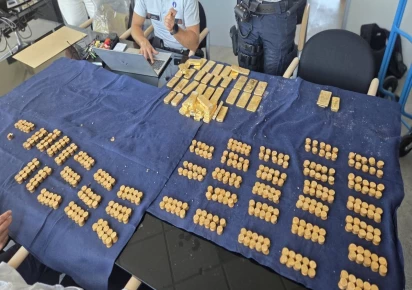
      Construction workers renovating a property in Belgium have made an extraordinary discovery after uncovering a large collection of gold bars and coins estimated to be worth around €9 million, or approximately Rs2.89 billion. The valuable hoard was reportedly hidden inside the walls of a cellar at a house in East Flanders. According to Belgian media reports, the workers discovered the treasure earlier this week while carrying out renovation work on the property. They were drilling into the building as part of preparations to install new sewage pipes when they unexpectedly came across the hidden collection. The discovery immediately attracted attention because of its enormous value and raised an unusual legal question: who will eventually be entitled to the gold? Both the construction workers who found the treasure and the charity that owns the property could potentially have a claim, depending on the outcome of the investigation. Police have launched an inquiry into the discovery and have warned members of the public to stay away from the construction site. Authorities said the property had effectively been searched and disturbed after news of the discovery spread. The gold has since been removed from the building and placed in a secure location while officials investigate its origin and ownership. The workers reportedly found the treasure while carrying out work around the foundations of the house. Among those involved was an 18-year-old student named Kobe, who was working a summer job at the construction site. Speaking to Belgian public broadcaster . He described the moment as one of disbelief and excitement. He initially thought some of the objects they had uncovered might simply be ordinary €1 coins. However, when the workers noticed what appeared to be a gold nugget among the items, they realised they had discovered something far more valuable. The workers quickly contacted police rather than attempting to take the treasure for themselves. Site manager Mario explained that the sheer quantity of gold made it impossible to secretly keep the discovery. He also acknowledged that taking it would amount to theft. Kobe similarly said that an amount worth around €9 million could not realistically be hidden. The property is currently owned by CAW Oost-Vlaanderen, an organisation that provides welfare and social support in the Dendermonde area, a Flemish community with a population of around 47,000 people. CAW Oost-Vlaanderen director Geert Hillaert said the organisation was shocked and amazed by the discovery. He expressed hope that, if the charity eventually receives part of the treasure, the money could be used to help people in need and support its welfare programmes. Police have appealed to the public not to visit the site in search of additional valuables. Authorities said they hoped the unusual discovery would eventually be placed in the hands of the rightful owner or used in a way that could benefit society. Under Belgian law, a legitimate owner has up to five years to come forward and claim hidden treasure. Prosecutors are currently investigating the circumstances surrounding the hoard, including whether it could be connected to criminal activity. If no owner is identified, Belgian civil law may allow the treasure to be divided between the person who discovered it and the owner of the property. However, this rule applies only if authorities determine that the gold is not connected to a crime. For now, the builders and the charity must wait while investigators determine who has the legal right to the extraordinary fortune. If no rightful owner appears within the five-year period, the discovery could transform an ordinary renovation project into a life-changing event.

  • |

    Indian ex-editor jailed 10 years for rape

    An Indian court has sentenced former investigative magazine editor Tarun Tejpal to 10 years of rigorous imprisonment after convicting him in a rape case involving a junior colleague, bringing a high-profile legal battle that has spanned more than a decade to a major turning point. The case stems from allegations that Tejpal sexually assaulted a female journalist inside a lift at a luxury hotel in the coastal state of Goa during a media event in November 2013. A trial court had acquitted Tejpal in 2021 of charges including rape, sexual harassment and wrongful restraint. However, the Goa government challenged the verdict before the Bombay High Court, which overturned the acquittal and found him guilty. The court ordered Tejpal to surrender within two weeks to begin serving his sentence. In addition to the prison term, he was directed to pay a financial penalty imposed by the court. Following the verdict, Tejpal announced that he would challenge the conviction before India’s Supreme Court. He maintained that the case against him was politically motivated and claimed he had faced a prolonged campaign against him over the past 13 years. Tejpal was first arrested in 2013 after the allegations surfaced and spent several months in custody before being granted bail by the Supreme Court. Throughout the proceedings, he consistently denied the allegations and argued that the prosecution was driven by political considerations. The case attracted nationwide attention because it emerged during a period of heightened public concern over violence against women in India. Public debate over sexual assault had intensified following the 2012 gang rape and murder of a young woman in New Delhi, which led to widespread protests and significant reforms to India’s criminal laws on sexual offences. The conviction also had a lasting impact on Tehelka, once regarded as one of India’s leading investigative publications. The scandal severely damaged the magazine’s reputation and influence, despite continuing operations under new management.

  • |

    Ex-US health official Anthony Fauci invokes Fifth Amendment in volatile Senate hearing

    Former top US public health official Dr Anthony Fauci repeatedly invoked his Fifth Amendment right against self-incrimination during a tense Senate committee hearing on Wednesday, refusing to answer questions regarding the origins of COVID-19 and early federal pandemic responses. The hours-long session before the Senate Homeland Security and Governmental Affairs Committee degenerated into a fierce clash between the retired scientist and Republican lawmakers. Fauci, 85, who led the National Institute of Allergy and Infectious Diseases (NIAID) for nearly four decades, declined to answer more than 100 questions on the advice of his legal team. In a statement before asserting his constitutional right, Fauci accused committee chairman Senator Rand Paul (R-KY) of pursuing an “unhinged obsession” with sending him to prison. Fauci stated that answering questions under oath was a deliberate attempt to trap him into potential perjury charges. Paul and GOP members pressed Fauci on whether federal funding supported dangerous “gain-of-function” research at the Wuhan Institute of Virology in China, and cited over 1,000 pages of newly leaked personal diary entries that lawmakers argue contradict his past public statements. Despite a preemptive presidential pardon issued by Joe Biden before leaving office, legal experts noted that testifying under oath could still leave Fauci exposed to potential perjury prosecutions if lawmakers alleged inconsistent statements. Enraged by the repeated refusals, Senator Paul announced that the committee will vote next week on holding Fauci in contempt of Congress, which could prompt a referral for criminal prosecution.

  • |

    Peru and Mexico resume diplomatic relations after political dispute

    The diplomatic break occurred when Mexico granted political asylum to former Peruvian Prime Minister Betssy Chavez, who faced conspiracy charges regarding former President Pedro Castillo’s 2022 attempt to dissolve Congress. As part of the bilateral agreement to restore relations, Peru granted Chavez safe-conduct guarantees under the 1954 Caracas Convention on Diplomatic Asylum, enabling her to leave the Mexican Embassy in Lima and travel to Mexico. Peruvian Foreign Minister Carlos Espa confirmed she departed in good health. The Peruvian Ministry of Foreign Affairs maintained that no political persecution exists in the country and stated that granting safe-conduct does not waive Peru’s legal right to request Chavez’s extradition in the future. The diplomatic rapprochement follows commitments made by newly elected Peruvian President Keiko Fujimori ahead of her inauguration to normalize ties with Mexico, an initiative welcomed by Mexican President Claudia Sheinbaum.

  • |

    Iran’s army voices readiness for potential renewed US attack

    ‘If Iran cannot trade, if Iran cannot live, no one will be able to trade or live. The Strait of Hormuz is the strait of our dignity and honor, and it will not be allowed for the country’s enemies to use this major logistical chokepoint while the Iranian people are deprived,’ says Iranian army commander-in-chief Amir Hatami

Leave a Reply

Your email address will not be published. Required fields are marked *