inquiry committee formed
| |

Inquiry Committee formed against Punjab University…

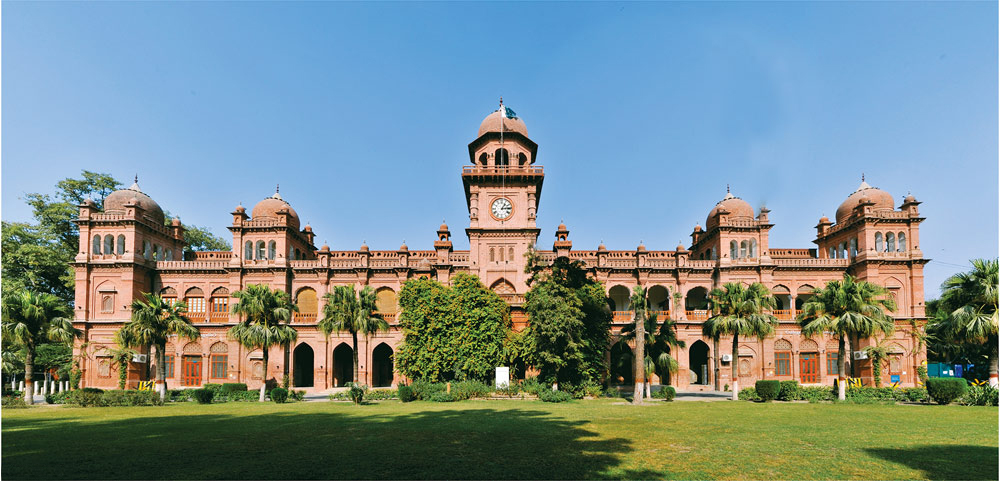
Lahore : The administration of Punjab University has taken a significant step by forming a three-member inquiry committee to investigate multiple complaints submitted against the university’s Public Relations Officer (PRO), Khurram Shehzad.

The committee has been constituted with the approval of the Vice Chancellor and has been directed to complete its investigation within one week and submit a detailed report along with recommendations.

According to official documents, the inquiry committee comprises Dr Nadir Shah, Dr Imtiaz Shafiq, and the Deputy Registrar (Administration). The committee will review the complaints, examine relevant records, assess available evidence and record statements from concerned individuals before finalising its findings.

Sources said that Khurram Shehzad has been serving as PRO on additional charge for several years. During this period, several faculty members reportedly submitted written complaints to the Vice Chancellor, alleging concerns regarding the use of official authority and the handling of administrative responsibilities.

The complaints reportedly include allegations relating to misuse of official resources, administrative conduct, procedural issues and other matters connected with the performance of duties. The allegations, however, will be subject to verification by the inquiry committee.

The Vice Chancellor has directed the committee to conduct a transparent review and submit its findings within the stipulated timeframe, after which any further administrative action will be considered in light of the inquiry report.

The formation of the committee has attracted attention within academic and administrative circles, with university stakeholders awaiting the outcome of the investigation.


Similar Posts

  • Emigration policy sparks clash in National Assembly committee

    Islamabad: A fresh controversy has emerged in the National Assembly Standing Committee on Overseas Pakistanis and Human Resource Development after lawmakers raised questions over the preparation of the new emigration policy, the role of parliamentarians in policy making and mistakes in official committee records. The debate started when members questioned whether important stakeholders were consulted before the approval of the new immigration policy and why some members of the committee were not included in the policy launch event. During the meeting, Dr Mahreen Razzaq Bhutto, a member of the committee pointed out that concerns raised in an earlier meeting regarding the emigration policy were missing from the official minutes. She questioned the process through which the policy was prepared and asked whether relevant stakeholders were taken on board before the policy was approved. The lawmaker argued that public policies affect millions of people and should be prepared after consultation with all important groups, including representatives of the people. She also questioned statements regarding the policy’s approval timeline, noting confusion about when the policy was actually introduced and approved. The issue created a debate inside the committee over the difference between the government’s authority to make policies and parliament’s responsibility to monitor their implementation. Committee Chairman Syed Rafiullah stated that making government policy falls under the authority of the government and the minister concerned. He said the role of the committee is to review, monitor and examine whether the policy is being implemented properly. The chairman maintained that the government has the right to prepare policies, while parliamentary committees can examine their performance and suggest improvements. However, the member disagreed, arguing that while the government has the authority to create policies, consulting stakeholders strengthens the policy and improves public confidence. She said that parliamentarians should be involved before policies are presented for final approval because they represent public concerns. The lawmaker stressed that policies become public documents after approval, but meaningful consultation should happen before final decisions are made. The chairman responded that members would have the opportunity to discuss issues within the policy and provide suggestions after reviewing the document. The discussion also highlighted the importance of clearly defining the connection between government policy making and parliamentary oversight. Another controversy emerged when members raised objections over the wording used in committee documents regarding the Federal Secretary of the Inter Provincial Coordination Division. Dr Mahreen questioned why the word “summon” was used for a federal secretary in the committee recommendations, arguing that such language is generally associated with legal authority and court proceedings. She questioned whether a parliamentary committee should use the term for a senior government official who was being requested to attend a meeting. Officials clarified that the use of the word appeared to be a drafting mistake and that the actual intention was to invite the secretary to attend the meeting. The committee secretary explained that the official agenda mentioned the secretary was invited along with relevant officers to participate in discussions. The member insisted that official documents should use accurate wording because committee reports become public records and represent parliamentary proceedings. She said that drafting mistakes can confuse the powers and procedures of parliamentary committees. The meeting also witnessed a heated exchange between members over the issue, with the chairman asking members to follow the committee procedure and discuss matters according to their turn. The chairman advised members that disagreements should remain within the rules of parliamentary discussion and that the committee should continue its work in an organised manner. The committee later continued discussion on the relevant agenda items while maintaining that official records and policy discussions must remain clear and accurate.

  • |

    West Bank village mourns lost harvest as violence halts annual fig festival

    The Palestinian village of Tel in the northern occupied West Bank should have been celebrating one of its busiest and most cherished times of the year. Residents had spent weeks preparing for the annual fig harvest and a festival expected to attract visitors from across the region. Instead, the village has been left grieving after a deadly confrontation forced organizers to cancel the event and replaced the festive atmosphere with mourning. The violence erupted after an attack involving Israeli settlers last week. The clashes that followed resulted in the deaths of four Palestinians and two Israeli settlers, leaving the community in shock. Black flags now hang where festival decorations were meant to be displayed, while many orchards remain out of reach because of an increased Israeli military presence and ongoing restrictions in the area. Tel village council head Walid Zaidan said the tragedy has deeply affected the community of around 7,000 people. According to him, the village has lost its usual energy and sense of joy after the deaths of four young residents in a single day. He said the emotional impact is visible throughout the village, where families continue to cope with grief and uncertainty. Zaidan said residents had not been seeking confrontation but were trying to protect their homes after repeated attacks by Israeli settlers. He recalled an earlier incident in which the home of a local resident, Sohaib Ramadan, was set on fire. The family managed to escape only moments before the house was completely destroyed. He said many villagers feared another similar attack and went out to defend their neighborhood when violence broke out again. The damage has extended beyond the loss of life. Zaidan said Israeli bulldozers entered farmland and cleared large sections of agricultural land. Initial estimates suggest that around 2,000 dunams, or roughly 500 acres, have been affected. Local officials have been unable to inspect the full extent of the destruction because access to the area remains restricted by Israeli forces and settlers. Residents also claim that a new settlement outpost is being established on the land. At the same time, Israeli forces have carried out arrests and questioned dozens of Palestinians in the village, adding to growing tensions. For the people of Tel, farming is more than an economic activity. Fig trees, olive groves and prickly pear plants have long been central to the village’s identity and way of life. Tel is known throughout the occupied West Bank for producing several varieties of figs, drawing visitors each harvest season to buy fresh fruit and locally made products. Plans for a three day festival featuring figs, dairy products, cheeses and other local goods were abandoned after the violence. Farmers who own nearby livestock and poultry farms have also struggled to reach their animals because roads remain blocked, raising concerns about the welfare of their livestock. Local resident Omar Ishtayeh said the village has depended on agriculture for generations, but increasing restrictions and repeated settler attacks have made farming more difficult. He said orchards that once represented prosperity now reflect the hardships facing local families. With the fig season already underway, many farmers fear the fruit will spoil before they are able to safely return to their land. Palestinian officials argue that the events in Tel are part of a wider rise in settler violence across the occupied West Bank. According to the Palestinian Colonisation and Wall Resistance Commission, thousands of attacks targeting Palestinians and their property were recorded during the first half of 2026. These incidents included assaults on civilians, arson attacks, damage to farmland, restrictions on access to agricultural areas and the expansion of settlement outposts. The United Nations considers Israeli settlements in the occupied Palestinian territories illegal under international law. Palestinians say the continued expansion of settlements is reducing hopes for the creation of an independent Palestinian state and making everyday life increasingly difficult for communities that rely on their land for survival.

  • Pattaya Mystery Deepens: Arrest Warrants Issued for Two Men Over Missing Russian Siblings

    PATTAYA, Thailand – Thai police are currently intensifying their massive search operations for two missing Russian siblings in Chonburi province. The sudden and unexplained disappearance of these young tourists has sparked widespread concern among local community members. Law enforcement authorities are working around the clock to find any vital trace of their whereabouts. Diana Nazimova, […]

  • | | |

    Why is the risk of an India-China clash rising in …

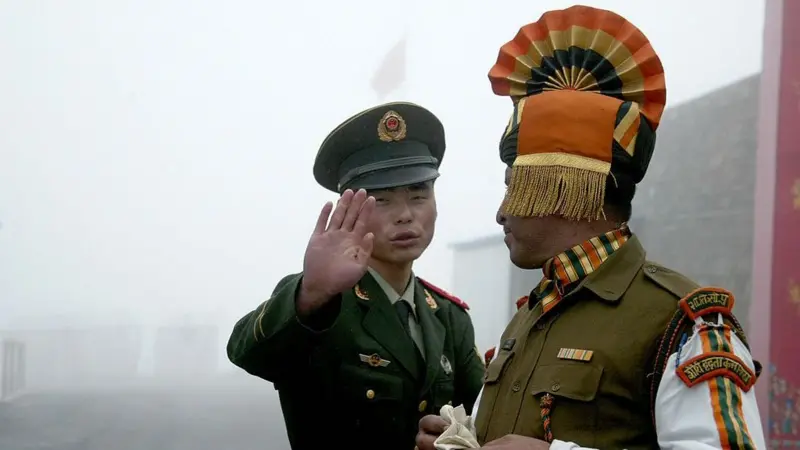
    Tensions along the India-China border remain a major security concern, particularly in Arunachal Pradesh despite recent efforts by both countries to improve relations and maintain peace along their disputed frontier. India’s National Security Adviser Ajit Kumar Doval and Chinese Foreign Minister Wang Yi recently held talks in Beijing on the long-running border dispute. The meeting marked the 25th round of discussions between the two countries special representatives on the boundary issue. Following the talks China’s Ministry of Foreign Affairs said Wang Yi emphasized the importance of stable relations between China and India. He described the two countries as important neighbours and emerging economies arguing that improved and stable bilateral relations are in the fundamental interests of both populations. According to the Chinese statement Wang called for a strategic and long-term approach to bilateral relations stronger communication and efforts to reduce differences. He also urged both sides to remove obstacles and promote cooperation as good neighbours and friendly partners. Doval also struck a conciliatory tone during the discussions. According to the Chinese statement he said India and China are ancient civilizations with large populations and important economies adding that the two countries should be viewed as partners rather than rivals. Doval reportedly said that under the guidance of the leadership of both countries India-China relations had returned to the right track. He also said overall peace had been maintained in border areas and that exchanges and cooperation in several fields were making progress. However, the disputed border remains a sensitive issue. Arunachal Pradesh is particularly important because China claims large parts of the Indian-administered territory and refers to the region as “Zangnan” or southern Tibet. India firmly rejects China’s territorial claims and considers Arunachal Pradesh an integral part of the country. The two sides have previously experienced serious confrontations along the Line of Actual Control making border management and military deployments highly sensitive. During the latest talks both sides discussed advancing negotiations on boundary demarcation strengthening border management mechanisms improving procedures and expanding cross-border cooperation. Although the latest diplomatic engagement indicates that both countries are seeking to prevent further escalation unresolved territorial claims and military activity continue to create the possibility of confrontation. The key challenge for India and China will be to maintain dialogue while managing their competing territorial claims and preventing local disputes from developing into a broader military crisis.

  • |

    Samay Raina reacts after India’s Got Latent episode leak

    Comedian Samay Raina has appealed to fans to support creators through official platforms after a members-only bonus episode of India’s Got Latent Season 2 was leaked online just hours after its release. The exclusive episode, which was made available only to paid YouTube members, reportedly surfaced on multiple unauthorized platforms shortly after it went live. Clips from the show, as well as the complete episode, quickly spread across social media and file-sharing websites, allowing many users to watch it without purchasing a membership. The bonus episode features a star-studded lineup, including actor and television host Raghav Juyal, comedian and reality TV winner Munawar Faruqui, content creator Niharika NM, and comedian-writer Rohan Joshi. It was intended to be exclusive content for paying subscribers who support the show through YouTube memberships. Following the leak, Samay Raina addressed the issue through his Instagram stories, asking viewers not to consume pirated versions of the episode. Instead, he encouraged fans to watch the content through official channels so that the creators and everyone involved in producing the show receive proper support. In his message, Samay admitted that he understood why some people rely on piracy because he had done the same during his college years. He revealed that when he was a student and could not afford to pay for entertainment, he often downloaded movies and other content through torrent websites. However, the comedian explained that his perspective changed after he started earning his own income. He said that now he prefers to purchase games through official platforms like Steam and watches movies and shows on legitimate streaming services because he believes creators deserve to be compensated for their work. Speaking directly to his audience, Samay said that anyone who wants to watch the complete bonus episode can subscribe to his YouTube membership through the link available in his Instagram bio. He emphasized that purchasing a membership is the right way to access exclusive content and helps support the people behind the production. The comedian also shared that many fans had informed him they had already watched the episode through torrent websites or Google Drive links. Responding to those messages, Samay reiterated that while he once depended on piracy due to financial limitations, he now makes a conscious effort to pay for the content he enjoys because it supports the entertainment industry and encourages creators to continue producing quality work. The incident has once again highlighted the ongoing challenge of digital piracy faced by online creators and streaming platforms. Despite the availability of subscription-based services and exclusive memberships, leaked content continues to spread rapidly across the internet, often within hours of release. Samay Raina’s response has drawn attention for its balanced approach, as he acknowledged his own past experiences while encouraging fans to make ethical choices if they are financially able. His message serves as a reminder that paying for official content directly supports creators, performers, editors, and production teams who invest significant time and effort into bringing entertainment to audiences.

  • |

    Swiss government rejects proposed constitutional ban on non-UN sanctions ahead of neutrality vote

    The Swiss government has formally rejected a popular initiative seeking to enshrine a rigid, absolute definition of neutrality into the country’s constitution, warning the move would cripple national security and diplomatic flexibility. The constitutional referendum, scheduled for 27 September, was triggered after right-wing campaign groups backed by the Swiss People’s Party gathered over 100,000 signatures. Proponents argue Bern’s historical stance has been diluted by adopting European Union sanctions against Russia over its war in Ukraine and deepening training ties with NATO. If passed, the amendment would constitutionally mandate that Swiss neutrality remain perpetual and armed, while explicitly barring non-UN sanctions and foreign military alliances. Launching the official counter-campaign on Tuesday, Swiss Foreign Minister Ignazio Cassis insisted the nation’s neutrality remains intact without need for restrictive legal amendments. “Switzerland has been and is neutral, and it will remain neutral,” Cassis said in a statement, adding that the proposal would severely hinder security cooperation with international partners prior to an actual crisis. Current polling indicates low public support for the initiative, with a Tamedia survey showing 54 per cent of voters opposed compared to 34 per cent in favour.

Leave a Reply

Your email address will not be published. Required fields are marked *