instagram introduces music

Instagram introduces music replacement for old posts

Instagram has introduced a new “Replace Audio” feature that allows users to change the music in their previously published feed posts.

In a statement, Meta said the new update enables users to replace the soundtrack of an existing post without affecting its likes, comments, shares or overall reach.

The company explained that the feature was designed to give users greater control over content they have already shared.

Previously, users who wanted to change the background music of an old Instagram post had to delete the post and upload it again. With the new feature, they can simply replace the audio while keeping the original post intact.

To use the feature, users need to open a previously published post, tap the menu in the top-right corner and select “Edit.” They will then see an option to replace the existing audio.

Meta said the rollout of the feature has already begun and it will be made available to all Instagram users in the near future.

Similar Posts

  • |

    Does placing Wi-Fi router on floor weaken signals?

    You may have heard that the location of a Wi-Fi router plays an important role in its performance. Placing a router in a poor location can negatively affect the strength and range of internet signals. But what happens if you place a Wi-Fi router on the floor? The answer is that a Wi-Fi router can be placed on the floor but generally, it is not an ideal location. One reason is that when a router is placed on the floor, a significant portion of its Wi-Fi signals may be directed toward the ground. In addition, placing the router on the floor increases the chances of its signals being blocked or weakened by furniture and other household objects. As you may know, most Wi-Fi routers have antennas that transmit signals at different angles. Therefore, when a Wi-Fi router is placed on the floor, many of its signals may travel directly toward the floor instead of spreading efficiently throughout the room. Walls along the path of Wi-Fi signals can also act as obstacles. That is why it is generally recommended to place your Wi-Fi router in an elevated location such as on a shelf. The higher the router is placed, the better the signal coverage is likely to be throughout the house. It is also better to place the router in an open area where there are fewer household objects around it. Although placing a Wi-Fi router on the floor is not ideal, it is not necessarily the worst possible location. In fact, placing a router close to electrical appliances can be even worse. Therefore, you should avoid placing your Wi-Fi router near devices such as televisions, microwave ovens, refrigerators, Bluetooth devices and other electronic appliances as they can significantly interfere with signal coverage.

  • X launches Rewards Program for original content creators

    X has discontinued its previous Creator Revenue Sharing Program and introduced a new Original Content Rewards Program in its place. The purpose of X’s Original Content Rewards Program is to reward content creators who share original content on the social media platform. Earnings will depend particularly on the qualified impressions generated through a creator’s original content. Rewards will be distributed every two weeks with the first payment scheduled for August 28. Only impressions from Premium subscribers will be counted toward payments. Existing participants will be able to earn revenue until September 7 while eligible creators can apply for the new program starting September 8, 2026. Under the new initiative, posts containing misinformation and disinformation as well as posts carrying Community Notes will be ineligible for advertising revenue. It is worth noting that new users can no longer access the previous Revenue Sharing Program which has now been discontinued.

  • NCA and PUCAD unite in ‘Ra’naai-e-Khayal-o-Khat’

    LAHORE — On the afternoon of August 14, 2026, Lahore’s main cultural pivot along The Mall became a two-part gallery circuit. It’s because two of Pakistan’s most valued art institutions: the National College of Arts (NCA) and the College of Art & Design, University of the Punjab (PUCAD) opened their doors to a historic joint exhibition titled Ra’naai-e-Khayal-o-Khat (The Beauty of Thought and Line). The inauguration began at 3:30 PM by Chief Guest Prof. Dr. Niaz Ahmad Akhtar, Chairman of the Higher Education Commission (HEC). The collaborative display marks a rare institutional symbiosis arranged under the leadership of Vice Chancellor NCA Prof. Dr. Murtaza Jafri, Vice Chancellor Punjab University Prof. Dr. Muhammad Ali and Principal CAD PU Prof. Dr. Samina Nasim. This exhibition took place across two physical sites. Part 1 is hosted at PUCAD’s Allama Iqbal Campus and Part 2 is taking over the galleries of NCA. The exhibition which runs through September 3, 2026 forces observers into an active pedestrian dialogue between both historic campuses. The atmosphere felt energetic with a distinct focus on tactile exploration, material experimentation and personal commentary while walking through the gallery spaces. It’s far from a conventional student thesis. The works on display demonstrate a meticulous engagement with raw textures, physical mediums and thematic intensity. One of the most captivating pieces in the gallery space is Silent Voice (2026) by Syedah Adeela Ijaz Naqvi. This piece neatly sits on the white wall with a modest print label: the 2” x 3” work entirely relying on hair on canvas. The tactile quality of the piece is intuitive. There are fine strands of human hair intricately arranged to compose two emotive faces. One of the faces is posing a silent scream and the other is gazing outward with quiet resignation. The physical texture of the woven fiber creates a three-dimensional depth. The artwork captures abstract emotional distress in the immediate reality of human bodily material. Nearby, Zaheer Chaudhry’s Shadow Has No Choice (2022) offers an abrupt photographic counterpoint. The large-format 36” x 25” black-and-white print captures the web-like shadow of tree branches cast against a weathered wall. Chaudhry’s deliberate work turns simple light exposure into a study of urban architecture, restraint and organic silhouette. This artwork emphasizes on physical grain of the surfaces upon which shadows fall. The exhibition moves fluidly between interiority and observational realism. In an extraordinary mixed-media work, an artist utilizes actual transparent MRI and CT scan films as a physical substrate. The cross-sectional images of the human spine and skull form the internal structure of a curled human figure. The scan is overlaid with swirling patterns reminiscent of cellular forms or neural pathways. The artwork physically merges medical technology with existential vulnerability. In contrast to these monochromatic psychological investigations stands a large botanical painting depicting green parakeets clustered within a canopy of lychee trees. The piece revels in the lush sheen of ripening fruit and light filtering through leaves. The painting is executed with meticulous brushwork. It celebrates regional flora and fauna with precision. Elsewhere, a surrealist monochrome composition presents a reclining figure intertwined with reptilian and avian wildlife. There’s a frog resting on patterned cloth while a bird hovers close to an open beak-like mouth. This piece of art blurs the line between human anatomy and raw natural ecology. The exhibition’s opening on Independence Day preserved national identity and historical homage. The central hall sculpted spaces render tributes to Quaid-e-Azam Muhammad Ali Jinnah. A heavily dark bronze bust of Jinnah presents prominently before the official insignias of Punjab University and NCA. Its rough tactile surface catches the ambient overhead lighting. Nearby, a tonal portrait executed in high-contrast graphite and airbrush tones captures Jinnah’s likeness in quiet contemplation.   Ra’naai-e-Khayal-o-Khat sets a significant precedent for academic art institutions in Pakistan by uniting NCA and PUCAD. The two institutions have created a unified platform that foregrounds artistic integrity and field research. The exhibition will remain open to the public at both venues until September 3, 2026.

  • Google Maps tests new Power Saving Mode for low battery

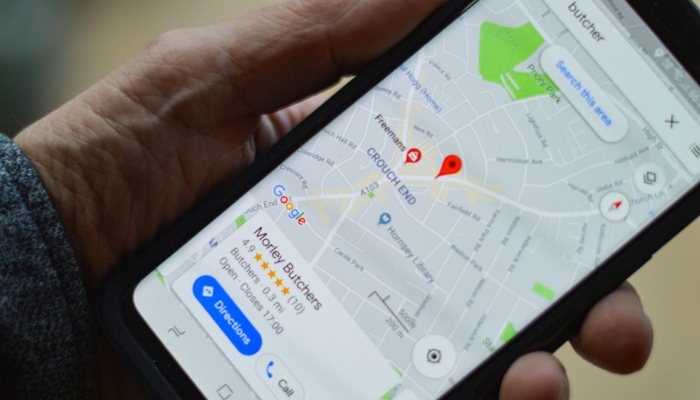
    If you use Google Maps and notice that your smartphone’s battery is about to die, you probably know how frustrating that situation can be. However, this problem may soon be resolved. According to a report by Android Authority, Google is working on a new feature called Power Saving Mode for Google Maps. The purpose of this feature is to allow Google Maps to continue working for a longer period even when the phone’s battery is close to running out. The feature was spotted in a new beta version of the Google Maps app for Android devices. According to the report, when users switch to this power-saving mode, the colourful user interface of Google Maps will change into a simple black-and-white view. Several details on Google Maps will disappear leaving only essential navigation information such as the next turn and the remaining travel time. The report further stated that the screen will switch to a monochrome display in this mode. Street names and traffic colors will disappear while the amount of on-screen text will also be reduced to help extend battery life. The process of switching to Power Saving Mode is also somewhat unusual. According to the report, the mode can be activated by pressing the phone’s physical power button while Google Maps is in navigation mode. Google has not yet officially announced the Power Saving Mode feature. Therefore, it is difficult to say when the feature will officially become available to all users. For now, the feature remains hidden in the beta code and Google may make further changes to it before its official release.

  • WhatsApp tests new birthday reminder feature

    WhatsApp is developing a new feature that will remind users of their contacts birthdays similar to the birthday reminders available on Facebook. According to a report by WABetaInfo, the birthday reminder feature is currently being tested in the beta version of WhatsApp for Android. The feature is designed to help users keep track of the birthdays of their friends and family directly within WhatsApp eliminating the need to rely on separate calendar applications. Under the new feature, users will receive notifications when one of their saved contacts has a birthday. The notification will allow users to open the chat instantly and send birthday wishes directly through WhatsApp. The report also revealed that WhatsApp is working on a dedicated “Birthdays” section within the app. This page will display the birthdays of saved contacts in one place making it easier for users to view and manage important dates. According to the report, the birthday reminder will only work if a contact has added their date of birth to their WhatsApp profile. If a friend or family member has not provided their birthday information in WhatsApp, no birthday reminder will be available for that contact. WABetaInfo added that the feature is still under development and additional changes or improvements may be introduced before its public release.

  • | |

    Multimedia pioneer Cao Fei captures the human heart

    Among contemporary Asian creators, Beijing-based multimedia artist Cao Fei stands out as a defining narrative voice. Working across video, virtual reality, installation, and photography, her globally acclaimed career centers on a simple yet profound premise: amidst the whirlwind of rapid industrial advancement, hyper-capitalism, and sweeping technological change, art must always return to the core of the human condition. Born in 1978 in Guangzhou, Cao Fei grew up on the frontlines of staggering societal evolution. Watching the countryside surrender to megacities, factory complexes, and high-tech infrastructure gave her a unique point on the modern world. Rather than viewing this rapid transition with nostalgia or pessimism, her works connect reality and imaginative fantasy. A hallmark of Cao’s career is her fascination with the workplace, particularly automated logistics hubs and manufacturing floors. In iconic pieces like Whose Utopia and Asia One, she embeds her cameras inside functioning industrial facilities from textile plants to highly automated e-commerce distribution centers. Yet, instead of focusing solely on the cold efficiency of machinery or output metrics, she shifts her lens toward the individual laborers maneuvering through these vast, mechanized systems. Her films document the quiet desires, personal dreams, and unspoken emotional bonds of workers who navigate a world increasingly driven by algorithms and quotas. Parallel to her exploration of physical industry, Cao Fei has consistently operated on the cutting edge of digital frontiers. Long before the concept of the metaverse entered mainstream vocabulary, she was constructing RMB City within online platforms like Second Life, exploring how virtual avatars allow people to seek identity, escape, and community in digital environments. Her projects often feature young people engaging in subcultures like cosplay, stepping out of suburban construction sites and into elaborate alter egos. For Cao, these virtual realms are not merely frivolous distractions; they represent vital spaces of self-expression where individuals reclaim agency against the pressure of uniform urban life. Despite her focus on futuristic landscapes, automated networks, and virtual platforms, Cao Fei maintains that rootedness in heritage remains essential. Traditional culture, memory, and personal history act as indispensable anchors in a world constantly shifting beneath our feet. Whether reflecting on regional Cantonese roots, exploring local neighborhood history in Beijing, or depicting surreal futures, her work grounds high-tech environments in real human memory and emotion.   Ultimately, Cao Fei’s artistic vision offers a thoughtful, multi-layered reflection on modern life. By balancing documentation with surreal storytelling, her art reminds us that no matter how complex our machines, algorithms, or cities become, the central narrative of our time remains fundamentally human.

Leave a Reply

Your email address will not be published. Required fields are marked *