orders blacklist corrupt
| |

KP orders blacklist of corrupt, underperforming of…

PESHAWAR: The Khyber Pakhtunkhwa government has directed all provincial departments to prepare verified lists of corrupt, disreputable, underperforming and suspicious officers by August 7 as part of a major governance reform aimed at improving transparency, accountability and public service delivery.

According to official directives, officers included on the verified negative lists will not be posted to sensitive positions or offices involving direct interaction with the public. The government has also instructed departments to ensure that all appointments and transfers are made strictly on the basis of merit, performance and suitability.

The directives further emphasize transparency in public procurement and financial management, the establishment of an effective public grievance redressal system, the digitization of government services and ensuring that officers deliver timely and efficient services to citizens.

Sources said the instructions were issued following a high-level meeting chaired by Khyber Pakhtunkhwa Chief Secretary Shahab Ali Shah. The meeting was attended by administrative secretaries, director generals and heads of various government departments.

According to the sources, if the decisions are fully implemented, Khyber Pakhtunkhwa could become the first province in Pakistan to officially maintain a verified negative list of government officers with poor performance records, corruption allegations or damaged reputations.

An official document quoted the chief secretary as saying that providing quality public services and ensuring the welfare of citizens should remain the top priority of every government department

Similar Posts

  • | |

    Jacob Batalon recalls iconic handshake with Tom Holland

    LOS ANGELES: Actor Jacob Batalon has opened up about the memorable handshake he shares with Tom Holland in the Spider-Man films, revealing that the fan-favourite moment was created spontaneously and has remained unforgettable over the years. Batalon, who has portrayed Ned Leeds since Spider-Man: Homecoming in 2017, said the signature handshake returned naturally while filming Spider-Man: Brand New Day. He explained that after performing it throughout several films, it had become second nature whenever the cameras started rolling. The actor recalled that the handshake was invented just minutes before filming one of their early scenes together. According to Batalon, the script simply required the characters to have a unique “best friends” handshake, leaving the two actors to create one on the spot. He said the quick improvisation unexpectedly became one of the most memorable moments of the franchise and has remained popular among fans ever since. Speaking about his relationship with Holland and the rest of the Spider-Man cast, Batalon described them as hardworking, humble and highly professional. He said spending years together on the film series had created a close bond that felt more like family than colleagues. Batalon added that watching his co-stars grow in their careers has been rewarding and expressed gratitude for being part of the successful superhero franchise. Spider-Man: Brand New Day, released in July 2026, continues its successful run in cinemas, with audiences embracing the return of the beloved characters and their on-screen chemistry.

  • |

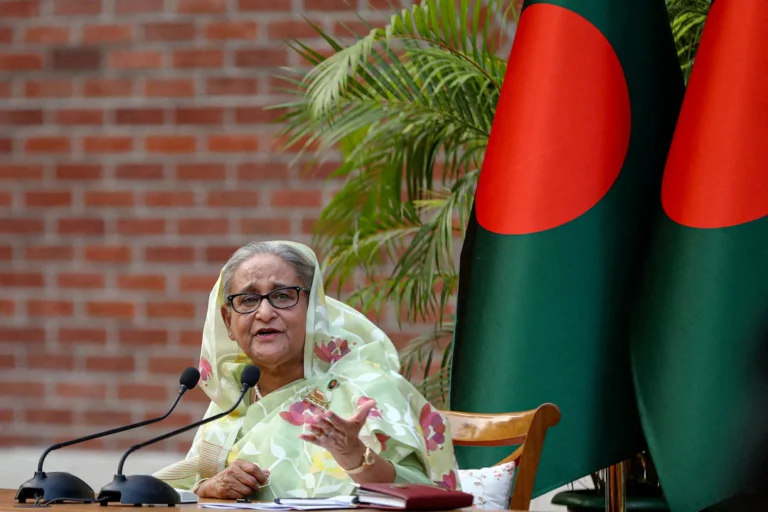
    Bangladesh seeks India’s clarification over Hasina speech

    DHAKA: Bangladesh has asked India to clarify its position over a planned virtual address by former prime minister Sheikh Hasina, saying political activities by a fugitive could undermine efforts to improve relations between the two neighboring countries. The request comes ahead of an event scheduled for August 5 in New Delhi, where Hasina is expected to deliver a video address alongside her son, Sajeeb Wazed Joy, during a programme organized by the Foreign Correspondents’ Club of South Asia. Bangladesh’s State Minister for Foreign Affairs Shama Obaed Islam said Dhaka is committed to strengthening ties with India but believes New Delhi should clearly explain its stance regarding political activities by individuals wanted by Bangladeshi authorities. She said Bangladesh has repeatedly expressed concerns over Hasina and other leaders of the Awami League making political statements while residing in India. According to the minister, Dhaka does not want such activities to negatively affect the progress made in bilateral relations. The minister noted that the event is not being organized by the Indian government but added that Bangladesh is prepared to raise the matter through diplomatic channels if required. India’s Ministry of External Affairs had not issued an official response to the remarks at the time of reporting. Relations between Bangladesh and India have remained under strain since Hasina left Bangladesh in August 2024 following a student-led uprising that ended her tenure in office. Although both countries have recently indicated a willingness to rebuild diplomatic engagement, the issue of Hasina’s stay in India continues to be a sensitive matter. Bangladesh has formally requested Hasina’s extradition to face legal proceedings. In 2025, she was sentenced to death in absentia over crimes against humanity linked to the 2024 crackdown on anti-government protests. Hasina has rejected the verdict, describing it as politically motivated and without legal validity. Despite the legal cases against her, Hasina has said she intends to return to Bangladesh in the future, while her planned virtual appearance has once again brought the issue of her presence in India into the diplomatic spotlight.

  • | | |

    UAE visa restrictions threaten Pakistan’s Gulfoo…

    Pakistani business leaders have raised concerns over reported difficulties in obtaining UAE visas, warning that the situation is disrupting trade, business travel and export activities. The restrictions are causing uncertainty among Pakistani exporters and traders who regularly travel to the UAE for commercial meetings, exhibitions and other business activities. Ismail Suttar, Founder and Chairman of the Salt Manufacturers Association of Pakistan, said Pakistani citizens were facing serious difficulties in obtaining UAE visas. He said the reasons for the reported restrictions had not been clearly communicated. Business representatives said the issue was particularly worrying for companies with established operations in Dubai. Several Pakistani businessmen have offices and long-standing commercial interests in the UAE. Some business owners have also reportedly faced difficulties travelling to the UAE to visit their families. Representatives of the business community said repeated visa rejections had created considerable uncertainty. A member of the Karachi Chamber of Commerce and Industry said the matter had been formally raised with UAE authorities. A letter was sent to the UAE consul general on June 11, followed by another communication on July 7. The business community says the visa situation could also affect Pakistan’s participation in major international exhibitions. Gulfood, one of the major food and beverage exhibitions held in Dubai, is a particular concern. Pakistani food companies are preparing for the upcoming event, but exporters fear that their sales teams may not receive visas. Business leaders say participation in such exhibitions is important for finding international buyers and expanding exports. Without visas, company representatives cannot display products, hold meetings or negotiate new deals. They warned that prolonged travel restrictions could affect Pakistan’s efforts to increase exports and strengthen commercial ties with international markets. Former Federation of Pakistan Chambers of Commerce and Industry Secretary General Shahid Anwar said visa conditions for Pakistanis differed across Gulf countries. He noted that some Gulf states had introduced measures that made travel easier for Pakistani citizens. Saudi Arabia has included Pakistan in a package-based tourist visa programme, while Kuwait has restored several visa categories for Pakistani nationals. According to Anwar, these developments indicate improving engagement in some bilateral relationships. The situation with the UAE, however, remains unclear. UAE authorities have maintained that there is no general visa ban on Pakistanis and that applications across different categories continue to be processed. Business representatives, however, say their experiences do not always match the official position. Rawalpindi Chamber of Commerce and Industry President Usman Shaukat said several chamber members with established businesses in the UAE were facing visa problems. Some businessmen have long-standing commercial links and property interests in the UAE. Despite this, they have reportedly struggled to obtain visas. The difficulties have resulted in cancelled meetings and missed international exhibitions, according to business representatives. They said the impact was being felt not only in Rawalpindi but also among business communities in Karachi, Lahore and other major commercial centres. Travel industry representatives have also reported a significant decline in movement between Pakistan and the UAE. Aviation consultant Wahid Mukhtar said travel to the UAE had been badly affected by visa difficulties. He said family and visit visa applications were also facing high rejection rates. He added that labour visa holders continued to travel, while holidaymakers were increasingly choosing destinations such as Azerbaijan and Tashkent. Qatar has also changed its visa arrangements for Pakistani travellers, according to travel industry representatives. The reported restrictions are also affecting Pakistanis travelling for medical and health-related activities. Masood Ahmed said some applicants below the age of 40 were facing difficulties in obtaining Dubai visas, even when they had supporting letters. He said older applicants were experiencing comparatively fewer problems. Some younger applicants had previously been approved when travelling with family during major health exhibitions. Business leaders have urged the Pakistani government to intervene diplomatically. They want Islamabad to engage with UAE authorities and seek clarity on the visa situation.

  • | |

    Javed Jabbar urges stronger support for NAPA

    Former senator and ex-federal minister Javed Jabbar has called on both the government and the private sector to strengthen their support for the National Academy of Performing Arts, arguing that the institution has reached a point in its evolution where it can meaningfully expand its contribution to Pakistan’s cultural life, but only if it receives the backing it deserves. Speaking to media in his capacity as a member of NAPA’s Board of Directors, Jabbar acknowledged the progress the academy had made over the past two decades while warning that future growth would not happen on its own. “What we have achieved over the past twenty years can now be expanded on a much broader scale,” he said, adding that while continued government support remained necessary, greater private sector participation was equally important to the academy’s sustainability. His remarks carried a particular weight given the sustained neglect Pakistan’s performing arts sector has historically faced from commercial institutions. Jabbar drew a direct parallel with other sectors that have benefited from private philanthropy. Pakistan has a strong tradition of charitable giving in healthcare and education, he noted, and he argued that the performing arts deserved the same recognition and financial investment. Patronage, he said, should go beyond purchasing tickets and attending events. It should translate into structural, sustained support for institutions doing the long-term work of building a creative culture. He also addressed the need for NAPA itself to remain current and adaptable. With rapid technological changes reshaping the media and entertainment industries, he stressed that the academy would need to regularly update its faculty and curriculum to ensure students graduate with skills relevant to the world they are entering. The performing arts landscape of today is not the one of twenty years ago, and the training institutions responsible for the next generation of artists and practitioners must reflect that reality. At the same time, Jabbar made clear that responsibility did not rest with institutions alone. Students, he said, must bring the same commitment to the opportunities NAPA provides. They should not take those opportunities for granted and must maintain the discipline the performing arts require. NAPA was established in 2005 at the request of then-President Pervez Musharraf and was founded by the legendary Zia Mohyeddin, who was trained at the Royal Academy of Dramatic Art in London and had dedicated his life to theatre, film and television across both local and international productions. The academy offers programmes in theatre arts and music, with students taught by practicing musicians, musicologists and visiting maestros. Students also receive practical training in performance and are given the opportunity to present their work to live audiences. Javed Jabbar himself is one of Pakistan’s most distinguished public intellectuals, with a career spanning advertising, documentary filmmaking, politics and writing. He has authored 19 books, directed over 300 commercials, and produced landmark documentary and cinematic works including the 1972 documentary Moenjodaro: The City That Must Not Die, which won the Silver Prize at the Asian Film Festival. He has also served as Minister of State for Information and as a member of the Senate Forum for Policy Research. His advocacy for NAPA reflects a longstanding commitment to the role of culture and the arts in Pakistan’s national life.

  • |

    China seeks Houthi assurances for safe passage of oil tankers in Red Sea

    China has held direct discussions with Yemen’s Houthi movement in an effort to secure safe passage for its oil tankers through the southern Red Sea as regional tensions continue to disrupt one of the world’s busiest shipping routes. According to sources familiar with the talks, Beijing wants to ensure that vessels carrying energy supplies to China can travel without being targeted by attacks. The negotiations follow the Houthis’ announcement on July 20 that they would block access to Saudi Arabian ports, expanding their military campaign during the ongoing regional conflict. The group said it would target ships linked to Saudi ports, raising fresh concerns over the safety of commercial shipping and global energy supplies. Sources said China was among the first countries to contact the Houthis directly after the new restrictions were announced. Beijing reportedly requested guarantees that Chinese flagged or China bound tankers would be allowed to pass safely through the Bab el Mandeb Strait, a strategic waterway connecting the Red Sea with the Gulf of Aden. A senior Iranian official was among those who confirmed that the discussions had taken place. China’s priority is to keep crude oil shipments moving from Saudi Arabia’s Red Sea export terminals, particularly the port of Yanbu. Maintaining those supplies has become increasingly important as disruptions around the Strait of Hormuz have reduced the flow of Iranian oil through another key maritime route. Officials believe uninterrupted shipments from Saudi Arabia will help stabilize China’s energy imports during the regional crisis. Shipping data shows that at least four oil tankers carrying Saudi crude for China have successfully passed through the Bab el Mandeb Strait since the Houthis announced their blockade. Industry analysts said Chinese officials coordinated the passage of each vessel individually with the Houthi movement. Sources also indicated that both sides kept Iranian authorities informed throughout the process. At the same time, the Houthis have warned international shipping companies that vessels loading or unloading cargo at Saudi Arabian ports could become military targets. The warning has increased concerns among shipping operators, prompting some vessels to reconsider their planned routes. Two oil supertankers recently altered their journeys because of security fears. The New Champion, which was scheduled to load crude oil at Yanbu, and the New Prime, which was already carrying oil, both turned away from the Bab el Mandeb Strait and returned to open waters in the Gulf of Aden rather than continue through the high risk area. Last week, the Houthis claimed responsibility for missile and drone attacks on two Saudi oil tankers, the Encelia and the Layla. Maritime security officials confirmed that the Encelia had been struck, adding to concerns over the safety of commercial vessels operating in the region. The Red Sea remains one of the world’s most important trade routes because it provides the shortest sea connection between Europe and Asia. A direct journey from Yanbu to Asian markets through the Bab el Mandeb Strait normally takes around 16 days. However, ships that avoid the route and instead travel through the Suez Canal before sailing around the southern tip of Africa face voyages lasting about 50 days, significantly increasing fuel costs and delivery times. Recent shipping data indicates that traffic through the Bab el Mandeb Strait has started to recover slightly despite ongoing security risks. Twenty eight vessels passed through the waterway on Monday, the highest daily total in four days, although traffic remained below the monthly peak recorded earlier in July. Of the 12 ships entering the Red Sea that day, four were oil tankers, showing that energy exports continue despite heightened regional tensions and continuing security concerns.

  • | | |

    Pakistan unveils major construction reforms to boo…

    ISLAMABAD: The federal government is preparing a wide-ranging reform package aimed at revitalising Pakistan’s construction industry, improving regulatory oversight and attracting greater investment in modern infrastructure. The proposed measures include the establishment of a Construction Industry Development Board (CIDB), consideration of a specialised Construction Development Bank (CDB), targeted tax reforms and changes to import and export policies. The proposals were discussed during a high-level meeting chaired by Federal Minister for Economic Affairs and Establishment Division Senator Ahad Khan Cheema. The meeting brought together senior government officials, representatives of the Construction Association of Pakistan and other stakeholders to examine the sector’s financial, regulatory and operational challenges. Under the proposed framework, the CIDB would promote the development of the construction industry while also regulating contractors, consultants and industry standards. The body would include representatives from both the public and private sectors and would seek to establish more consistent construction standards across the country. Senator Cheema said the government and the Construction Association of Pakistan were in agreement over the need for a dedicated regulatory and development body. The proposed framework will be presented to Prime Minister Shehbaz Sharif for approval. The government also plans to introduce targeted tax incentives and rationalise import and export policies to encourage the use of modern construction technologies and strengthen local production capacity. In a significant move to improve the quality and durability of public infrastructure, the standard Defect Liability Period for public development projects is expected to increase from one year to three years, with a longer-term plan to extend it to five years. The proposed reforms would also increase accountability for consultants. Unlike contractors, who can face penalties for poor performance, consultants currently have limited direct legal accountability. Under the new framework, consultants could be subjected to regulatory oversight and held financially and legally responsible for design defects and technical errors. The government is also examining the construction industry’s difficulties in obtaining financial and performance guarantees. Senator Cheema directed Minister of State for Finance Bilal Azhar Kayani to consult the State Bank of Pakistan and Pakistan Banks Association on these issues and assess the feasibility of establishing a dedicated Construction Development Bank. The government says the reforms are intended to ensure that public infrastructure projects deliver better value for money, remain durable and meet higher technical standards. Officials believe stronger regulation and accountability could reduce disputes, improve construction quality and bring Pakistan’s industry closer to international standards.

Leave a Reply

Your email address will not be published. Required fields are marked *