lahore board digitizes
|

Lahore Board digitizes result cards, introduces QR code certificates

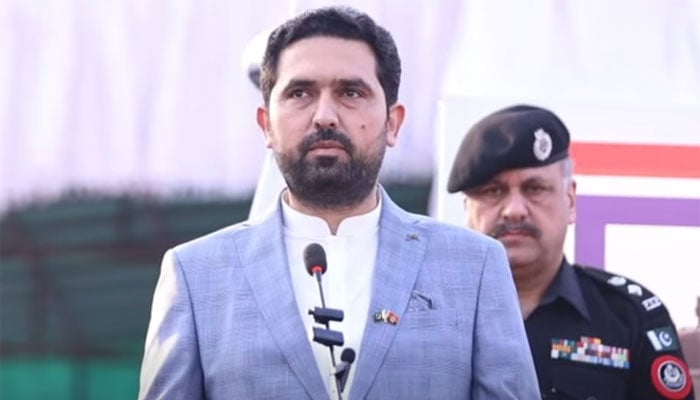
LAHORE – Chairman Lahore Board of Education, Dr. Engineer Badr-ul-Islam has said that the Lahore Board of Intermediate and Secondary Education (BISE Lahore) has taken a major and revolutionary step to bring the education system in line with modern requirements and provide prompt solutions to the problems faced by students.

In accordance with the vision of Chief Minister Punjab Maryam Nawaz and the directions of Education Minister Rana Sikandar Hayat and Chairman Task Force Committee for Boards Muzammil Mahmood, BISE Lahore has rapidly digitized its administrative and examination systems.

Announcing this major development, Chairman Lahore Board Engineer Dr. Badr-ul-Islam said that result cards have been completely digitized and the entire record of examination results has been shifted to a modern digital system.

The primary objective of this initiative is to ensure transparency in examinations, prevent the issuance of fake degrees and certificates and save students from traditional paperwork and repeated visits to the Board offices.

Modern QR codes have been added to all digital result cards. By scanning the QR code with any device, a student’s complete academic record and examination results can be instantly verified online.

The result cards of all private students will be uploaded to the Board’s official website from where students will be able to directly download their digital result cards.

All regular students will be able to obtain their result cards through the portals of their respective schools or colleges and educational institutions.

The Inter Board Coordination Commission (IBCC) has been formally informed about the new digital system, e-verification and QR code mechanism so that students do not face any delay or difficulty during admissions to higher education institutions or the attestation of their academic documents.

Chairman Lahore Board Engineer Dr. Badr-ul-Islam further said that the Lahore Board of Education is committed to making all its operations paperless and fully digital. Following the digitization of result cards, other services including online NOCs, migration certificates and online fee payments are also being further simplified and automated.

He said the objective is to ensure that students can access all necessary facilities through modern cyber and IT services from the convenience of their homes.

Similar Posts

  • | |

    New provinces debate gains momentum as coalition p…

    A renewed debate over the creation of new provinces in Pakistan has gathered political momentum after two major coalition partners publicly endorsed Interior Minister Mohsin Naqvi’s proposal to restructure the country’s administrative system. However, the ruling Pakistan Muslim League-Nawaz (PML-N) has yet to officially comment, fueling speculation over its stance on the sensitive issue. The discussion began after Naqvi argued that Pakistan’s existing administrative framework had become ineffective and called for a national consensus on establishing smaller provinces to improve governance and public service delivery. His remarks quickly drew support from coalition allies, including the Muttahida Qaumi Movement-Pakistan (MQM-P) and the Istehkam-e-Pakistan Party (IPP). Federal Health Minister Mustafa Kamal described the proposal as an urgent national necessity rather than a political choice, stressing that decentralizing administrative powers was essential for effective governance. The MQM-P has long advocated the creation of an additional province in Sindh, making the party one of the strongest supporters of the initiative. Privatization Minister Abdul Aleem Khan of the IPP also endorsed the proposal, suggesting that each of Pakistan’s four existing provinces could eventually be divided into three administrative regions. He argued that smaller provinces would bring government closer to the people and reduce the hardships faced by citizens traveling long distances to provincial capitals. Despite growing support from coalition partners, the proposal faces significant constitutional and political challenges. Any change to provincial boundaries requires a two-thirds majority in the affected provincial assembly, making consensus difficult to achieve. The Pakistan Peoples Party (PPP), which governs Sindh and is also part of the federal coalition, has expressed strong reservations, warning that such a move could create more problems than solutions. Opposition leaders have also criticized the proposal, arguing that the government lacks the political mandate for such a major constitutional change. They insist that strengthening democratic institutions and improving governance should take priority over redrawing provincial boundaries. Political analysts have offered differing views on the initiative. Some believe creating new provinces could deepen ethnic and regional divisions, while others see the debate as an attempt to shift public attention away from pressing national issues, including recent unrest in Azad Jammu and Kashmir and ongoing security challenges in Balochistan. Many experts argue that empowering local governments under the 18th Constitutional Amendment would be a more practical and effective way to improve governance without altering provincial boundaries. Mustafa Kamal also acknowledged that stronger local governments are essential regardless of whether new provinces are eventually created. With the PML-N maintaining silence and key coalition partners taking opposing positions, the proposal has opened a fresh political debate that is likely to remain at the center of Pakistan’s national discourse in the coming months.

  • | |

    Pentagon signs framework agreement with lockheed M…

      The United States Department of Defense (Pentagon) has entered into a framework agreement with leading American defense contractors Lockheed Martinand Northrop Grumman to expand the production capacity of critical components used in missile defense systems. The agreement is part of the U.S. government’s broader effort to strengthen its defense industrial base and ensure that the military maintains sufficient stocks of advanced missile interception systems amid rising global security challenges. According to Arab media reports, the Pentagon has not disclosed the financial value of the framework agreement. While details regarding the total cost and production timeline remain confidential, officials have indicated that the initiative is intended to significantly increase manufacturing capabilities for components used in missile interceptor systems. The agreement comes at a time when the United States is reassessing its defense production capacity in response to ongoing international conflicts and growing demand for advanced military equipment. Reports suggest that the prolonged wars involving Iran-related regional tensions and the conflict in Ukraine have placed considerable pressure on U.S. weapons and missile inventories. As a result, the Pentagon has been working to replenish depleted stockpiles while ensuring that American forces remain prepared for future security challenges. Missile defense systems play a crucial role in protecting military installations, strategic assets, and civilian populations from incoming missile threats. These systems rely on highly sophisticated interceptor missiles and advanced technologies capable of detecting, tracking, and destroying hostile missiles before they reach their intended targets. Increasing production of the key components used in these systems is expected to improve the United States’ ability to respond quickly to evolving security threats and maintain a reliable supply of defensive capabilities. Defense analysts have noted that expanding manufacturing capacity is becoming increasingly important as global geopolitical tensions continue to rise. The ongoing war in Ukraine has resulted in significant military assistance from the United States and its allies, including the transfer of advanced missile defense equipment and interceptor missiles. At the same time, heightened tensions in the Middle East have increased the demand for missile defense systems capable of countering a wide range of aerial threats. The latest framework agreement follows another major defense contract announced just last week. The U.S. Army awarded Lockheed Martin a contract worth up to $58.6 billion for the production of Patriot interceptor missiles, one of the world’s most widely used air and missile defense systems. The Patriot system is designed to intercept ballistic missiles, cruise missiles, and hostile aircraft, making it a critical component of the United States’ missile defense network as well as that of several allied nations. The new agreement with Lockheed Martin and Northrop Grumman is expected to complement that large Patriot missile contract by ensuring that manufacturers have the capacity to produce the essential components needed for future missile defense programs. By investing in increased production capabilities, the Pentagon aims to strengthen supply chains, reduce manufacturing bottlenecks, and accelerate the delivery of critical defense equipment. Although the Pentagon has not revealed the financial details of the framework agreement, the move underscores Washington’s continued commitment to enhancing national security and maintaining military readiness. As global conflicts and regional tensions persist, expanding defense production is expected to remain a top priority for the U.S. Department of Defense in the years ahead.

  • | |

    Central Ruet-e-Hilal Committee meets to sight Rabi…

    The meeting of the Central Ruet-e-Hilal Committee to sight the moon of Rabi-ul-Awwal 1448 AH is underway in Islamabad. The meeting is being held at the Ministry of Religious Affairs’ Kohsar Block under the chairmanship of Central Ruet-e-Hilal Committee Chairman Maulana Abdul Khabir Azad. Meanwhile, the Pakistan Space and Upper Atmosphere Research Commission (SUPARCO) has predicted that the Rabi-ul-Awwal moon is unlikely to be sighted today. According to SUPARCO, the chances of sighting the moon are very low as it will be approximately 20 hours and 53 minutes old at sunset. SUPARCO said Rabi-ul-Awwal 1 is likely to fall on Saturday. However, the Central Ruet-e-Hilal Committee is the competent authority to make the final announcement regarding the sighting or non-sighting of the moon.

  • | |

    Punjab allocates Rs12.52bn for local polls after 1…

    The Punjab government has taken a major step towards holding long-delayed local government elections, approving Rs12.52 billion for the polls that could finally restore elected local councils across the province after an 11-year gap. The decision was taken during the 36th meeting of the Punjab Cabinet, chaired by Chief Minister Maryam Nawaz. The allocation signals that the provincial government is preparing for a fresh local election process after years of political, legal and administrative delays. Punjab last held local government elections in 2015, during the tenure of former chief minister Shehbaz Sharif. Polling was conducted in phases between October and December that year, while elected councils formally assumed office in 2017 following indirect elections for mayors and chairpersons. However, the local government system subsequently faced repeated disruptions. The Pakistan Tehreek-i-Insaf government dissolved the elected local bodies in April 2019 before their scheduled completion. Although the Supreme Court later ordered their restoration, the councils eventually completed their term on December 31, 2021. Under Article 140A of the Constitution and the Elections Act, local government elections are required within 120 days after the expiry of local councils. This meant Punjab’s next elections were due in April 2022. Yet successive governments repeatedly changed local government laws, forcing the Election Commission of Pakistan (ECP) to restart key preparations. Polls Could Be Held by November The latest development has raised hopes that Punjab may finally see local elections later this year. PILDAT President Ahmad Bilal Mehboob welcomed the cabinet’s decision to allocate funds, describing it as a positive indication that the electoral process could move forward. He said the ECP had completed the demarcation and delimitation process and dealt with objections, making it possible for the commission to announce an election schedule after August 17. According to Mehboob, if there is no “unseen factor”, local government elections could be held in Punjab by November 2026. The move could also have wider political implications. Asked whether the PML-N government’s decision might ease pressure surrounding demands for the creation of new provinces, Mehboob said provincial restructuring remained a complex issue. However, he noted that holding local elections could, to some extent, reduce the pressure for new provinces by strengthening grassroots representation. For millions of Punjab residents, the key question now is whether the latest budget allocation will finally translate into polling stations, elected councils and a functioning local government system after years of waiting.

  • | | |

    Ministers seek PM’s approval for prices of 52 vi…

    ISLAMABAD: The federal health ministry has sought an urgent meeting with Prime Minister Shehbaz Sharif to obtain approval for the pricing of 52 newly registered life-saving medicines. Health Minister Syed Mustafa Kamal and Finance Minister Senator Muhammad Aurangzeb are expected to attend the meeting along with Federal Health Secretary Muhammad Aslam Ghauri and Drug Regulatory Authority of Pakistan (DRAP) Chief Executive Officer Dr Obaidullah. Officials said the health ministry has contacted the prime minister’s adviser, Tauqeer Shah, requesting an early appointment for the delegation. The Cabinet Committee on Drug Pricing had already approved prices for the 52 medicines during its meeting on July 24. However, the medicines cannot be legally marketed in Pakistan until the federal cabinet gives its final approval. After cabinet approval, DRAP will be able to issue notifications fixing the maximum retail prices of the medicines, allowing pharmaceutical companies to formally launch the products in the regulated market. Health ministry officials said the proposed meeting with the prime minister is aimed at obtaining his support for placing the pricing decision before the federal cabinet at the earliest. The delegation is also expected to raise the issue of hardship cases involving several essential medicines. Manufacturers and importers of these medicines have requested price adjustments, arguing that continued production or imports at the existing prices have become increasingly difficult. A senior health ministry official said the government was concerned because several registered medicines remained unavailable in the regulated market despite their prices having been approved by the drug pricing committee. The official said the delegation would brief the prime minister on the situation and seek immediate action to prevent further shortages. Among the medicines facing supply pressure are essential products such as influenza vaccines and morphine used in cancer treatment, along with other drugs whose manufacturers have reported difficulties in maintaining supplies at existing prices. The Cabinet Committee on Drug Pricing, chaired by Finance Minister Muhammad Aurangzeb, approved the 52 pricing cases after reviewing recommendations submitted by DRAP’s Drug Pricing Committee and Policy Board. All 52 cases forwarded by the Drug Pricing Committee and endorsed by the DRAP Policy Board were approved by the cabinet committee. However, the committee’s decision is not the final step in the process. The federal cabinet must endorse the recommendations before DRAP can officially notify the maximum retail prices. The medicines covered by the proposed pricing decision are used to treat a range of serious and chronic conditions. They include medicines for cancer, diabetes, haemophilia, Parkinson’s disease, autoimmune disorders, blood-clotting conditions and severe infections. Some are also used in intensive-care units and emergency treatment. Officials believe timely approval could help bring the newly registered medicines into the regulated market and improve availability for patients requiring specialised treatment.

  • | | |

    PM Shehbaz unveils first Youth Employment Policy

    ISLAMABAD: Prime Minister Shehbaz Sharif has announced Pakistan’s first Youth Employment Policy. He said the government is focusing on education, skills, employment and entrepreneurship for young people. Addressing a ceremony in Islamabad, Shehbaz said a significant amount of money had been allocated for youth development this year. He stressed the importance of equal educational opportunities. He said every child should have access to quality education.The prime minister said Pakistan could not achieve the vision of Quaid-e-Azam if quality education remained limited to wealthy families. He criticised the gap between privileged and poor students. He said elite institutions provide better facilities to children from affluent families. According to Shehbaz, this inequality has contributed to Pakistan’s weak performance in the education sector. He said his government had worked to bring students from remote and less-developed areas into the education system. The prime minister also highlighted the Daanish Schools programme. He said its network is being expanded beyond Punjab. New Daanish Schools are being established in Azad Jammu and Kashmir and Gilgit-Baltistan, he added. Shehbaz said young people must be given access to modern education and technology. He warned that Pakistan would fall further behind if its youth were not prepared for the changing global economy. 35% quota for women The prime minister announced important measures under the new employment policy. He said women would receive a 35% quota across the labour force.He also announced a 10% annual quota for startups. The measure is aimed at encouraging young entrepreneurs and creating new employment opportunities. Shehbaz said young people should not only look for jobs. They should also be encouraged to establish businesses and create employment for others. Daanish University in Islamabad The prime minister also announced progress on Daanish University in Islamabad.He said the university is being established to provide modern and quality education. Classes are expected to begin next year.Shehbaz said financial difficulties should not prevent talented students from pursuing higher education. He said students with strong academic results would be given opportunities even if they could not afford expensive education. The prime minister pledged that his government would take every possible step for youth development. He said higher education and employment would remain among the government’s key priorities. Shehbaz also highlighted the government’s laptop distribution programme. He said around 700,000 laptops had already been distributed among deserving students.According to the prime minister, the laptops were awarded strictly on merit. He recalled that the programme had faced criticism in the past. Some critics had accused the government of using laptops for political purposes.Shehbaz rejected the criticism and said deserving students received the devices based on their academic performance. He further announced that 250,000 students would receive Chromebooks this year.The devices will also be distributed on merit. The prime minister said investment in education and digital skills was essential for Pakistan’s future.He said young people represent the country’s biggest resource. Providing them with education, technology and employment opportunities, he added, would help build a skilled workforce and strengthen the national economy.The new Youth Employment Policy is therefore being presented as a broader government effort to connect education with employment and entrepreneurship.

Leave a Reply

Your email address will not be published. Required fields are marked *