conflict must not
| | |

Conflict must not distract from climate action, leaders warn COP31

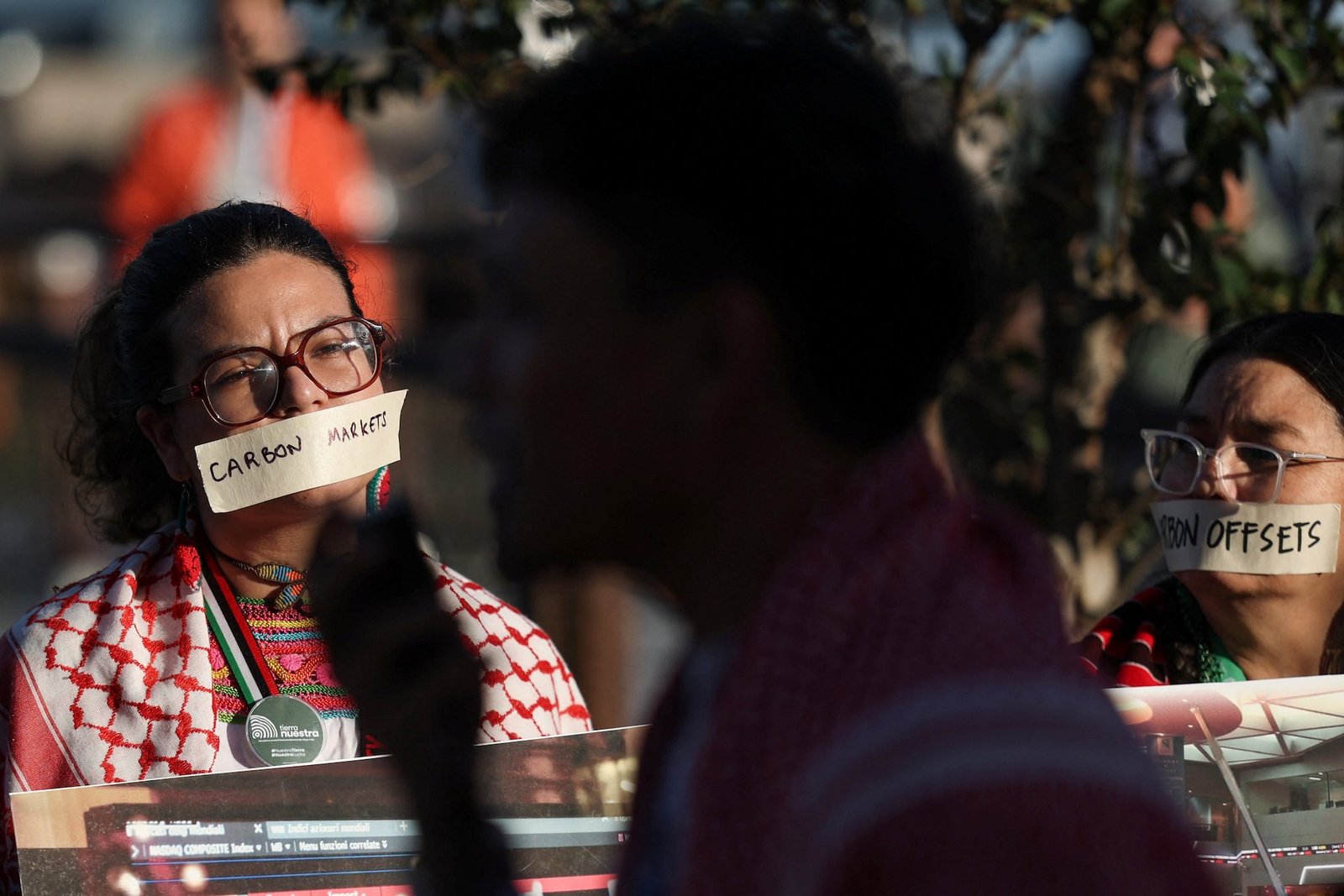
ANTALYA, Turkey – Wars and trade disputes should not be allowed to distract the world from its struggle to combat global warming, leaders told the COP31 climate conference on Wednesday, November 12, as negotiators prepared to hash out a new deal to try to limit climate change.

COP31 host Turkey has been pushing countries to put a goal to expand electrification at the center of a final deal, even as critics say it may do little to curb warming without a clearer plan to reduce the use of fossil fuels.

Heads of state gave back-to-back speeches on Wednesday to lay out their positions.

Brazil’s President Luiz Inacio Lula da Silva, whose country hosted last year’s conference, told the summit that climate change had since slipped down the global agenda.

“We started talking more about weapons and tariffs than the survival of future generations,” he said. “The planet cannot be at the mercy of hegemonic struggles.”

Turkey’s President Tayyip Erdogan echoed the comment.

“Wars, crises, migration, famine and poverty increase the need for international solidarity each day,” he said.

Oil supply disruption

The US and Israeli war on Iran this year has disrupted Middle East crude oil shipments and sent fuel prices soaring around the globe, triggering a scramble for reliable supplies.

Those dynamics have pushed global warming down the list of urgent priorities for some governments, even as climate advocates argue they make the perfect case for a more rapid adoption of clean energy alternatives to oil.

Saudi Arabia’s energy minister, Prince Abdulaziz bin Salman, had a different take, arguing the existing geopolitical situation reflects the importance of the free flow of all types of energy.

“Measures that are aimed at protecting the climate should not constitute barriers facing countries and impeding their achievements of economic development,” he said.

Negotiators from nearly 200 countries are seeking agreement at COP31 on a proposal from Turkey to increase the share of electricity in global energy use to 35% by 2035, from a little over 20% now, and revive stalled efforts to move away from fossil fuels.

UN Secretary-General Antonio Guterres told world leaders earlier in the day that the slow international response to climate change so far had placed the world on a path to destruction, and that fast action was needed to avert it.

“The brutal truth is that the climate crisis is outrunning us. This is the path to mutually assured destruction,” Guterres said, pointing to rising emissions, global temperatures and worsening climate-driven disasters.

Leader speeches will continue into Thursday, November 13.

Year of extreme weather

A UN report last month found the world on course to break through the 1.5 degrees Celsius (2.7 degrees Fahrenheit) warming limit that countries had agreed to pursue under the Paris Agreement to prevent the worst effects of climate change.

Meanwhile, 2026 has also stood out with a series of extreme heatwaves across Western Europe and a glacier collapse in Nepal that triggered a catastrophic flood, killing more than 1,450 people, with thousands still ​missing.

Former French prime minister Laurent Fabius, who presided over the 2015 Paris climate conference and leads an advisory council of former COP presidents, said the leaders’ speeches should give political impetus to the negotiations.

“It is an opportunity for leaders to make some announcements, and more this time, to explain how they will implement, because the key word in Antalya is implementation,” he told Reuters.

Many nations will not be represented, though.

The United States, the world’s largest historical emitter of greenhouse gases, has skipped the talks for the second year in a row after President Donald Trump – who has called global warming a hoax – withdrew the US from climate cooperation following his return to office in 2025.

Other G7 countries France, Germany, Japan, Italy and Canada did not send their top leaders to the talks this year.

“The world’s biggest economies should be leading the response to the climate crisis, not leaving it to others,” said Mohamed Adow, director of climate and energy think tank Power Shift Africa. – Rappler.com

Similar Posts

  • |

    Use of Pellet guns in Delhi protests revive Kashmi…

    Cockroach Janta Party protests in Delhi has sparked a nationwide debate while reopening old wounds in occupied Kashmir, where the weapon has been used extensively against peaceful protesters for years. The incidents in the capital have drawn attention to the long-standing suffering of Kashmiris, who have borne the brunt of pellet gun injuries, with many left blinded or permanently disabled. The Delhi protests, led by students demanding education reforms, ended successfully with the resignation of Education Minister Dharmendra Pradhan. However, the use of pellet guns against demonstrators has overshadowed the victory, raising concerns about the government’s approach to handling dissent. Critics have questioned why such force was used against peaceful protesters in the capital, drawing parallels to the devastation caused in occupied Jammu and Kashmir. Rahul Gandhi, a prominent opposition leader, expressed deep sorrow over the use of pellet guns, highlighting the tragic toll they have taken in Kashmir. Human rights organizations have repeatedly condemned pellet guns as a “cruel weapon” that causes disproportionate harm, and the international community has raised concerns about their use in the region. The Delhi incident has reignited calls for a ban on pellet guns, with activists urging the Indian government to adopt less lethal methods of crowd control. The controversy has also drawn attention to the broader issue of human rights violations in occupied Kashmir, where the use of such weapons has been a persistent concern. Hospital records from the region highlight the devastating impact of pellet gun injuries, with countless young Kashmiris left with permanent disabilities. The use of pellet guns in Delhi has not only sparked outrage but has also brought the Kashmir issue back to the forefront of national and international discourse. Human rights groups have called for a thorough investigation into the incidents and for the government to ensure that such weapons are no longer used against citizens exercising their fundamental rights. As the debate continues, the victims of pellet gun injuries in both Delhi and Kashmir await justice and accountability. The incident serves as a reminder of the urgent need for reforms in crowd control measures and the importance of protecting the rights of all citizens. The international community continues to monitor the situation closely, urging India to uphold its human rights obligations. The time for change is now. The government must act decisively to ensure that the rights of all citizens are protected and that such incidents are never repeated. The victims of pellet gun injuries, both in Delhi and Kashmir, deserve justice, and the government must take concrete steps to ensure that their voices are heard and their grievances addressed. The fight for justice continues, and the nation must stand united in its commitment to upholding the rights and dignity of all citizens. The use of pellet guns in Delhi has once again exposed the harsh realities of India’s approach to law and order, and the need for meaningful reform has never been more urgent.

  • |

    Ex-US health official Anthony Fauci invokes Fifth Amendment in volatile Senate hearing

    Former top US public health official Dr Anthony Fauci repeatedly invoked his Fifth Amendment right against self-incrimination during a tense Senate committee hearing on Wednesday, refusing to answer questions regarding the origins of COVID-19 and early federal pandemic responses. The hours-long session before the Senate Homeland Security and Governmental Affairs Committee degenerated into a fierce clash between the retired scientist and Republican lawmakers. Fauci, 85, who led the National Institute of Allergy and Infectious Diseases (NIAID) for nearly four decades, declined to answer more than 100 questions on the advice of his legal team. In a statement before asserting his constitutional right, Fauci accused committee chairman Senator Rand Paul (R-KY) of pursuing an “unhinged obsession” with sending him to prison. Fauci stated that answering questions under oath was a deliberate attempt to trap him into potential perjury charges. Paul and GOP members pressed Fauci on whether federal funding supported dangerous “gain-of-function” research at the Wuhan Institute of Virology in China, and cited over 1,000 pages of newly leaked personal diary entries that lawmakers argue contradict his past public statements. Despite a preemptive presidential pardon issued by Joe Biden before leaving office, legal experts noted that testifying under oath could still leave Fauci exposed to potential perjury prosecutions if lawmakers alleged inconsistent statements. Enraged by the repeated refusals, Senator Paul announced that the committee will vote next week on holding Fauci in contempt of Congress, which could prompt a referral for criminal prosecution.

  • | |

    Iran shifts to offensive posture as Hormuz standof…

    Iran has moved from a defensive to what a senior Iranian official called a fully offensive strategy, citing a deadlock in efforts to reach a lasting end to its war with the United States, according to a person familiar with the matter who spoke to a foreign news agency on Monday. Progress toward peace talks and the resumption of oil tanker traffic through the Strait of Hormuz has stalled, with no indication that either side is moving closer to ending the conflict the United States and Israel launched on February 28. The official said Iranian entities must prepare to escalate tensions in the strait and across the wider region, adding that Tehran stands ready to make difficult decisions and would carry out a precise military strike to break the US naval blockade if diplomacy collapses. Washington did not immediately respond to those remarks, though President Donald Trump told Fox News earlier in the day that Iran should raise the white flag of surrender. Throughout the conflict, Trump has swung between threats of further escalation and claims that a peace deal sits within reach. Iran’s Islamic Revolutionary Guard Corps pushed back hard on one such claim Monday, rejecting as false Trump’s assertion that Washington maintains backchannel contact with IRGC officials on matters related to the war. Spokesman Hossein Mohibbi told Iran’s Tasnim news agency that no talks are taking place between IRGC officials and American counterparts, describing Trump’s claims as fantasies stemming from desperation over battlefield setbacks. Mohibbi said diplomatic matters fall to other Iranian institutions and remain outside the Guard’s purview, adding that current information from the Foreign Ministry confirms no talks are underway even at that level. He argued Trump’s statements amount to an attempt to influence global energy prices. Trump had told reporters earlier Monday that his administration keeps a backchannel with the IRGC and speaks directly with its officials inside Iran. Trump also issued a separate warning aimed at Oman, saying Washington would respond with force if the sultanate interferes with US Iran negotiations. Asked about Oman’s role in talks touching on Iran and the Strait of Hormuz, Trump told Fox News the United States would bomb Oman if it gets in the way. The comment came after Iran said Saturday that it had reached agreement with Oman on a shipping route map for the strait following weeks of technical talks. Trump separately confirmed the administration’s direct channel with the IRGC and repeated that Tehran should surrender, calling Iranian officials skilled negotiators who are nonetheless losing ground. Fighting also intensified elsewhere in the region. Yemen’s Houthi movement claimed Monday that it struck several Saudi naval vessels along with a weapons depot in a broad missile and drone assault. Spokesman Yahya Saree said a Saudi amphibious transport ship and accompanying vessels were hit in a precise aerial attack involving multiple ballistic missiles, claiming several ships sank while others caught fire. He said Houthi forces also used multiple drones to strike a Saudi weapons depot at the Sahn al Jin camp in Yemen’s Marib province. Saudi authorities had not confirmed the claims as of publication. Separately, Yemen’s army said Monday it detected two hypersonic ballistic missiles fired by Houthi forces toward the city of Mocha and the Red Sea, launched from a former air defense brigade headquarters east of Taiz. No information on casualties or damage was immediately available, and the Houthis did not comment. The launch followed a claim from Yemen’s National Resistance Forces that Houthi fighters had targeted Mocha with seven drones a day earlier, adding to fears of renewed full scale conflict in a country that had seen relative calm since April 2022 following nearly twelve years of civil war. On the Iranian side, IRGC Deputy Commander in Chief Major General Mostafa Izadi said Iranian forces shot down more than 200 enemy aircraft during the recent war with the United States and Israel, according to Iran’s Fars news agency. Izadi said the conflict left the Islamic system undamaged and demonstrated Iran’s strength to the world. Parliament speaker Mohammad Bagher Ghalibaf went further, declaring both a military and political victory over Washington and Israel on the day a 60 day ceasefire under the Islamabad memorandum was set to expire. Ghalibaf said the US and Israel failed to achieve any of nine publicly stated objectives in the war, calling it their biggest failure. Trump, meanwhile, reiterated on his Truth Social platform that Iran cannot possess a nuclear weapon in any form, describing this as Washington’s permanent top priority. Iran also pressed a separate grievance Monday, with Foreign Ministry spokesman Esmaeil Baghaei blaming pollution in Gulf waters on decades of US military presence and operations in the region. Baghaei said the environmental damage stems from American military activity over the past five decades and called for Washington to be held accountable, estimating losses in the trillions of dollars. His comments followed Iran’s request last week for compensation after an oil slick reached the island of Qeshm, which officials said has since been cleaned up. Separately, salvage efforts continued for a grounded tanker leaking Russian crude off Oman’s coast, with officials citing monsoon weather and the shallow, rocky seabed as major obstacles. Mohammed bin Abdullah al Rawahi of Oman’s transport ministry said the conditions expose salvage vessels to operational and navigational risks, compounded by flooding damage to one side of the tanker. Diplomatic efforts on Gaza also advanced Monday, with Israeli Prime Minister Benjamin Netanyahu due to meet Trump envoy Jared Kushner a day after a rare meeting between Kushner and Hamas officials in Cairo. A diplomatic source said Hamas leader Khalil Al Hayya attended some sessions with Kushner and Gaza peace envoy Nickolay Mladenov. Trump said in late July that a deal had been reached on the complete disarmament of Hamas and other armed groups, though Netanyahu, facing an October re election vote, has publicly rejected the plan. Trump separately welcomed the signing of the Makkah Joint Defence Agreement by Turkiye, Pakistan and Saudi Arabia, saying on Truth

  • US and Saudi forces launch joint precision strikes on Iranian-backed targets in eastern Iraq

    Joint military operations between United States fighter jets and the Saudi Arabian Armed Forces targeted multiple logistics and weapons facilities belonging to Iranian-aligned armed groups across eastern Iraq, US Central Command confirmed in an official statement. The coordinated air raids were conducted in direct retaliation to more than thirty Iranian-directed aerial drone attacks launched over a seventy-two-hour period. Central Command specified that the targeted militia groups acted under the explicit direction of Iran’s Islamic Revolutionary Guard Corps to strike American troop installations and Saudi energy infrastructure. While American military officials confirmed that recent strikes against US assets were successfully defended without casualties, the Saudi Ministry of Defense cited international self-defence provisions under Article 51 of the United Nations Charter, noting that the aerial campaign directly addressed drone incursions originating from Iraqi territory against petroleum facilities in eastern Saudi Arabia and Riyadh. The joint intervention signals a notable strategic escalation for Saudi Arabia, which had previously sought to limit direct military involvement despite recurring proxy threats along its borders and maritime trade corridors. Central Command noted that Iranian-backed militias in Iraq attempted over six hundred attacks against US personnel and facilities between February and April alone, warning that failure to cease offensive operations would trigger further military action. In response to the bombings, representatives for Iraq’s Popular Mobilization Forces reported casualties and structural damage across several headquarters, condemning the strikes as a severe violation of Iraqi national sovereignty.

  • | | |

    IRGC targets key US military bases in Kuwait

    Iran’s Islamic Revolutionary Guard Corps (IRGC) has claimed responsibility for launching another round of attacks on US military facilities in Kuwait, saying the strikes targeted key military infrastructure used by American forces in the Gulf region. In an official statement, the IRGC said the operation targeted the Ali Al Salem Air Base, where US military personnel and equipment are stationed. According to the statement, the attack struck a large military equipment warehouse, a Patriot air defence missile system, and a hangar used to house US MQ-9 Reaper drones. The IRGC claimed the strikes caused significant damage to military assets at the base. However, the extent of the reported damage has not been independently verified. The statement also said Iranian forces targeted Al Udairi Barracks, another military facility used by US forces in Kuwait. The IRGC claimed the attack hit accommodation areas used by American troops as well as two helicopter hangars, resulting in heavy damage to helicopters and unmanned aerial vehicles. Iran further claimed that a telecommunications tower was also struck during the operation. According to the IRGC, the attack was carried out in retaliation for what it described as previous US attacks on communication infrastructure inside Iran. The latest announcement comes amid heightened military tensions between Iran and the United States following recent exchanges of attacks in the region. Both countries have accused each other of escalating the conflict through military operations targeting strategic installations. There has been no immediate confirmation from the US Department of Defense or the Kuwaiti government regarding the IRGC’s claims. American and Kuwaiti officials have not publicly commented on whether the reported attacks caused casualties or damage to military facilities. Independent verification of the IRGC’s claims remains unavailable, and the exact impact of the reported strikes has not yet been confirmed. The reported attacks are likely to further increase tensions in the Gulf region, where US military bases play a central role in regional security and military operations. Observers say any further escalation could have significant implications for stability in the Middle East as diplomatic efforts to ease tensions continue.

  • | |

    Pezeshkian rejects pressure as Iran seeks path to de-escalation

    Iranian President Masoud Pezeshkian has said Tehran will not surrender to external pressure or compromise its military and defensive capabilities, while stressing that Iran remains open to diplomacy if it can help protect the country’s interests. In a televised interview marking the second anniversary of his presidency, Pezeshkian said Iran would resist any attempt to force it into submission. He maintained that Tehran had the right to preserve its defence capabilities and would not accept demands aimed at weakening its military strength. The Iranian president described his country’s response during the latest conflict with the United States and Israel as an act of self-defence. He praised Iran’s armed forces, including the Army, Islamic Revolutionary Guard Corps and Aerospace Forces, for their performance during the fighting. Pezeshkian also accused Washington and Tel Aviv of attempting to bring Gulf countries together against Iran. He said Tehran was working to prevent further regional divisions and maintained that Muslim countries should cooperate regardless of sectarian differences. He rejected claims that Iran sought territorial expansion or intended to attack neighbouring states. According to Pezeshkian, Iran wanted peaceful relations with countries in the region and had no plans to seize territory or expand its borders. The president also questioned why some regional countries allowed their territories to be used for attacks against Iran. He said Tehran did not seek confrontation with those states but would respond against locations from which it was attacked. Meanwhile, senior US military officials are reportedly pushing for a path toward de-escalation as concerns grow over the effectiveness and sustainability of further military action against Iran. According to a report, Chairman of the Joint Chiefs of Staff Gen Dan Caine has privately urged senior Trump administration officials to explore options for ending the conflict. The discussions reportedly involved senior figures including CIA Director John Ratcliffe, Secretary of State Marco Rubio and Vice President JD Vance. US officials are said to believe that continued air operations alone may not be enough to force Tehran to accept Washington’s demands. There are also concerns about Iranian retaliation against US allies and regional energy infrastructure. The report further indicated that shortages of some US weapons, including air-defence interceptors and precision munitions, could make a prolonged conflict increasingly difficult. Despite the concerns, US officials reportedly believe American forces could still inflict significant damage on Iran if President Donald Trump orders further escalation. At the same time, Washington is examining diplomatic options that could allow Trump to present an agreement as a political achievement. A possible agreement between Iran and Oman could provide a major breakthrough in efforts to reopen the Strait of Hormuz, according to a US official. Washington expects Tehran and Muscat to reach an understanding that would allow commercial shipping and oil traffic to resume through the strategic waterway. The United States has indicated that it could lift its blockade of Iranian ports once commercial shipping is restored and Iran fulfils its commitments. The Strait of Hormuz is one of the world’s most important energy routes, with a significant share of global oil supplies traditionally passing through it. Disruptions caused by the conflict have contributed to higher energy prices and increased inflationary pressure. The latest diplomatic activity follows several previous claims that a deal over the strait was close, although Iranian officials have repeatedly denied that formal negotiations were taking place. Regional tensions have also prompted Pakistan, Saudi Arabia and Türkiye to strengthen military cooperation through a joint defence agreement signed in Makkah. Under the agreement, an armed attack against any one of the three countries would be treated as an attack against all three. The countries said the pact was intended to strengthen collective deterrence and protect regional security. Türkiye stressed that the agreement was defensive and was not directed against any particular country. However, the deal comes amid heightened tensions involving Iran and growing concerns about the conflict spreading across the Gulf and wider Middle East. Meanwhile, diplomatic efforts are continuing on the Lebanon front, where officials are discussing arrangements for monitoring the potential disarmament of Hezbollah under a US-backed framework. Pezeshkian has also defended diplomatic engagement with Washington despite opposition from Iranian hardliners. The Iranian president argued that dialogue could be useful if it allowed Tehran to safeguard its national interests and secure its rights.

Leave a Reply

Your email address will not be published. Required fields are marked *