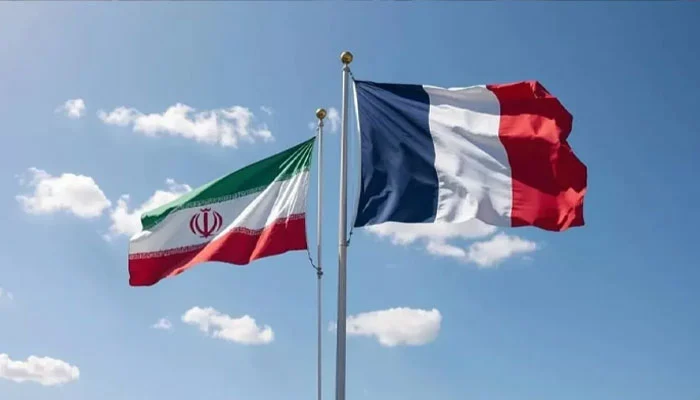
world leaders return
|

World leaders return to UN amid wars in Middle East and Ukraine

UNITED NATIONS — World leaders gather in New York this week for the UN General Assembly, bracing for President Donald Trump‘s return to the rostrum for a second year running, with talks centering on the widening conflicts in the Middle East and Ukraine and the risks of artificial intelligence.

Nearly 130 heads of state meet with the post-World War II order under strain and with the UN itself struggling to remain relevant and weathering attacks from Trump, who has slashed America’s contributions and withdrawn from dozens of UN bodies.

Chinese leader Xi Jinping, who last addressed the diplomatic jamboree via video in 2021, will skip New York in favor of one-on-one talks with Trump in Washington on Thursday, fueling debate about the UN’s relevance in addressing global crises.

Compounding the crisis of morale and finance are questions about the next leader of the 80-year-old organization: Secretary-General Antonio Guterres completes his term at the end of 2026, with no clear frontrunner in the race to replace him.

The 15-member UN Security Council may hold high-level meetings on Ukraine, AI and the Middle East, including talks with Arab leaders, diplomats said.

More than a year into Trump’s second term, “we would no longer say that the UN is in freefall, but we would say that it’s stuck in an open-ended crisis,” said Richard Gowan of the International Crisis Group.

“The UN may not be in emergency care like it was last year, but it seems to be trapped in a trauma center for the foreseeable future,” Gowan said.

The US avoided losing its vote at the assembly by paying $725 million in contributions to the regular budget this week, but it still owes the organization more than a billion dollars and makes ongoing demands for cuts and reforms.

Growing AI risks

The assembly meets shortly after several artificial intelligence industry leaders called for a coordinated slowdown of the development of the technology, warning that it could soon improve on its own and escape human control.

Guterres has said that AI will be a major topic, adding that countries pushing its frontiers should set up “common guardrails in order to avoid this race to the bottom that could lead one day to a gigantic disaster at the global level.”

The secretary-general has long proposed global governance of AI. In 2023, the UN created an advisory body on the technology, with members including tech executives, government officials and academics.

The warning has put Guterres at odds with Trump, who dismissed AI risks as a “hoax,” saying there is a “sick conspiracy” against it and that China would benefit from the doubt being cast on its development.

Middle East escalation

The Middle East will again be a focus of discussions, as the US-Israeli war on Iran continues to drive global inflation and destabilize the region. Recent gains by Houthi militants threaten shipping in ​the vital Bab el-Mandeb Strait and could further spike energy prices.

“It’s very difficult to have a military solution for that problem, and the experience of fighting in Yemen demonstrated how complicated it is to have successful interventions,” said Guterres, adding that the UN’s envoy on Yemen was making a “huge effort” to advance talks.

Peace talks remain stalled, however, as Iran and the US continue to exchange strikes and Trump threatens a major escalation of the war.

Iranian President Masoud Pezeshkian is scheduled to address the assembly on Wednesday.

Israeli Prime Minister Benjamin Netanyahu – wanted by the International Criminal Court over alleged war crimes and crimes against humanity in Gaza that Israel denies – is to speak on Thursday.

Palestinian President Mahmoud Abbas will for the second year running not be at the gathering in person. The US, a close Israeli ally, again denied him a visa. On Thursday, the General Assembly voted to allow Abbas to appear via video.

There is likely to be a high-level meeting on the conflict in Sudan on the sidelines, diplomats said, although a diplomatic breakthrough is unlikely.

Ukraine, food security

Also on the agenda is Russia’s more than four-year-old war in Ukraine.

Ukrainian President Volodymyr Zelenskiy and Russian Foreign Minister Sergei Lavrov will address the General Assembly. Zelenskiy will likely seek to shore up Ukraine’s position ahead of what is expected to be another tough winter, diplomats said.

The Security Council has been unable to take action to end the conflict because permanent member Russia holds a veto.

Trump has at times appeared frustrated that he has been unable to broker an end to the war, a goal he declared a priority when he began his second term in January last year. The US president spoke with his Russian counterpart Vladimir Putin earlier this month, but it was unclear whether he plans to meet Zelenskiy in New York.

Guterres highlighted the impact the war was having on civilians but also on food security and energy prices.

“The effective blockade existing in the Black Sea is creating enormous problems that add to the problems generated by the Middle East crisis, and I think it would be very important to find a way to allow Ukrainian exports and Russian exports of food, fertilizers and energy to take place in a safe way through the Black Sea,” he said. – Rappler.com
Similar Posts

  • New Jersey discovers software glitch that permitted non-citizens to vote

    A major technological defect within New Jersey’s Motor Vehicle Commission (MVC) added approximately 6,600 non-U.S. citizens to the state’s voters between June 2023 and June 2024. Governor Mikie Sherrill publicly disclosed the finding during a news briefing, explaining that an investigation was immediately launched upon discovery to ensure election rolls are corrected and fully secured. Preliminary assessments conducted by election authorities indicate that fewer than 400 of those erroneously added individuals actually went on to participate in elections. Officials emphasized that there is no indication these votes altered the outcome of any contest or resulted from intentional fraud by the affected residents. The voter registration system used across New Jersey driver’s license centers relies on digital touchpads designed to streamline voter sign-ups. When residents apply for or renew state identification or driver’s licenses, the system asks a series of preliminary eligibility questions, including whether the applicant is a United States citizen. Between June 2023 and June 2024, a severe programming error caused the system to bypass negative responses. Even when non-citizen applicants explicitly selected No on the prompt asking if they were eligible citizens, the software disregarded the answer and forwarded their information to election boards as new voter registrations. Governor Sherrill noted that the individuals involved were completely blameless. They answered the eligibility prompts truthfully, but the automated backend software processed them as voters regardless. Although the underlying code error was patched in June 2024, the full scope of the improperly generated registrations was not uncovered until recently. After identifying the affected records, state election administrators conducted a preliminary audit to evaluate whether any of the erroneously registered individuals had cast ballots. The review revealed that under 400 people on the list had voted in at least one election during the period in question. The misregistered voters were distributed across political spectrums, enrolling as Democrats, Republicans, and unaffiliated voters across multiple counties. State analysts confirmed that the limited number of votes cast were widely dispersed across time and region, meaning no single local or statewide race was tipped as a result of the system error. State officials clarified that affected individuals will not face prosecution or legal penalties, as they did not falsify documents or attempt to circumvent registration laws. In response to the revelation, Governor Sherrill announced immediate corrective steps to clean the voter registries and enforce administrative accountability. Election boards have begun systematically removing all 6,600 affected names from state voter databases. The state is mailing official notification letters to all impacted residents, informing them of the system glitch and confirming that their records are being updated to prevent future voter file errors. The state Motor Vehicle Commission is severing ties with IDEMIA, the third-party software contractor responsible for managing the license registration keypads, and moving to onboard a new vendor. The Governor’s Chief Counsel has opened an internal investigation into why the error persisted for a full year under the previous administration without being escalated or publicly reported. The disclosure has drawn varied reactions across the political and advocacy landscape. Voting rights organizations, including the League of Women Voters of New Jersey, commended the current administration for its swift transparency and proactive purging of improper records while reiterating that affected residents were victims of a software glitch rather than bad actors. At the same time, the incident has fueled debates over voter registration infrastructure and database management. Republican lawmakers called for broader overhauls and stricter verification mechanisms across state agencies. State leaders maintained that the issue represents an isolated technology failure that is being thoroughly rectified to preserve the integrity of future elections.  

  • |

    Pakistan, Saudi Arabia reaffirm ‘Brotherly T…

    Pakistan and Saudi Arabia on Saturday reaffirmed their “close and brotherly ties” while underscoring the importance of diplomacy amid escalating tensions in the Middle East involving the United States, Iran, and Yemen’s Houthi movement. The development came as Yemen’s Houthis launched attacks on Saudi oil installations at two Red Sea ports, raising concerns that the conflict disrupting energy supplies from the Gulf could spread to another major shipping route. According to a statement issued by the Ministry of Foreign Affairs, Deputy Prime Minister and Foreign Minister Senator Mohammad Ishaq Dar spoke with Saudi Foreign Minister Prince Faisal bin Farhan Al Saud. The two leaders exchanged views on the latest regional developments and reaffirmed the close and brotherly ties between Pakistan and Saudi Arabia. Both leaders underscored the importance of continued diplomacy and shared their commitment to promoting constructive engagement, peace, and stability in the region. The Middle East crisis, which has continued for nearly six months, has affected regional stability and disrupted energy supplies, with concerns extending beyond the region. The situation appeared to enter a different phase as the United States refrained from launching air strikes on Iran for the first night in two weeks, without immediately explaining the halt. The Houthi attacks on Saudi oil installations threaten to widen disruptions to global oil supplies caused by the Iran conflict and have contributed to a sharp rise in global oil prices, with Brent crude rising above $100 a barrel for the first time since May. Amid the escalating tensions, US President Donald Trump on Friday vowed “major military punishment” for Tehran and the Houthis after the group claimed responsibility for striking two Saudi tankers in the Red Sea on Thursday. The Saudi-led coalition said it would continue taking necessary measures to protect its ships and Saudi Arabia’s interests, warning it would respond “uncompromisingly” if the Houthis continued their attacks. The coalition’s response underscores the seriousness of the situation and the potential for further escalation. Pakistan and Saudi Arabia have historically maintained strong bilateral relations, with both countries cooperating on a range of issues, including security, economic development, and regional stability. The reaffirmation of their ties comes at a critical time, as the Middle East faces increasing instability and the threat of a wider conflict. The two leaders’ commitment to diplomacy reflects a shared recognition of the need for dialogue and cooperation to address the complex challenges facing the region. As tensions continue to rise, Pakistan and Saudi Arabia remain committed to promoting peace and stability in the Middle East. The international community has urged restraint, with the UN warning of catastrophic consequences if the violence continues. The coming days will be critical in determining whether diplomatic efforts can prevent a full-scale war or whether the region will slide further into chaos. The situation remains fluid, and the world watches with concern as the conflict in the Middle East continues to unfold. The commitment of Pakistan and Saudi Arabia to diplomacy offers a glimmer of hope for a peaceful resolution, but the challenges ahead are significant, and the path to peace remains uncertain. The international community must continue to support efforts to de-escalate tensions and promote regional stability, ensuring that the voices of diplomacy and dialogue prevail over the drums of war. The situation in the Middle East serves as a reminder of the interconnectedness of global security and the importance of cooperation in addressing shared challenges. The coming weeks will be critical in shaping the future of the region and the broader global order, with the conflict highlighting the urgent need for a coordinated international response to prevent further escalation and promote lasting peace.

  • | |

    Iran summons French ambassador over diplomats accu…

    Iran summoned the French ambassador in Tehran this week over allegations that two French diplomats interfered in the country’s internal affairs. A spokesman for Iran’s Foreign Ministry said the ambassador was called in specifically to address the conduct of the two diplomats stationed in Tehran. Speaking at a weekly press briefing, Esmaeil Baghaei said the meeting emphasized that the French government must halt what he described as interference in Iran’s domestic affairs carried out under misleading pretexts. Baghaei said both diplomats had been using contact with civil society groups as cover for activities that amounted to meddling in Iran’s internal matters, and argued that their conduct had no legal basis under the Vienna Convention on Diplomatic Relations. The dispute stems from an incident on July 20, when Iranian security forces detained the two French diplomats and questioned them for several hours before allowing them to return to the French embassy. One of the diplomats later alleged that he was subjected to physical mistreatment while in custody. French Foreign Minister Jean Noel Barrot condemned the episode, describing it as an extremely serious act of intimidation. The incident adds to a period of heightened friction between Iran and Western governments, as Tehran remains locked in a broader standoff with the United States and its allies over its nuclear program and regional activities, a dynamic that has repeatedly spilled over into diplomatic disputes with European nations in recent months.

  • |

    Human rights organizations file federal lawsuit challenging Trump administration sanctions on ICC

    Four prominent non-governmental organizations filed a joint federal lawsuit contesting executive sanctions imposed by the Trump administration on the International Criminal Court, arguing the penalties unlawfully disrupt global war crimes prosecutions. The legal challenge, brought by Human Rights Watch, the Center for Constitutional Rights, the Open Society Institute, and the American Friends Service Committee, targets an executive order enacted in February 2025. The presidential directive established financial sanctions and travel bans against ICC officials, judges, and affiliated advocacy groups involved in investigating alleged war crimes in Palestinian territory, including cases involving senior Israeli officials. Attorneys representing the civil rights organizations contend that the broad scope of the sanctions violates First Amendment protections regarding free speech and association. The suit asserts that the threat of severe civil and criminal penalties has effectively forced US-based legal advocates to suspend representation of victims before the tribunal, while halting formal collaborations with sanctioned international rights groups. The filing marks the latest in a series of legal challenges against the administration’s broader push to limit the jurisdiction of the Hague-based court. Representatives for the US Department of State and Department of Justice did not immediately issue formal statements regarding the lawsuit.

Leave a Reply

Your email address will not be published. Required fields are marked *