manjrekar slams lenient
|

Manjrekar slams ‘lenient’ punishment for Jaiswal, Vaibhav

MUMBAI: Former India batter Sanjay Manjrekar has criticised the International Cricket Council (ICC) for what he described as lenient disciplinary action against Yashasvi Jaiswal and Vaibhav Suryavanshi following separate incidents involving the young Indian players.

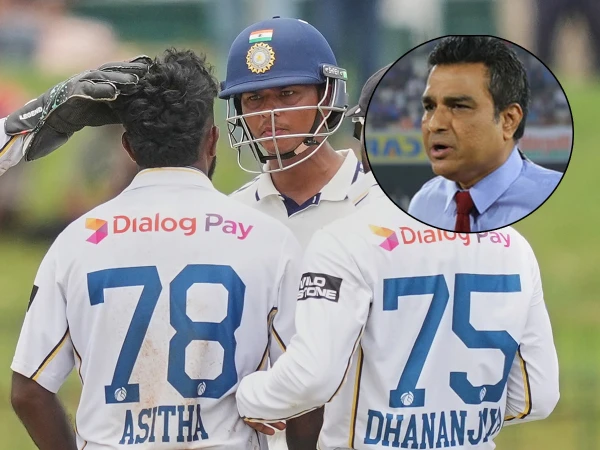
Manjrekar expressed his frustration on social media after the ICC sanctioned Jaiswal and Sri Lankan fast bowler Asitha Fernando following an on-field confrontation during the Galle Test.

Jaiswal and Fernando were involved in a heated exchange after the Indian batter was dismissed. The situation escalated when the two players moved towards each other and their heads made contact, prompting teammates and officials to intervene before the confrontation could develop further.

The ICC found both players guilty of breaching its code of conduct and imposed a fine of 25 per cent of their match fees, along with one demerit point each.

Manjrekar questioned whether the punishment was strong enough given the nature of the incident. He argued that the authorities should have taken a firmer position on conduct that could potentially undermine discipline and sportsmanship in international cricket.

The former India international also referred to an earlier incident involving 15-year-old Vaibhav Suryavanshi, expressing disappointment that the youngster had received only a 50 per cent match-fee fine.

His comments have renewed discussion about whether disciplinary measures in cricket are consistent across players and incidents, particularly when young cricketers are involved.

The Jaiswal-Fernando confrontation attracted considerable attention because it occurred during a Test match, where players are expected to maintain discipline despite the intense pressure of international competition. The involvement of teammates in separating the two players prevented the incident from becoming more serious.

The ICC’s decision means both Jaiswal and Fernando will carry a demerit point on their disciplinary records, although neither player received a suspension.

Manjrekar’s criticism adds to the wider debate over how cricket’s governing bodies should respond to confrontations on the field. While fines are intended to punish misconduct, some former players believe stronger sanctions are necessary when physical contact occurs.

The controversy also highlights the challenge faced by cricket authorities in balancing firm discipline with proportionate punishment. For now, the ICC decision stands, but Manjrekar’s comments are likely to keep the debate alive over whether international cricket needs tougher penalties for on-field clashes.

Similar Posts

  • | |

    Maryam hits back at Bilawal with video proof

    Punjab Senior Minister Maryam Aurangzeb has responded to criticism by Pakistan Peoples Party (PPP) Chairman Bilawal Bhutto Zardari by releasing video footage showcasing the condition of roads, streets, and sanitation in several cities across Punjab. The response followed Bilawal’s address at an election rally in Azad Jammu and Kashmir (AJK), where he questioned the state of development and municipal services in different parts of Punjab. During his speech, Bilawal raised concerns about the condition of cities beyond Lahore and asked whether residents of other districts were receiving the same level of attention and development. Soon after the speech, Maryam Aurangzeb shared a series of videos on social media. The footage focused on the same cities mentioned by Bilawal. According to her, the videos were intended to present the actual situation on the ground and respond directly to the questions raised during the rally. The videos highlighted roads, streets, and cleanliness operations in different districts. They showed paved roads, cleaned streets, and sanitation activities carried out by local authorities. Maryam Aurangzeb maintained that the footage reflected the provincial government’s ongoing efforts to improve infrastructure and public services across Punjab. She gave special attention to Vehari and Kasur, two districts specifically mentioned by Bilawal in his speech. To answer his criticism, she shared separate videos from both cities. The footage displayed roads, residential streets, and cleanliness arrangements, which she described as evidence of the government’s development work. Maryam Aurangzeb said the videos served as visual proof of the progress made in Punjab. She maintained that the provincial government was working to improve civic facilities in both major cities and smaller districts, rather than focusing only on Lahore. https://x.com/i/status/2079953668946976948

  • |

    Shaheen, Naseem should play more domestic cricket, Usman Shinwari

    Former Pakistan fast bowler Usman Shinwari has urged Shaheen Shah Afridi and Naseem Shah to play more domestic and first-class cricket, arguing that regular competitive cricket can help the two premier pacers maintain their pace, fitness and longevity. Speaking to the media, Shinwari said Pakistan has traditionally placed too much emphasis on bowling speed, often overlooking the impact of workload and continuous cricket on a fast bowler’s body. “Even if your fitness is like Cristiano Ronaldo’s, bowling continuously can eventually affect your pace,” he said. Shinwari described Shaheen and Naseem as outstanding bowlers and said he was not in a position to offer them personal advice. However, he stressed that playing selected domestic cricket could help them retain their rhythm and speed while reducing the risk of injuries. The former pacer also discussed Pakistan’s upcoming challenges in England, saying tours of the country have historically been difficult for Pakistan. He believes the team can still produce a strong series if it carries its current momentum forward. Reflecting on Pakistan’s recent Test performances against the West Indies, Shinwari said the team’s first-match performance was disappointing but praised the side for making a strong comeback in the second Test. He emphasised the importance of consistency, saying better continuity within the team would ultimately produce better results. Shinwari also backed the decision to restore Babar Azam to the Test captaincy, describing it as a positive move and saying Babar has the ability to lead Pakistan in the longest format. Another major point raised by Shinwari was Pakistan’s approach to selecting players across different opponents. He argued that the same combination should not automatically be used against teams with vastly different playing conditions and strengths. Discussing Mohammad Abbas, Shinwari questioned the excessive focus on speed. He noted that Abbas had taken eight wickets at around 125kph in a recent match, arguing that the pacer’s best years were affected because too much importance had been attached to increasing his pace. “Speed is important, but it should not be given excessive importance,” he said. On Ihsanullah, Shinwari said the fast bowler had expressed grievances and suggested that his disciplinary issues should be addressed. Despite his experience, Shinwari made it clear that he has no plans to become Pakistan’s national team coach. He argued that coaches, like players, should progress through a structured system rather than being appointed directly to the national side. His comments have once again highlighted the debate over workload management, pace, domestic cricket and long-term planning in Pakistan’s fast-bowling system.

  • |

    Viral 1970s PTV clip reignites debate over changing TV standards

    A vintage clip from a 1970s Pakistan Television (PTV) drama has gone viral on social media, reigniting conversations about how the country’s television industry and cultural standards have changed over the decades. PTV, Pakistan’s oldest television network, first went on air in November 1964 and quickly became known for producing memorable dramas, educational programs, and family-oriented entertainment. Many of its productions from the 1960s and 1970s are still remembered for their strong storytelling, talented actors, and high production quality. Over the years, however, the broadcaster’s programming evolved alongside Pakistan’s changing political and social landscape. The recently resurfaced clip is from the classic PTV play Parchaiyaan. In the scene, several female characters are seen wearing elegant sarees paired with sleeveless blouses, a fashion choice that has caught many younger viewers by surprise. The attire, which reflected the style of that era, has sparked widespread discussion online, with many people saying such costumes would be unlikely to appear on mainstream Pakistani television today. The video quickly gained traction across social media platforms, where users compared the fashion and creative freedom of the 1970s with modern television standards. Many viewers expressed surprise that such scenes were once broadcast on the country’s state-owned television network. Some social media users described the clip as evidence that Pakistani television once embraced a more modern and progressive visual style. Others questioned whether the footage was authentic, with one user asking if it had really aired on PTV. Another remarked that the television industry of the time appeared far more liberal than many people assume today. Not everyone viewed the clip positively. Some users argued that the clothing shown in the scene was too revealing by today’s standards, while others said the discussion highlighted how cultural expectations and public attitudes have shifted over the decades. Several viewers, however, praised the actresses featured in the clip for carrying the traditional outfits with grace and elegance. One user admired the woman dressed in a black saree, saying she wore the outfit confidently despite the short-sleeved blouse. Others pointed out that sarees were a common part of formal fashion in Pakistan during that period, particularly among urban families and in television productions. The viral discussion has also revived broader conversations about the evolution of Pakistan’s entertainment industry. Many users reflected on how television content has changed over time due to shifting social values, cultural preferences, and broadcasting policies. Some believe earlier productions offered greater artistic freedom, while others argue that changing audience expectations naturally influenced the direction of television programming. As the clip continues to circulate online, it serves as a reminder of how fashion, media, and public opinion evolve across generations. Whether viewed as a symbol of artistic expression or simply a reflection of its time, the decades-old scene has once again placed PTV’s rich television history at the center of public conversation.

  • |

    Northwestern province warns of glacial floods as Pakistan monsoon death toll rises to 107

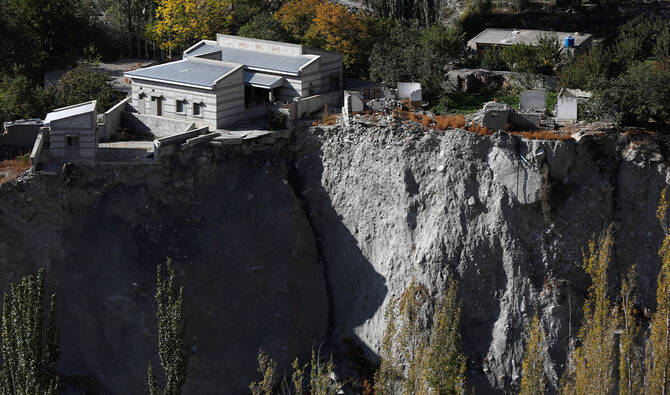
    Authorities in Khyber Pakhtunkhwa province have issued urgent warnings regarding potential glacial lake outburst floods, urging residents and tourists to stay away from rivers, streams, and narrow mountain valleys. The disaster alert follows persistent heavy monsoon rains that have killed at least 107 people and injured 344 others across the country since late June, with the heaviest casualties reported in Khyber Pakhtunkhwa and Punjab due to flash floods, structural collapses, and electrocutions. The Provincial Disaster Management Authority has highlighted specific high-risk northern districts, including Upper and Lower Chitral, Upper Dir, Swat, Upper Kohistan, and Mansehra, where warm temperatures combined with intermittent rainfall are rapidly accelerating glacial melt. Local administrations have been instructed to monitor vulnerable zones closely, with officials advising the public to watch for sudden changes in river water colour or unusual mountain sounds that could signal an imminent surge.

  • | |

    Rain inundates homes, shops in Rawalpindi

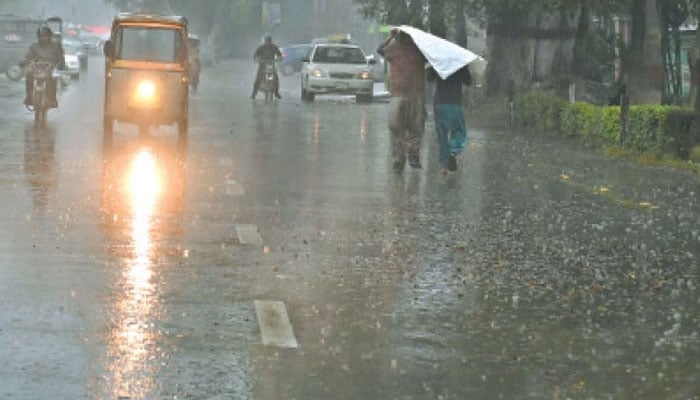
    Heavy rain in Rawalpindi has caused flooding in several low-lying areas, creating difficulties for residents. Water entered homes in Sadiqabad and Dhoke Elahi Bakhsh. Residents faced problems as rainwater accumulated inside residential areas. Several major roads were also affected. Rainwater collected on Murree Road, Rawal Road and Dhoke Khaba, disrupting traffic and making movement difficult. The situation became more difficult as WASA drainage teams had yet to reach some affected areas. Residents were waiting for authorities to clear the accumulated water. Water also entered shops in some areas, causing inconvenience to traders and residents. Meanwhile, the rain in Rawalpindi and Islamabad later stopped. Following the end of the rainfall, the water level in Nullah Lai began to fall. At Kattarian, the water level dropped to around 14 feet. At the Gawalmandi Bridge, the water level was recorded at around 16 feet. The rainfall has highlighted the vulnerability of low-lying areas in Rawalpindi to urban flooding. Residents have called for timely drainage operations to prevent rainwater from entering homes and businesses. The weather department has also forecast rain at some places in Punjab, Balochistan and Khyber Pakhtunkhwa. Authorities are expected to remain alert in areas vulnerable to flooding and water accumulation.

  • | |

    Waqar Zaka wins global trading competition

    Pakistani digital entrepreneur, television personality and cryptocurrency advocate Waqar Zaka has won the WEEX TradFi Masters, an international trading competition featuring more than 3,000 participants from around the world. The competition tested participants across multiple asset classes, including stocks, commodities, precious metals and cryptocurrencies, over a 20-day trading period. According to the organisers, Zaka recorded a 74 per cent return on an initial virtual trading capital of US$100,000, finishing ahead of competitors from South Korea and China, who secured second and third positions respectively. As part of the award, Zaka received a 2026 Mercedes-Benz G-Wagon at a prize ceremony held in Dubai. Waqar Zaka first rose to prominence as a television host before becoming one of Pakistan’s most recognised digital entrepreneurs and cryptocurrency advocates. Over the past several years, he has built a large online following through content focused on blockchain technology, digital assets and financial education. He has consistently campaigned for the legalisation and regulation of cryptocurrencies in Pakistan and has urged policymakers to embrace blockchain technology and the digital economy. His latest achievement has been welcomed by supporters as another milestone in his career and has drawn attention to the growing participation of Pakistani traders in international financial and digital asset markets.

Leave a Reply

Your email address will not be published. Required fields are marked *