maryam nawaz expresses

Maryam Nawaz expresses grief over Baghbanpura roof collapse

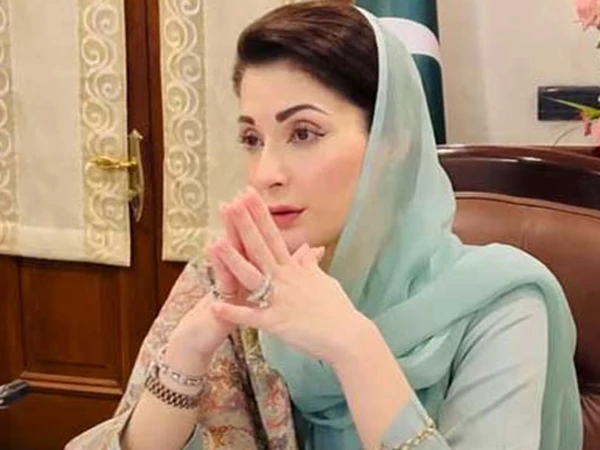
Lahore – Punjab Chief Minister Maryam Nawaz Sharif has expressed profound grief and sorrow over the loss of precious human lives in a roof collapse incident in Baghbanpura.

On the chief minister’s directives, the Deputy Commissioner Lahore and other administrative officials immediately reached the site and supervised the rescue operation for several hours. The chief minister closely monitored the rescue operation and received moment-by-moment updates on the situation.

Chief Minister Maryam Nawaz directed the authorities to ensure the best possible medical treatment for the injured and extended her heartfelt condolences and sympathies to the bereaved families.

Acting on the chief minister’s instructions, arrangements were made for the burial of those who lost their lives in the tragedy. As a precautionary measure, the affected area was sealed off and adjoining houses were evacuated to ensure public safety.

A total of 70 Rescue 1122 personnel, equipped with the required machinery and vehicles, participated in the rescue operation. Volunteers from Civil Defence, teams from the Health Department, and personnel from the Suthra Punjab programme also remained present at the site to assist in the emergency response.

Similar Posts

  • | |

    Dar calls for Muslim unity to protect Al-Aqsa

    Deputy Prime Minister and Foreign Minister Ishaq Dar has urged Arab and Islamic countries to stand together to protect Al-Aqsa Mosque and defend the rights of the Palestinian people amid the worsening situation in occupied Jerusalem and the West Bank. Speaking at a ministerial meeting on Jerusalem in Amman, Jordan, Dar said Muslim nations must adopt a united and coordinated approach to preserve the sanctity of Jerusalem’s holy sites. He stressed that immediate action is needed to stop violations at Al-Aqsa Mosque and maintain the site’s historical and legal status. Dar said the international community must ensure unrestricted access to Jerusalem’s holy places and prevent any attempts to alter their religious or historical character. He added that continued Israeli actions threaten regional stability and undermine prospects for a lasting peace. The foreign minister strongly opposed Israeli settlement expansion, annexation efforts, forced displacement of Palestinians and demographic changes in the occupied territories, including East Jerusalem. He said such measures violate international law and several United Nations Security Council resolutions. He also called for the complete implementation of the Gaza peace plan and all relevant UN resolutions. Dar welcomed diplomatic efforts by the United States, Egypt, Qatar and Türkiye, expressing hope that all parties would honour their commitments and move the peace process forward. Referring to the humanitarian crisis in Gaza, Dar said the ceasefire had brought limited relief, but conditions remained critical. He noted that millions of Palestinians continue to face severe food shortages, displacement and insecurity despite recent progress. Dar urged Muslim countries to strengthen diplomatic efforts to ensure international protection for Palestinians and hold those responsible for violations of international law accountable. He said justice and respect for international law are essential for achieving sustainable peace. Reaffirming Pakistan’s longstanding support for Palestine, Dar said Israel has no sovereignty over occupied East Jerusalem or its Islamic and Christian holy sites. He reiterated Pakistan’s support for the establishment of an independent and sovereign Palestinian state based on the pre-1967 borders, with Al-Quds Al-Sharif as its capital. The minister also warned that continued attacks on religious sites could inflame tensions across the Muslim world and increase the risk of wider regional conflict. The ministerial meeting concluded with a joint declaration by Arab and Muslim foreign ministers announcing the creation of a permanent mechanism to document Israeli violations in Jerusalem and at its Islamic and Christian holy sites. The mechanism will include a media platform to record incidents involving worshippers and religious sites and present documented evidence before international organisations and the global community. The declaration reaffirmed that East Jerusalem remains an occupied territory and rejected all unilateral measures aimed at changing its legal or demographic status. It also stressed that a two-state solution remains the only viable path to lasting peace in the region. On the sidelines of the meeting, Dar held separate discussions with the foreign ministers of Saudi Arabia, Egypt, Türkiye, Jordan and Somalia. The meetings focused on strengthening bilateral cooperation, reviewing regional developments and coordinating diplomatic efforts on the Palestinian issue.

  • | |

    Polling begins in PS-30 Khairpur by-election

    Polling has begun for the by-election in Sindh Assembly constituency PS-30 Khairpur. Pakistan Peoples Party (PPP) candidate Barrister Asfandyar Khan Kharral is contesting the election against seven independent candidates. The constituency has a total of 254,980 registered voters. The Election Commission has established 164 polling stations for the by-election. Officials have classified several polling stations as sensitive due to security concerns. A total of 64 polling stations have been declared highly sensitive. Another 68 polling stations have been classified as sensitive. Security arrangements have been strengthened at these locations. Around 2,500 police personnel have been deployed across the constituency. They have been assigned duties at polling stations and other important locations. Security personnel are also monitoring the polling process to prevent any untoward incident. Authorities have directed officials to ensure a peaceful environment for voters. The by-election was necessitated by the death of PPP MPA Naeem Kharral. His death left the PS-30 Khairpur seat vacant. The contest is being closely watched because the PPP candidate is facing multiple independent candidates. Voters in the constituency will decide who will represent them in the Sindh Assembly. Polling officials have been instructed to facilitate voters and ensure that the electoral process remains orderly. Security personnel will remain deployed throughout the polling process. Authorities have also taken measures to protect polling staff and voters.

  • | |

    Mir Raza murder case raises questions over investi…

    The father of young Karachi businessman Mir Raza has raised serious questions over the investigation into his son’s murder. He alleged that the case was being influenced. He claimed that signs of interference by the Sindh government were visible in the investigation. Lawyers protested at the City Court on Tuesday over the failure to arrest the suspects in the case. Mir Raza’s father, Mir Hussain, also spoke during the protest. He questioned the removal of Dr Usama from the case. According to Mir Hussain, Dr Usama was removed so that he would not be able to answer questions about the matter. He also questioned the preparation of the post-mortem report. He asked why the report was allegedly prepared on the basis of photographs. Mir Hussain questioned whether any pressure was involved in the preparation of the report. He demanded that the circumstances surrounding the post-mortem be properly examined. The victim’s father further criticised the police investigation. He said the police’s alleged incompetence in his son’s case was now evident. The protest was held as the suspects in the murder case remained at large. The lawyers demanded progress in the investigation and the arrest of those responsible. Mir Hussain called for transparency in the investigation. He said the family wanted answers regarding every aspect of the case.

  • | |

    Punjab CTD arrests 54 terror suspects

    The Punjab Counter Terrorism Department (CTD) has arrested 54 suspected terrorists, including five individuals alleged to have links with India’s intelligence agency, RAW, during a series of intelligence-based operations (IBOs) conducted across the province over the past two months. According to the CTD, a total of 419 intelligence-led operations were carried out in multiple districts to counter potential terrorist threats. During these operations, authorities questioned 422 individuals and detained 54 suspects believed to be associated with banned militant organisations. Officials said the five suspects accused of having links with RAW were identified as Waris Khan, Danish Ali, Roz Ali Khan, Wilayat Shah and Muhammad Aziz. The arrests were made in Lahore and Okara, while investigations into their alleged activities are continuing. The CTD stated that those taken into custody are suspected of having affiliations with several proscribed groups, including Fitna al-Khawarij, Daesh, Al-Qaeda in the Indian Subcontinent (AQIS), Lashkar-e-Jhangvi, Sipah-e-Sahaba and other outlawed organisations. The operations were conducted in several districts, including Lahore, Rawalpindi, Gujranwala, Faisalabad, Jhelum, Sargodha, Mianwali, Bhakkar, Sahiwal, Mandi Bahauddin, Pakpattan and Bahawalpur, as part of an ongoing campaign against terrorism. Authorities said a significant cache of weapons, explosives and other materials was recovered during the raids. The seized items included 7.9 kilograms of explosive material, 12 improvised explosive devices (IEDs), 50 detonators, safety fuse wire, pistols, rifles, ammunition, banned literature, pamphlets, flags, mobile phones and cash. The CTD also highlighted its wider security efforts, saying that during the past eight weeks it carried out more than 13,500 combing operations in coordination with local police and other law enforcement agencies. Nearly 495,000 people were screened during these operations, resulting in more than 1,100 arrests and over 1,000 registered cases.

  • | | |

    PM seeks broader JICA partnership in skills, miner…

    Prime Minister Shehbaz Sharif on Wednesday called for expanding Pakistan’s cooperation with the Japan International Cooperation Agency (JICA), identifying skills development, mineral exploration and support for small and medium-sized enterprises (SMEs) as key areas for future collaboration. The prime minister made the remarks during a meeting in Islamabad with a nine-member JICA delegation led by its President, Dr Tanaka Akihiko. He said Pakistan deeply values its decades-long partnership with Japan and expressed confidence that the latest engagement would further strengthen bilateral development ties. Highlighting the government’s economic agenda, Shehbaz said Pakistan had emerged from a challenging economic period through coordinated reforms and was now focused on achieving sustainable and inclusive growth. He noted that fiscal reforms had significantly improved revenue collection over the past three years, creating greater capacity for national development. The premier stressed that equipping young people with modern skills, expanding technical and vocational education, creating employment opportunities and empowering women remain among the government’s highest priorities. He said Pakistan is keen to benefit from JICA’s expertise in these sectors. Shehbaz also identified the country’s vast mineral resources as a major area of economic potential and invited JICA to provide technical assistance to help develop the sector and attract greater investment. Discussing support for businesses, the prime minister said reforms at the Small and Medium Enterprises Development Authority (SMEDA) had strengthened the institution. He expressed hope that enhanced cooperation with JICA would help improve SME productivity, encourage entrepreneurship and boost Pakistan’s exports. During the meeting, Shehbaz also conveyed condolences over the recent earthquake in Japan. Dr Tanaka thanked the prime minister for his message of sympathy and appreciated the warm hospitality extended to the Japanese delegation during its visit. The JICA president reaffirmed the agency’s commitment to expanding cooperation with Pakistan in healthcare, education, urban and rural development, industrial growth and technical training. He said future projects would be designed in line with the development priorities of both the federal and provincial governments. Dr Tanaka also acknowledged Pakistan’s efforts to promote peace and stability in the Middle East. Separately, Federal Minister for Economic Affairs Ahad Cheema met the JICA delegation to discuss future development initiatives. He invited the agency to participate in financing the Main Line-1 (ML-1) railway project alongside the Asian Development Bank and other development partners, describing the railway upgrade as vital for improving trade, transportation and industrial connectivity across the country. Cheema also sought JICA’s support for expanding internet connectivity in rural areas to promote freelancing and digital commerce. He requested technical assistance for feasibility studies of major infrastructure projects, an area in which JICA expressed readiness to cooperate.

  • | |

    Parliament approves sweeping defence command chang…

    Pakistan’s Parliament has approved legislation aimed at establishing a new legal framework for the country’s military command structure. The National Assembly and Senate passed the Defence Forces Act 2026 and amendments to the National Command Authority Act 2010 on Thursday. The legislation was approved despite strong opposition from opposition lawmakers, who objected to the speed at which the bills were brought before the Houses. Prime Minister Shehbaz Sharif attended the National Assembly session. The opposition later boycotted the voting process and walked out of the chamber in protest. The new Defence Forces Act provides a legal structure for the Defence Forces Headquarters. The headquarters will serve as a central institution for matters concerning national security, defence policy and coordination among the armed forces. Under the new framework, the Chief of Defence Forces will exercise operational command and control over the armed forces. The CDF will remain accountable to the federal government for matters related to command and control. The legislation also gives the CDF powers to improve coordination and integration among the Army, Navy and Air Force. The office will oversee joint operations, coordination and other matters involving the armed forces. The CDF will also have authority under relevant laws regarding the retirement, release and dismissal of military personnel, subject to constitutional provisions. The office will also be able to approve or reject resignations and retain personnel in service where permitted under the law. The federal government will frame rules and regulations needed to implement the new legislation. The CDF will also be authorised to issue orders and directions required to enforce the provisions of the Act. Parliament also approved amendments to the National Command Authority Act 2010. The changes replace references to the Chairman Joint Chiefs of Staff Committee with references to the Chief of Army Staff and Chief of Defence Forces. The legislation gives retrospective effect to key provisions from November 2025. The new laws are linked to changes introduced through the 27th Constitutional Amendment, which significantly altered Pakistan’s military command structure. Under the revised system, the Chief of Army Staff also serves as the Chief of Defence Forces. The office of Chairman Joint Chiefs of Staff Committee has been abolished under the new framework. The opposition strongly objected to the legislation being placed on the supplementary agenda. Opposition lawmakers said they had not been given sufficient time to examine the bills. Opposition Leader Allama Raja Nasir Abbas questioned the urgency of the legislation and called for more time for lawmakers to study the proposed changes. Mahmood Khan Achakzai also demanded that lawmakers be given at least a few days to review and debate the bills before voting. The government defended the procedure, saying parliamentary rules allow supplementary legislation to be introduced. Law Minister Azam Nazeer Tarar argued that the bills had already been examined and approved by the National Assembly. The cabinet had approved the draft legislation earlier in the day during a meeting chaired by Prime Minister Shehbaz Sharif in Islamabad. According to the government, the Defence Forces Act was necessary to provide administrative and legal arrangements for the office of the Chief of Defence Forces and its headquarters. The new framework also establishes the position of Commander of the National Strategic Command following the abolition of the CJCSC post. The commander is appointed by the prime minister on the recommendation of the army chief and CDF. The position carries a three-year term, with the possibility of another three-year term under the prescribed procedure.

Leave a Reply

Your email address will not be published. Required fields are marked *