meralco rates november
| | |

Meralco rates up in November as peso drop, Middle East crisis persist

(This is a press release from the Manila Electric Company.)

MANILA, Philippines – The Manila Electric Company (Meralco) announced on Friday, November 13 an upward adjustment of P0.4895 per kilowatt hour (kWh) in the electricity rate for the month of November, bringing the overall rate for a typical household to P15.5510 from P15.0615 per kWh in October.

For residential customers who are consuming 200 kWh, this adjustment translates to an increase of around P98 in the total electricity bill.

Driving this month’s overall rate increase was the generation charge which went up by P0.4344 per kWh mainly due to higher costs of power suppliers, which remain affected by the peso depreciation and the ongoing crisis in the Middle East.

Charges from First Gas/Prime CoreGen went up by P2.9241 per kWh mainly due to higher fuel costs resulting from Malampaya natural gas quarterly repricing and increase in the price of liquefied natural gas (LNG). First Gas/Prime CoreGen’s LNG use went up from 24% to 44%, as it needed to supplement Malampaya supply with imported gas. The peso also depreciated to its lowest level during the period, affecting around 86% of First Gas/Prime CoreGen’s costs that were dollar denominated.

Charges from the Wholesale Electricity Spot Market (WESM) also increased by P4.3946 per kWh, as average demand in Luzon rose by around 769 MW brought about by warmer temperatures in October 2026, which were even warmer than in October 2024, the last El Niño event.

Meanwhile, charges from Power Supply Agreements (PSAs) decreased by P0.2769 per kWh owing to higher average PSA dispatch.

For this period, First Gas/Prime CoreGen, PSAs, and WESM accounted for around 24%, 73%, and 3%, respectively, of Meralco’s total supply requirements.

Must Read

[READOUT] The race to deliver cheaper power


[READOUT] The race to deliver cheaper power

Taxes and other pass-through charges

Contributing to the overall rate increase were higher taxes and other pass-through charges which had a net increase of P0.2165 per kWh. This is mainly due to higher taxes resulting from the lower utilization of indigenous natural gas, which is exempt from value-added tax (VAT).

These also include the slight increase in charges from the National Grid Corporation of the Philippines (NGCP) of P0.0080 per kWh. The transmission charge went up by P0.1721 per kWh following the Energy Regulatory Commission’s (ERC) approval of higher Maximum Allowable Revenue (MAR) for NGCP. This, however, was largely offset by the P0.1641 per kWh reduction in the ancillary service charge because of the suspension of the Reserve Market starting October 14.

Pass-through charges for generation, and transmission and ancillary service are paid by Meralco to the power suppliers and the NGCP, respectively, while taxes, universal charges, and other public policy charges are all remitted to the government and the relevant agencies.

Meralco implements distribution rate adjustments

This month’s rates also reflect the implementation of new distribution tariffs approved by the ERC for the First Regulatory Period (1RP), which resulted to a minimal increase in distribution, supply and metering (DSM) charges of residential customers. For those with consumption of 200 kWh, the adjustment is equivalent to a slight increase of P0.0096 per kWh.

Following Meralco’s implementation of its 1RP rates, regulatory reset fees adjustments shall also be set to zero starting this month, from the previous rate of P0.0023 per kWh.

Beginning this November, Meralco will also implement another refund related to its Actual Weighted Average Tariff (AWAT), tempering the upward movement in other components.

As approved by the ERC, the latest AWAT refund — which translates to a P0.1733 per kWh downward adjustment for residential customers — will be implemented over six (6) months or until the full amount has been fully refunded.

This AWAT refund covers Meralco’s application for the Lapsed Period from January to June 2026 and was filed in compliance with previous ERC orders for the years when distribution utilities like Meralco did not have a rate reset. Subsequently, adjustments had to be filed to the ERC to cover the difference between Meralco’s AWAT and the Meralco’s approved distribution tariff of P1.3522 per kWh during the Lapsed Period.

Meralco likewise is continuously implementing two simultaneous AWAT refunds–equivalent to a total of P1.0139 per kWh for residential customers. These two AWAT refunds cover the Lapsed Periods from July2022 to December 2025.

Customers reminded of extended bill payment due dates

In accordance with ERC’s directive, Meralco reminds its customers of the extended payment due dates for unpaid electricity bills to avoid possible service disconnection.

Unpaid electricity bills from May to July 2026 must be settled on or before November 26, 2026, while those covering August to October 2026 must be paid on or before December 26, 2026.

For customers with monthly electricity consumption of 200 kWh or below, the suspension of disconnection activities has been extended until December, provided that all unpaid bills from May to July 2026 are settled on or before November 26, 2026.

Meanwhile, customers with monthly consumption exceeding 200 kWh are advised to settle any outstanding balances within the prescribed period to avoid service disconnection.

For customers who may need assistance or need flexible payment arrangements, they can reach Meralco through its different customer touch points. Payments may be made conveniently through the My Meralco app or any authorized payment partner. Customers who may need assistance or flexible paymentarrangements may reach out through Facebook Messenger, email customercare@meralco.com.ph, or visit the nearest Meralco Business Center.

During the ASEAN Summit on November 16 to 18, all Meralco Business Centers will remain open from 7 am to 5 pm, with a skeletal workforce. All customer transactions will continue to be accommodated.

For electricity service concerns, customers can report through the My Meralco app or through Meralco’s official social media accounts on Facebook (www.facebook.com/meralco) and X (@meralco). They may also text their concerns to 0920-9716211 or 0917-5516211 or contact the Meralco Hotline at 16211. – Rappler.com


Must Read

[Market Rider] Quick fixes to relieve hurting households from high power costs


[Market Rider] Quick fixes to relieve hurting households from high power costs

Similar Posts

  • | |

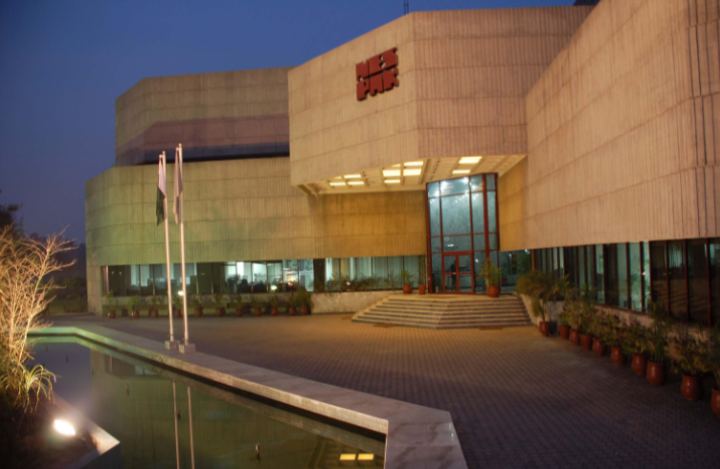
    NESPAK sets record with 180 new engineering projec…

    LAHORE: NESPAK, a premier organization of consulting engineers, has set an all-time record in business acquisition by securing 180 new engineering projects, both domestically and internationally, during the fiscal year 2025-26. Mr. Ahsan Anwar, Acting Managing Director of NESPAK, made this revelation here on Tuesday. NESPAK has achieved unprecedented business by acquiring 172 national projects and 8 international projects securing substantial financial value at both levels. As a result, NESPAK has once again strengthened its presence felt in domestic and international markets securing diversified and high value projects in fields of transportation, energy, water resources, urban development and public infrastructure. Among the landmark projects currently being executed during 2025-26 are consultancy services for the Battery Energy Storage System (BESS,2.5GWh) for the Saudi Electricity Company (SEC), Mass Transit System in Faisalabad & Gujranwala, Punjab Development Programme City Improvement Project (North and South Packages), K-IV Augmentation Works in Karachi, High-tension Transmission Line Project in Makkah, Saudi Arabia, Sultan Said Bin Taimur Road Project in Oman and the 30 MW Asifrah Diesel Fired Power Plant in Yemen. These projects demonstrate NESPAK’s growing footprint across the Middle East and South Asia while contributing significantly to sustainable infrastructure development. The organization remains actively engaged on hundreds of projects covering highways, motorways, dams, hydropower, irrigation & drainage systems, flood protection & river training, buildings, airports, urban development, public health engineering, power transmission and digital infrastructure. With decades of experience and a highly qualified workforce, NESPAK continues to play a pivotal role in supporting Pakistan’s socio-economic development through innovative, sustainable and world-class engineering solutions. NESPAK stands out as one of the most successful and profitable organizations among the State-Owned Enterprises (SOEs). Its reputation, integrity, and track record speak volumes about its credibility and standing, both nationally and internationally. NESPAK was conceived by its founders as an essential services entity, free from foreign dependence and capable of delivering the highest quality in engineering consultancy. It was envisioned to lead the consultancy market in Pakistan and compete abroad with excellence. Time has proven that NESPAK has succeeded in fulfilling its objectives to a large extent, thanks to the unparalleled dedication of its professional staff, who spared no effort in achieving their goals.

  • | | |

    Oil prices slip despite Gulf tensions as markets f…

    LONDON: Global oil prices edged lower on Thursday as investors shifted their attention from escalating military tensions in the Gulf to the resilience of energy supplies flowing through the region’s critical shipping routes. Brent crude futures fell 96 cents, or 1.06%, to $89.78 per barrel, while US West Texas Intermediate (WTI) crude declined 64 cents, or 0.76%, to $83.82 per barrel. The retreat came just a day after both benchmarks posted sharp gains, reflecting the market’s growing tendency to react briefly to geopolitical developments before refocusing on supply fundamentals. Oil markets had surged on Wednesday after US President Donald Trump warned Iran of a forceful response following an alleged Iranian missile strike on a US military base in Jordan. The rally was further fuelled by fresh US military operations against Iranian targets and joint US-Saudi strikes on Iran-backed armed groups in Iraq, heightening fears of wider regional instability. Despite the renewed military activity, analysts said traders are increasingly assessing whether the conflict will significantly disrupt global oil exports. Market participants remain closely focused on the Strait of Hormuz, a strategic waterway that traditionally carries nearly one-fifth of the world’s oil and gas shipments. According to energy consultancy Rystad Energy, around 13 million barrels of Gulf oil per day are still reaching international markets despite severe disruptions and restrictions in the region. Analysts noted that alternative shipping routes and logistical adjustments have helped prevent a complete supply shock. Lin Ye, Vice President of Commodity Markets at Rystad Energy, said geopolitical headlines continue to trigger rapid price spikes, but such rallies often fade as investors evaluate actual supply conditions and ongoing diplomatic efforts. Meanwhile, shipping challenges persist after Iran’s closure of the Strait of Hormuz and the Iran-aligned Houthi movement’s naval blockade in the Red Sea. Even so, some cargoes, particularly those linked to Chinese buyers, continue to move through alternative channels. IG market analyst Tony Sycamore said the longer alternative export routes remain operational, the weaker Iran’s leverage over the Strait of Hormuz becomes. He added that markets are increasingly adapting to prolonged disruptions, reducing the lasting impact of geopolitical shocks on crude prices. Although volatility remains elevated, traders are now placing greater emphasis on uninterrupted oil flows rather than military rhetoric, suggesting that supply resilience could continue to shape global energy markets in the weeks ahead.

  • |

    SBP to maintain focus on price stability, reforms and sustainable economic growth

    KARACHI: State Bank of Pakistan (SBP) Governor Jameel Ahmad has said the central bank will continue to prioritise price stability, structural reforms and the creation of a business-friendly economic environment aimed at boosting productivity, exports and employment. Addressing a flag-hoisting ceremony held at the SBP headquarters in Karachi to mark Pakistan’s 79th Independence Day, Governor Ahmad said the country had made notable progress towards macroeconomic stability over the past year. He attributed the improvement to disciplined fiscal and monetary policies, better economic management and continued efforts to strengthen financial and economic institutions. Inflation remains within medium-term range Speaking about the inflation outlook, the SBP governor said average inflation during fiscal year 2025-26 stood at 7.1 percent. He said the central bank believed that the prevailing monetary policy stance was appropriate for keeping inflation within its medium-term target range of 5 to 7 percent. According to Ahmad, the current policy framework also provides sufficient space for economic activity to continue, while supporting investment and employment generation. The governor said maintaining price stability would remain a central objective of the SBP as Pakistan seeks to move from short-term stabilisation towards sustained economic expansion. Growth expected to strengthen Ahmad said Pakistan’s economy recorded growth of 3.7 percent in FY26, reflecting the impact of improved macroeconomic conditions and greater fiscal and monetary discipline. Looking ahead, he projected economic growth in the range of 3.5 to 4.5 percent during FY27. He described the outlook as encouraging, saying the economy was gradually moving towards a more sustainable growth path after going through a difficult period of economic stabilisation. The governor stressed that maintaining policy discipline would be important to ensure that the gains achieved in recent years translate into durable economic development. Remittances strengthen external position The SBP chief also highlighted improvements in Pakistan’s external sector, particularly the performance of workers’ remittances. He said overseas Pakistanis had demonstrated confidence in the country by sending record amounts of money home, with remittances surpassing $41 billion during FY26. The inflow is expected to increase further, with remittances projected to reach around $44 billion in FY27, according to the governor. Ahmad said stronger remittance inflows, combined with a relatively low current account deficit, had helped improve Pakistan’s foreign exchange position. The country’s foreign exchange reserves reached $18.4 billion by the end of FY26, while the SBP expects reserves to rise above $21 billion during FY27. He said strengthening the external position would help improve economic resilience and provide greater capacity to withstand external shocks. SBP pushes digital transformation The governor also outlined measures taken by the central bank to modernise Pakistan’s financial infrastructure and expand the use of digital payment channels. He pointed to the successful launch of PRISM+, saying the upgraded payment and settlement infrastructure had brought Pakistan’s large-value payment system closer to international standards. The system has improved the speed, security and efficiency of large-value payments and settlements, he said. Ahmad added that SBP initiatives aimed at encouraging digital payments had resulted in a substantial increase in the use of electronic channels. Retail digital transactions increased from approximately 10 billion to 12 billion over the past year, reflecting growing adoption of technology across the financial system. According to the governor, the shift towards digital payments is more than a technological development. It is also contributing to greater documentation, transparency and efficiency within the economy. Self-reliance and institutions vital for progress Governor Ahmad said Pakistan’s long-term economic success would depend not only on financial and monetary policies but also on stronger institutions, economic self-reliance, respect for the rule of law and national unity. He emphasised that the country’s journey towards sustainable development required continued commitment and collective efforts from institutions, businesses and citizens. While acknowledging the progress achieved during the past year, he cautioned that Pakistan continued to face economic challenges that required sustained attention, policy consistency and determination. He said the objective should now be to convert the gains from economic stabilisation into a durable foundation for investment, productivity, exports and employment. The governor reaffirmed that the SBP would continue playing its role in supporting monetary and financial stability while contributing to broader efforts aimed at improving the welfare of the Pakistani people.

Leave a Reply

Your email address will not be published. Required fields are marked *